
Most people hit Naples at the waterfront or along Spaccanapoli, where the city is already posing. I drift north of Via Foria instead, where the ground drops into a valley that used to sit outside the walls. Rione Sanità does not straighten up for visitors. Scooters pile under laundry lines. Fruit stalls yell over church bells. Somewhere between a baroque staircase and a bakery counter, powdered sugar ends up on your sleeve.
That sugar is half of why I keep coming back.
Under the bridge, into the valley
Walk up from the metro at Museo or Cavour and you pass through Borgo dei Vergini first — churches and stone before the street falls away. The Ponte della Sanità carries traffic overhead, a concrete lid that long helped cut the quarter off from the rest of Naples. Going under it still feels like crossing a line. The light shifts. Voices bounce off different walls. The valley opens, and Capodimonte leans in from above.
This was never the postcard version of the city. For years a lot of Neapolitans just drove past. Cooperatives reopened catacombs, painters took over walls, and a few kitchens started pulling in people who would not have crossed the bridge after dark. What still feels the same is how packed ordinary life is here: kids against palazzo doors, nonne on balconies, someone always carrying a tray of something hot.
Mornings work better. Early enough that the San Gennaro tour groups have not fully stacked up, late enough that cafés have dragged tables onto the pavement. Buy a coffee standing up. Watch the street finish waking.
Powdered sugar and pizza on Via Arena
Via Arena della Sanità is where I end up when I want to eat without a plan. Two places a short walk apart cover most of what the neighborhood does well: dough and tomato at one, cream and air at the other.
Da Concettina ai Tre Santi is at Via Arena alla Sanità 7 bis, 80137 Napoli. Four generations of the Oliva family have made pizza here, and the place does not bother with a waterfront view. The room gets loud in a normal way. I order a margherita first, then lean into fried or stuffed pies when the counter looks busiest — usually a decent sign. I have waited. The wait has always been worth it. The rim has that soft Neapolitan give and a little char that says the oven is doing the work.
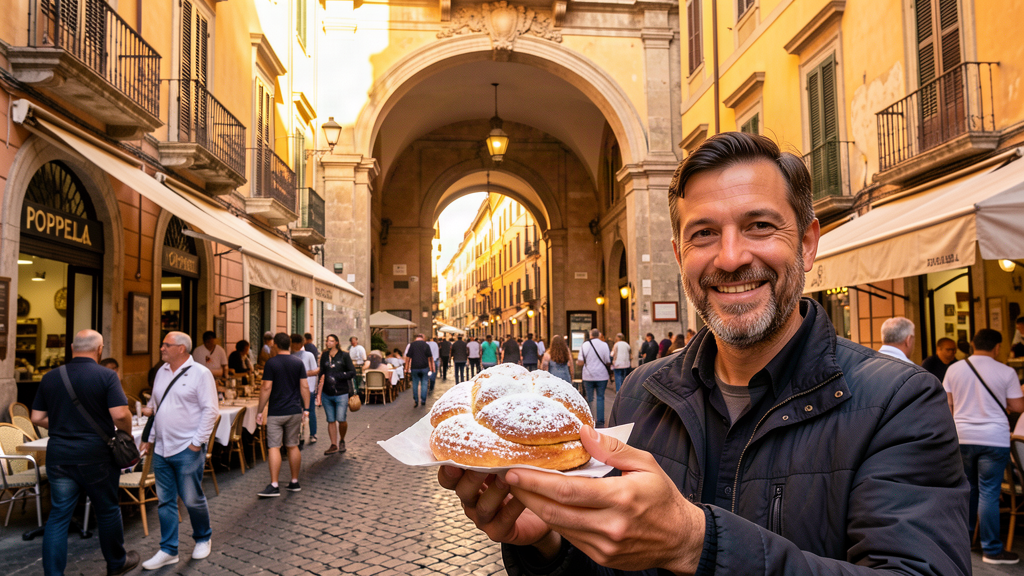
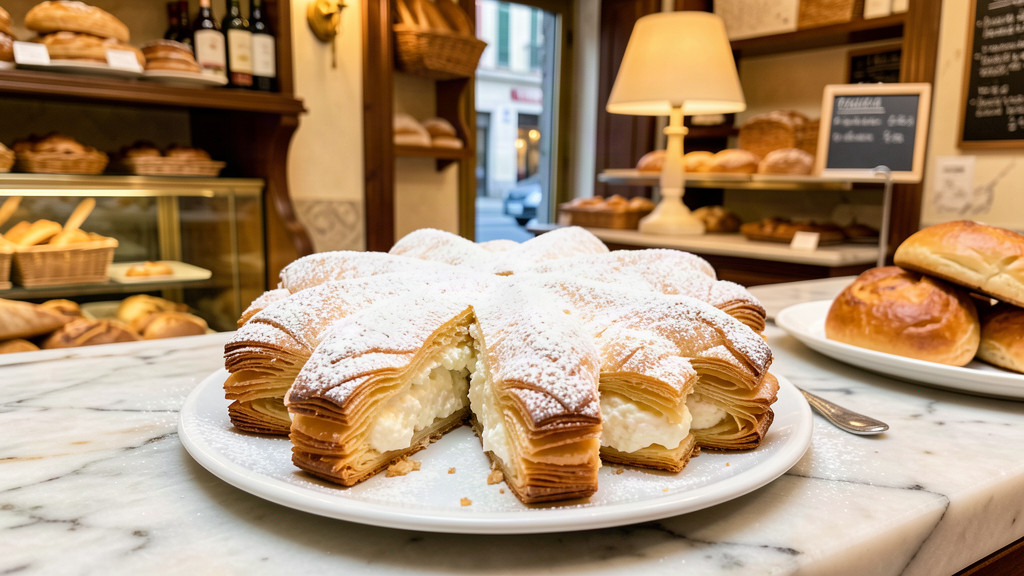
A few doors down, Pasticceria Poppella keeps its main shop at Via Arena alla Sanità 28/29, 80137 Napoli. This is Totò’s old quarter — Antonio de Curtis grew up nearby — and Poppella has been feeding the street since the early 1900s. The one to get is the fiocco di neve: a soft, sugar-dusted bun split and filled with cream that feels lighter than it looks. Eat it standing. Powdered sugar will stick to you for about ten minutes. Other counters sell cousins of this pastry; this one belongs on this street.
When I want a table and a slower hour, I walk a few minutes to La Locanda del Monacone at Via Sanità 32/A, 80136 Napoli. Traditional cooking, no stiff linen act — ragù when the kitchen is making it, fried starters that vanish too fast, house wine poured like you are meant to finish the bottle. Better for a real meal than a photo of a queue.
Bones, saints, and staircases
Sanità’s underground is not a side trip. It is how the neighborhood tells its story. The Catacombe di San Gennaro climb the Capodimonte side — wide corridors, faded frescoes, Naples’ patron layered into the tufa. Book ahead when you can. Cooperative guides talk about the living district as much as the dead, which is how it should go.
Farther west, the Cimitero delle Fontanelle at Via delle Fontanelle 80, 80136 Napoli is a different kind of quiet. An old tuff quarry stacked with anonymous skulls and long bones, it became a place where Neapolitans adopted the unknown dead, left coins and notes, and kept company with absence. Dim and cool even in July. Nobody needs a speech about mortality in that room. Go carefully. Leave when you have had enough.
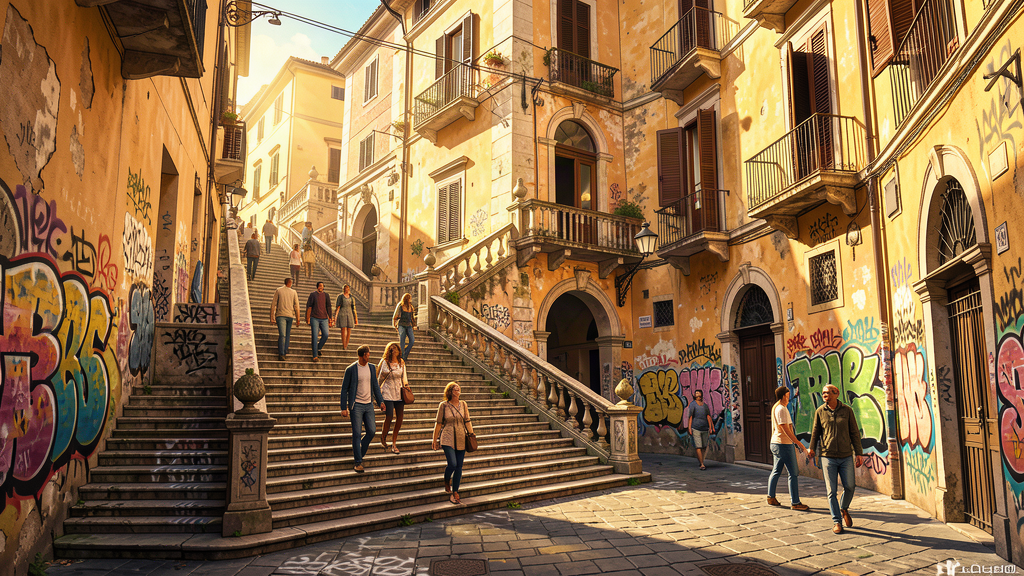
Back up top, Palazzo dello Spagnuolo on Via Vergini is the baroque answer: a double staircase curling up a courtyard like a stage set that never got a curtain. You can often walk in without much ticket fuss. Stand at the bottom and look up. People still live here. Spectacle next to laundry, grandeur next to scooters — that is Sanità in one glance.
Street art has taken other walls. Some of it is good. Some of it is just loud. I treat the murals like weather and keep walking: Via dei Vergini into Via Sanità, side alleys when a doorway looks interesting, back out when a courtyard feels private.
A day that stays in the valley
You can spend a full day without leaving the rione and still feel like you missed half of it. Morning sugar and coffee. Catacombs before the heat. Lunch or early pizza. Fontanelle in the cooler afternoon. A slow loop past the Spanish palace stairs and the smaller churches that never make the lists. Capodimonte’s park and museum sit above you if your legs hold — greener, more formal Naples by bus or climb.
I do not try to stitch Sanità to Pompeii and the waterfront in one tired day. The valley works better if you loiter. Let a counter chat run long. Let a wrong turn become the route.
Places to stay
Sanità itself has fewer classic hotels than the centro storico or the port, so I base nearby and walk or metro in. Three options at different prices:
Budget — Hostel of the Sun Via Guglielmo Melisurgo 15, 80133 Napoli Close to the port: clean bed, social lobby, easy hop toward ferries or the centro. Private rooms exist alongside dorms. It is not a hushed palace, but the staff know the city and taxis stay simple after a late dinner in Sanità.
Midrange — Hotel Piazza Bellini & Apartments Via Santa Maria di Costantinopoli 101, 80138 Napoli A converted building near Piazza Bellini and the museum corridor. Newer finishes on older bones; the roof and common rooms work as a pause after street noise. Museo metro and the walk toward Via Foria put Sanità in easy reach without leaving you stranded for historic-center evenings.
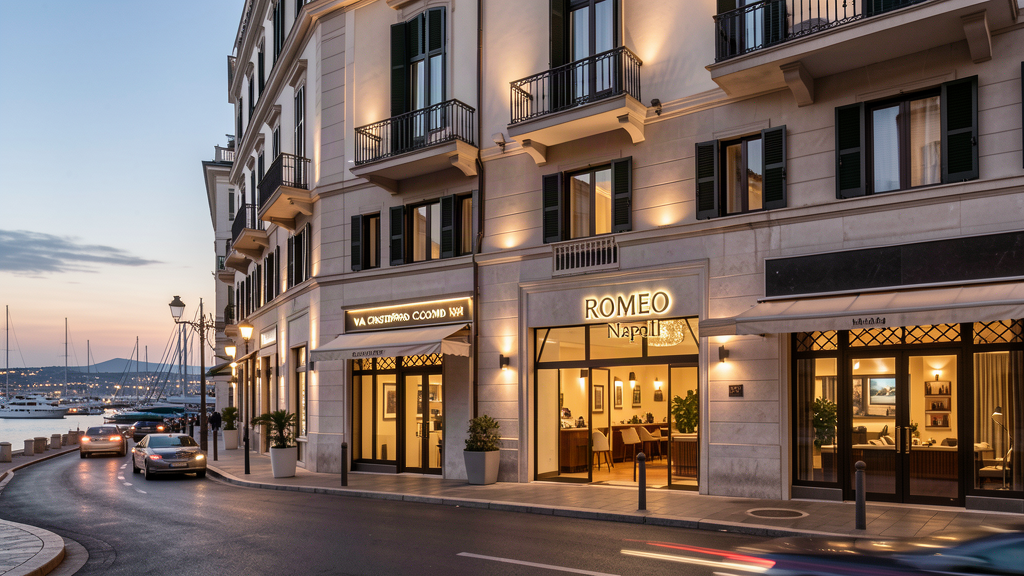
Splurge — ROMEO Napoli Via Cristoforo Colombo 45, 80133 Napoli Waterfront when you want a serious room, a spa, and a gulf view after the valley. More polished and vertical than Sanità’s courtyards, which is useful after a day in tuff dust. Shower off, then watch the bay change color.
Book early for spring and autumn weekends. Summer runs hotter. Winter empties some kitchens on Mondays and makes the underground feel almost private.
Restaurants and food (quick list)
- Da Concettina ai Tre Santi — Via Arena alla Sanità 7 bis, 80137 Napoli — neighborhood pizza with long family history
- Pasticceria Poppella — Via Arena alla Sanità 28/29, 80137 Napoli — fiocco di neve and standing-room sugar
- La Locanda del Monacone — Via Sanità 32/A, 80136 Napoli — sit-down traditional cooking in the rione
Getting around without losing the thread
Naples is better on foot than most people expect, and worse in traffic than anyone hopes. For Sanità, metro to Museo or Cavour, then walk. Buses climb toward Capodimonte when legs refuse. Taxis are fine late; use the meter or agree on a clear fare first. Scooter rental looks fun until a one-way alley meets a delivery truck.
Pickpocketing shows up where crowds thicken — more on Spaccanapoli than a Tuesday morning in the valley — so keep bags zipped. The old rough reputation is not a reason to skip Sanità. It is a reason for ordinary city sense and daytime-first timing if you are new here.
Cash still helps at smaller counters. Cards work in more places than they used to. A little Italian — un fiocco, per favore; il conto — goes further than a long phrasebook speech.
What stays with you
I leave Sanità with sugar on my clothes and a slightly redrawn map of Naples. The waterfront will still be there tomorrow. Pompeii is a train whenever you decide. Harder to put off is the feel of a district that feeds its own people first and lets visitors join the line. Stand under the bridge at dusk once. Listen to the mopeds and the television noise spilling from open windows. Then walk back toward Via Arena and check whether the bakery light is still on.
If it is, get another fiocco. The sugar comes out in the wash. The street sticks longer.
