
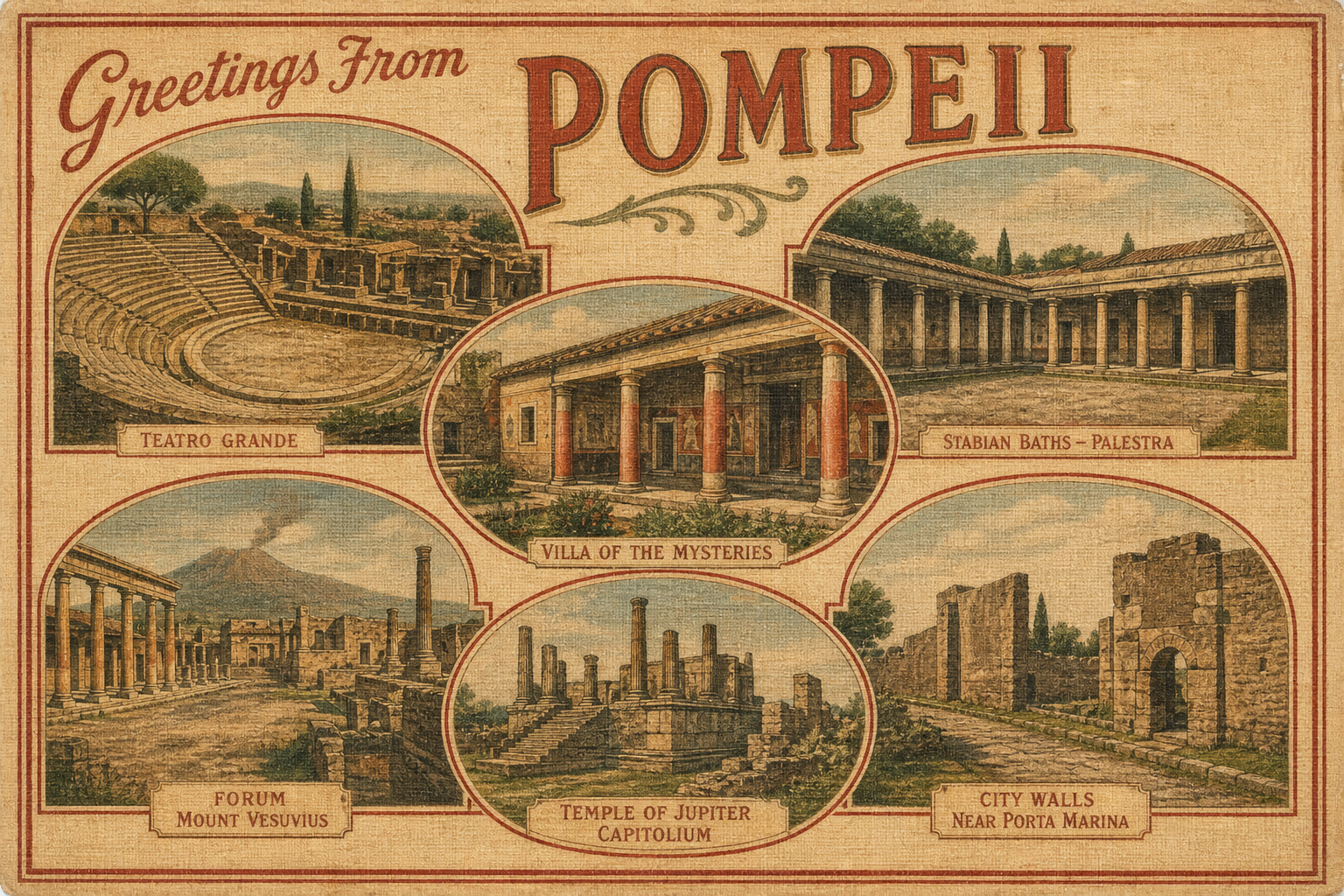
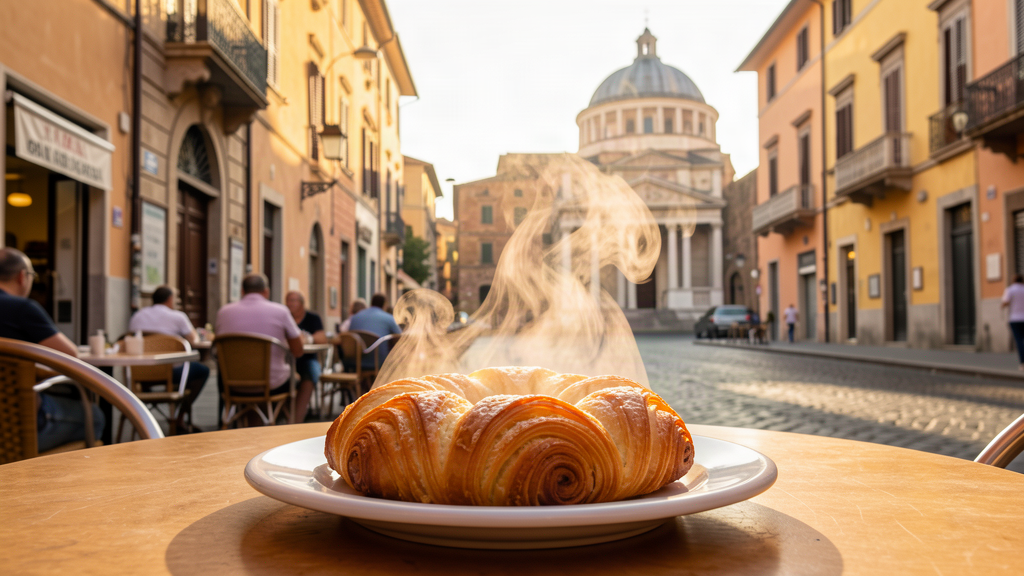
Most people treat Pompeii like a day-trip stop with a turnstile. Train in, headphones on, three hours of stone streets, train out. The excavations will mess with how you picture ordinary Roman life, and that is fair. But the modern town of Pompei (one fewer i on Italian signs) is not a parking lot with souvenir stands. It is a working strip of Campania that grew up beside the digs. Via Roma still does the basic Italian street job: move you from coffee to candles to dinner without announcing what any of it means.
I like arriving the afternoon before a ruins day. Let the site wait. Catch the town first — espresso cups stacking, scooter mirrors flashing, pilgrims with shopping bags angled toward a dome you can see from half the side streets.
The walk that stitches two Pompeii together
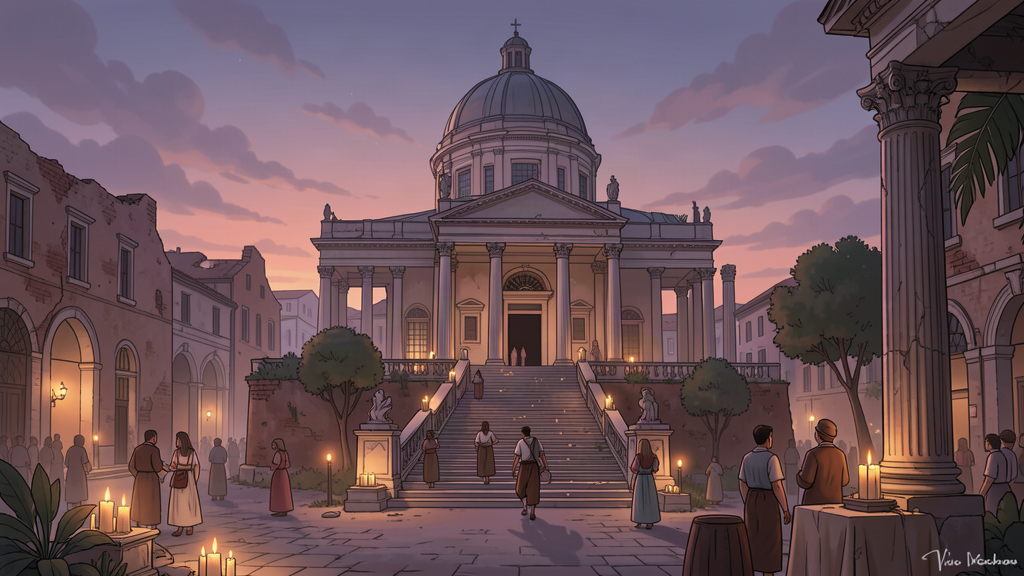
Start near the archaeological park’s busier edges and turn into town. Via Roma is not pretty in a postcard way. It is useful. Shops lean into the sidewalk. Hotel awnings drip after a short rain. Someone is always carrying a tray of something hot. In ten or fifteen unhurried minutes, the ticket-queue mood falls off, and you land at Piazza Bartolo Longo and the Sanctuary of the Blessed Virgin of the Rosary.
Modern Pompei is shaped the way it is because of that sanctuary. Bartolo Longo — lawyer, convert, relentless fundraiser — pushed a Marian shrine into being in the late nineteenth century on land that was still half-forgotten countryside next to famous ruins. The basilica is white and busy. Inside it gets oddly quiet in a personal way. People do not whisper for the camera. They light candles. They leave notes. They come back years later with the same ask.
If the campanile elevator is running, take it. From the top, ancient Pompeii spreads in pale blocks toward Vesuvius, modern roofs fill the middle ground, and the gulf sits out there as a strip of blue. You stop thinking of “Pompeii” as only the ash city. There is also this later town that learned to live next door to the digs without turning into a gift shop.
I like the square late in the day, when tour groups thin and the light softens on the façade. Kids chase each other near the fountains. A nun cuts across with purpose. Someone sells roasted nuts that smell better than they look. Sit for a bit. Watch who uses the piazza as a shortcut and who treats it as the point of the walk.
A morning that starts with pastry, not a ticket
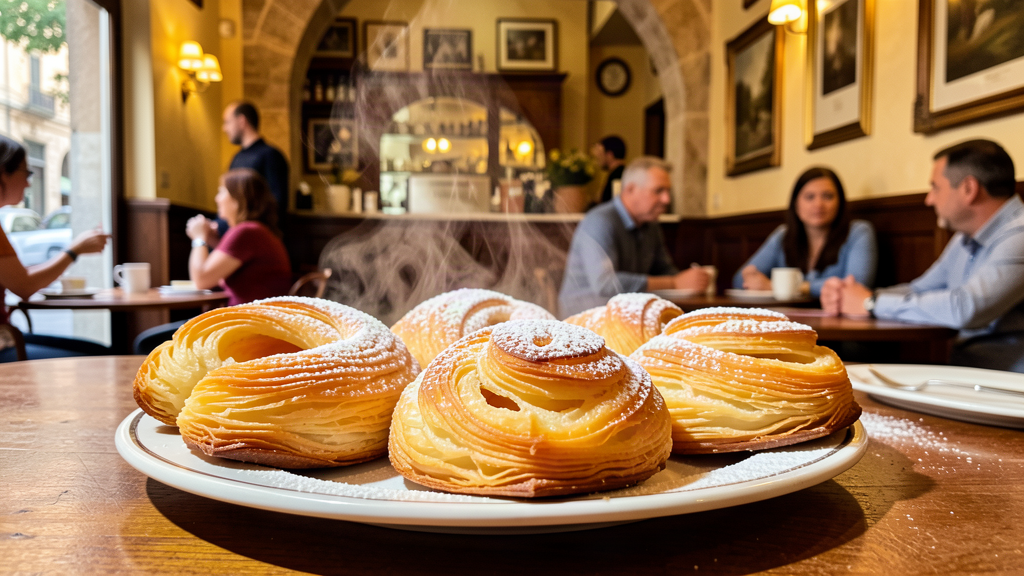
Before the Scavi gates thicken, walk Via Roma again and stop at Pasticceria De Vivo dal 1955, Via Roma 36, 80045 Pompei. It has the confident mess of a bakery that knows its regulars. Trays cycle. Powdered sugar finds every sleeve. You will hear Italian first, English second, and that order is a good sign.
Order a sfogliatella while it is still releasing steam — Campania’s clam-shell pastry, layers shattering into your napkin, ricotta warm and orange-scented if you timed it right. Or a simpler cornetto if you want less fuss. Stand at the counter if you can. Tables are fine, but the counter is where the morning actually happens: quick greetings, football mutters, someone already late for work.
You head into the park with sugar on your fingers. Bakers worked a few hundred meters from here under different gods, too, which I only think about after the second bite. Keep Via Roma as your reference line — sanctuary, hotels, pastry, evening stroll.
Inside the park without turning into a checklist
You will go into the excavations. Of course you will. Just do not let the audio guide bully you into a greatest-hits sprint.
I move slower near the edges of the famous routes. Side streets where cart ruts still cut the stone. A thermopolium counter with circular holes that once held jars of food. Courtyards where a scrap of painted red still hangs on against the weather. The amphitheater is worth the walk even when your feet complain; the scale resets you. So do quieter houses if a wing is open and the crowd has drifted toward forum photos.
I try not to narrate every room as tragedy. The place is full of ordinary ambition — shops, politics, bad jokes in graffiti, someone who cared about a garden layout. Ash preserved the furniture of daily life. Notice the daily part.
Bring water. Wear shoes you trust. Go early or late if your ticket allows. When the heat climbs and the stone starts throwing it back at you, leave. The modern town is right there. That is pacing, not quitting.
Evening Pompeii, when the day-trippers vanish
After four or five, the sidewalks change. Restaurant lights come on. You hear plates more than guide flags. Pompei stops feeling like a service corridor for antiquity and starts feeling like a small Campanian town that happens to own a very famous neighbor.
Walk past the sanctuary again with no plan. Duck a side street if a doorway smells like ragù. Notice how often Vesuvius sits behind completely normal errands — a pharmacy run, a haircut, a kid on a bike with no hands.
If you have a second morning, consider skipping the main park. Use it for sanctuary corners, a longer breakfast, or a coast hop only after Pompeii has been itself for a while.
Places to Stay
Stay in town. Commuting from Naples works, but you lose the early quiet and the evening reset that make the ruins land differently.
Hotel Diana Pompei (budget-friendly)
Vicolo Sant’Abbondio 12, 80045 Pompei NA
A practical base a short walk from the archaeological area, with a garden people actually use and rooms that favor sleep over design. Good when you want clean, straightforward lodging and money left for long lunches. Ask about parking if you have a car; the lanes nearby are tight.
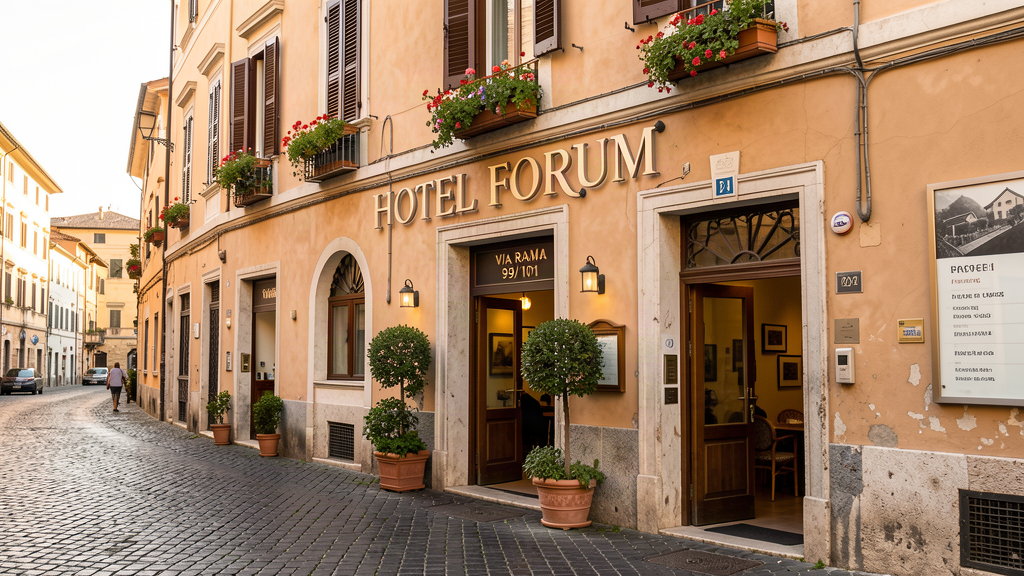
Hotel Forum (mid-range)
Via Roma 99/101, 80045 Pompei NA
Right on the town’s main street, close enough to the digs that you can walk back for a shower between heat and dinner. The location does the work: sanctuary one way, excavations the other, pastry in the middle. Rooms are comfortable without competing with the ruins.
Hotel Maiuri Pompei (splurge / full-service)
Viale Unità d’Italia 20, 80045 Pompei NA
A fuller hotel stay when you want space to decompress after stone and sun — polished service, easier evenings, less scramble. Still walkable enough that you stay inside Pompei’s orbit instead of treating the town as a transfer.
Book weekends and spring high season early. Pompei is small; the good simple rooms go first.
Where to Eat
Skip the menus translated into five languages with photos of every plate if you can help it. Look for places that still cook as if tomorrow’s regulars matter.
Pasticceria De Vivo dal 1955
Via Roma 36, 80045 Pompei NA
Breakfast and sweet stops, not a full dinner plan. Sfogliatelle, coffee, gelato when the afternoon leans hard. Local infrastructure more than a staged food experience.
La Bettola del Gusto
Via Sacra 48, 80045 Pompei NA
Campanian cooking with enough care to feel special and enough honesty to feel like supper. Pasta that tastes like someone salted the water properly. Grilled things that arrive without foam. Go when you are hungry from walking and want a table, not a concept.
Ristorante Il Principe
Via Colle San Bartolomeo 4, 80045 Pompei NA
For a more deliberate dinner — contemporary takes on regional flavors without abandoning the south. Useful when you have one nicer night and want the meal to be the evening. Reserve if your dates are busy.
If you catch Il Circolo Osteria on a good night (Via Roma 10, inside the Habita79 property), the garden seating makes a fine pause between sanctuary bells and sleep.
Getting here and getting around
Circumvesuviana trains link Naples and the Sorrento line to Pompei. Watch the spelling on boards, and confirm whether you want the stop nearest the excavations or the town center depending on your hotel. Key points are walkable with decent shoes. Taxis exist, but they are not a substitute for learning Via Roma on foot.
Vesuvius and Amalfi connections are easy from here, which is why people overstuff the day. Resist. Give the sanctuary an unhurried hour, the bakery a real breakfast, and the excavations a morning that ends before you hate marble.
I leave Pompei thinking the famous dead city is only half of what is here. The other half is still buying pastry, lighting candles, and walking home under a volcano that has not finished talking.
