
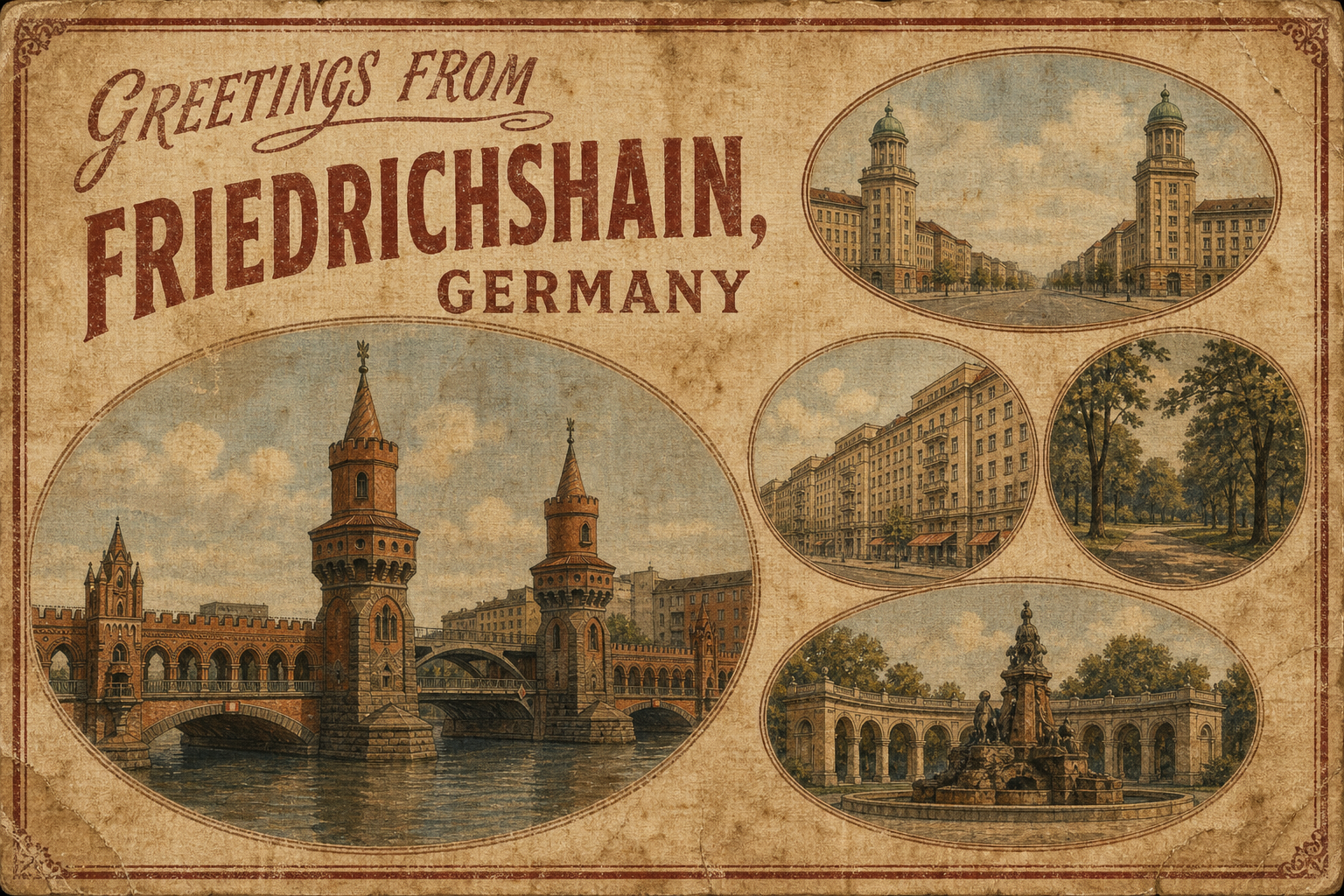
Warschauer Straße dumps half of Berlin’s weekend visitors at the East Side Gallery and the RAW gates. I walk the other way. Ten minutes north of the S-Bahn stairs, Boxhagener Platz — Boxi to anyone who lives here — still runs on a neighborhood clock. Saturday, the square fills with farmers and cheese. Sunday it turns into vinyl crates, paperbacks, and jackets that smell faintly of basement. Friedrichshain does clubs and wall murals fine. I come back for the square when the stalls are open, and the side streets haven’t started performing yet.
This was East Berlin workers’ housing, then squats and nightclubs after the Wall, then renovated balconies and higher rents. All of it shows if you look past the party strip on Simon-Dach-Straße. Stay a couple of nights and the borough stops feeling like a nightlife brand. People buy bread, argue about records, sit on the grass with a beer they brought themselves. Ordinary stuff, which is the point.
Boxi when the flea stalls go up
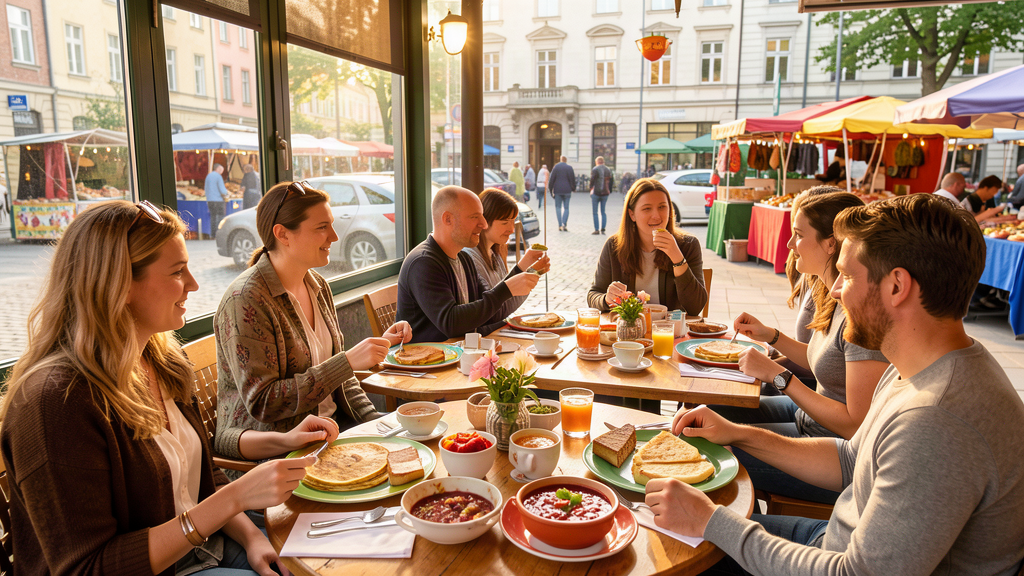
I time Boxhagener Platz for Sunday morning. By ten the tables ring the green — records sorted by decade, DDR kitchenware, paperbacks in three languages, jackets priced for haggling. Arrive before eleven if you want room to flip sleeves without elbows. By early afternoon the square thins into café chairs, strollers, dogs, and people who never left the night before. The playground stays busy either way. Kids run. Adults dig through other people’s basements.
Saturday is the food market, earlier and more practical. Brandenburg vegetables, bread still warm, cheese cut to order, honey, the odd prepared stall if you need something in your hand. Locals shop here the way they shop at any good Wochenmarkt — bags fill, conversations run long, and nobody is staging a food festival. I buy fruit I can eat while walking, and something wrapped that drips. On a Tuesday, the square is just grass, benches, apartment façades. The markets are what make people linger.
From Boxi, peel into Grünberger Straße, Gärtnerstraße, and Gabriel-Max-Straße instead of drifting straight to Simon-Dach. Those side streets hold the quieter cafés and the places people return to after the market bags are emptied. Simon-Dach works fine for a loud first beer if you insist. I treat it as a shortcut more than a destination.
Knorrpromenade and the brick edge of RAW
Southwest of the square, Knorrpromenade is a short surprise. Ornamental gates, front gardens, façades built before the First World War for a wealthier class dropped into a workers’ district. Named for Georg Knorr of the brake works, the street still feels like someone left a quieter century standing. Walk it once while the market noise is still in your ears. The contrast does more for me than another bar crawl.
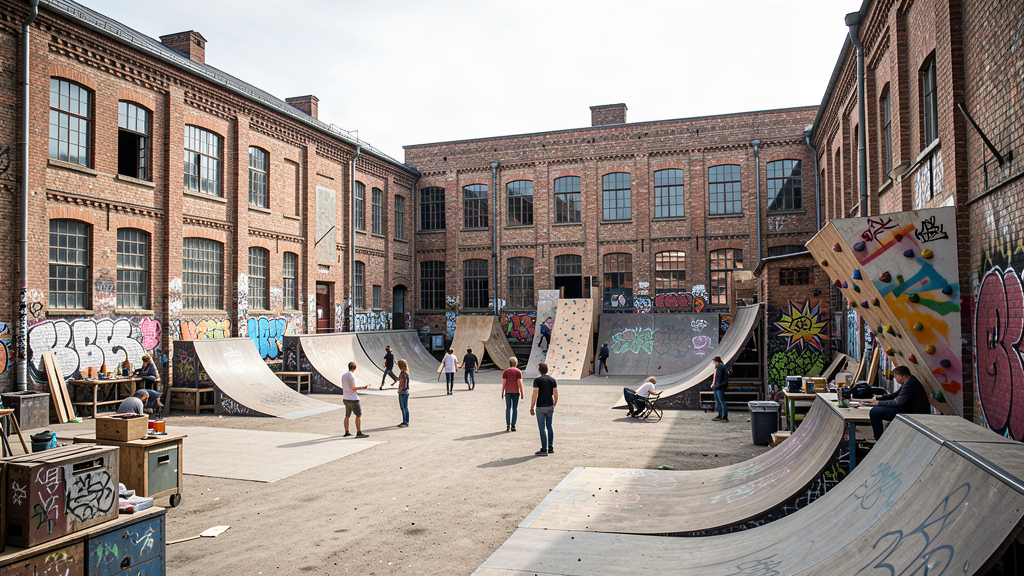
South toward the tracks, RAW-Gelände on Revaler Straße keeps the old Reichsbahn repair yards in rough brick. Clubs and bars own the nights. Daytime is workshops, climbing walls, skate bowls, street art, and whoever is using the open ground without a ticket. I go when the light is flat, and the queues have not started — late morning or a weekday afternoon. You can cross the yard, watch someone weld or paint, and leave without buying anything. The future of the site keeps getting planned and replanned. For now it is still half workshop, half nightlife machine. That unfinished mix is more interesting than a polished concept would be.
Between Boxi and the Spree, Warschauer Straße is the loud spine: S-Bahn, U-Bahn, buses, the bridge toward Kreuzberg. I treat it as transit. The better walking is one block off it.
Karl-Marx-Allee without the tour script
North of the Kiez, Karl-Marx-Allee stretches in wedding-cake socialist classicism — the old Stalinallee, twin towers at Frankfurter Tor, long façades meant to impress. Walk a stretch between Frankfurter Tor and Strausberger Platz when you want scale instead of alleyways. Ground-floor shops come and go. The buildings stay.
Café Sibylle at Karl-Marx-Allee 72 is the pause I actually keep. Coffee, cake, and a small exhibition on the boulevard’s postwar story after a long renovation pause. It is not pretending to be hidden. Sit with a cup, look at the photos, then step back onto the wide sidewalk and feel how broad the avenue still is. Pair it with a Boxi morning, and you get two different Berlins in one day without turning it into homework.
If you want green after the hard lines of the Allee, Volkspark Friedrichshain sits at the northwest edge — hills, the Märchenbrunnen, enough path to lose an hour. Useful second-day padding when the square and the RAW yards already filled the first.
Places to Stay
Hotel 26 — Grünberger Straße 26, 10245 Berlin. Small rooms a short walk from Boxhagener Platz. Cheap base if you want the Kiez under your feet and would rather spend on meals and market finds than on a lobby. Organic-leaning breakfast, café downstairs, easy reach of Frankfurter Tor and the U5.
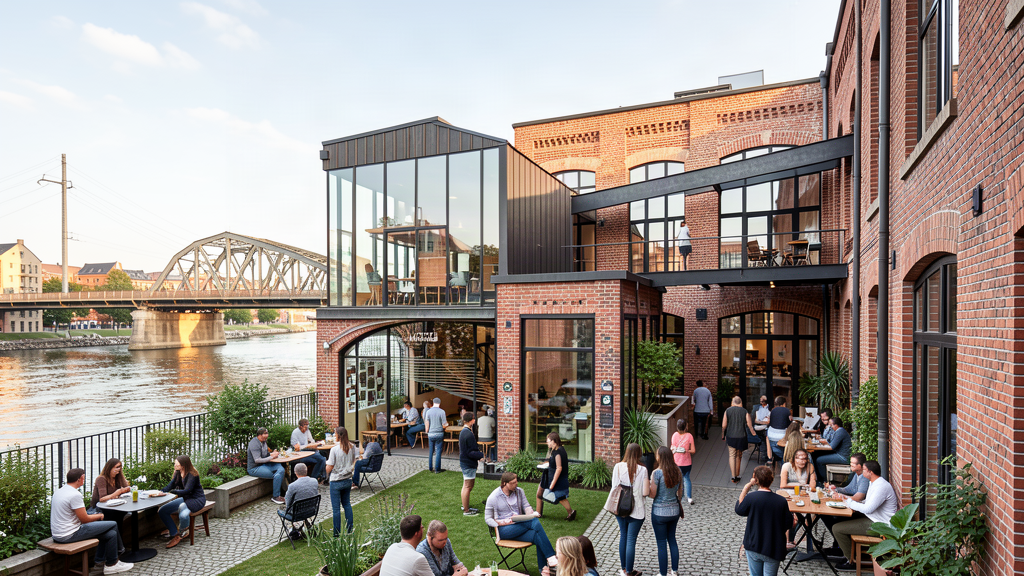
Michelberger Hotel — Warschauer Straße 39-40, 10243 Berlin. Creative mid-range hotel in a former industrial shell near the Spree and the Oberbaumbrücke. Rooms run from simple to loft-like; the restaurant and courtyard pull guests and locals both. Handy if you want RAW and the Boxi walk without changing neighborhoods.
sly Berlin — Petersburger Straße 16, 10249 Berlin. Design hotel toward Volkspark Friedrichshain with restored industrial bones, a greenhouse restaurant at the center, and a rooftop sauna if you need a quiet hour above the street. More money, still inside the borough instead of shipping you to Mitte.
Where to Eat
Niko Niko Ramen — Boxhagener Straße 26, 10245 Berlin. Small counter-and-table ramen shop a block off Boxi. Tonkotsu when you want something hot and focused after market walking. Expect a short wait on weekends; the room is tight and not built for lingering groups. Cheap-to-moderate, and the line still includes people who live nearby.
Café Datscha — Gabriel-Max-Straße 1, 10245 Berlin. Russian kitchen and weekend brunch energy right on the square’s edge. Blini, borscht, cakes, and a room that fills early when the weather is good. Book or arrive off-peak if you hate waiting. I use it after a Sunday flea pass when I want a real table and something that is not street food.
Macondo — Gärtnerstraße 14, 10245 Berlin. Colombian café a few steps from the Platz — empanadas, strong coffee, small plates, a reading-room feel that still gets loud. Good for a slower sit when the market is packing up. Come for the food; the neighborhood already has enough photo corners.
Bakeries and Imbiss spots fill the gaps. Simon-Dach will feed you late; the better ordinary meals tend to sit one street over. Some days I stop at a market stall and call it done. Other days I want ramen or a proper table. Both work.
Getting there, and how long to stay
S+U Warschauer Straße (S3, S5, S7, S9, U1, U3) is the main gate. Ostkreuz connects almost everything else. U5 stops at Frankfurter Tor, and Samariterstraße puts you closer to Karl-Marx-Allee and the northern edge of Boxi. From Hauptbahnhof, S5 or S7 to Warschauer Straße takes about fifteen minutes. An AB ticket covers the day. Bikes suit the grid; cars fight one-ways and scarce parking for no good reason.
One full day covers a Boxi market morning, Knorrpromenade, a RAW daylight pass, and Café Sibylle on the Allee before dusk. Two nights are better: one Sunday flea market or Saturday farmers’ market, one slower evening off Simon-Dach, plus time for Volkspark or a second coffee on Gärtnerstraße without rushing. Three days let you add a Kreuzberg walk over the Oberbaumbrücke, a rest morning, or another RAW visit when the clubs are asleep and the brick yards feel closer to what they used to be.
I usually leave after the last vinyl crate is half closed and someone is still arguing about a sleeve. Warschauer keeps moving. Boxi does not hurry.
