

The first thing I notice in Beelitz is a smell. Late spring brings wet soil and cut white asparagus from the fields that ring the town. Autumn brings pine resin and damp leaf litter from the Stadtwald that takes over Beelitz-Heilstätten a few kilometers west. Either way, you have already slipped Berlin’s pull, even if the RE7 only took about an hour.
I came for the sanatorium complex people still label a lost place, though parts of it have tickets and a lift now. What kept me was smaller: a women’s pavilion where trees grow out of the broken roof, and a market town that still acts like one between deliveries and courtyard sweeping.
The Alpenhaus from the treetops
Beelitz-Heilstätten spreads through mixed forest like a campus that never quite closed its gaps. The buildings went up around 1900 as lung sanatoria for Berlin workers — long stays, fresh air, Liegehallen, gardens planted before some wards finished. War hospitals followed, then decades as a Soviet military hospital, then emptiness, graffiti, and photographers treating ruin as sport.
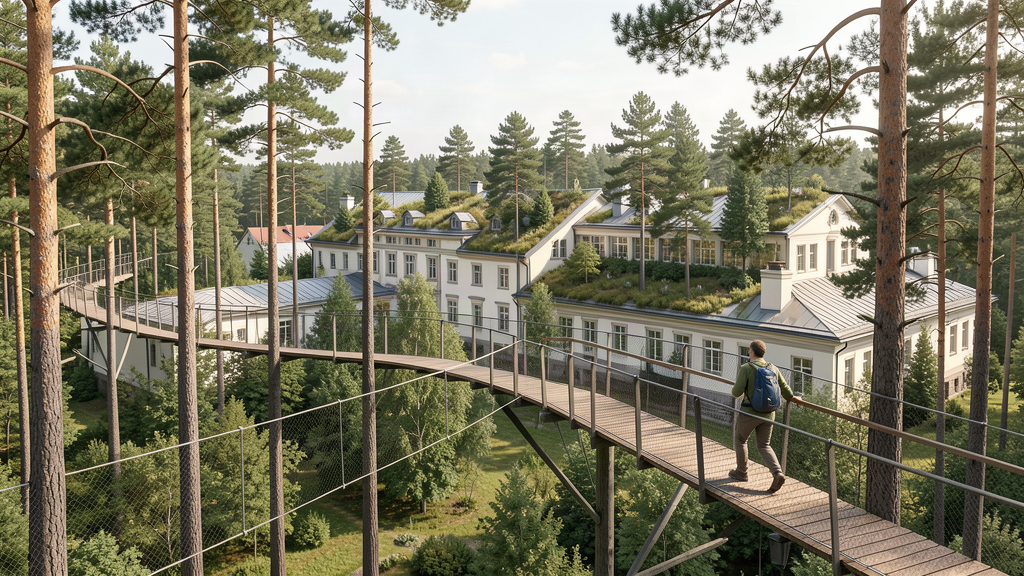
A portion of the grounds is open again under the Baum & Zeit project. You buy a ticket, walk parkland that still feels half-wild, and climb or take the lift onto a treetop path about twenty meters up. The angle changes. Brick and iron sit below; green has the upper hand.
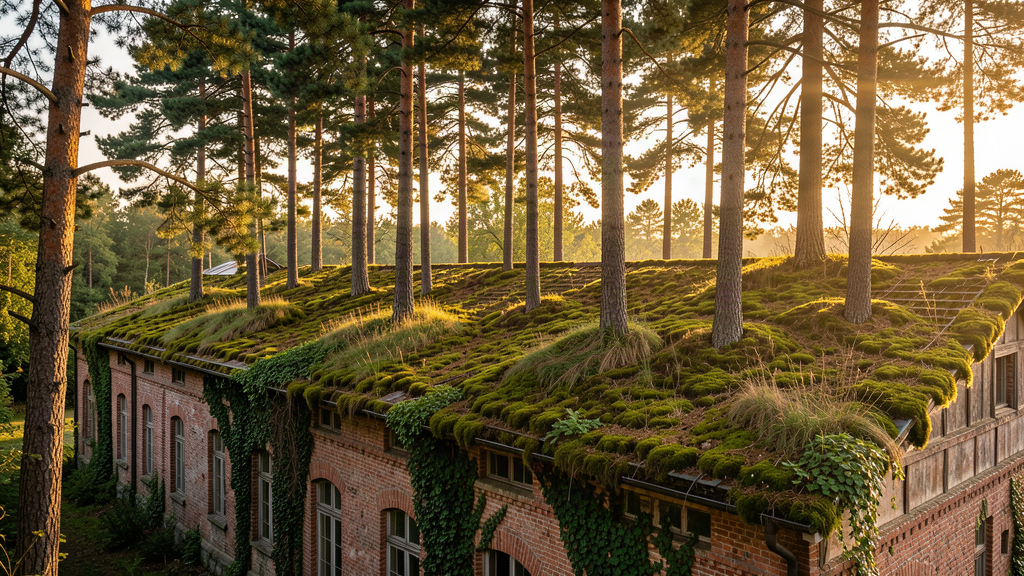
The path crosses above the Alpenhaus, the old women’s infectious-disease pavilion. On its roof, a small stand has been growing since wartime damage left the structure open to weather and seed. Pines and broadleaf saplings stand where patients once slept under a solid ceiling. Nobody staged that forest. Nobody patched the slate in time, and the seed took.
I stayed on the platform longer than I meant to. Gravel paths below pick up pieces of the old garden layout. Guided tours into surgery wings exist if you want interiors; I preferred the outdoor read first. After rain, the air smells like any Brandenburg pine stand. The architecture is ornate and a little severe — big windows, long corridors, public-health money spent with confidence.
Strasse nach Fichtenwalde 13 is the practical address. The RE7 stop Beelitz-Heilstätten drops you close enough that the walk is part of the visit, not a transfer. Go early. Midday brings school groups. Mornings leave gaps between footsteps on the boards.
Altstadt, Nieplitz, and asparagus
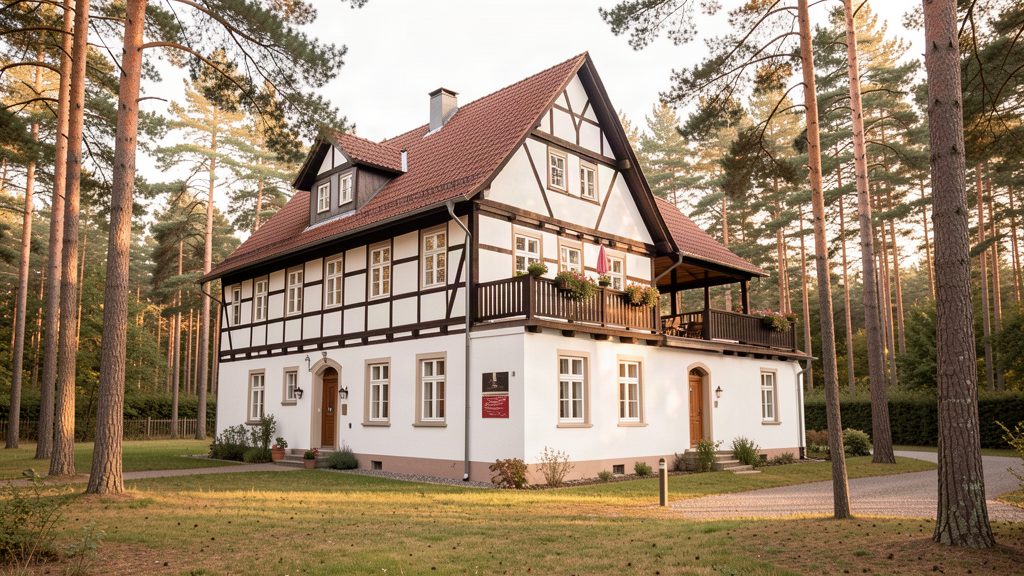
The historic center sits apart from the forest campus: compact brick and plaster, a medieval street plan, the slow pace of a Fläming market town. St. Marien und St. Nikolai anchors it; climb the tower when it is open. Renovated Bürgerhäuser face quiet lanes. Delivery vans still block corners. Someone is always sweeping a courtyard.
Between the old streets and the little Nieplitz, the Stadtpark softens the edges. Just off it sit the Alte Posthalterei and, behind the courtyard in a remount building, the Spargelmuseum at Mauerstraße 12. The museum is small, and that suits it. Carl Friedrich Wilhelm Herrmann started commercial asparagus here in 1861; neighbors copied him; by the end of the century Berlin knew Beelitz from the crates. Since 2013, the town has worn “Spargelstadt” on its signs without flinching.
I like museums that stay honest about work — harvest tools, sorting tables, seasonal labor that still owns April through June. Outside, the fields finish the point: white spears under dark foil, farm shops with handwritten prices, a slight jam when a Hofcafé fills on Saturday. If your asparagus usually arrives on a restaurant plate, Beelitz puts dirt and foil back in the picture.
A full day stretches without strain: morning on the Baumkronenpfad, midday in the Altstadt and museum, afternoon on a farm loop through Klaistow, Busendorf, or Schlunkendorf. Cyclists use local paths and the Fläming network; the Europaradweg R1 brushes the Heilstätten side.
Bare feet and ordinary hours
Beside the treetop ticket area, the Barfußpark runs through leaf litter, sand, cones, mud, and the occasional rough patch that makes you laugh and swear in the same breath. Useful after steel walkways. Shoes off. Twenty slow minutes of noticing the ground.
Beelitz is forest shade, a short train ride from the capital, and a town that still sells what it grows. In shoulder seasons, the Heilstätten park can feel almost private. Mist hangs between pavilions. The roof forest stops looking like a gimmick and starts looking like what happens when a building stays open to the sky. High spargel season puts spears on every menu; for quieter tables, try the edges of the season or kitchens that keep cooking after the white spears stop.
Places to Stay
lokal genial (budget-friendly rooms)
Hermann-Löns-Str. 4B, 14547 Beelitz
Restaurant-with-pension on the wooded edge of town. Three straightforward doubles, calm at night, useful if you want dinner downstairs and a short hop to both Altstadt and Heilstätten. Good when you are watching costs and still want a proper bed.
Hotel Stadt Beelitz (mid-range, in town)
Berliner Straße 195, 14547 Beelitz
Privately run in the historic core — the easy base if morning walks to the church square and Spargelmuseum matter more than sleeping in the sanatorium forest. Rooms are unfussy; location does most of the work. Eat on Mühlenstraße and still reach the Baumkronenpfad without a logistics puzzle.
Landhotel Gustav (historic stay at the Heilstätten)
Paracelsusring 2, 14547 Beelitz-Heilstätten
A sanatorium-era building, renovated rather than left to the vines. You sleep inside the woodland campus you came to walk: fewer car doors, more pine quiet, a slower breakfast. Higher on the price ladder, right for travelers who want the architecture underfoot all night.
Book weekends early in spargel season. Midweek outside May–June is gentler on rates and nerves.
Restaurants and food
Zur Alten Brauerei
Mühlenstraße 30, 14547 Beelitz
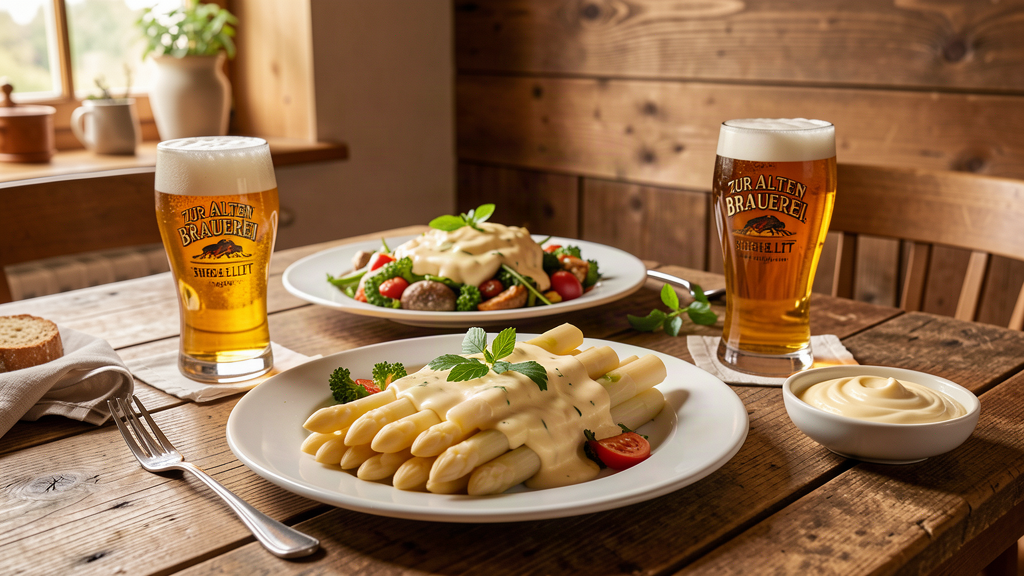
Long-running old-town house tied to Beelitz’s asparagus story and, in season, locked onto local spears. Brandenburg Gasthof feel — wood, chatter, no design concept, trying hard. Phone reservations are the habit; Saturday walk-ins often bounce. When spargel ends, the kitchen moves to other regional plates instead of freezing the menu in May.
Simianers Spargelstübchen
In den Steegwiesen 1, 14547 Beelitz OT Busendorf
Farm restaurant on a multi-generation spargel operation just outside the core town. Plates that taste like the same morning’s field — classic preparations, herb pancakes, white asparagus with something crisp and salty. The Hofladen is half the reason to stop; take a bundle home if a kitchen waits in Berlin.
Spargel- und Erlebnishof Klaistow
Glindower Straße 28, 14547 Beelitz OT Klaistow
Bigger and busier: Hofrestaurant, own produce (asparagus, berries, later pumpkin), bakery smells, outdoor sprawl that absorbs families without apology. Not a hideaway — a reliable regional table with better ingredients than the parking lot suggests. Order what just left their land, then walk the grounds.
For coffee and cake, wander near the church and Posthalterei until a café window looks lived-in. Beelitz is as good for a low-key café hour as for a planned crawl.
Getting there and around
From Berlin, RE7 toward Dessau stops at Beelitz-Heilstätten for the forest campus; services to Beelitz Stadt suit the Altstadt. Match the station to your first stop. By car, the A9 exit Beelitz-Heilstätten / Fichtenwalde is near the treetop-path parking. Cyclists can day-trip the lakes-and-fields run southwest of Potsdam.
Buses link some Ortsteile on thin schedules. Farm restaurants in Busendorf or Klaistow without a car need bikes, taxis, or patience. Walking the Altstadt and Heilstätten park is still the best part of the day.
A last look up
On my final pass under the Alpenhaus, a breeze moved the roof pines and dry debris ticked onto the old structure. That ordinary sound is what I took home more than any plaque date. Beelitz carries a heavy twentieth-century file and a vegetable season people still argue about in the best way. Between them sits a small town with a stream, a post yard, and enough forest to drop your shoulders a few inches.
Stay a night if you can. Day-trippers leave with the main views. Overnight, you get the empty path through the pines after the ticket booth goes quiet, and the white spears are only rows again, waiting for morning.
