
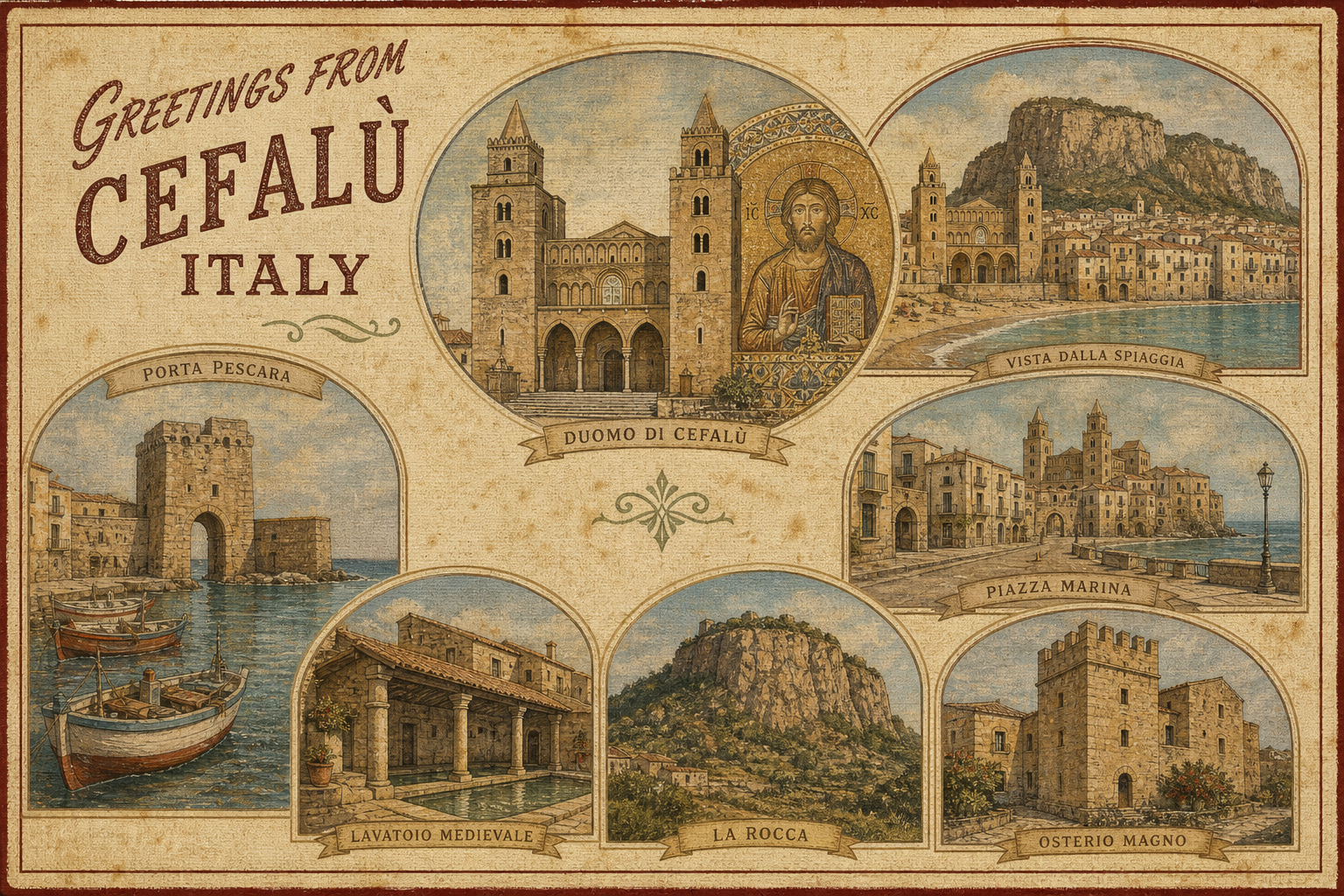
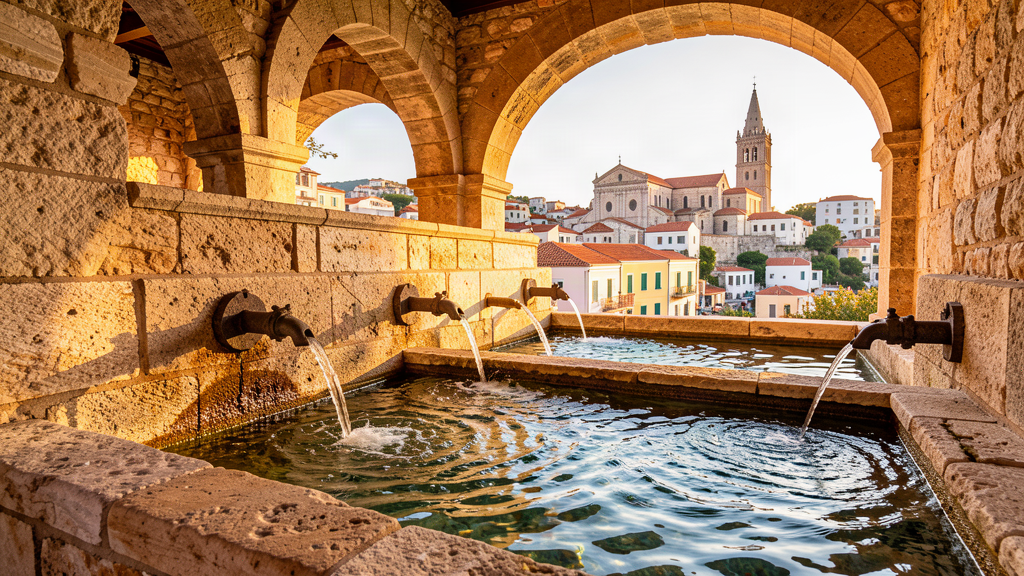
The beach gets the cameras. The Norman cathedral gets the tour groups. What holds me sits a few steps under Via Vittorio Emanuele, where the Cefalino still runs into stone troughs that once did laundry for the whole town. You go down a lava-stone stair, the air cools, and the water keeps moving whether anyone is watching.
Cefalù sits on Sicily’s north coast between Palermo and the long run east toward Messina. People treat it as a day trip from the capital or a beach base with a pretty skyline. Fair enough. I keep an extra morning for the wash house, for Corso Ruggero when the shutters are still half closed, and for a plate of fish that tastes more like the Tyrrhenian than a menu photograph.
Down the stairs to the laundry
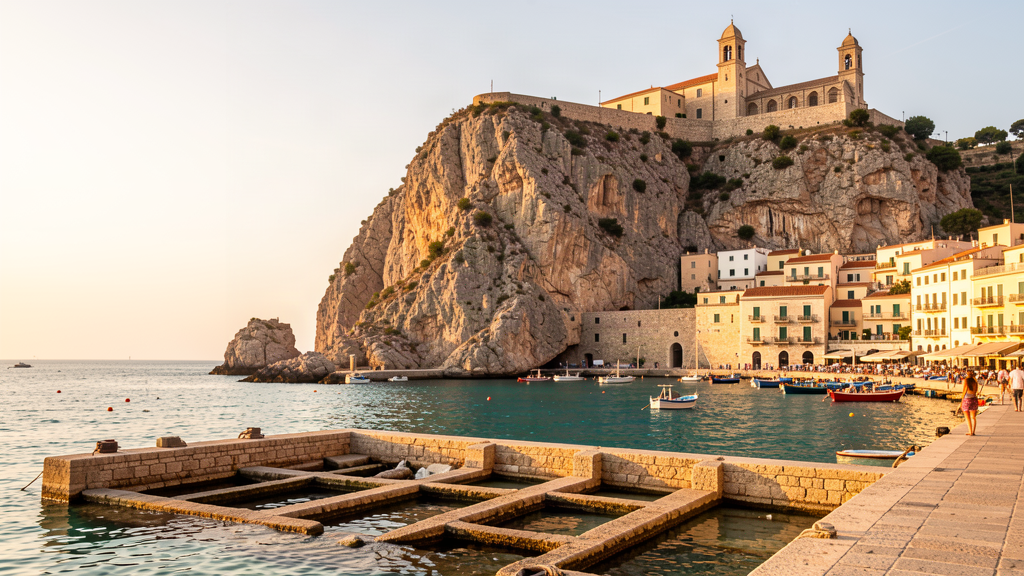
The Lavatoio Medievale hides in plain sight on Via Vittorio Emanuele, near Palazzo Martino, around number 57. You are walking above it before you notice the entrance. Then the steps drop and the sound of the stream replaces scooter noise.
Basins sit in a row. Cast-iron spouts feed them. The water is the Cefalino, covered and redirected over centuries so the street could rise while the laundry stayed low. Arabs worked the spring first. A 1514 rebuild shaped what you see now. Locals still know it as work infrastructure that became a quiet stop, not a stage set.
I go early or late. Midday in August the stone holds heat and the small space fills with people photographing each other. Morning light is better. So is a weekday when the beach is already busy and this room under the street is almost empty. Stand long enough that the troughs stop looking medieval-cute. They start looking like tools.
You do not need a ticket. You do need decent shoes for the stairs. Pair it with a slow walk along Via Vittorio Emanuele toward the sea walls and the old harbor end of town. The wash house is not a half-day attraction. It is a ten-minute correction to the idea that Cefalù is only sand and a façade.
The town under the rock
La Rocca hangs over everything. The climb is steep, the views are real, and in high season the path can feel like a queue with a summit. I still go. I treat the old streets as the main event, not the warmup.
Corso Ruggero is the spine under the cathedral’s twin towers. Side lanes drop toward the water or climb toward the rock. Laundry still hangs. Delivery vans still argue with pedestrians. The beach runs along the edge of the centro, so you can walk from a bar to wet sand without a bus. That convenience is why day-trippers pack the lungomare. It is also why staying overnight matters. After the last train of beach bags leaves, the corso becomes a town again.
Museo Mandralisca, Via Mandralisca 13, 90015 Cefalù PA, is small and odd in a good way: archaeology, coins, and Antonello da Messina’s Portrait of an Unknown Man watching you from a quiet room. I go when the beach is loudest. Twenty or thirty minutes is enough.
The cathedral itself is Norman muscle and gold mosaic. Go inside if the line is short. If it is not, walk the square, look up at the towers against the rock, and save your patience for dinner.
Fish, pasta, and tables near the water
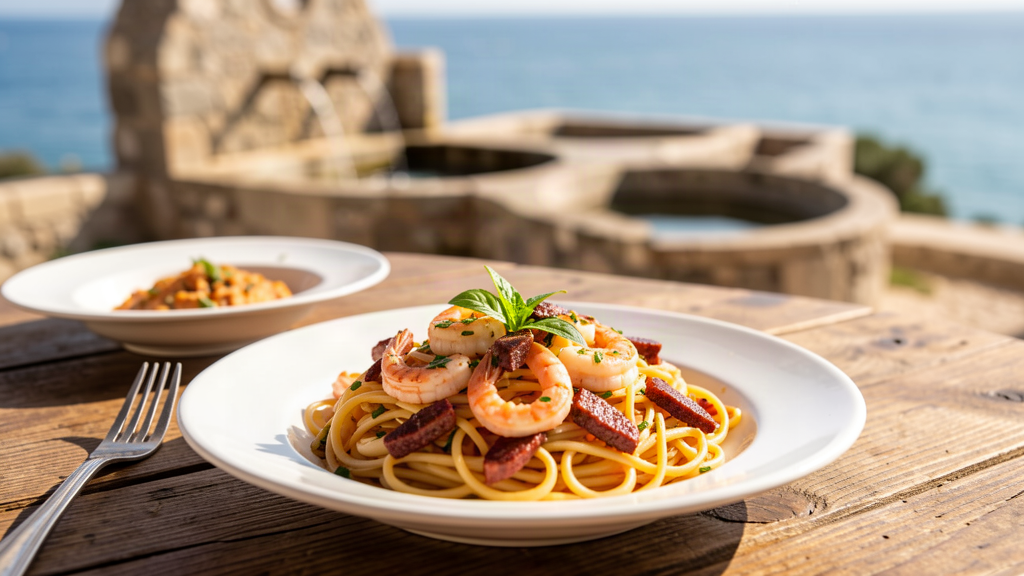
North-coast cooking here is seafood first, then pasta that can take the same catch. Swordfish, sardines, shrimp when the boats cooperate. Pasta con le sarde shows up when kitchens are honest. Granita and brioche still count as breakfast if you are not stuck in a hotel dining room.
Ostaria del Duomo, Via Seminario 5, 90015 Cefalù PA, sits at the foot of the cathedral in a room that has been feeding people since the late 1970s without dressing the square up. Sicilian plates, seafood when the market allows, tables that fill because of location and habit. Book in summer.
Lo Scoglio Ubriaco, Via Carlo Ortolani di Bordonaro 2, 90015 Cefalù PA, puts you closer to the sea edge with a terrace that works when the weather holds. Fish is the point. Pizza appears for mixed groups. I use it when the meal wants air and a view of water rather than cathedral stone. Reserve the outdoor seats; they go first.
Tinchitè Taverna & Putia, Via XXV Novembre 37/39, 90015 Cefalù PA, keeps a more everyday taverna feel a short walk from the main tourist scrape. Traditional Sicilian cooking, smaller room energy, useful when you want less lungomare performance. Check hours. Small places close hard outside peak season.
Between those, a coffee and a pastry on or near Corso Ruggero still counts. The fish stalls and small alimentari are worth a pass even if you are not cooking. Early, when the ice is still honest.
Places to stay
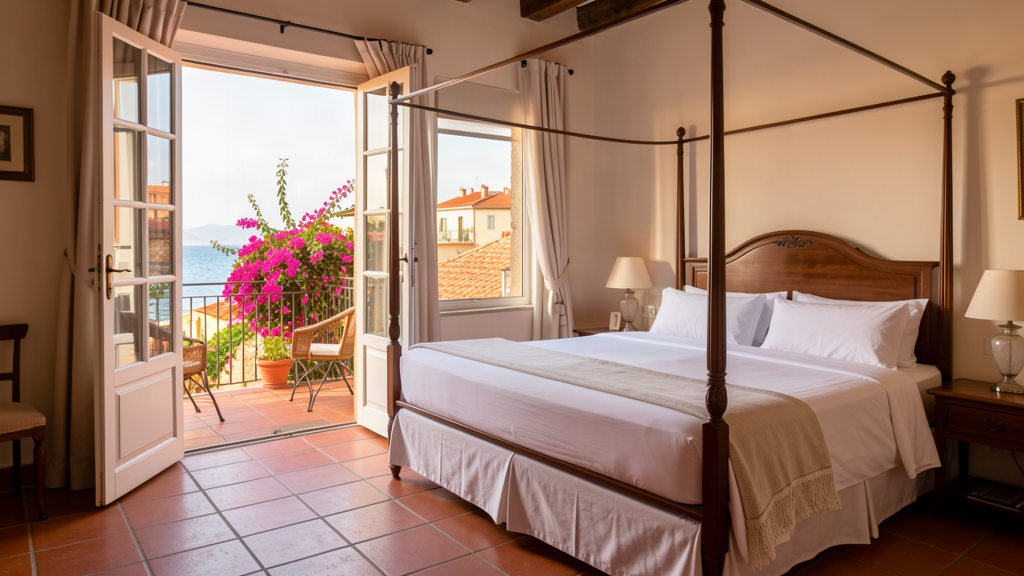
Sleep in the centro if you want to walk to the Lavatoio, the beach, and dinner without thinking about parking. Sleep east toward Caldura if you want a cove, a pool, and a short taxi into town. Day-tripping Palermo is easy from either. Dragging bags across the old grid every night is not.
Budget: Hotel La Giara, Via Veterani 40, 90015 Cefalù PA. Central, family-run for decades, a roof terrace that earns its keep at golden hour. Rooms are simple. Location is the amenity. You trade spa polish for being minutes from sand and the corso. Ask about street noise in August; the town lives late.
Midrange: Hotel Kalura, Via Cavallaro 13, 90015 Cefalù PA. East of the center on the Caldura side, sea access, gardens, a calmer base if the old town’s tight lanes wear you down after dark. Walk or taxi into the centro for the wash house and evening passeggiata. Worth it if beach time is half your trip.
Splurge: Le Calette, Via Vincenzo Cavallaro 12, 90015 Cefalù PA. Same eastern stretch, coves and full-service comfort, a longer stay feel without pretending you are far from town. Use it when the holiday is rest-first, and Cefalù’s streets are the outing, not the only address.
If you drive, pre-book parking before you arrive. The historic core was not designed for casual looping with a suitcase in the trunk. Trains put you near enough to walk or take a short taxi. That is often the cleaner arrival.
Getting here and moving around
Fly into Palermo (PMO). Buses and trains run east along the coast to Cefalù. The train is straightforward and drops you within walking distance of the old town if your bags are light. Driving the A20 is fine until you hit the last kilometer of centro streets. Rent a car only if you plan Madonie villages or longer coast hops. For a beach-and-town stay, you do not need one.
Inside Cefalù, walk. The centro is compact. La Rocca is feet and lungs. For Kalura and Le Calette, taxi or a short drive. Palermo is a day trip if you leave early and treat it as one neighborhood, not the whole capital. The Madonie sit inland when you want cooler air and less salt.
Spring and autumn are the kindest. Summer works if you shift the Rocca and open-sun walking to the edges of the day and keep midday for shade, water, and a long lunch. Winter thins the beach furniture and the corso crowds. The Lavatoio can feel almost private under a grey sky. Some restaurants close hard off-season. Call ahead.
A day that keeps the wash house in the middle
Morning: coffee near Corso Ruggero, then down the lava stairs to the Lavatoio before the tour language starts. Stay until the water noise is louder than the street. Walk Via Vittorio Emanuele toward the sea walls. If the light is soft, sit on the beach without committing the whole day to it.
Midday: shade. Mandralisca if the beach is packed. A simple plate or a rest behind closed shutters. Closed shops mean lunch hour, not a tourism failure.
Late afternoon: short Rocca climb if your knees agree, or a second pass of the corso when people reappear. Evening: Ostaria del Duomo or Lo Scoglio Ubriaco depending on whether you want cathedral stone or sea air. End with a walk past the wash-house street even if you do not go down again. You will hear the Cefalino if the town is quiet enough.
Cefalù will sell you the beach umbrella and the cathedral mosaic, and both deserve the time. What holds me is lower and wetter: stone basins still taking the river under Via Vittorio Emanuele, fish on a plate that did not need a slogan, a small town that still hangs laundry between Norman towers and Tyrrhenian sand. The water keeps moving in the troughs. The corso keeps the evening. Walk both. Then let the stairs decide when you are done.
