
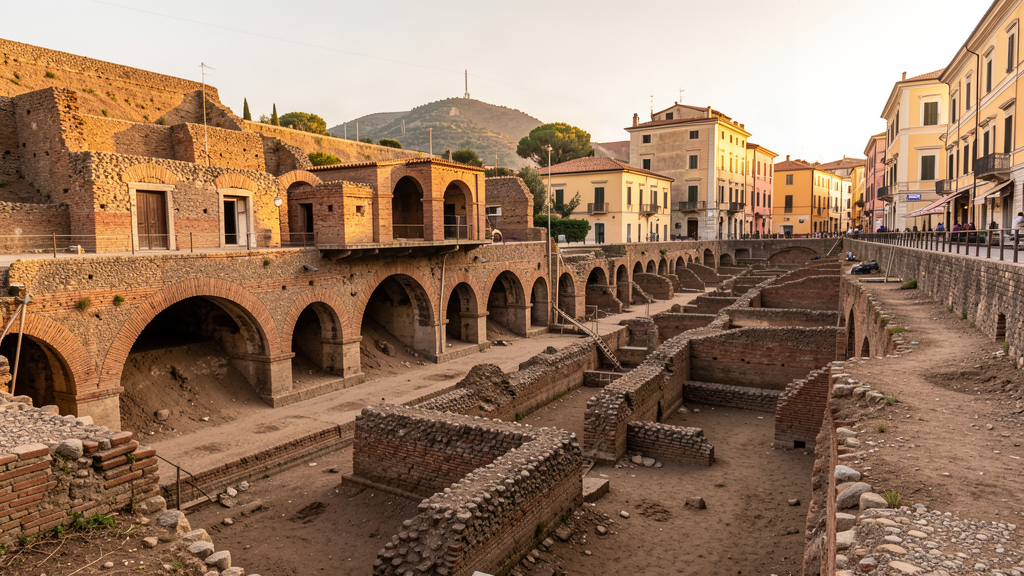
Most visitors treat Herculaneum like Pompeii’s quieter cousin — half a day, then the Circumvesuviana hauls them somewhere louder. I stay for the lower edge of the dig, where the ancient beach sits under hardened mud and a row of arched boat sheds holds what the polished streets above only hint at.
The modern town is Ercolano. The Roman town is Herculaneum. You walk both in one afternoon if you pay attention. Corso Resina runs along the top of the scavi like a lid. Down below, the fornici open toward a shoreline that no longer has water.
Down to the buried beach
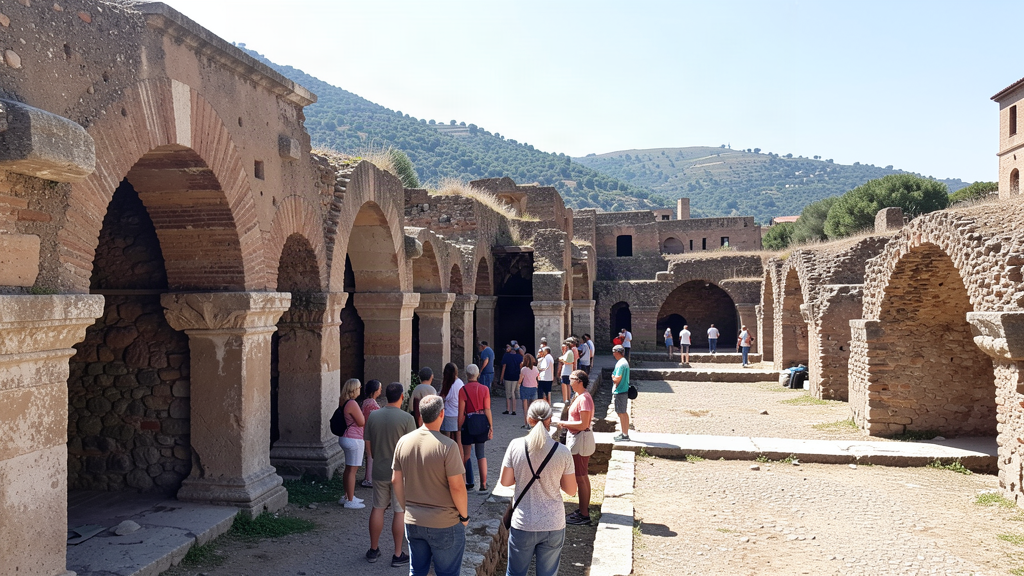
Enter from the main gate off Corso Resina and resist photographing every mosaic first. Work your way seaward. The site drops in levels; the light changes; chatter thins. At the bottom you meet the ancient shoreline — ground that was beach in 79 CE and is now a trench under modern Ercolano.
The fornici are the vaulted chambers built along that shore. Boat sheds, storage, shelter. In the final hours of the eruption, people crowded into them, waiting for rescue that did not come. Skeletons were found here in clusters — not an abstract tragedy so much as bodies that chose a roof over open air. Stand at the rail. Give it a minute. This is a hard place to rush through with a grin for the camera.
I don’t keep a guide headset talking over it. The arches look plain. What happened inside them does not. If a school group fills the platform, wait. The moment lands better when you can hear your own feet on the gravel.
Above the shore, multi-story houses still hold carbonized wood — beams, doors, even bed frames that Pompeii mostly lost. Herculaneum was buried in hot surge and mud that sealed organic material instead of burning everything the same way. That is why a visit here feels closer to rooms people used, not only floors they walked.
Houses that still read as houses
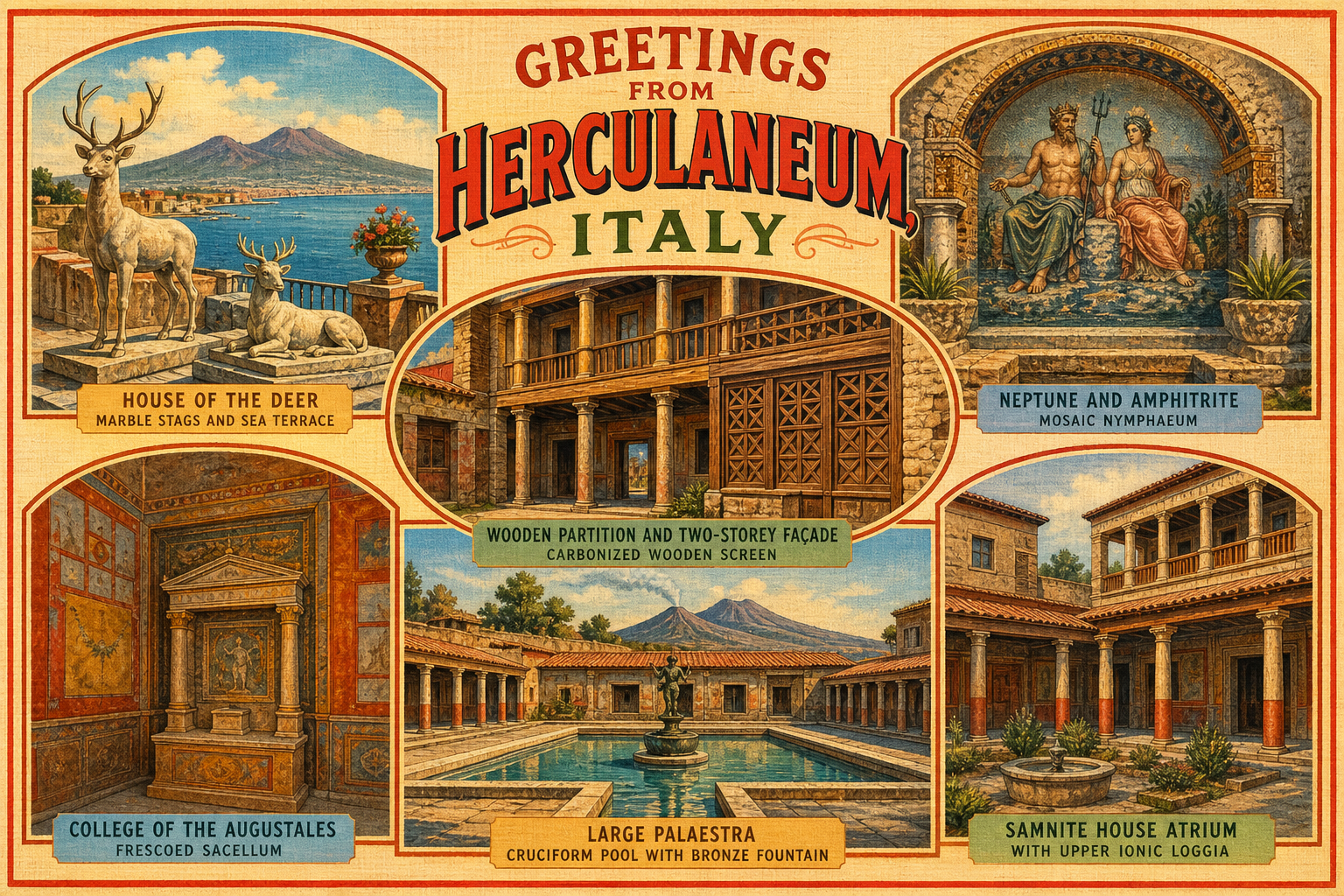
On the upper streets, pick a few buildings and slow down. The House of the Wooden Partition keeps a carbonized sliding door that still divides space the way a real apartment would. The House of the Deer opens toward what was sea view when the coast sat farther out. Fresco colors hold better than you expect after two thousand years of bad luck and careful conservation.
I like the suburban baths for the plumbing logic — niches, benches, the stubborn practicality of getting clean in a port town. Skip racing a checklist. Herculaneum is small enough that depth beats coverage. If you only have two hours, spend forty minutes on the shore level and the rest on two houses you actually finish looking at.
Much of the ancient city still sleeps under Ercolano’s apartment blocks and shop streets. You feel that when you look up from the dig and see laundry lines and satellite dishes on the rim. The scavi are not a sealed theme park at the edge of nowhere. They are a hole cut through a living town.
Corso Resina when the tickets end
After you climb out, Corso Resina is ordinary in a way I like: traffic, cafés, people buying things that have nothing to do with AD 79. Walk it without hunting monuments for a few blocks. The Miglio d’Oro — the Golden Mile of Bourbon-era villas toward Portici and Torre del Greco — starts to make sense as a coastal strip of ambition layered on older ground.
Villa Campolieto and its neighbors open on schedules that change; check before you build a day around gates. Even from the sidewalk, the facades show this coast has been fashionable more than once. I treat the villas as optional after the fornici, not a second main act you owe anyone.
If heat still has you, the MAV (Museo Archeologico Virtuale) near the site offers a cooler, more mediated version of the same story — reconstructions, screens, a different tempo. I use it when rain hits or when my feet are done with uneven ancient stone. It does not replace the dig. It is a useful second pass when the real site has already worn you down.
Eating when the scavi empty
Ercolano feeds excavators, school trips, and people who live here. I aim for rooms that do not need a ruins selfie to justify the bill.
La Terra d’Ercole Via Pignalver, 21, 80056 Ercolano NA, Italy
A short walk from the site, good for pizza and uncomplicated plates when you come up hungry and dusty. Family pace, not performance. I go when I want tomato, dough, and a table that turns over without ceremony.
Viva Lo Re Corso Resina, 261, 80056 Ercolano NA, Italy
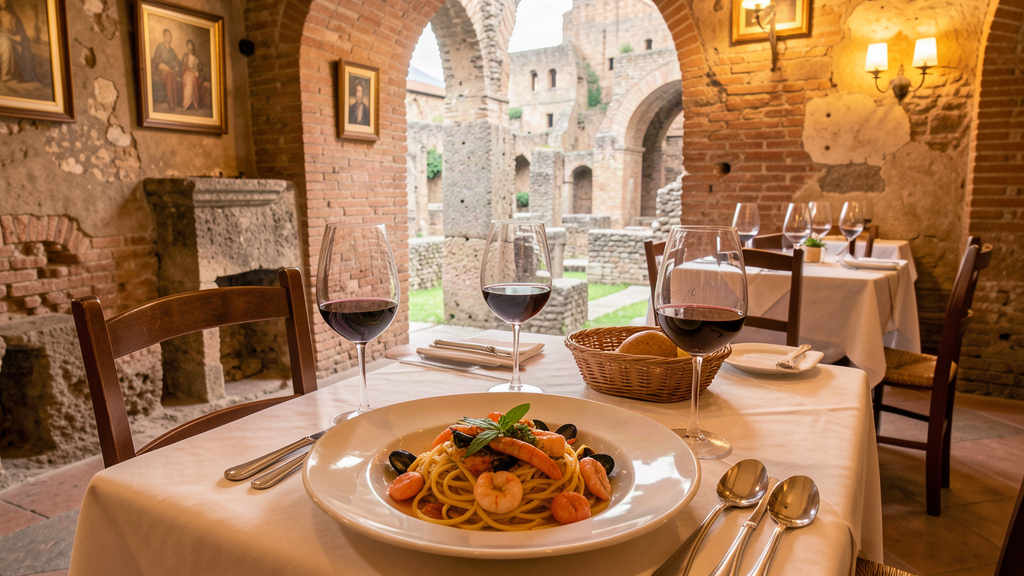
The address everyone who researches Ercolano dining eventually meets — and for once the reputation holds. Campanian cooking with more care than a tourist trap, wine that matches the food, a room that still feels like a local evening out. Book if you can. Order like you plan to stay put rather than bolt for the next train.
Le Scuderie di Villa Favorita Corso Resina, 330/332, 80056 Ercolano NA, Italy
Farther along the same spine, in the orbit of the old villa stables. Pizza, drinks, a night mood that works when you are sleeping in town and do not want every meal to be a history lesson. Useful second dinner. Fine for a slower plate after a Vesuvius morning.
Between meals, stand at a bar for espresso the way the street does. Fruit from a shop that faces ordinary traffic beats anything sold in a site cafeteria.
Places to stay
Sleeping in Ercolano changes the math. You walk to the gate early, before day-trippers pour off the train, and you eat dinner without calculating a late ride back to Naples.
B&B Enjoy Ercolano (value) Via IV Novembre, 71, 80056 Ercolano NA, Italy
Simple rooms a few minutes from the scavi entrance and a short walk from Ercolano Scavi station. You trade lobby theater for location and a fair rate. Confirm stairs and breakfast hours when you book. Soft bag, early start, done.
Hotel Herculaneum (mid-range) Corso Resina, 230, 80056 Ercolano NA, Italy
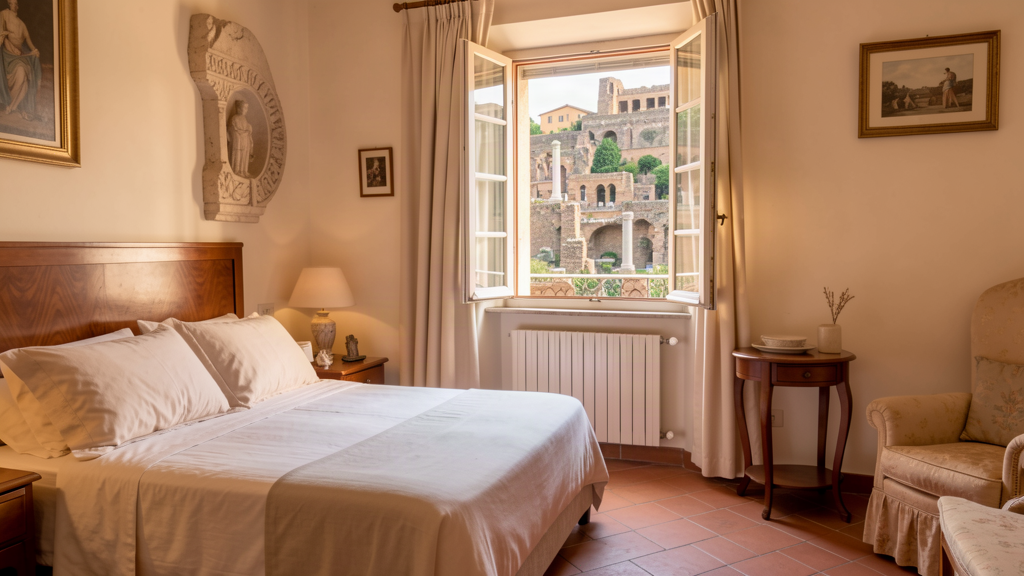
Right on the main run facing the archaeological zone — convenient without trying too hard. Rooms are practical; the win is walking out the door and into the site rhythm, then back again for a shower before dinner at Viva Lo Re. Good base if you also plan a Vesuvius day without dragging luggage across half of Campania.
Miglio d’Oro Park Hotel (splurge) Corso Resina, 296, 80056 Ercolano NA, Italy
An 18th-century villa turned hotel on the Golden Mile strip: gardens, larger rooms, a softer landing after hot stone. Come when you want the dig by day and some quiet at night. Even if you only spring for one night, the garden air is the point.
Getting here and moving around
Ercolano Scavi on the Circumvesuviana is the default approach from Naples or Sorrento. Trains are frequent, crowded in high season, and they look their age. Watch the station name; other Ercolano stops leave you with a longer walk. From the platform, it is roughly a ten-minute stroll downhill toward Corso Resina and the site entrance.
A car is optional trouble. Parking exists, but the streets around the dig were not designed for a rental car’s confidence. If you drive for a Vesuvius morning, consider leaving the vehicle and finishing Herculaneum on foot and train.
Inside the scavi, surfaces are uneven. Good shoes matter more than a clever hat. Shade is incomplete. Bring water; buy more on Corso Resina instead of toughing it out. Tickets and timed entries shift with season and conservation work — check the official Parco Archeologico di Ercolano channels the morning you go, not a screenshot from last year.
Vesuvius pairs naturally with a stay here. Shuttle and ticket combos run from town; the cone is a separate weather decision. On windy or closed days, keep Herculaneum and a long lunch as the whole plan. That still counts as a good day.
Late spring and early autumn suit the exposed dig. Midsummer works if you enter at opening and surrender the midday hours to shade, food, and a nap. Winter can feel almost private, with shorter light and a colder wind off the bay. Rain turns ancient floors slick; the fornici still hold their charge in gray weather, maybe more so.
I leave Ercolano with dust in my shoes and the arches still behind my eyes. Pompeii will always take the bigger crowds and the louder fame. What sticks for me is smaller: a modern street running over a buried beach, and those boat-house vaults where people waited while the mountain did what it did.
