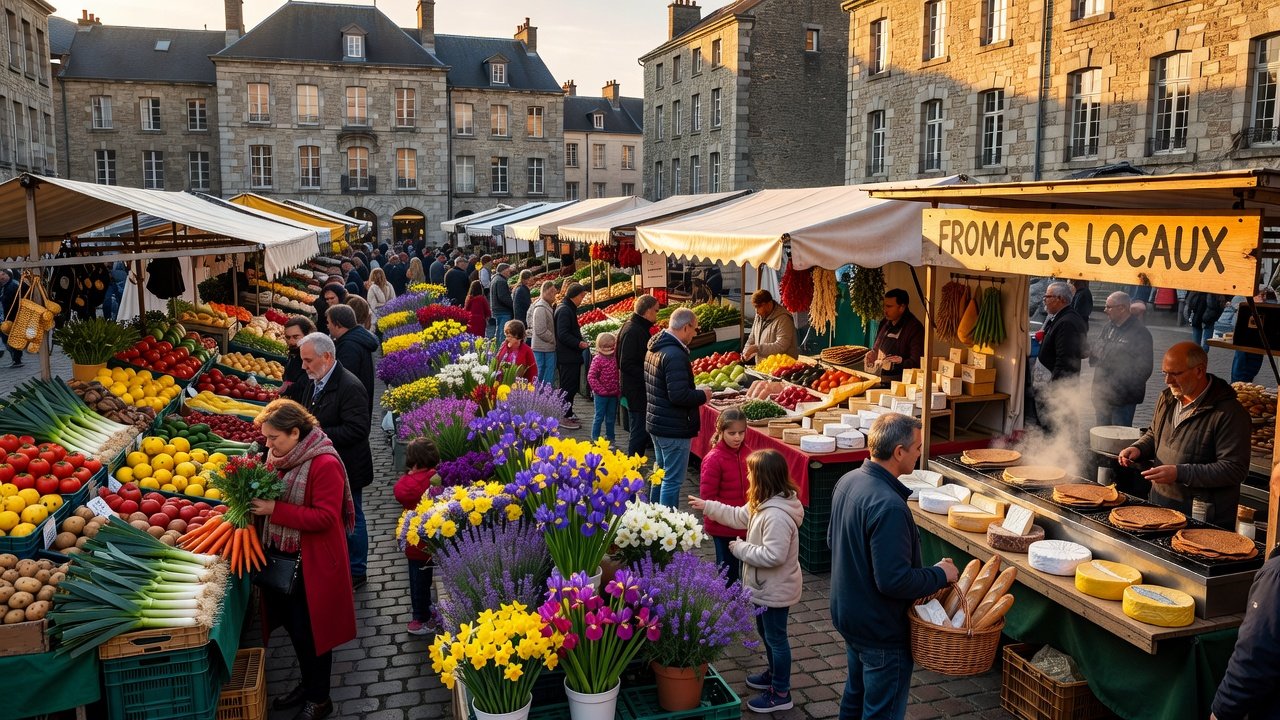
Saturdays at Marché des Lices in Rennes
The alarm on my phone never quite matches the real rhythm of a Saturday in Rennes. By the time I step out of my hotel near the old town, the sky is still that pale Breton gray, but Place des Lices is already humming. Stalls are unfolding under the plane trees, crates of oysters clattering onto ice, and the smell of fresh buckwheat batter drifts from the galette trucks. This market has run every Saturday since 1622. Four centuries later, it still feels like the living center of the city.
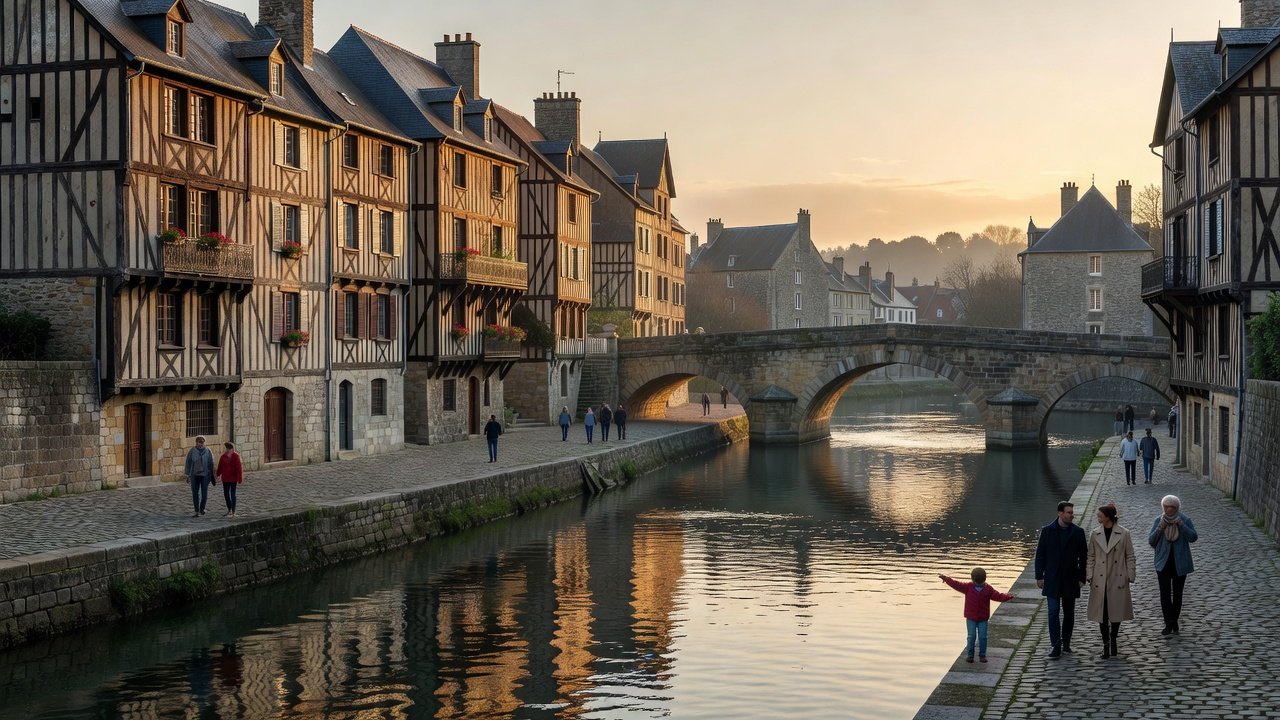
Rennes is the capital of Brittany, but it never pushes itself forward the way Paris or even Nantes do. The half-timbered houses lean at odd angles along the narrow lanes. The Vilaine river cuts a quiet path through the center, lined with towpaths where locals jog or push strollers. On market days the energy concentrates here, at the Place des Lices, where roughly 250 producers and artisans set up. Ten thousand people pass through before lunch. Most of them are Rennais buying for the week, not tourists posing for photos.
I arrive early, just after the first stalls open. A woman in a blue apron is already slicing saucisson and wrapping wedges of tomme de Gévezé. Next door a fishmonger arranges langoustines and palourdes on crushed ice. The two nineteenth-century market halls, the Halles Martenot, stand at one end like quiet sentinels. Inside them the permanent vendors sell cheese, bread, cider, and honey while the open square fills with the weekly overflow.
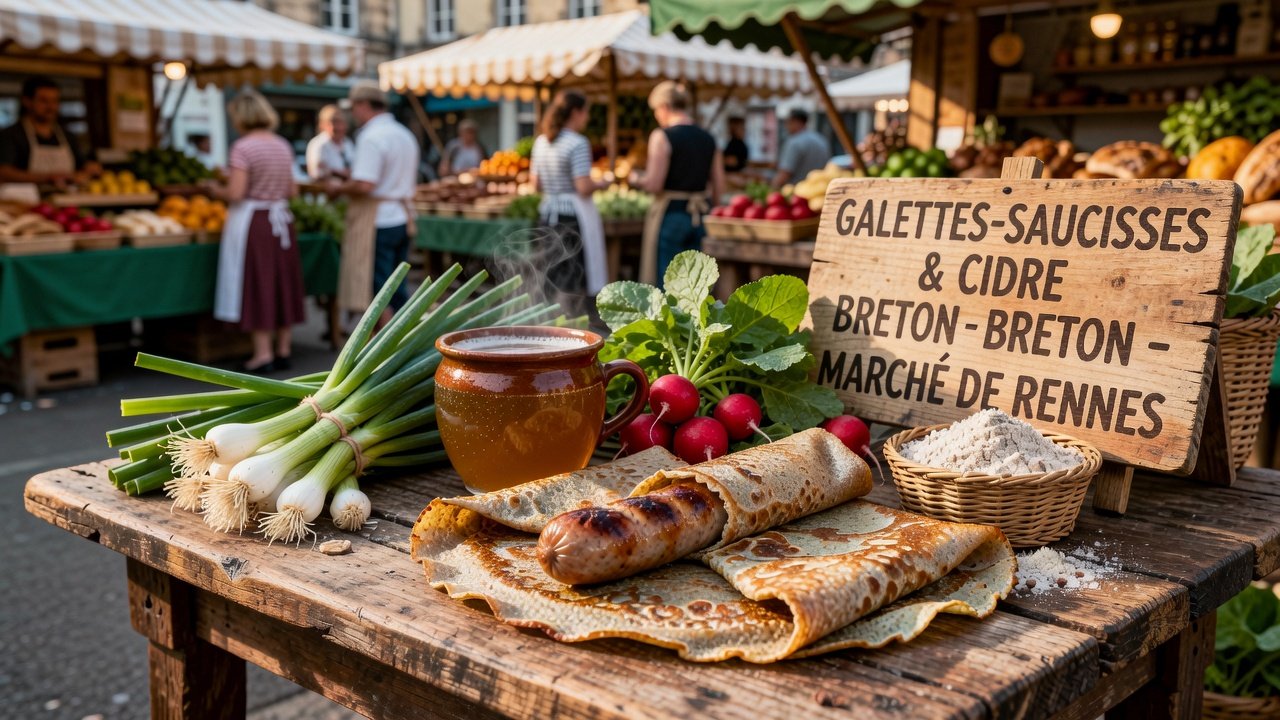
The first time I came I made the mistake of arriving at ten. The best oysters were already gone and the line for galette-saucisse stretched halfway around the square. Now I know to come before eight. The early crowd is mostly older locals who know exactly which stall has the sweetest strawberries or the freshest beurre salé. I watch an elderly man negotiate the price of artichokes with the same seriousness he might bring to a game of palet breton. When he finally pays he slips the vendor an extra coin and receives a wink in return.
By nine the square has filled with a different energy. Students from the nearby university queue at the coffee trucks. Families spread out blankets on the grass at the edge of the square for an impromptu picnic. Political groups hand out leaflets near the fountain while a small brass band plays traditional tunes that drift between the stalls. The galette-saucisse trucks do a steady trade. A crisp buckwheat pancake wrapped around a grilled sausage, sometimes with a fried egg or a smear of mustard, costs just a few euros and tastes better than any sit-down breakfast I have had in months.
I buy a wedge of salted butter and a round loaf of rye bread from a producer whose farm is only twenty kilometers away. The woman behind the table tells me she still milks by hand twice a day. She wraps the butter in parchment and tucks a small jar of sea salt into the bag without being asked. These small generosities happen constantly here. The market is not a performance for visitors. It is simply how the city feeds itself.
After the market I follow the narrow streets toward the cathedral. The old town survived the great fire of 1720 in patches, so the architecture jumps between centuries. Half-timbered houses painted in faded reds and ochres sit beside neoclassical facades. I stop at a tiny crêperie on Rue Saint-Georges that opens only on weekends. The owner, a man in his sixties with flour on his apron, makes galettes to order on a cast-iron plate. Mine arrives with egg, bacon, and local cheese melted at the edges. He brings it to the table himself and lingers just long enough to ask where I am from. When I tell him he nods and says the butter in Brittany is still better than anywhere else he has tasted. I do not argue.
The afternoon stretches long and slow. I walk the towpath along the Vilaine past houseboats and willow trees. A few kayakers paddle upstream. The water is dark and calm. On the opposite bank a line of cafés has set out tables under striped awnings. I order a cidre brut and watch the light change on the water. Rennes feels both ancient and unpretentious in these quiet stretches. There are no grand boulevards or famous monuments demanding attention. Instead there are neighborhoods where people have lived for generations and still know their neighbors by name.
For dinner I return to the old town and find a small restaurant tucked behind the market square. The menu changes with whatever the vendors had that morning. I eat grilled mackerel with new potatoes and a salad of shaved fennel and orange. The wine list is short and entirely Breton. The owner brings each course himself and refills my glass without asking. When I leave he hands me a small paper bag of madeleines still warm from the oven.
Rennes rewards the patient visitor. It is easy to spend a weekend here without ever feeling like you are following a checklist. The city reveals itself in the details: the way the market vendors remember your order after two visits, the sound of the cathedral bells mixing with the chatter of the square, the particular shade of green the Vilaine takes on after rain.
Places to Stay
Finding a room in Rennes that feels rooted in the city rather than aimed at conferences is straightforward if you look beyond the big chains near the station.
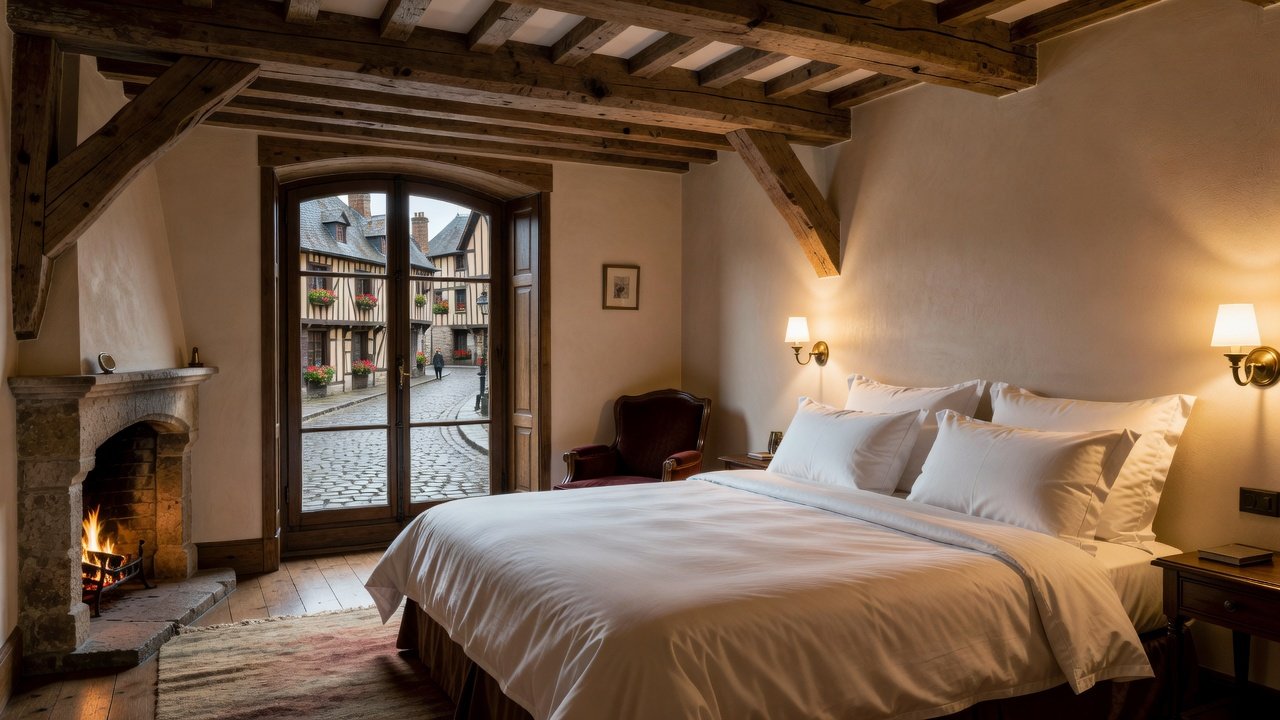
Le Magic Hall sits at 17 rue de la Quintaine in a quiet corner of the old town. The building was once a theater and still carries traces of its past in the high ceilings and wooden floors. Rooms are simple and comfortable with thoughtful touches like local art on the walls. It sits in the mid-range price bracket and books up quickly on market weekends.
Hôtel Le Sevigné at 47 avenue Janvier offers a solid budget option a short walk from the historic center. The rooms are clean and functional with good beds and strong showers. It lacks the charm of the smaller properties but the location is convenient and the staff knows the city well enough to give useful recommendations for markets and crêperies.
Balthazar Hotel and Spa M Gallery at 19 Rue Marechal Joffre provides the upscale choice. Housed in a restored historic building, the rooms feature elegant details and the small spa offers a welcome retreat after a long day of walking. It sits in the higher price range but the central location and thoughtful service make it worth the splurge for a special trip.
Where to Eat
Rennes is a city that eats well without making a fuss about it. The emphasis is always on fresh, local produce rather than elaborate presentation.
Crêperie Saint-Anne on Rue Saint-Anne serves some of the most reliable galettes in the old town. The buckwheat pancakes come loaded with regional ingredients and the sweet crêpes are generous without being cloying. It is a local favorite for both lunch and late-night snacks.
La Crêperie Rennaise at 10 rue Rallier du Baty keeps things traditional with a focus on quality ingredients. Their Rallier du Baty galette with local cheese and bacon is a standout. The small dining room fills quickly on weekends, so arrive early or be prepared to wait.
Bretone at 7 Rue Joseph Sauveur offers a slightly more modern take while still honoring Breton traditions. The menu includes both savory galettes and sweet crêpes alongside a small selection of other regional dishes. It is a good choice when you want something a little different without straying far from the classics.
Getting Around
Rennes is compact enough to explore on foot. The old town and market area are entirely walkable. For longer distances the metro and bus system are efficient and inexpensive. If you plan to stay longer, renting a bicycle is easy and the city has an excellent network of protected paths along the river.
The train station connects Rennes to Paris in under two hours and to other Breton towns with frequent service. Arriving by train and walking straight into the market on a Saturday morning is one of the most pleasant ways to begin any visit.
Rennes does not demand your attention. It simply offers you a seat at the table and lets the ordinary beauty of daily life do the rest. On market days especially, when the square fills with the sound of crates being stacked and neighbors greeting one another, it is hard to imagine a more honest introduction to Brittany.