
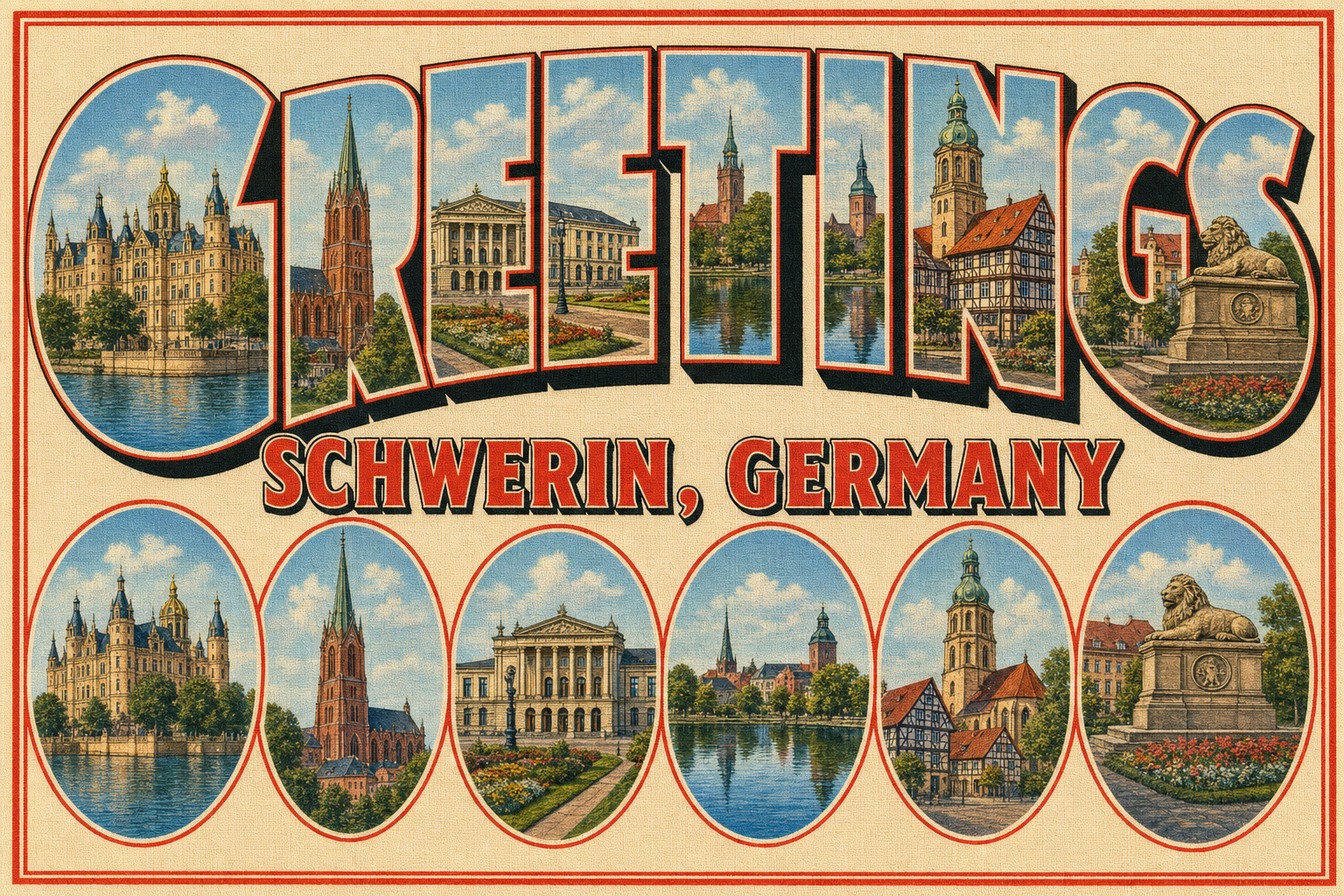
Most people arrive in Schwerin for the island Schloss and leave with the same photograph. Fair if the day is short. Wrong if you have soft shoes and one slow morning. This is a lake capital where water sits inside the street map, the Residenzensemble still runs as government and museum at once, and the better hour often starts after you step off Schlossinsel into Schelfstadt timber and Ziegelsee light.
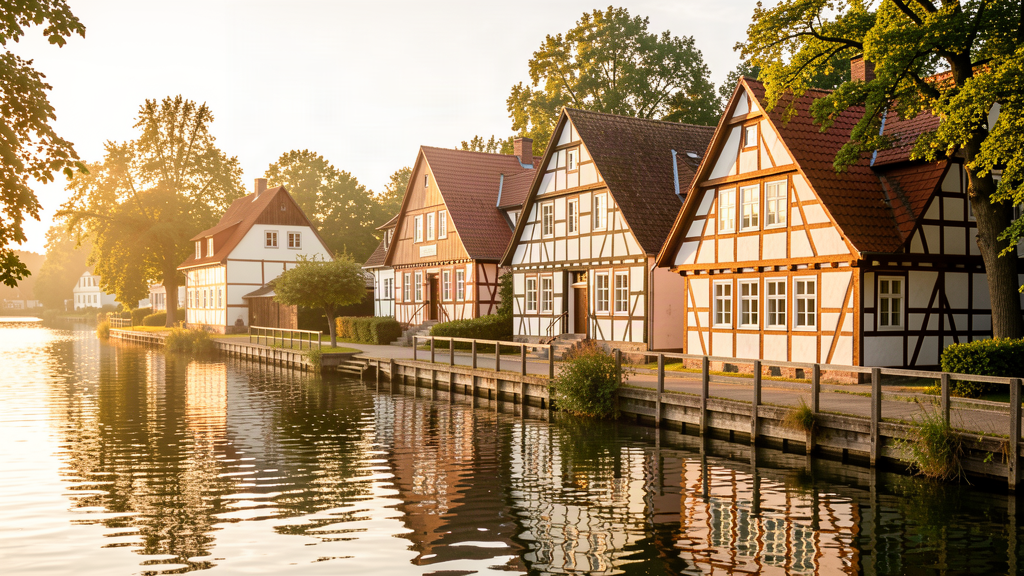
I start north of the postcard. Schelfstadt — the old artisan “shelf” town — keeps baroque street plans, colored fronts, and lanes that feel closer to a village than a capital. Ziegelsee is a short walk away, quieter than the big Schweriner See showpiece. That is the Schwerin detail I keep: not only turrets on water, but a neighborhood that still hangs laundry and opens doors between two smaller lakes.
Schelfstadt lanes, Schelfkirche, and the walk that is not the Schloss queue
Schelfstadt grew as a planned Neustadt, and you can still see the grid if you slow down. Streets open onto small squares. Timber and plaster fronts carry ordinary life more than souvenir logic. St. Nikolai, the Schelfkirche, anchors the quarter with baroque calm. Climb if you want height, or just stand outside and let the brick hold the light. You do not need a full cathedral morning to get your bearings.
I loop without a checklist. Apothekerstraße, side courts, a bakery window, then a path that tips toward water. Locals cut through here between errands. Tour groups thin out once the Schloss courtyard and Burggarten claim the cameras, and that thinning is the point. Schwerin’s state-capital polish is real, but Schelfstadt keeps a human scale: bikes against facades, café chairs aimed at neighbors more than the skyline.
Rain does not kill the quarter. Covered corners, a short museum stop later, coffee that does not need a lakeside table. Soft shoes matter more than a packed itinerary. One unhurried circuit beats racing every facade on a map app.
Burgsee, Schlossinsel, and the Residenzensemble without the crush
You will go to the castle. You should. Schweriner Schloss sits on Schlossinsel with turrets that earn the postcards, and since the Residenzensemble joined UNESCO’s list the palace, gardens, ministries, and water read as one designed civic landscape rather than a single ticketed attraction. Go early or late. Burgsee holds the cleanest reflection before courtyard noise builds. Walk the shore first and let the building arrive in pieces instead of as a selfie wall.
Inside, treat the museum rooms as craft and court life, not a race to the throne set. Outside, the Burggarten and longer Schlossgarten paths pull you into tree shade and water edges where the city eases up. Marstall and Arsenal add bulk and history; skip the full audio-guide hour if your feet already want the next lake.
I keep Schloss time honest: one strong exterior loop, a selective interior if lines are kind, then leave while the light is still good for Pfaffenteich or Ziegelsee. Chase every tower angle and the afternoon turns into souvenir fatigue. Better to live beside the ensemble than try to conquer it.
Pfaffenteich promenade, Dom brick, and Schweriner See breath
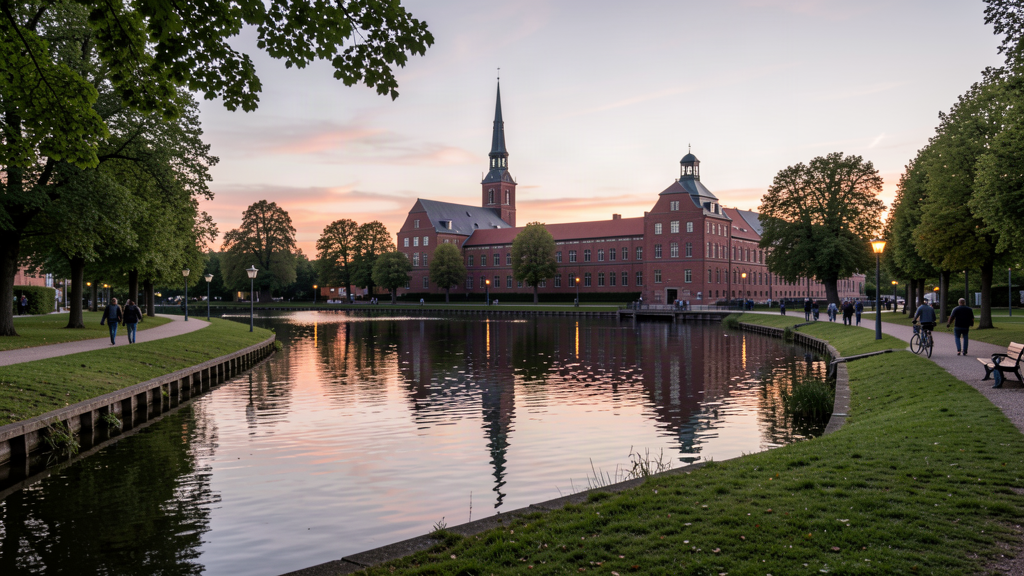
Pfaffenteich is the rectangular city pond framed by nineteenth-century frontage and a promenade locals actually use. Swans, benches, evening walks, coffee without a performance. The Arsenal façade and surrounding streets give you Schwerin’s civic face at walking pace. From here, the Altstadt market and the Dom are close enough that you never need a bus for the core.
Schweriner Dom is North German brick Gothic. On a clear day, the tower climb earns itself — lake mosaic, roofs, Schloss silhouette. Do it once if heights agree with you; skip it if queues or knees argue. The nave still works without the view. Markt and Rathaus fabric fill the gaps between water and brick: weekly market energy when stalls are up, merchant-house detail when they are not.
Schweriner See is the big water: one of Germany’s large northern lakes, boat traffic, longer shoreline paths, Zippendorf light if you want sand and a slower lake afternoon. A Weiße Flotte hop or a simple shore walk reframes the city. Capital, yes, but always half lake district. I prefer one deliberate water hour over stacking cruises. Ziegelsee and Burgsee already taught the map; the big lake is breath, not another checklist.
Getting here, moving slow, eating Mecklenburg-practical
Schwerin Hauptbahnhof sits a short walk from Pfaffenteich and the Schelfstadt edges. Hamburg is the easy rail anchor; Berlin is farther but workable. Regional links stitch Wismar and Ludwigslust if a second day opens for side-trips. Walking covers Schlossinsel, Schelfstadt, Dom, and the pond loop. Buses help for Zippendorf and outer shores. A car is optional in the core and only useful if you chase scattered manor houses or lake villages past where the buses make sense.
Food here is Mecklenburg-honest: fish when the kitchen respects the lakes, hearty plates, cakes that mean business, beer that does not need a backstory. Cash still helps at smaller spots. Summer Schlossfestspiele and Christmas market weeks change the noise more than pure season alone. Shoulder months keep Burgsee reflections calmer and Schelfstadt lanes easier to hear yourself in.
A clean arc: morning Schelfstadt and Schelfkirche light, coffee toward Pfaffenteich, Schloss and Burgsee while the courtyard is still kind, Dom tower or nave if brick calls, Ziegelsee or a short See breath before dinner. Sleep close enough that the artisan quarter is not a negotiation at 9 a.m. Two nights let Zippendorf and a Wismar side-trip breathe. Confirm museum and tower hours before you promise a full Residenzensemble morning on a rest day; the lakes stay open when ticket desks sleep.
Places to Stay
Hotel Nordlicht (value, Schelfstadt simple)
Apothekerstraße 2, 19055 Schwerin
Small family-run house on the Schelfstadt edge near Pfaffenteich’s north shore — central without castle-front prices. Modest rooms, honest breakfast, stairs instead of spa branding, walking minutes to the artisan lanes and a longer stroll to Schlossinsel. Book when the trip is about sleep and lake loops, not design magazines. Bags down, then timber streets before the courtyard fills.
Hotel Speicher am Ziegelsee (mid, warehouse on the brick lake)
Speicherstraße 11, 19055 Schwerin
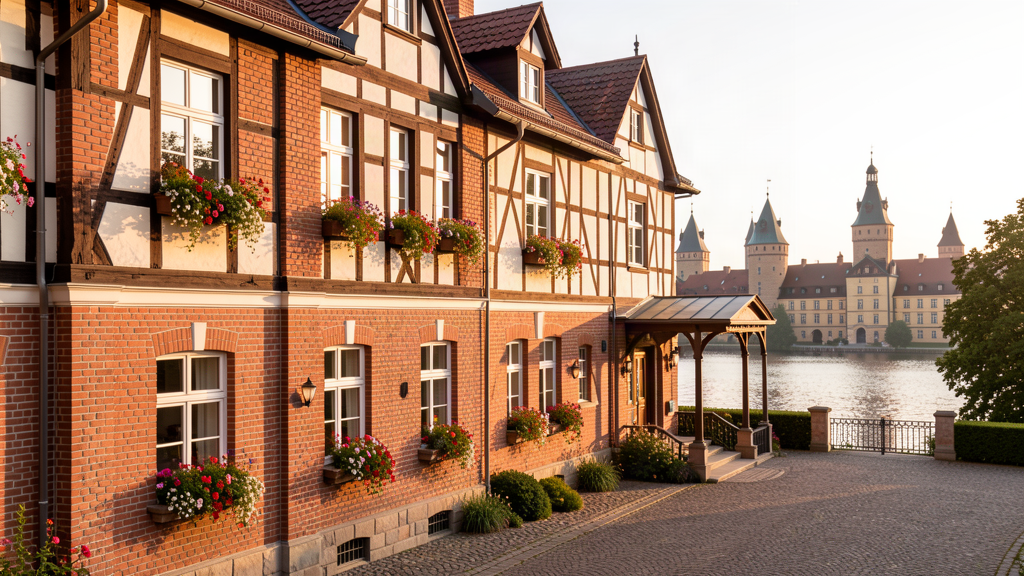
Converted grain warehouse on Ziegelsee with jetty energy, lake-facing calm, and a short walk into Schelfstadt. Practical rooms, sauna if legs need it, restaurant that leans regional. Good default when you want water at the door and the Schloss as a deliberate outing rather than a view you never leave. Morning light on the Speicher side beats another identical turret photo.
Weinhaus Uhle (upper, Altstadt wine house)
Schusterstraße 13–15, 19055 Schwerin
Historic wine house in the Residenzensemble fabric, a few minutes from the Schloss, with polished rooms, serious dining (1751 and the George bistro), and the kind of pillow that forgives a full Burggarten loop. Choose it when one refined Mecklenburg dinner and a next-morning Burgsee walk share the same key. The civic ensemble sits outside the door without the hotel feeling like a museum wing.
Confirm festival weeks and Christmas-market peaks early; Schwerin fills in polite waves. Shoulder seasons keep Schelfstadt kinder and Ziegelsee paths easier to claim alone.
Restaurants and food
Altstadtbrauhaus Zum Stadtkrug
Wismarsche Straße 126, 19053 Schwerin
House brewery in the old-town grain: beer made on site, hearty plates, rooms that fill with locals after work. Go for a full glass and food that does not apologize for portion size. Reserve on weekends; Monday and Sunday often rest — confirm before you walk over hungry. Pair with a Markt or Dom loop so dinner is the second half of a brick-and-water day.
Weinhaus Wöhler
Puschkinstraße 26, 19055 Schwerin
Historic Weinhaus with stained glass, a garden terrace when weather holds, and regional cooking that still feels like a Schwerin address rather than a hotel annex. Wine list for lingering; Monday rest is common. Come after Schelfstadt wandering when you want cloth napkins without losing the city’s pace. Garden tables in summer are the soft landing.
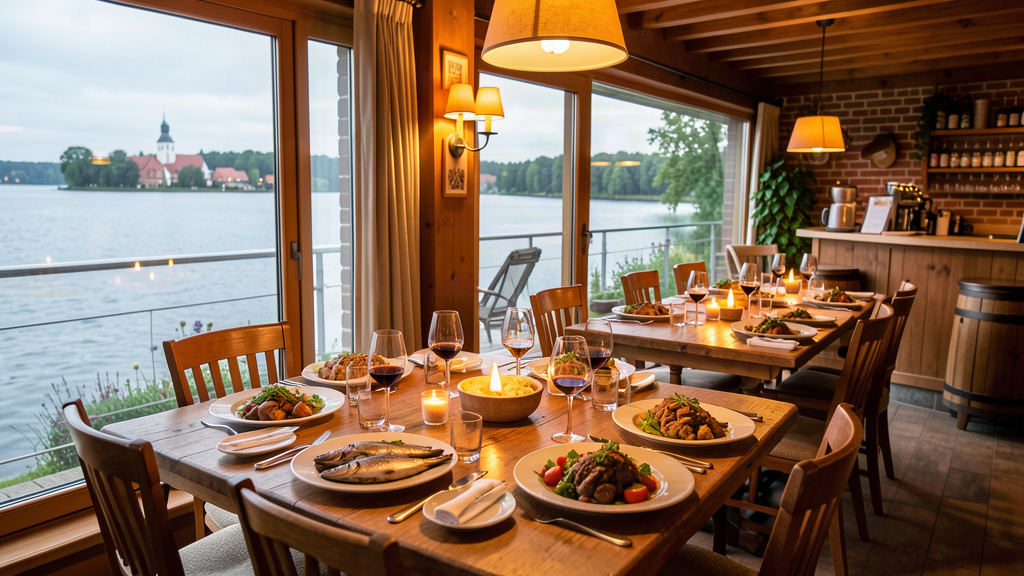
Restaurant aurum — Hotel Speicher am Ziegelsee
Speicherstraße 11, 19055 Schwerin
Lake-edge dining in the old Speicher with a regional kitchen and terrace light on Ziegelsee. Fish and Mecklenburg plates when the season agrees; quieter than the Schloss-front crush. Book a window or terrace when evenings run long. Walk the shore after so the meal stays tied to the water that defines the city.
One Schelfstadt morning, one Burgsee reflection, one Pfaffenteich hour, and a Ziegelsee table already make a full Schwerin. You do not need the longer castle-stop receipt.
