
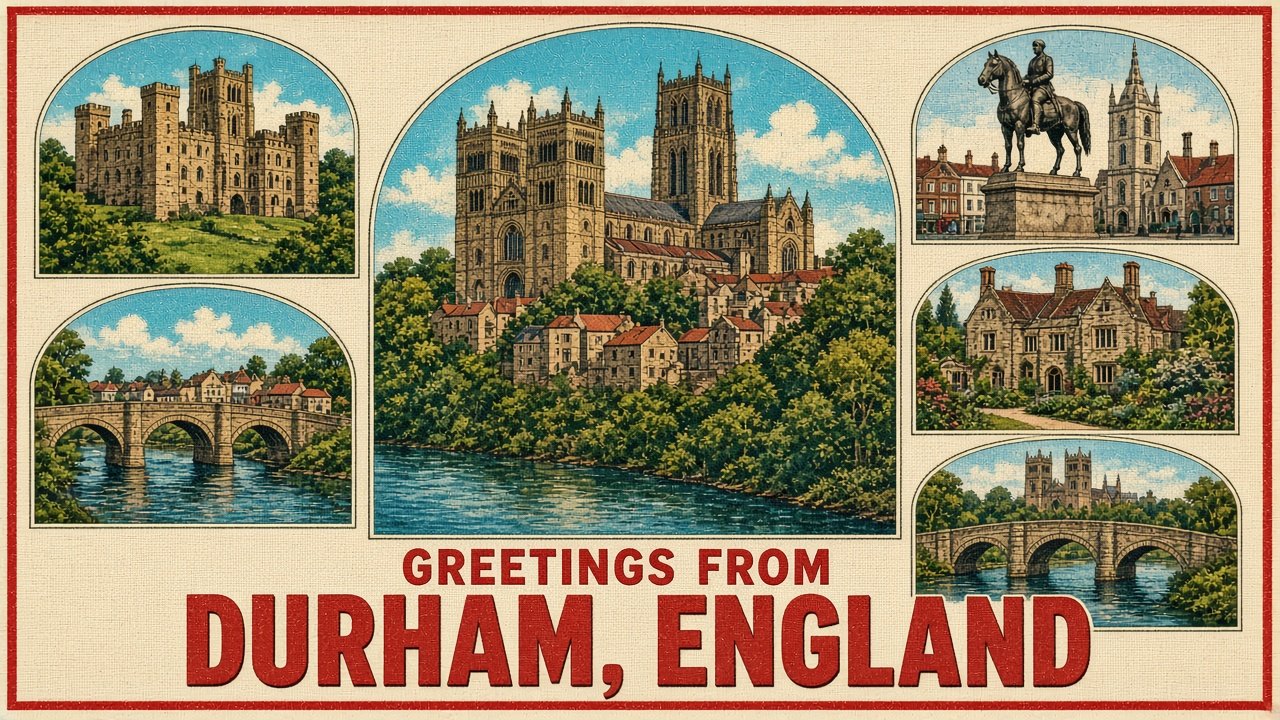
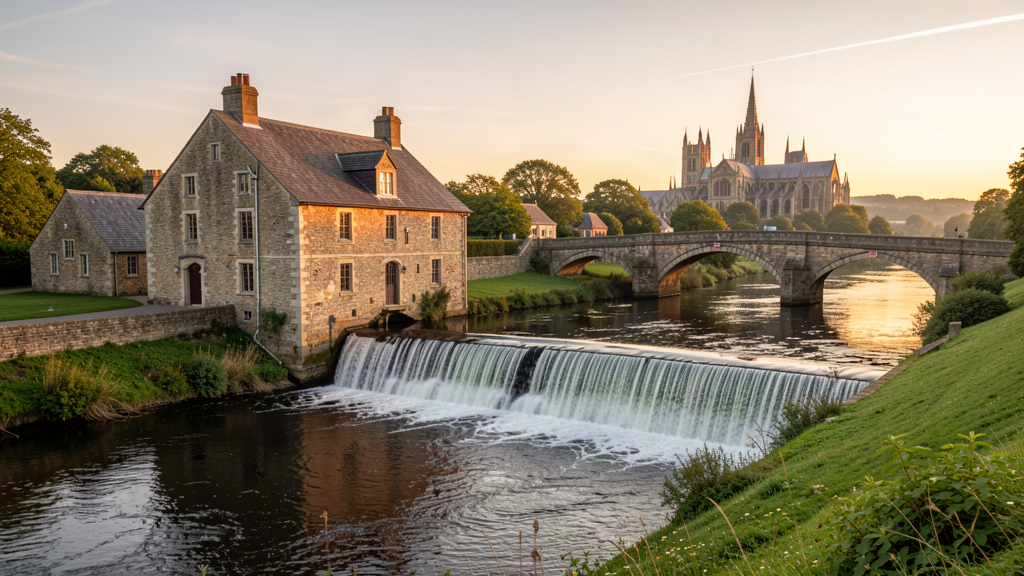
Most visitors treat Durham as a cathedral half-day: climb the peninsula, photograph the towers, buy a postcard on Palace Green, catch the next train north. Fair enough. What gets skipped sits lower — a tight loop of the River Wear, a weir that once drove cloth hammers, and a stone bridge the Dean and Chapter rebuilt after the great flood of 1771.
Give the Fulling Mill and Prebends Bridge the first quiet hour before the coach parties thicken on Saddler Street. Start when the riverbank paths hold dog walkers and rowers more than lanyards. Leave the ticketed towers for after lunch. The weir will wait.
Along the Wear to the Fulling Mill
Durham sells itself as castle, cathedral, and university, and those pitches are true enough. Under them sits a working river that still bends hard around the peninsula, holding water behind weirs and feeding paths through oak and beech that feel older than the gift shops above. The Old Fulling Mill sits on the eastern bank under the cathedral cliffs — stone, low windows, the kind of building that used to pound woolen cloth clean with hammers driven by the Wear. Fulling meant scouring grease and dirt out of woven fabric until it thickened for sale. Priory money from the mill went back into the cathedral fabric. The museum has moved; the mill remains. You walk past it with the weir talking under the arches and the towers hanging above the trees.
Prebends Bridge is the pedestrian crossing just upstream: three stone arches, built 1772–1778 after flood water took the timber bridge that replaced a ferry. From the west end you get the postcard view — cathedral, mill, water — the same bend Turner sketched more than once. A stone on the bridge carries a scrap of Walter Scott. Cross it early, and the city feels like a river settlement again, not a timed-entry heritage park.
The Water Gate still opens from South Bailey down to the bridge, one of the last working cuts through the old city wall on this side. Use it if you start on the peninsula; use the lower path if you start from Framwellgate. Either way you end at the same weir and the same mill. The Count’s House sits a short walk along the bank: a small classical summer house from the 1820s, named for Polish “Count” Joseph Boruwlaski who lived nearby, not inside. Picnic lawns open beside it when the weather holds. Keep walking and Kingsgate Bridge’s slim concrete span — Ove Arup’s work — lifts students across toward Elvet. You do not need a guided tour. Bank, weir, mill, bridge, open water.
Framwellgate, Elvet, and the peninsula loop
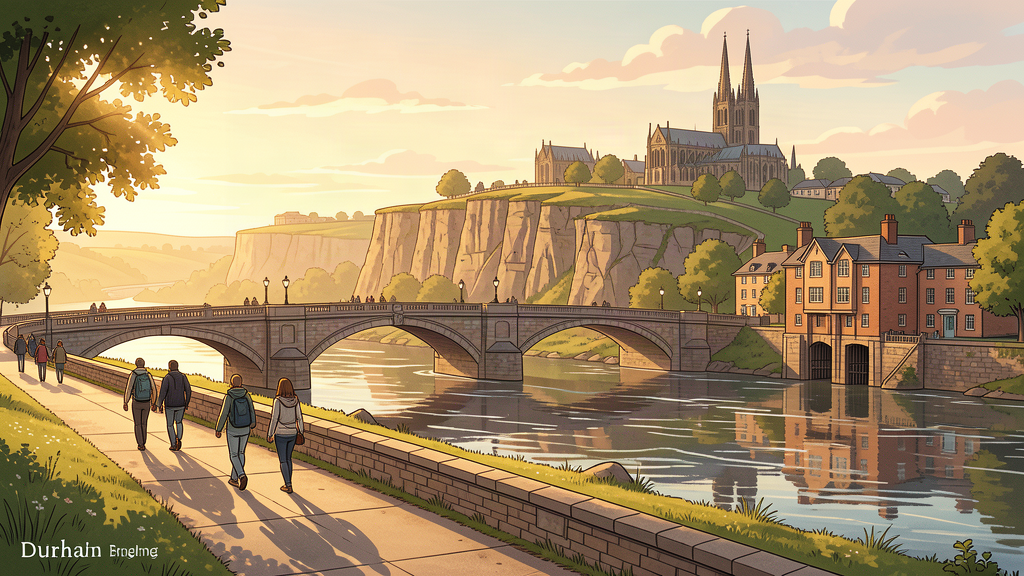
Framwellgate Bridge is the older crossing on the north side of the loop, rebuilt in the fifteenth century after an earlier flood, once gated and fought over. Steps drop to the lower path toward the mill. Elvet Bridge, Bishop Pudsey’s crossing from the late twelfth century, still carries you east into New Elvet and Old Elvet with chapel fabric that survived the rebuilds. Between the bridges, the Wear is slow enough for college boats; Brown’s Boathouse and the rowing clubs keep the water moving when exams do not.
Walk the full peninsula loop if you have the legs: Framwellgate to Prebends to Elvet and back through Market Place, or the reverse. The neck of land is narrow enough that you can cross it in minutes on Saddler Street and still feel the river on both sides. Market Place holds the civic center and the usual chains. The value is not the square itself but how fast you can leave it for the bank. Silver Street and the indoor market pull shoppers. Keep your best light for the weir.
Claypath climbs away northeast if you want ordinary Durham rather than the World Heritage core — bakers, takeaways, student flats, less polished stone. North Road on the west side does the same job with buses and practical shops. Neither needs a checklist. They remind you the city feeds people who live here after the coaches leave.
A short cathedral without the full circuit
Durham Cathedral and Castle earn the UNESCO line and can eat half a day if you let them. If the towers are why you came, go — the nave, the Galilee Chapel, the views from the tower when it is open are the real objects. If you already did the circuit, or you only have one free morning, the Fulling Mill and Prebends Bridge give peninsula truth without the queue.
Palace Green sits between castle and cathedral: open grass, library buildings, students cutting across. Useful logistics, not a substitute for the river when a tour group fills the green. Follow the water. The Undercroft Café under the cathedral works for a takeaway cup if you want heat on a winter bank walk; Flat White Kitchen higher on Saddler Street does a longer sit when brunch is the point.
What holds up is ordinary riverside stuff: a weir that once powered cloth, a mill that outlasted its hammers, a bridge rebuilt after flood water, a summer house that never really belonged to the count it is named for, lime trees on the lower path from Framwellgate to the mill. That is Durham when the tower ticket is not the whole plot.
Places to Stay
Travelodge Durham — Station Lane, Gilesgate, Durham DH1 1LJ Lower-bracket chain rooms on the Gilesgate side: simple, predictable, free parking, short hop into the centre and a longer walk or bus to the peninsula. Use it when the budget is tight and the A1(M) or a car sets the clock.
Premier Inn Durham City Centre (Walkergate) — Freemans Place, Walkergate, Durham DH1 1SW Mid-bracket chain beside the Wear at Walkergate: river paths outside the door, Pennyferry Bridge nearby, cathedral and castle a walk rather than a transfer. Book when you want the bank first and the towers second, without boutique prices.
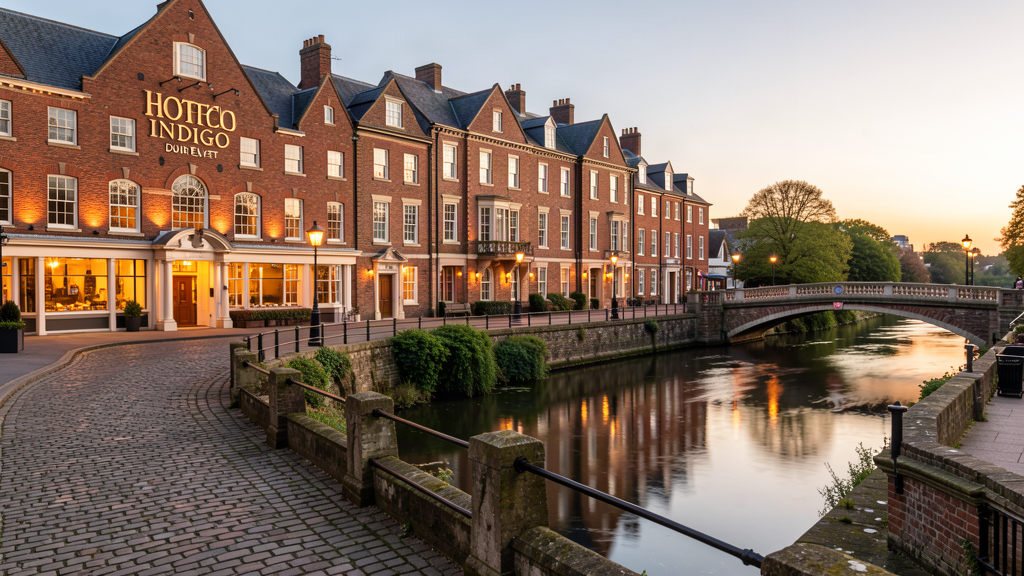
Hotel Indigo Durham — 9 Old Elvet, Durham DH1 3HL Higher-bracket stay in the former Old Shire Hall on Old Elvet: design-led rooms, short walk across Elvet Bridge to the peninsula, cathedral views from some angles. Use it when Old Elvet and the river loop are a pleasant walk, not a logistics problem.
Where to Eat
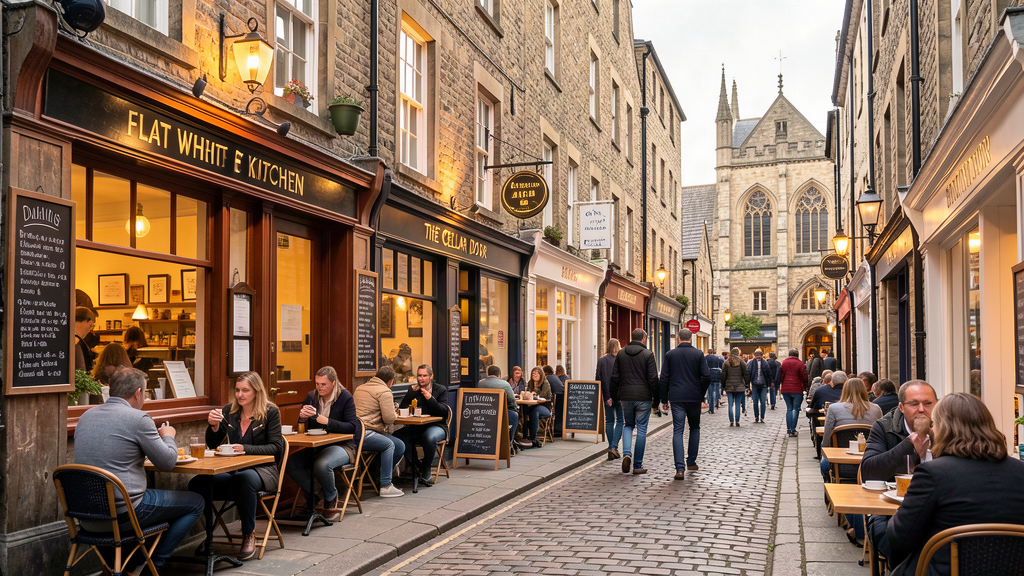
Flat White Kitchen — 40 Saddler Street, Durham DH1 3NU Brunch and coffee in a renovated townhouse on the climb toward the cathedral: cakes baked on site, strong coffee, tables that fill with students and walkers. Natural stop after the bank or before Prebends. Go early on weekends.
The Cellar Door — 41/42 Saddler Street, Durham DH1 3NU Modern plates in a 13th-century riverside building tucked on the same thoroughfare: cellar rooms, outdoor seats when weather holds, menus that shift with the season. Evening gravity after the weir and the mill; book when Saddler Street pubs look too loud.
The Boat Club & Tomahawk Steakhouse — Elvet Riverside, Durham DH1 3JT Riverside rooms on the Elvet side with the Wear in the window: steaks, casual tables, a useful sit after Kingsgate or Elvet Bridge. Use it when the peninsula walk runs long and you want the water still in view.
For cheaper fuel, grab something portable near Market Place or North Road and eat on the bank if the weather holds. Save the longer meal for Saddler Street or Elvet Riverside; save last light for Prebends Bridge or the Fulling Mill weir.
Getting around and leaving room
Durham station sits west above the city. The walk down to Framwellgate Bridge and the river takes roughly ten to fifteen minutes downhill, longer back up. Budget another ten to twenty minutes around the peninsula loop depending on how often you stop. Fulling Mill, Prebends Bridge, Count’s House, Elvet Bridge, and a stretch of Claypath or North Road fit one walking day if you skip emptying every cathedral chapel.
You will not need a car inside the peninsula. Parking is awkward and one-way systems punish guesswork. Train in, or park once on the edge at Walkergate or Gilesgate and walk.
The towers, the green, and the market square will pull every first visitor. Give them a slot. Do not let them replace the weir and the mill. Early at Prebends Bridge beats a midday queue on Palace Green. Carry a layer; the Wear gorge runs colder than the shops on Silver Street.
Do not reduce Durham to a tower selfie, a Palace Green photo, and a chain lunch. Walk until Old Fulling Mill holds the Wear weir under Prebends Bridge. Eat on Saddler Street or Elvet Riverside. Keep the cathedral for after the bank. The river still opens for people who live with this bend. Protect that morning.
