
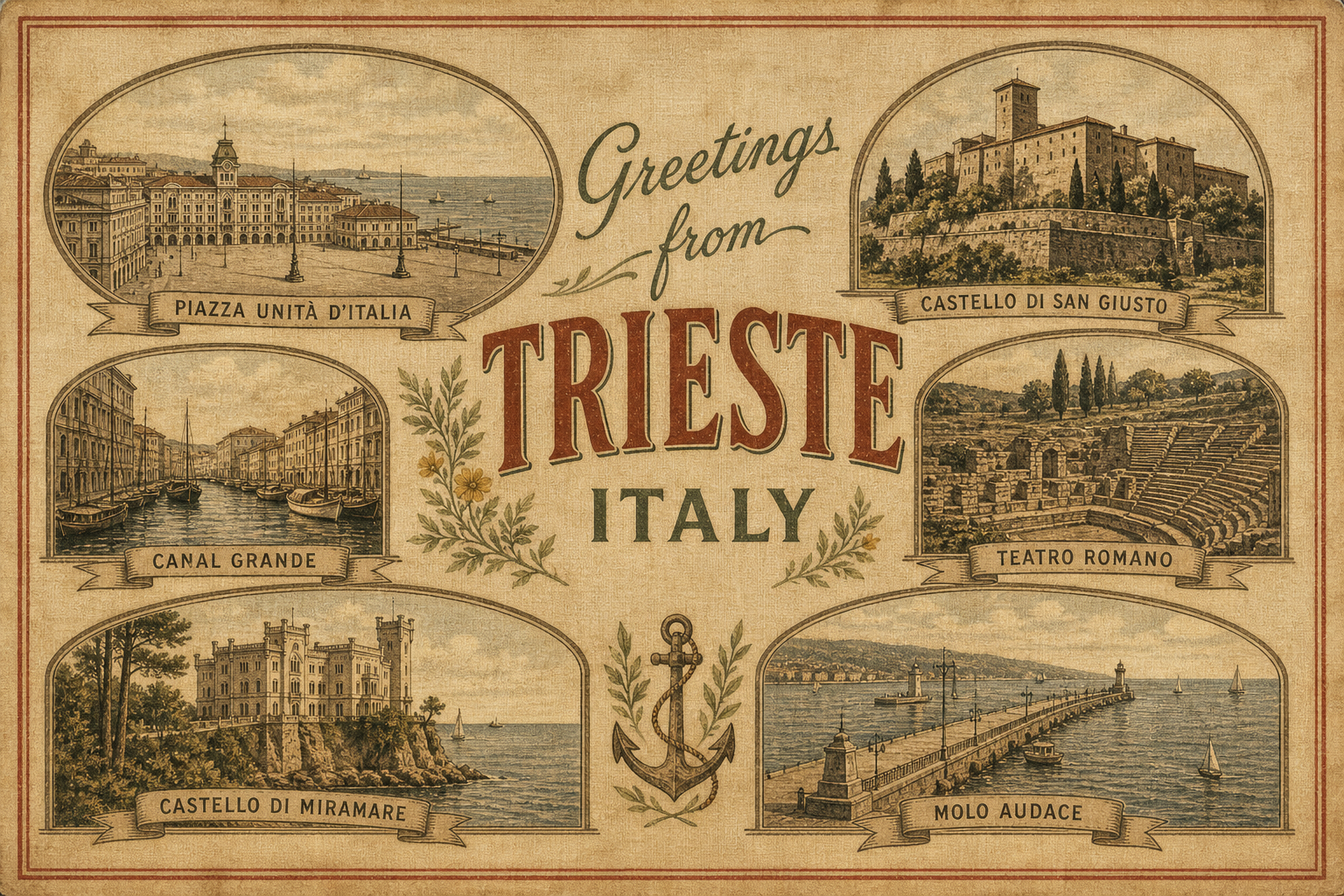
Trieste does not try very hard to look like the rest of Italy. That is half the reason I keep coming back. The gulf butts up against the Karst. German and Slovenian words still show up on menus. People order coffee like they mean a specific drink, not a lifestyle. And lunch, if you do it right, often means standing at a hot counter while someone slices boiled meats onto a plate nobody styled for Instagram.
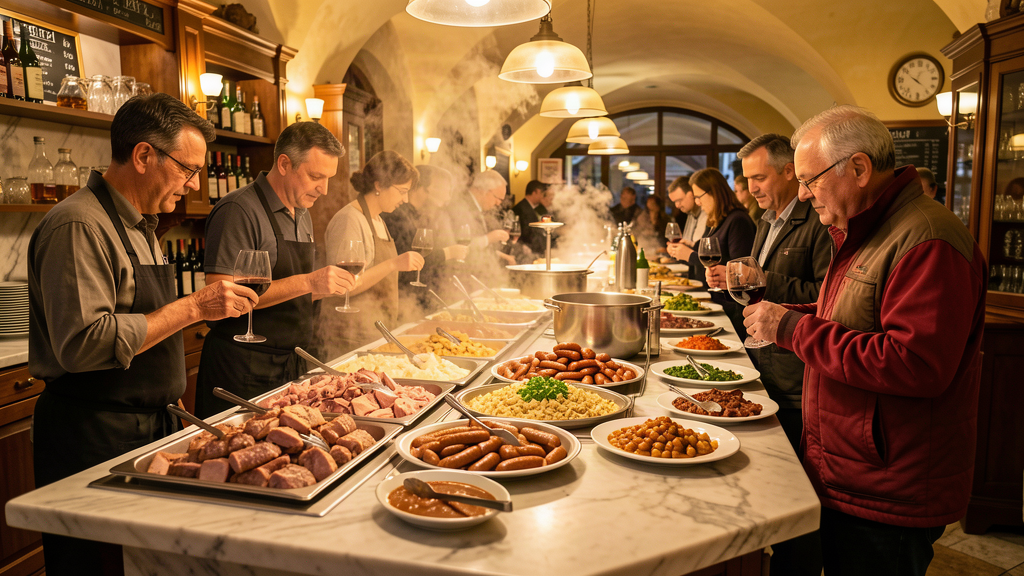
I start almost every visit the same way. Walk into Buffet da Pepi near Piazza della Borsa, take whatever space opens at the counter, and let steam and mustard do the introductions. The waterfront can wait. So can the big square from the guides. Once you see how Trieste feeds itself at noon, the rest of the map is easier to read.
How a buffet actually works here
In Trieste, a buffet is not a hotel breakfast line. Think deli meets beer hall meets working lunchroom. You order boiled pork, sausages, tongue, horseradish, sauerkraut, mustard from a jar that has seen better decades. You might get a small table. You might not. Nobody apologizes either way.
Buffet da Pepi has been at this long enough that the room feels practiced, not staged. Via Cassa di Risparmio is central, a few minutes from the canal and the waterfront, but the midday crowd still skews local. Point at what looks good. Ask for mixed bollito if you cannot decide. Eat standing if that is what is left. Drink something simple. Leave before you turn lunch into a project.
I like coming a little before the office rush or right after it breaks — busy enough to feel real, not so packed that you are only waiting. If Pepi is full, walk. Trieste has other counters with the same idea and slightly different house styles.
Coffee with a proper name
Before or after lunch, learn the local coffee code. A capo in B is espresso in a small glass with a streak of milk foam. A nero is a straight black. People do not camp out over giant mugs. They stand, talk a bit, then go back to whatever they were doing.
Caffè San Marco on Via Cesare Battisti is where I go when I want a longer pause. It opened in 1914. Tall room, bookshelves, the sense that someone nearby might be editing a paragraph instead of checking a flight. Order a coffee. Sit with a paper if you can find one. Do not treat it like a museum stop with a ticket. It works best as an ordinary room that happens to look good.
From there the Borgo Teresiano grid is easy: straight streets, the Canal Grande with boats and low bridges, shops that still feel like shops. Morning along the canal is quieter than the main square. Delivery crates. People cutting through to work. The occasional visitor photographing San Spiridione, then looking slightly surprised that the city keeps moving around them.
When you need air and water
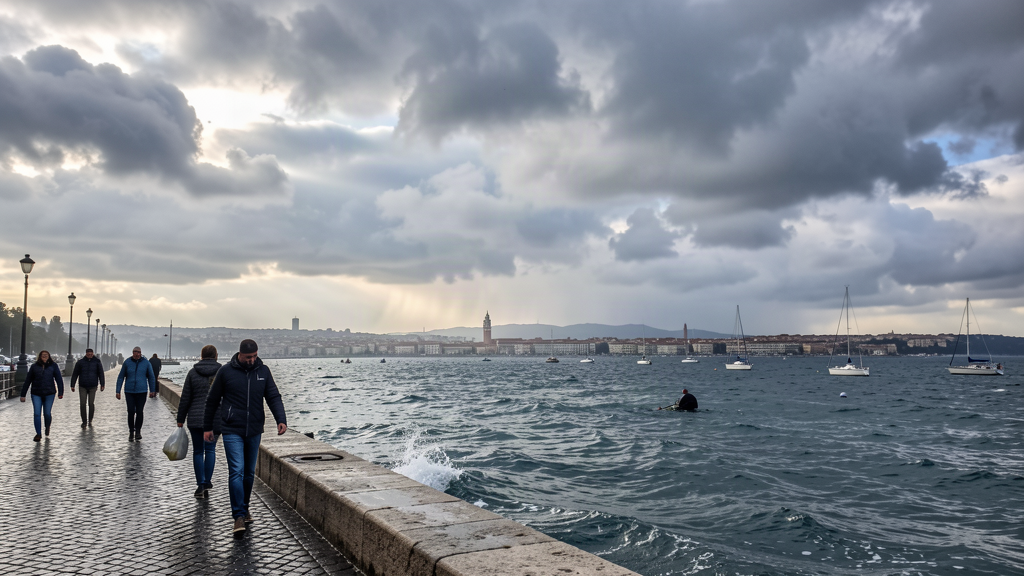
When the center feels tight, I walk or bus north to Barcola. The sea wall is not a glamorous beach resort. Locals swim, sit on the rocks, eat something quick, and go home. On a clear day the light off the water is sharp. After a bora, when the wind has scrubbed the sky, the gulf looks almost wiped clean.
I do not go to Barcola for a big program. I go to sit, walk the edge, and remember Trieste is a port first — not only a string of cafés. For height instead of shoreline, the Opicina tram still climbs toward the Karst plateau. The bay drops away, the air cools a little, and you feel how close the stone upland sits above the streets. An hour or two is enough. Then drop back into town for another coffee or an early dinner.
Food beyond the counter
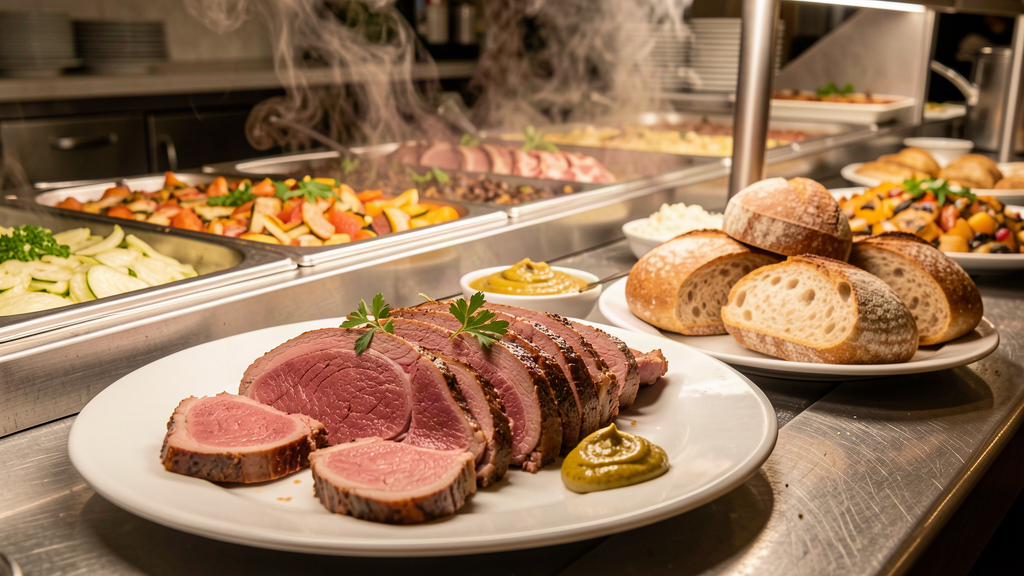
The buffet is the clearest local habit. It is not the only table worth booking.
Buffet da Pepi
Via Cassa di Risparmio 3, 34121 Trieste
The easy first stop, and still one of the best. Come for boiled meats, mustard, horseradish, and the simple pleasure of something heavy and exact in the middle of the day. Informal on purpose. If you only have one lunch and want the Trieste version rather than a generic Italian trattoria, start here.
Buffet da Siora Rosa
Piazza Attilio Hortis 3, 34123 Trieste
A short walk from the waterfront museums and older civic corners, Siora Rosa runs on the same buffet idea with its own pace. Early twentieth-century roots, Mitteleuropean cuts, regulars who know the drill. A good second counter if Pepi taught you the basics and you want another house style. I like it when I already know I want pork, beer, and a table that does not need a speech about terroir.
Osteria de Scarpon
Via della Ginnastica 20, 34125 Trieste
When the meat counters have done their job and you want fish, Scarpon is the reliable turn. Straightforward room. Local Adriatic plates — cuttlefish, cod with polenta, fried bits, simple grills. It sits off the pure postcard strip, which is fine. After a day on the canal and the riva, quiet seafood is often what I want.
If you still want something sweet later, any solid historic café will do. You do not need to collect every famous room. Eat like the city still feeds neighbors, not only visitors.
Places to stay
Stay close enough to walk. Trieste is better when you can leave the hotel without negotiating a garage every time you want coffee.
B&B I Filoksenia (value)
Via Fabio Filzi 10, 34132 Trieste
A practical base near the station side of the center. You give up grandeur for a short walk into the useful grid and a smaller bill. Good for two or three nights if you plan to eat out and care more about location than lobby theater. Confirm the room setup when you book; small properties vary.
Hotel James Joyce (mid-range)
Via dei Cavazzeni 7, 34121 Trieste
A small hotel in an old building near the historic core, a short walk from Piazza Unità and the lanes that climb toward San Giusto. Twelve rooms. More character than scale. I like it when I want older streets within minutes without waterfront-palace rates. Breakfast matters here more than a spa list.
Savoia Excelsior Palace (splurge)
Riva del Mandracchio 4, 34124 Trieste
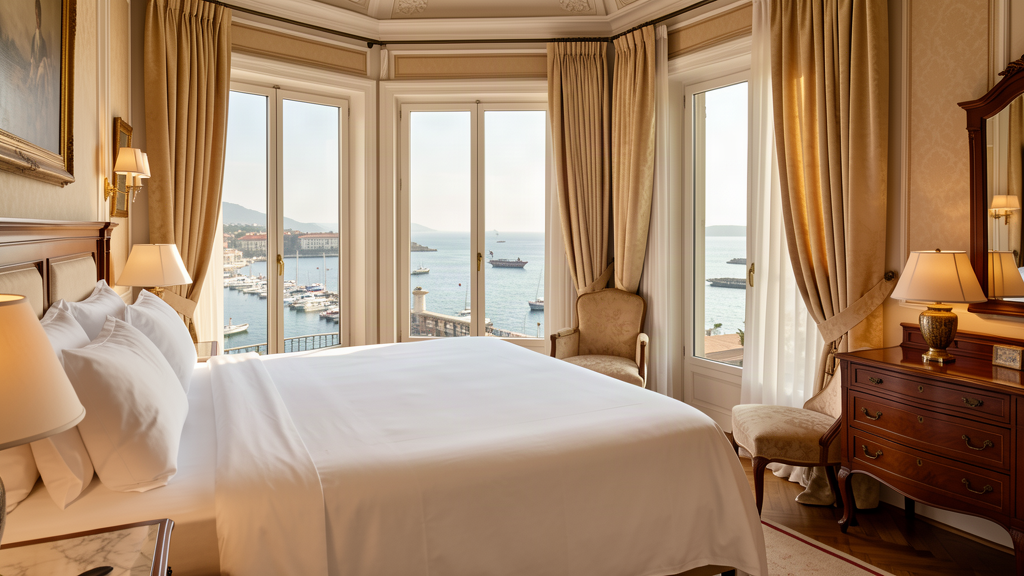
If you want the gulf in the window and old grand-hotel posture, this is the clear upgrade. Mornings start with ships and light instead of alley noise. Useful for a short stay when you want to land easily, walk the waterfront at dusk, and not think hard about logistics. You pay for setting and ease. Enjoy both.
A simple day that fits the city
Morning coffee at San Marco, or any bar that can make a proper capo. Walk the Canal Grande while the light is still flat. Late morning, drift toward Piazza della Borsa and take lunch at Pepi before the counter fills. Afternoon: Barcola for the sea wall, or the Opicina tram if you want the Karst edge. Come back down, rest, then dinner at Scarpon — or a second buffet if you are still thinking in pork. Evening on the riva is enough. You do not need a packed monument list to feel you have been somewhere specific.
If you have a second day, add San Giusto hill for the view and the layered stone underfoot, or a slower loop through side streets behind the main squares. Keep the buffet as your anchor. It is the habit that still feels least borrowed from somewhere else.
Practical notes
Trieste sits at the far edge of Friuli-Venezia Giulia, on the Adriatic under the Karst, with Slovenia close enough that day trips feel ordinary. Trains arrive from Venice and beyond. The station is walkable to much of the center if your bag is not ridiculous. Buses and the Opicina tram cover the rest. The bora can rearrange your hair and your plans with little warning, so carry a layer even when the morning looks gentle.
Coffee vocabulary helps. So does a willingness to eat lunch standing up. English works in hotels and main spots, but Italian gets warmer service. German or Slovenian food words on menus are not decoration either — they are leftover from a port that never belonged to only one story.
I keep returning for the counters more than the panoramas. Hot plates, sharp mustard, a short black coffee, then the walk back toward the water. That sequence is still the clearest way I know to meet Trieste without forcing it into someone else's Italy.
