
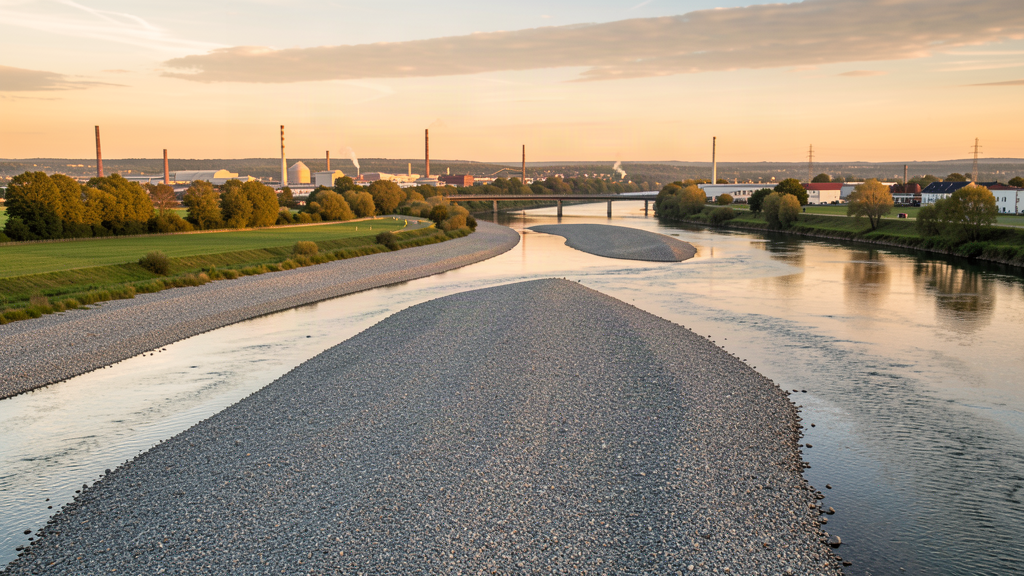
Most people treat Dillingen as a steel pin on the Saarland map. Exit toward the Hütte, glance at twin church towers from the train, keep rolling to Saarlouis or the French border. Fine if the day only holds a parking lot and a coffee. I come for the Prims after rain, when wet gravel hangs in the air, and for the bend where two rivers share one channel under low willows. Saardom sandstone stays cool long after the high street has started its ordinary Tuesday noise.
I start at the Primsmündung while barge sound sits out on the Saar. Walk the Ökosee once when the reed belt is empty enough to hear birds under the lookout steps. Drink coffee on Stummstraße after crates have been dragged in. Leave the big Hütte-tour crush for someone who needs smokestack photographs. Mouth first, then reed path, then a plate. That order works if the green steel town can wait one slower day.
Prims water, Saardom stone, and the town that still works on Tuesday
Dillingen sits in the Saarlouis basin in western Saarland, right where the Prims finishes its ninety-one-kilometer run into the Saar. Roughly ten kilometers from France, close enough to Saarlouis that the two urban edges almost touch. Locals call it the Hüttenstadt im Grünen, steel city in the green, because Dillinger Hütte has poured plate here since the late 1600s while Hüttenwald and river meadow keep the air softer than the works map suggests. No spa strip, no fortress circuit. The town grew on Roman Contiomagus soil in Pachten and on the habit of walking toward the confluence when the high street gets tight.
This is Saarland Dillingen, not the Donau town of the same name. Keep the wrong-state name out of the booking form.
Stummstraße is the civic spine between Bahnhof grit and the works: Altes Rathaus in red sandstone with Jugendstil corners, Evangelische Kirche concrete from the late 1960s, and the Stadtpark where two Westwall bunkers sit under ordinary lawn. Half-timber is scarce. Plain plaster and industrial brick sit side by side without a restoration brochure. On ordinary Tuesdays the pedestrian lanes fill with people who live here, not people who came for a twin-tower photo.
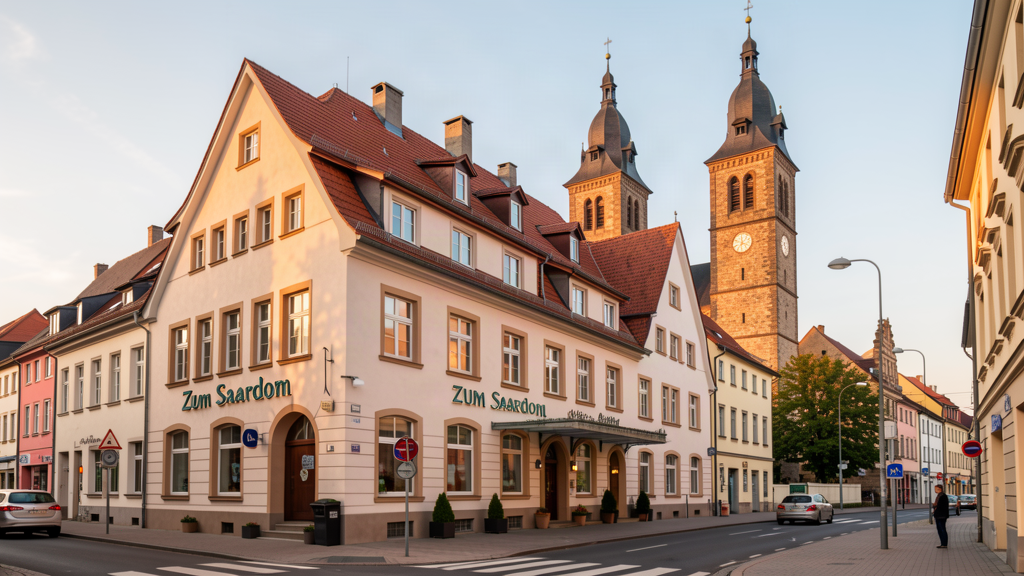
I care more about that spine before the first shift change, and about the short walk north on Saarstraße then left toward Primstraße, where town energy thins into river air. The Saardom (parish church Heilig Sakrament, finished 1913 in grey-red local sandstone) holds the skyline with unequal twin towers and a rose window over the west portal. Go once if you like neo-Romanesque volume under a quiet nave. Go early if you prefer stone cool to noon glare on the façade.
Optional second air: Römermuseum and Römerpark in Pachten when Contiomagus fragments matter, and a short hop to the Rehlingen lock if barge theater is the afternoon mood. Keep those after the mouth and the Ökosee, not instead of the gravel bars.
Mouth gravel, Ökosee reeds, and a clean day arc
The Primsmündung is not a branded viewpoint with a gift counter. It is the physical end of the Prims: gravel, meadow, willow shade where the smaller river finally gives its water to the Saar. From the center walk north on Saarstraße, turn onto Primstraße, and keep going until street noise thins and the bank opens. Comfortable shoes matter. Uneven path, wet clay after rain, the kind of riverside grit that fills a shoe before you notice. I go on weekday mornings while the benches are still free and the only company is a dog walker or a cyclist on the Saar-Radweg.
Uferpark stretches along the Saar with playground noise and the flat cycle path toward Saarlouis and Merzig. The works stay visible from many angles, but the mouth itself is quieter than the Hütte map has any right to allow.
East of the steel core, the Dillinger Ökosee is a twenty-three-hectare reclaim lake inside a bird sanctuary, ringed by roughly four kilometers of path and a lookout tower over the reed-belt horizon. I use it after the Primsmündung, when I still want water without barge diesel. The path turns slick after hard rain. The tower steps are worth it when herons sit quiet in the reeds.
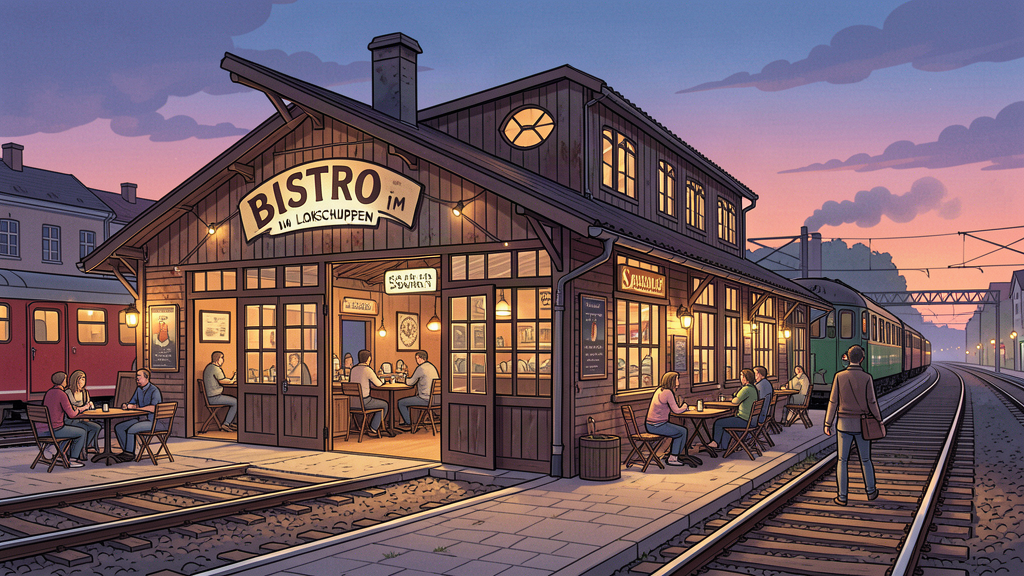
Back in town, Odilienbrunnen and the vertical gardens on two gable walls are small civic gestures (cistern water, myrtle against brick), not destinations on their own. Pair them with Stummstraße coffee while Rathaus stone is in early shade. The Lokschuppen on Werderstraße, a 1900 roundhouse revived as event hall, is worth a pass-by if the doors are open.
Clean day arc once bags are down: Primsmündung while gravel is cool, Saardom nave before noon heat, Linn’s or Gambrinus plate, then Ökosee reeds if legs still want a ring path. Two nights: early mouth light, full Ökosee loop before the board gets greasy, Pachten Roman fragments if the museum day lands right. Hütte-tour weeks can rewrite rates. Book early.
How Dillingen moves
Dillingen (Saar) Bahnhof sits on the Saarbrücken–Merzig line with regional links that reach Saarbrücken without drama on most days. Once bags are down, Stummstraße, Saardom, Stadtpark, and the walk toward Primstraße stitch better on foot than by car. Drivers use A8 / A620 exits toward Dillingen and park near the station or Stadtpark edge. Buses fill the gaps toward Saarlouis and Diefflen when the Diefflen stay is the base.
Confirm Ökosee path grip after rain, Saardom open hours, and restaurant rest days. Comfortable shoes matter twice: riverside clay at the mouth, tower steps and reed mud at the lake. Two nights beat a single twin-tower selfie between rail connections.
Places to Stay
Hotel Zum Saardom (value, Weinligstraße under the towers)
Weinligstraße 21, 66763 Dillingen/Saar
Small house steps from the Saardom and a short walk to Stadtpark and Stummstraße. Straightforward rooms, free Wi-Fi, and twin towers as morning orientation instead of a separate errand. Trade-off is less lobby theater and ordinary corridor quiet; plan the Primsmündung walk as the reason you came. Solid budget-to-mid base for travelers who want church stone and river mouth without a car for the core day.
Hotel Meilchen / Walzwerk (mid, Hüttenwerkstraße center)
Hüttenwerkstraße 31, 66763 Dillingen/Saar
City hotel on the works-side grid with covered roof terrace, central sleep, and a ten-minute foot link from the Bahnhof through the pedestrian lanes. Practical for two nights when you want desk-simple stays and short hops toward Primstraße in the morning. Trade-off is industrial-edge hum rather than riverside silence; the mouth walk still clears that by breakfast if you start early. Entrance also reads on Kieferstraße 2 depending on which corner the navi prefers.
Hotel Bawelsberger Hof (upper-casual, Diefflen edge)
Dillinger Straße 5a, 66763 Dillingen-Diefflen
Privately run three-star house in the Diefflen district with parking and Casa Pepe downstairs for Iberian plates after a full river day. Good when you want quieter sleep outside the Hütte grid and do not mind a short bus or drive back to Saardom and Primsmündung. Book ahead when local events fill Saarlouis-district rooms.
Restaurants and food
Linn’s Bistro (value-mid, Stummstraße house table)
Stummstraße 55, 66763 Dillingen/Saar
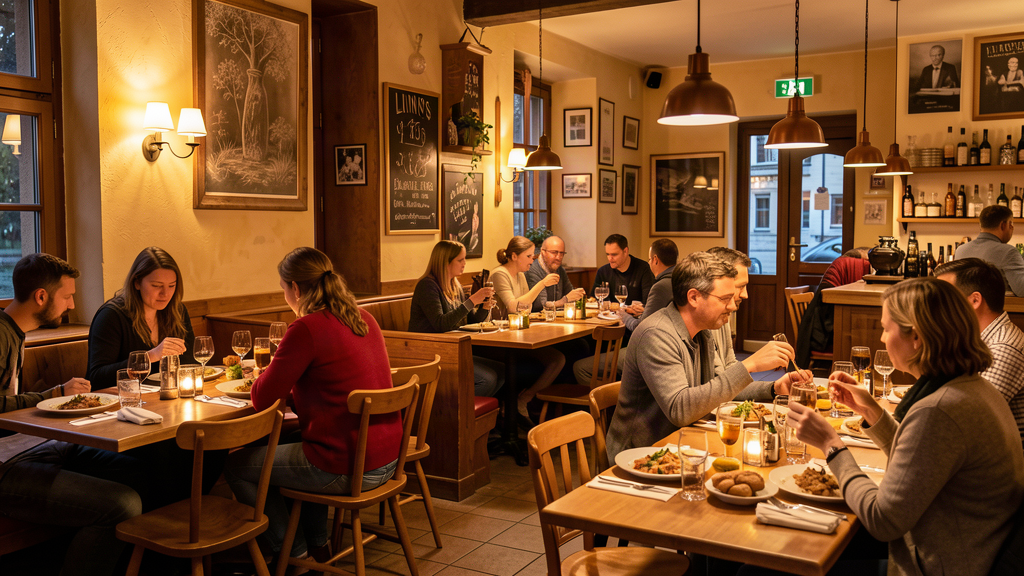
Long-running local bistro on the Bahnhof-to-Hütte spine with German plates and a lunch pace that still feels like town dinner more than tasting menu. Pair with a Primsmündung return when gravel still sits in the shoes. Call ahead on weekdays when locals fill first after shift change.
Hotel-Restaurant Gambrinus (mid, Saarstraße Italian)
Saarstraße 33, 66763 Dillingen/Saar
Italian house with fish, meat, pizza, and pasta at ordinary town prices, beer garden seats when weather cooperates, and an easy walk from Stadtpark toward Primstraße. Monday rest is common, so confirm before you count on it. Rooms upstairs if the Zum Saardom block is full.
Bistro im Lokschuppen (mid, Werderstraße event-hall kitchen)
Werderstraße 4, 66763 Dillingen/Saar
Bistro inside the revived locomotive shed with straightforward plates and a setting that still smells faintly of old rail brick when the hall is quiet. Good after an Ökosee ring or before an early mouth start. Reserve when a festival weekend has claimed the yard.
For a simpler central stop, Trevi sits at Johannesstraße 34 with pizza and casual plates, and Urfa Kebab at Herrenstraße 6 covers late hunger after reed-path mud. Morning coffee near Stummstraße while Rathaus stone is in early shade still beats brochure brunch.
Regional food stays plain in a good way. Lyoner, Dibbelabbes, and Schwenker can wait until you have stood once where the Prims gives up into the Saar. Climb the Ökosee tower after ordinary reed wind. Watch Saardom sandstone share street air with people who belong to Tuesday shift change more than to the day-trip map. Skip the steel-pin parking stop between the Autobahn and the next famous loop. Come for Primsmündung gravel, twin-tower nave, Ökosee reeds, and a Stummstraße table.
