
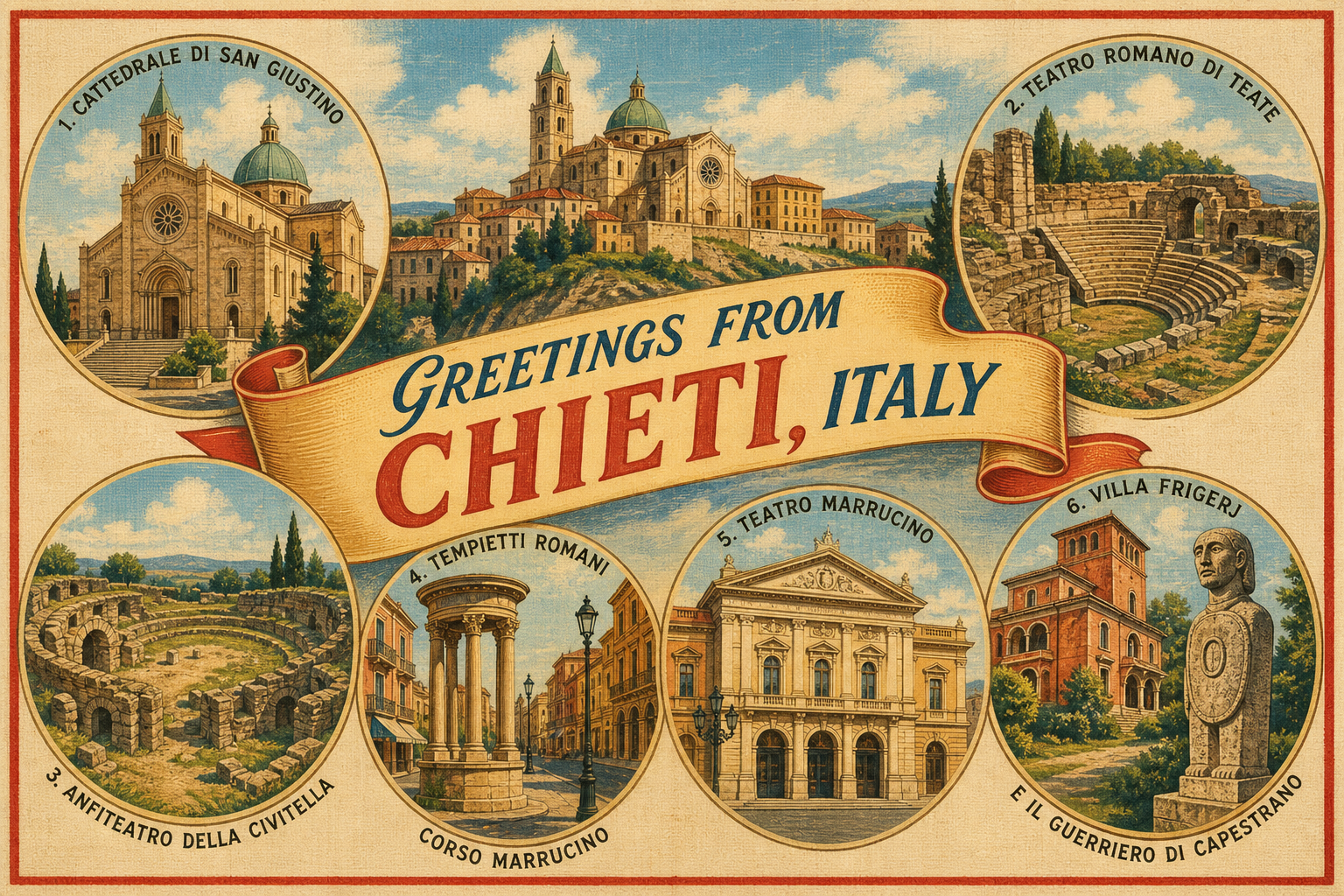
Chieti sits on a ridge like a ship that never left dry dock. Up at La Civitella the air runs cooler. It carries dust off amphitheatre stone and, on clear days, the pale bulk of the Maiella inland. East, the Adriatic is a thin silver line. Streets drop away in terraces. Below, scooters grind switchbacks that feel older than the scooters.
This used to be Teate Marrucinorum. It is still the archaeological and administrative spine of Abruzzo’s eastern province: university classes, paperwork, Sunday lunch. If you only blow through on the way to Pescara’s beach, you miss what the hill is for. Chieti’s pleasure is vertical. Climb, pause, look out, then drop into a corso that still belongs to locals after five.
La Civitella: stone oval and open sky
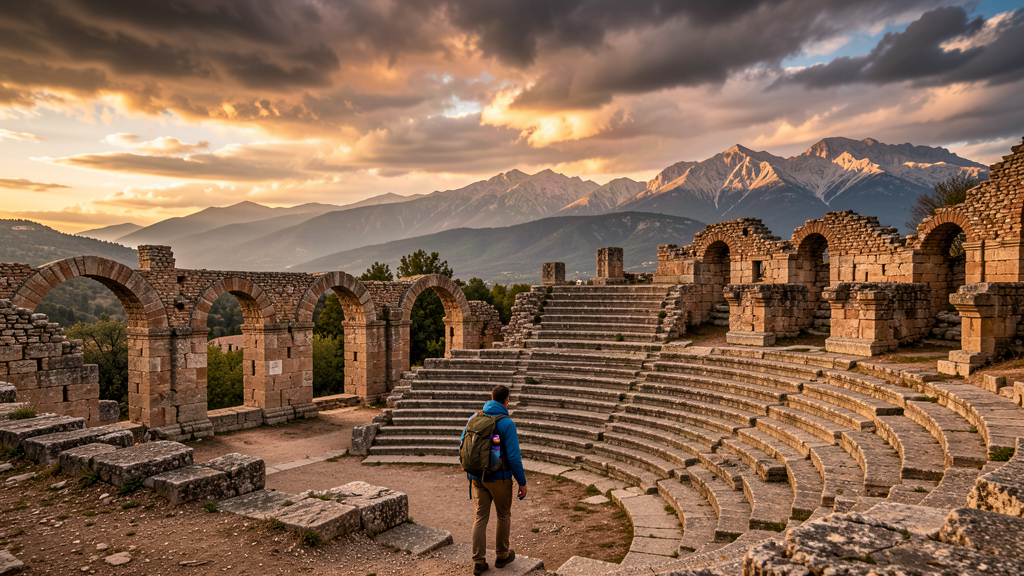
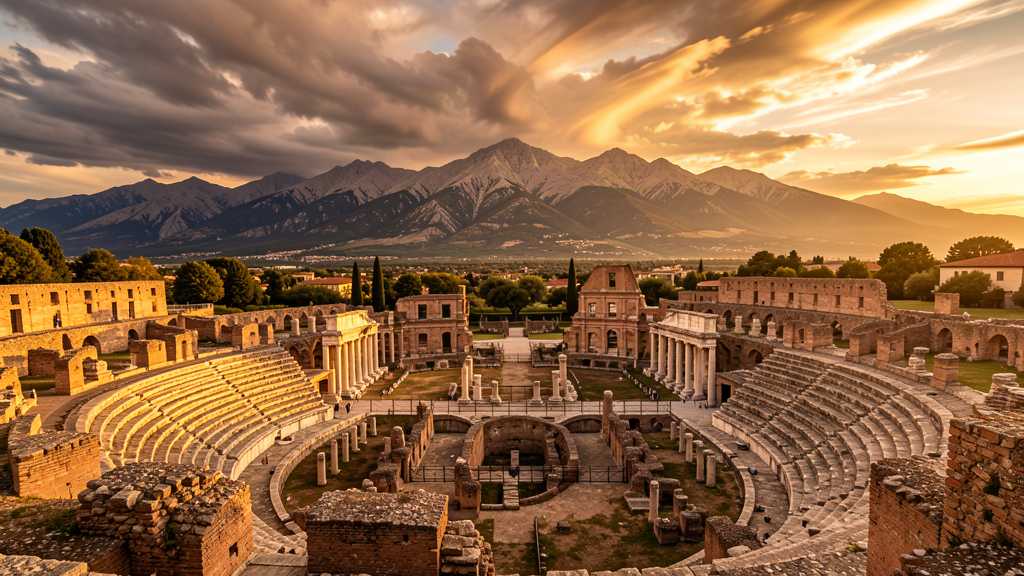
Start at the top. Museo Archeologico Nazionale d’Abruzzo – La Civitella wraps a 1st-century Roman amphitheatre at the city’s highest point. Restored enough that you read architecture, not just rubble. You walk the curve. Most seats are gone, but the bowl still holds wind the way a shell holds sound. Inside, the exhibits are Marrucini life before Rome: temple pediments, oil lamps, inscriptions. Ordinary kit. Empire feels less abstract when you can picture someone using a lamp.
The museum building is modern against the older hill, and the contrast works. Step back into Abruzzo light and the oval turns into a viewing platform instead of a diagram. Spring mornings can still put snow on the Maiella. Summer haze flattens the range into a blue wall. Either way, the view ties Chieti to the interior, not only to the coast fifteen minutes downhill.
A short walk from the gate, Belvedere Civitella gives you roughly the same panorama without a ticket if the museum hours don’t match yours. Stay long enough to watch a bus climb up from Chieti Scalo. The city really is two altitudes: ridge centro and the lower rail-and-road town. That split is why the station feels so far from the cathedral.
Corso Marrucino and the working centro
Drop from Civitella and the scale tightens. Corso Marrucino is the spine: shops, banks, the slow exchange of greetings that marks a provincial capital rather than a resort. Facades hide pieces of Roman wall if you look twice. A curve of stone in a basement. A wall thickness that does not match the plaster above. Chieti does not stage its antiquity. It builds on top of it and keeps walking.
Teatro Marrucino anchors the street’s cultural life. Nineteenth-century house, still used for opera, prose, and seasons filled by locals more than tour groups. Check the bill if you stay overnight. Even without a show, the place tells you this city will dress up after dark when it feels like it.
The Duomo di San Giustino rises from the medieval core with Romanesque-Gothic bones and the layered repairs of a long-important hill town. Step inside when it’s open, then keep moving. The lanes around the cathedral work better as a loop than a checklist: laundry lines, bar doorways, coffee cutting through afternoon heat.
Farther along the ridge, Villa Comunale is the park people actually use. Paths, fountains, shade, and the neoclassical bulk of Villa Frigerj. Families, joggers, teenagers on benches. Nobody is posing it for a brochure.
The warrior under a villa roof
Inside Villa Frigerj, the Museo Archeologico Nazionale d’Abruzzo holds the piece a lot of travelers know from a textbook before they know the city’s name: the Warrior of Capestrano. Limestone, disc armor, wide face. More human than heroic propaganda. Stand with him a few quiet minutes. The rest of the collection fills out Italic and Roman Abruzzo with enough depth for a slow hour.
If you have the energy, pair the museums. Capestrano and the broader story at Villa Frigerj; amphitheatre and local ground at La Civitella. They don’t cover the same ground. One is the emblem. The other is where that world sat. Between them, walk the park and let your eyes adjust to green after stone.
If doors are open, the Costantino Barbella museum and a few quieter churches reward attention without asking for a spectacle on every block.
Food from ridge and hinterland
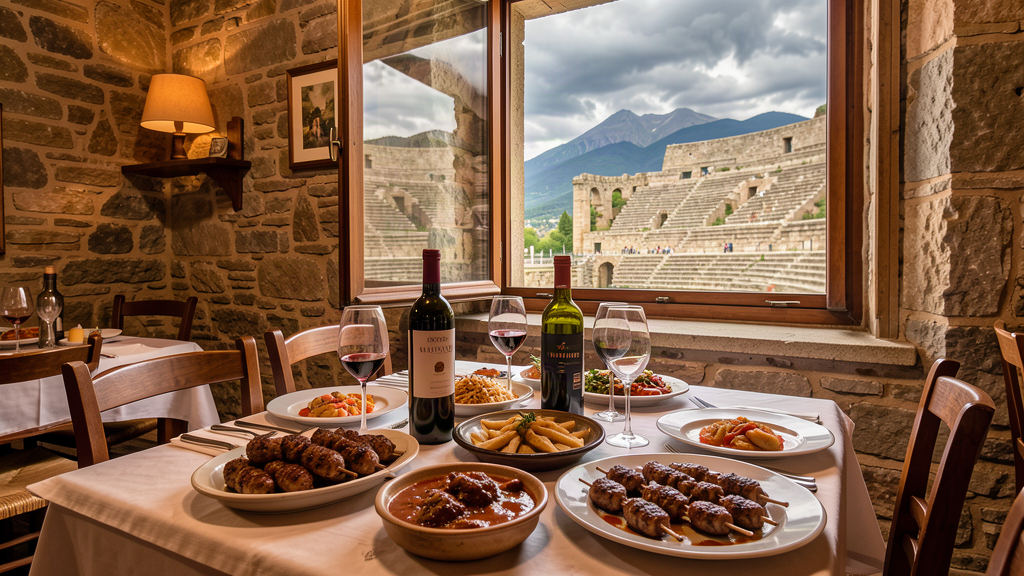
Chieti’s kitchen is Abruzzese without the lungomare show. Pasta alla chitarra, lamb and sheep in many forms, brothy primos when the weather turns, pecorino, arrosticini (short skewers over coals that still taste like the hills even in town). Montepulciano d’Abruzzo and Trebbiano fill ordinary carafes.
Trattoria La Tavernetta Da Ianni
Via Papa Giovanni XXIII, 2, 66100 Chieti CH, Italy
A cellar-feeling room where the cooking stays close to home. Share antipasti, take a secondo that sounds like the season, and let the first night feed you without ceremony.
Trattoria da Frank
Via Pasquale de Virgiliis, 4, 66100 Chieti CH, Italy
Family-run energy and a strong hand with meat, arrosticini included. The address locals name when you refuse a hotel restaurant. Book on weekends; Sunday lunch still matters here.
Ristorante Pizzeria Arrosticini Fazenda San Paolo
Via Vracone snc, 66100 Chieti CH, Italy
When you specifically want skewers and an informal room, this is the practical stop. Order more than you think you need. Pair with a simple red and accept smoke on your fingers afterward.
Between meals, corso bars handle coffee and aperitivo. Pastry shops turn out quiet regional excellence: almond, chocolate, something dusted in sugar. Worth packing carefully if you’re driving: a bottle with a readable producer name, cheese, honey if the stall looks honest.
Places to stay
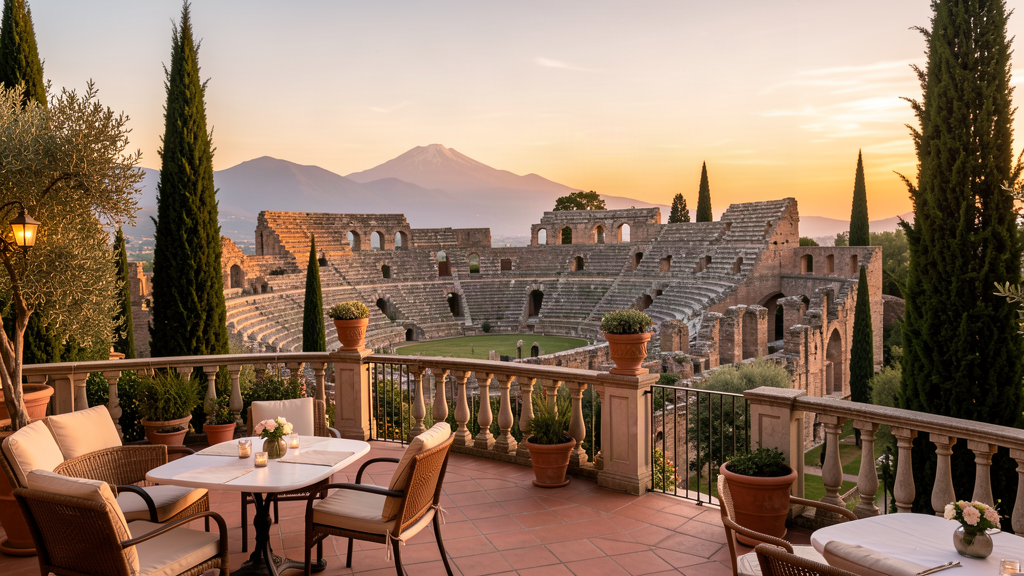
Sleep on the ridge if you can. Chieti Scalo suits trains and the autostrada; the historic center holds the evening air and morning views. A car helps for Maiella foothills and the trabocchi coast. In the centro you will walk more than you drive.
Antico Borgo Chieti (value, historic walls)
Via Monaco La Valletta 1, 66100 Chieti CH, Italy
Rooms in an older building near the heart of centro. Vaulted notes, walkable base for corso and museums. Choose it when budget matters and you still want stone streets outside the door.
Central Suites (mid, walk-everywhere)
Via Silvio e Beltrando Spaventa 16, Piano 1, 66100 Chieti CH, Italy
Compact suite-style stay a short stroll from the main sights. Clean modern rooms, a real central address, easy returns between museums. Solid middle ground for a couple or solo traveler using Chieti as a base.
Grande Albergo Abruzzo (higher comfort, classic hotel)
Via Asinio Herio 20, 66100 Chieti CH, Italy
Full-service hotel comfort: proper corridors, breakfast buffet, garden or terrace when weather cooperates. Useful after long travel days when you want a reliable desk and luggage handling within walking distance of centro.
A day that follows the ridge
Morning espresso near Corso Marrucino, then climb or bus to La Civitella while the light is clean. Give amphitheatre and museum a full hour. Walk the belvedere. Drop toward the Duomo and let the lanes decide the route.
Lunch at Da Ianni or da Frank. Afternoon in Villa Comunale and with the Warrior under Villa Frigerj’s roof. A second corso pass after the midday pause if shops reopen. Aperitivo where tables face people. Dinner of skewers or a slow secondo. If the air is clear, take a night walk toward high ground. The Maiella does not light up, but the ridge still feels like why the city exists.
With a second day, use Chieti as the hinge it has always been. Pescara sits close east. Inland roads climb toward mountain villages and park edges. South, trabocchi platforms stand over the water on wooden legs. Sleep back on the ridge. The hill keeps its temperature after the coast goes sticky and loud.
Getting there and around
Abruzzo Airport near Pescara is the practical air gateway. Bus, taxi, or rental car covers the short hop up. Trains serve Chieti Scalo more usefully than the historic center, so budget a local bus or taxi for the final climb with bags. Rome works when you need the larger hub.
In town, walk the ridge. Distances between Civitella, corso, cathedral, and Villa Comunale are human-scaled if you accept slopes. Buses link Scalo and centro. Rent a car for the Maiella, the coast south, or a hill-town loop. Parking in the core takes patience on market mornings and feast days.
Chieti will not hand you one postcard alley and call it finished. What you get is a working capital’s honesty: offices and students, two serious archaeology museums, a theatre with a real season, and an amphitheatre that still catches wind off the Maiella. Stand in that oval once. The rest of the city arranges itself around the height.
