
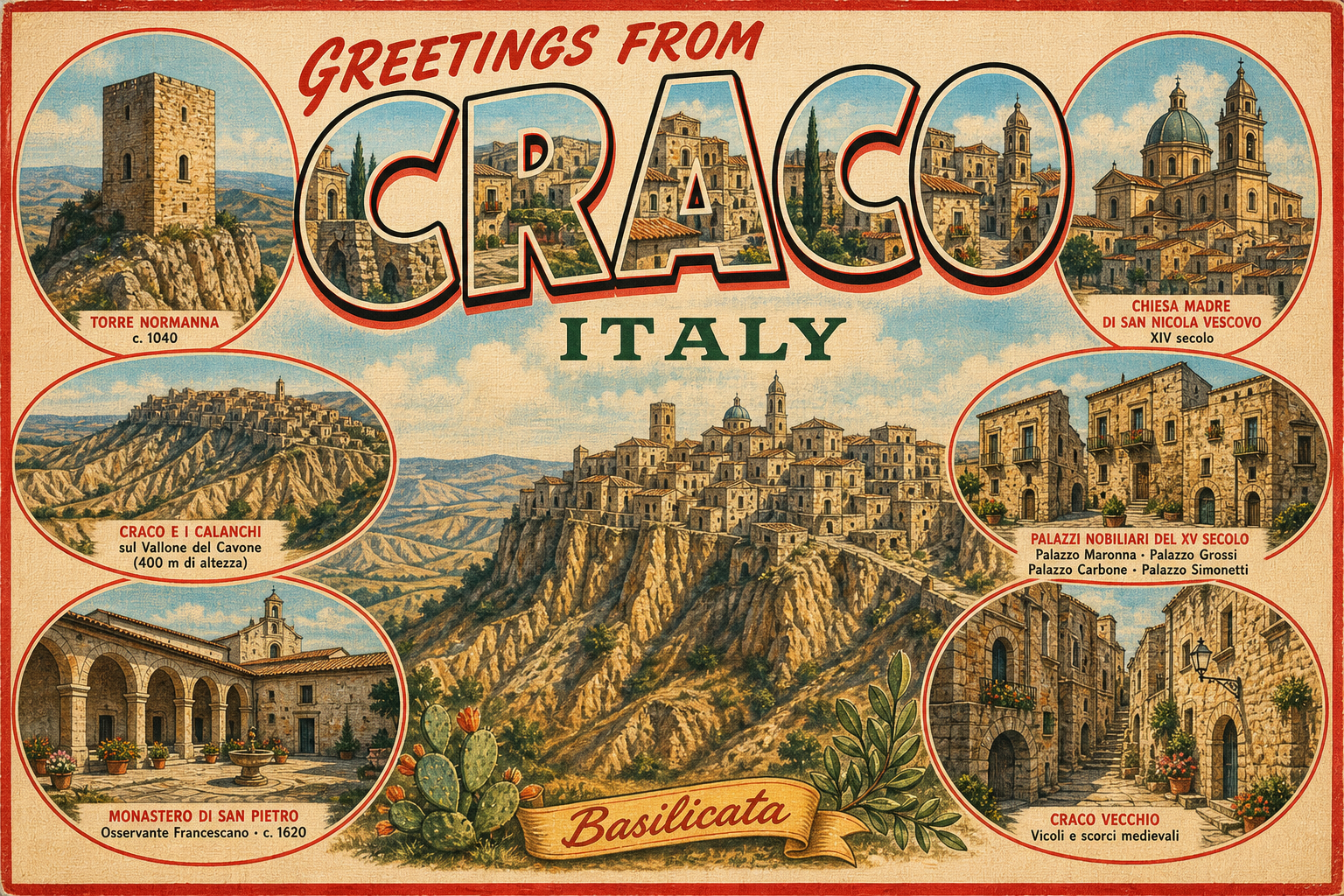
You don’t stroll into Craco the way you stroll into a living town. You park lower down, find the ticket desk, strap on a hard hat, and follow a guide into a hill settlement that still looks half alive until you notice the missing roofs. From the approach road the silhouette almost fools you: medieval stone, a rectangular Norman tower, church bulk, houses stacked against clay. Then the road ends, the barriers show up, and it clicks why nobody is hanging laundry here anymore.
Craco sits in the province of Matera, inland Basilicata, on a steep spur above the badland folds people call the calanchi and the wider Cavone country. Skip any comparison to Matera’s cave districts or the whitewashed hill towns farther south. This is a landslide village, Craco Vecchio, emptied after the ground gave way in the 1960s. Survivors resettled in Craco Peschiera down in the valley. Come if you want an hour inside real abandonment, not a staged ruin. Wear shoes with grip. Leave the idea of free wandering at the gate.
Why the hill emptied
Craco’s story is older than the frana. The ridge was settled for defense and sight lines. The Norman tower (torre normanna, roughly eleventh century, later folded into castle fabric) is the building that still looks like it means business. Around it sit the shells of noble houses and the Chiesa Madre dedicated to San Nicola Vescovo. Palazzi named on the tour (Grossi, Carbone, Maronna, Simonetti) mark what was once a small inland seat with something to prove.
Then the clay won. Landslides made the ridge untenable. Evacuation started in the early 1960s; families moved downhill to Craco Peschiera. Roofs fell. Doors stayed half open to weather. Film crews later liked the silhouette. Travelers tend to find the silence heavier than any script. What you visit now is a managed scenic park. Parts of it are beautiful, parts of it are unstable, and the guide knows which stones still hold.
The hard-hat hour
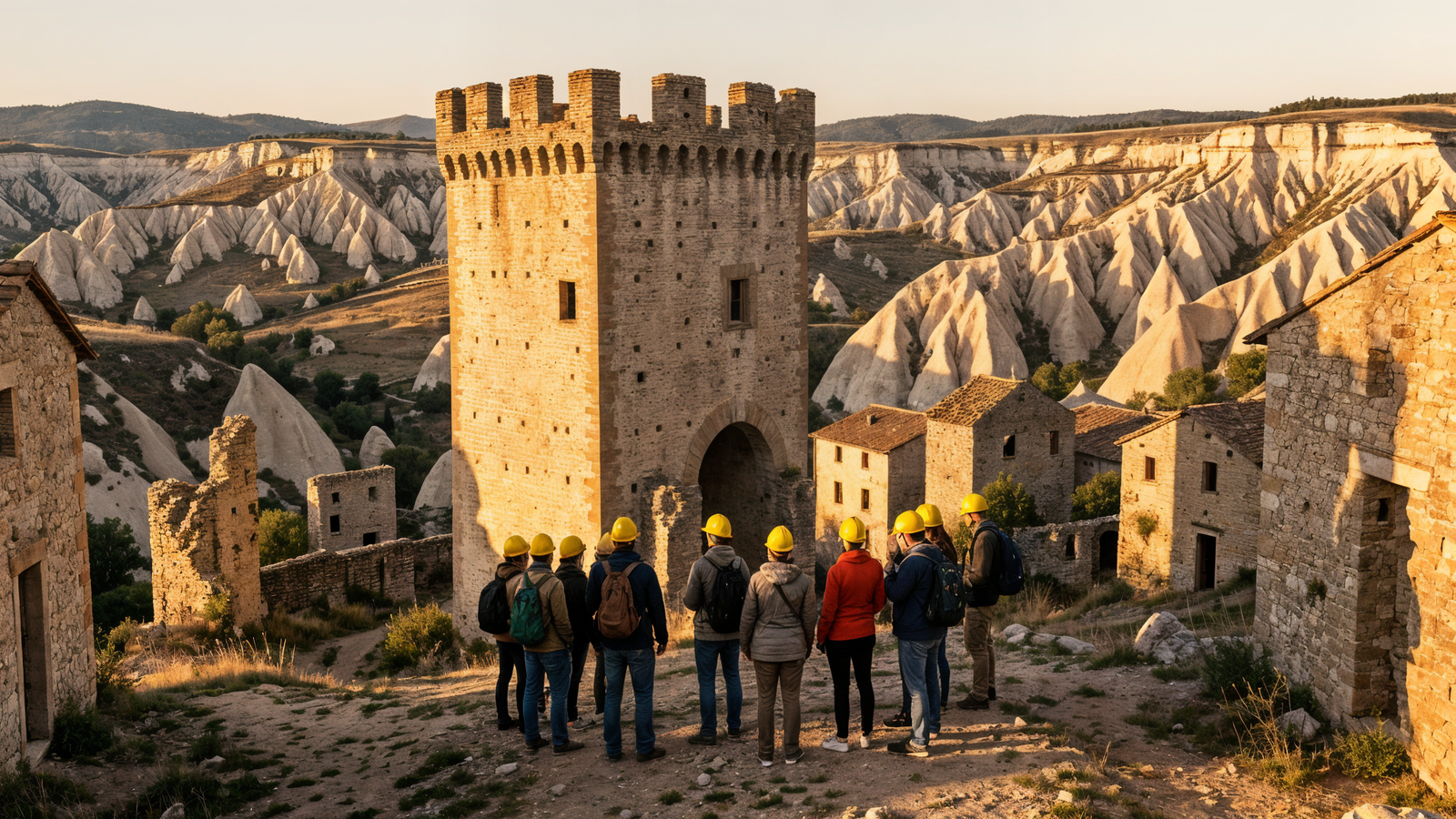
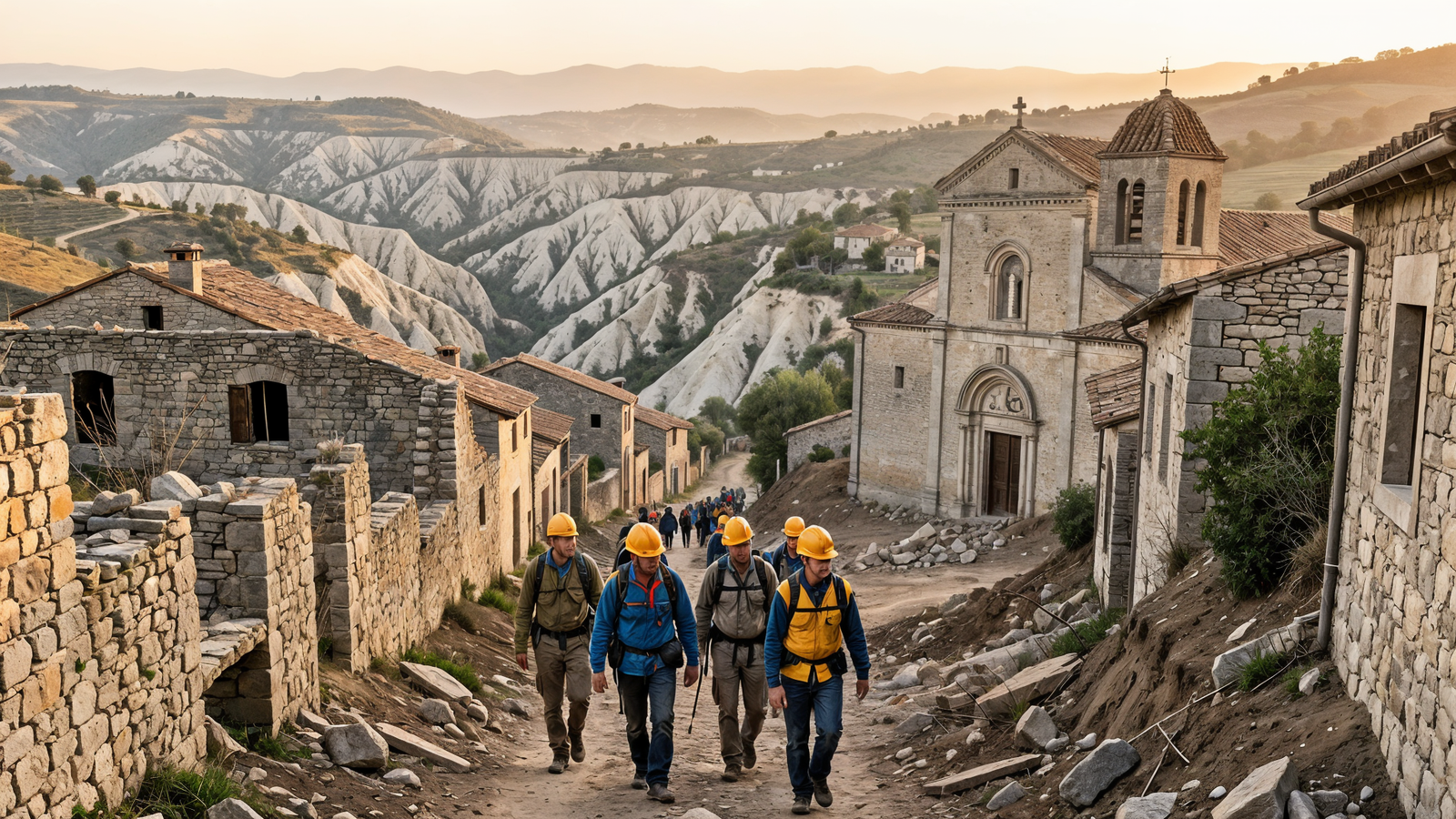
Access runs through the visitor setup at the base of the old town, commonly under the Oltre l’Arte umbrella, with museum space tied to the former San Pietro complex lower on the slope. Buy the ticket, take the helmet, listen once. A typical guided loop runs an hour to ninety minutes. You are not meant to freestyle through unstable masonry. The hard hat is not a costume. It is what you wear under cracked lintels.
The route threads what used to be ordinary life: bakeries, shops, domestic rooms, stair flights that stop in midair. The Chiesa Madre still holds the upper part of the borgo even when interiors are limited. The Norman tower is the climb worth the effort. From up there the calanchi look like pale, folded scars, and the Cavone valley opens without anyone selling you the view. Clear days make the emptiness feel odd and open. Wind makes the hat strap more important than your camera strap.
Go early if you can. Midday bleaches the clay and flattens the facades into one dusty mass. Lower light pulls windows into dark rectangles and gives the tower a cleaner edge. Summer heat on the exposed ridge is rough. Winter mud on the access roads is worse. Do not expect cafés inside Craco Vecchio. Bring water, keep the ticket handy, and stay behind the cordons. The place does not need a soundtrack.
Calanchi, not costume
The landscape around Craco does half the work. The calanchi (bare, gullied clay slopes) look almost lunar in hard light and softer when cloud takes the glare off. That is why the ridge feels precarious, and why the silhouette photographs so well from a distance. Stop on the approach road before you commit to the ticket line. The far view of Craco on its spur matters as much as any interior room you will enter with a helmet on.
Local life after the tour is not on these empty stairs. It is in Pisticci, in Craco Peschiera, and in masserie where dinner still means bread with a crust and something that grew nearby. Pair Craco with a slow loop. Do not treat it as a checkbox on the way to Matera’s Sassi. One ghost town is enough for a morning.
Eating after the empty streets
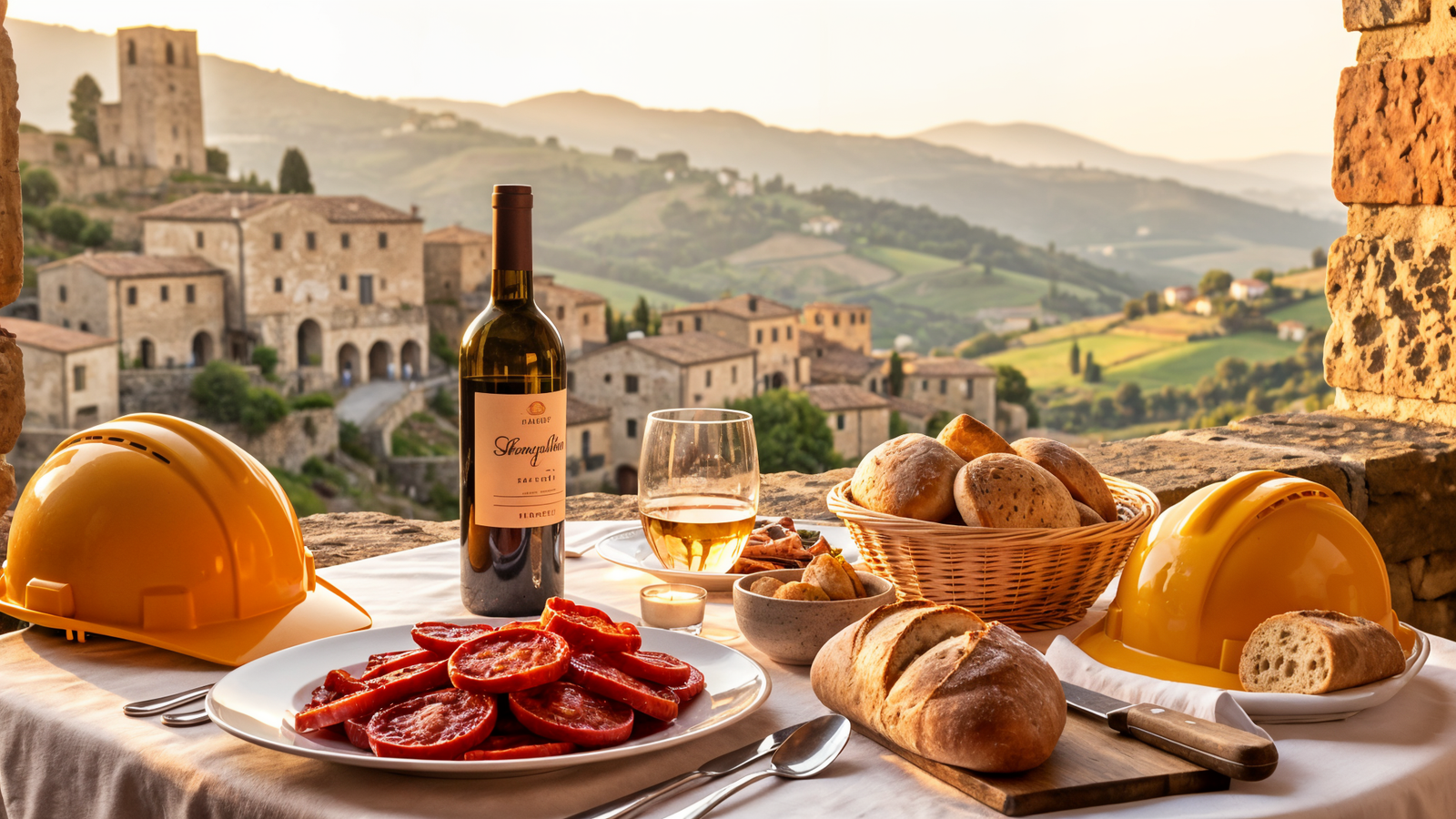
There are no proper restaurants in the abandoned core. Plan food in living Pisticci or at countryside tables between the hills and the Metapontino plain. Book Friday and Saturday nights. Weekdays are easier. Menus heavy with three-language folklore are usually less interesting than a room where the specials are written once.
Ristorante Pizzeria L’Incontro, Via Risorgimento 2, 75015 Pisticci MT, sits in the lived-in town fabric near Piazza Plebiscito. Pizza works when you want something simple after the ridge; a fuller plate works when the kitchen is turning out Lucanian comfort. Useful first stop when you come down hungry and slightly dusty.
Tenuta San Tommaso, Contrada Terranova, 75015 Pisticci MT, is the better pick when you want the meal to feel like the landscape: agriturismo table, space around you, none of the ghost-town theatrics. Grilled meats, vegetables that taste like they had a field, and a slower evening if Craco was your morning.
Il Calanco, Contrada Santa Lucia, 75015 Pisticci MT, doubles as lodging and a countryside kitchen when you would rather not re-enter town traffic. Honest portions, local products, a night that ends with dark hills instead of streetlights. Confirm dinner hours when you book the room. Inland places still keep real closing times.
Daytime can stay lighter: coffee on Corso Margherita in Pisticci, water before any second viewpoint. Save the long meal for after the helmet comes off.
Places to stay
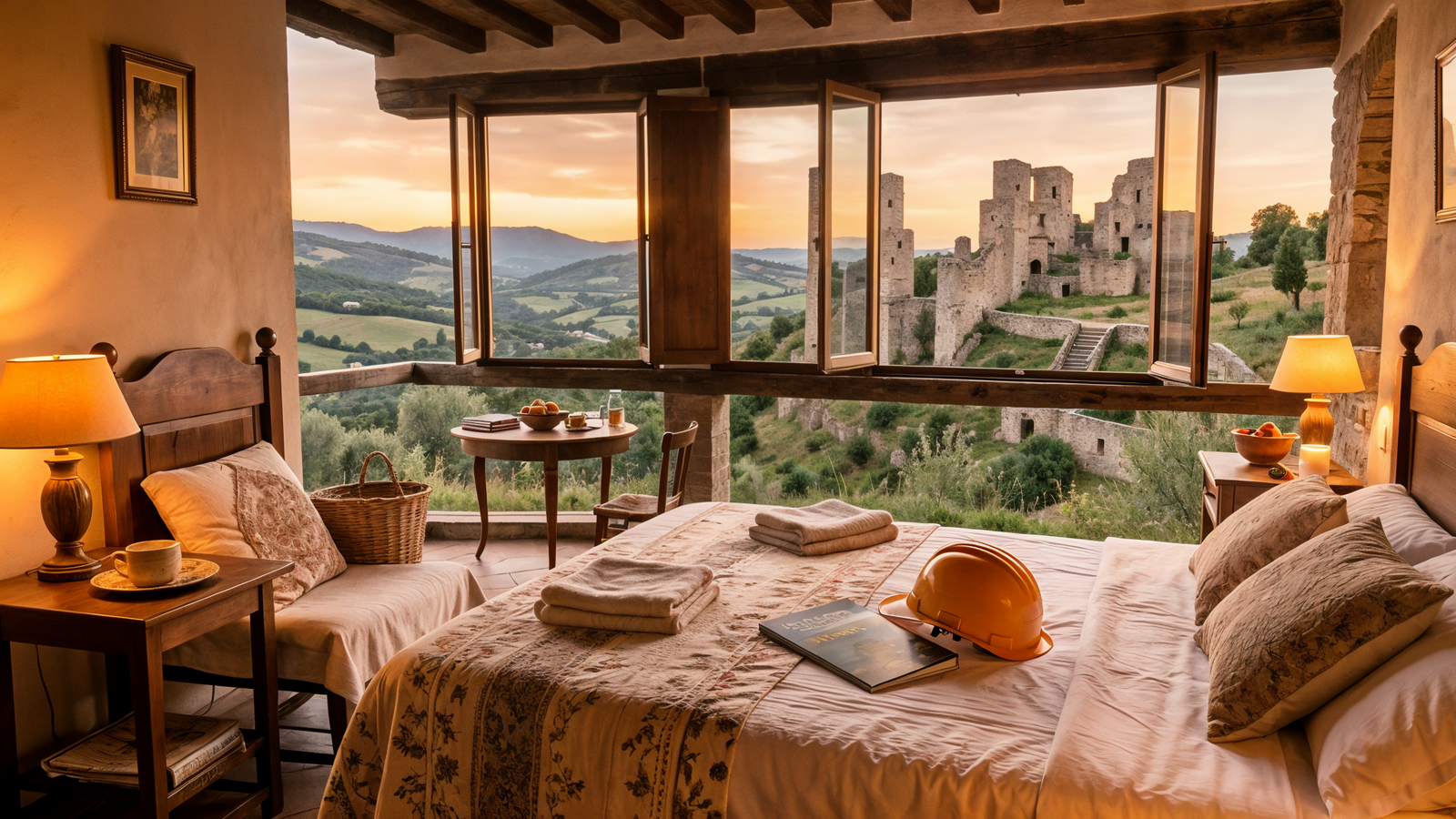
Nobody sleeps in Craco Vecchio. You sleep in Pisticci or in the masserie that stretch from the clay hills toward the Ionian edge. Choose town if you want evening streets. Choose countryside if Craco is a morning out-and-back and you want parking without a hunt.
Budget: B&B Le Camelie, Via Archimede 60, 75015 Pisticci MT. A straightforward town address near ordinary services (bar, bakery, streets where people actually live). Rooms are simple and practical. You trade design polish for a fair rate and a base that does not require a dirt-road flashlight at midnight.
Midrange: Il Calanco, Contrada Santa Lucia, 75015 Pisticci MT. Countryside stay with the calanchi in the name for a reason. Pool when the season is right, restaurant on site, parking that makes a Craco morning easy. Choose it when you want the landscape to keep going after the tour ends.
Splurge: Torre Fiore Hotel Masseria, Contrada Terranova, 75015 Pisticci MT. A restored masseria turned boutique stay in the rural belt near Pisticci, with more design intention and a quieter night than the centro. Use it when Craco is one sharp stop in a slower Basilicata loop and you want the evening to feel like more than a parking solution.
Getting here and moving around
Craco is a car place. Bari and Naples are the usual air gateways; from there you are on the Basentana (SS 407) world of exits and provincial spurs. From the Pisticci area, follow signs up toward Craco. Expect curves, occasional broken pavement, and sudden views that make people stop in stupid places. Pull off cleanly. Do not block farm traffic for a photo.
There is no hop-off-the-train fantasy here. Buses are not built around your itinerary. A car also unlocks Pisticci’s centro and the wider calanchi edges.
Watch your footwear on loose stone and dust. Midsummer afternoons on the spur are harsh; after rain, clay approaches get slick. Check tour timetables before you build a rigid day. Groups run on a schedule.
A day that fits the empty ridge
Morning: coffee in Pisticci, then the drive toward Craco while the light is still decent on the clay. Stop once for the distant silhouette. Ticket, helmet, guided loop through the lanes, the Chiesa Madre area, and the Norman tower view over the Cavone folds. Midday: lunch at L’Incontro if you want town noise, or Tenuta San Tommaso if you want countryside quiet. Afternoon: a slow second look at the calanchi from a roadside pull-off, or simply nothing. Let the morning sit. Late day: walk a living street in Pisticci so your last image of Basilicata is not only abandonment. Evening: dinner at Il Calanco or back at the masseria table, early enough that the dark hills feel calm instead of staged.
Craco will not give you shopping streets or a night market. It should not. This is a ridge that failed its residents and kept its outline: hard hats under a Norman tower, empty windows aimed at pale clay, a guide’s voice where kitchen noise used to be. Take the ticket seriously. Stand long enough on the tower side for the valley to go quiet in your head. Then drive down to a table where someone still cooks for the living.
