
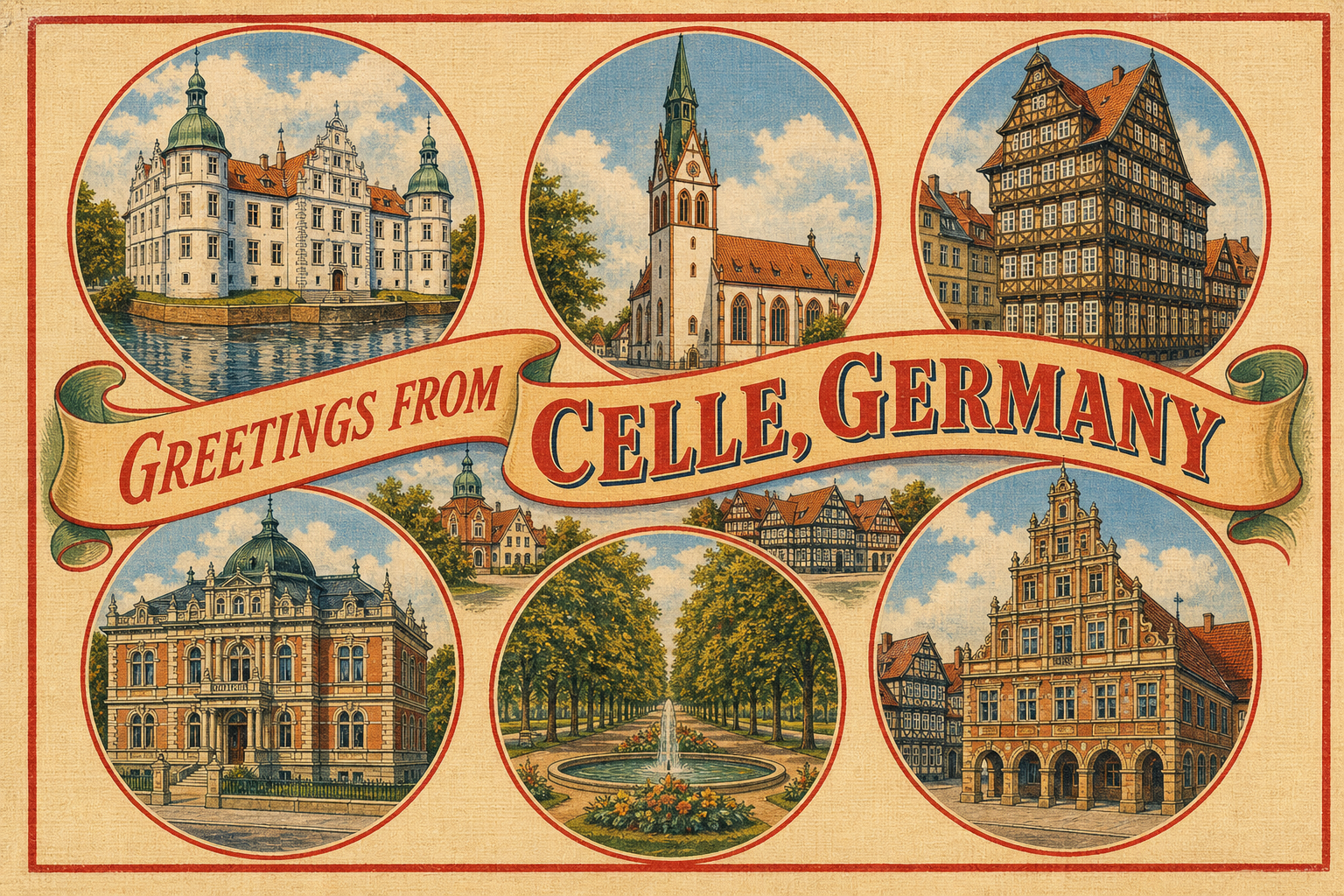
Most people treat Celle as a half-timber postcard on the way to the Lüneburg Heath — Schloss photo, one street of carved gables, coffee, train north. Fair if you only want a Weser Renaissance checklist. Thin if you like a working Niedersachsen residence town that still runs on Aller light, a French garden that never quite became a tourist maze, and beams that lean because merchants kept building after the dukes left.
I start under the Hoppener Haus carvings when Stechbahn is still quiet, walk the Altstadt toward Stadtkirche before the trumpet hour claims the tower, then let the French Garden and Aller meadows finish the day. Timber lane, lime alley, river bank. That is the Celle sequence I keep.
Hoppener beams, Stechbahn, and morning that still belongs to the Altstadt
Celle sits in eastern Lower Saxony on the Aller, about forty kilometers northeast of Hannover, at the southern edge of the Lüneburg Heath. From 1378 to 1705 it was the residence of the Brunswick-Lüneburg dukes. That money paid for Schloss wings, a Baroque theatre, and the half-timber walls that still fill the core. Roughly four hundred restored Fachwerk houses make the Altstadt one of the densest timber ensembles on the German Timber-Frame Road. Delivery bikes, bakery lines, and ordinary shopping still cut through the same lanes. The town did not freeze in 1600.
Stechbahn runs as the civic spine between Schloss and Markt — wide enough for markets, narrow enough that carved oriels still feel close. Hoppener Haus (1532) is the house everyone photographs: six storeys of colored carving stacked above a corner that still works as a street, not a sealed museum set. Stand under it early, before tour groups queue for the angle. Ordinary doors and upper windows still live above the same beams.
From Stechbahn, Kalandgasse, Zöllnerstraße, and the lanes toward Großer Plan hold smaller shops and bakeries, plus residential doors that still feel used. Altes Rathaus anchors Markt with Weser Renaissance gables; Ratskeller cellars still sit under civic stone when kitchens are open. Stadtkirche St. Marien lifts a white tower over the roofs. Climb if your legs allow, or time a walk for the traditional trumpet calls. One church interior done slowly beats racing every chapel plaque.
The synagogue on Im Kreise is northern Germany’s oldest surviving Jewish house of worship (1740), easy to miss if you only chase gables. Bomann Museum and the Residenzmuseum in the Schloss handle deeper history when rain wins. Kunstmuseum Celle keeps odd hours by design — walk past after dark and let the light installations work without a ticket queue.
French Garden limes, Schloss moats, and Aller meadow light
South of the Altstadt, the Französischer Garten opens as a formal park that never quite turned into a theme-park lawn. Seventeenth-century French gardeners laid the geometry for the ducal court; lime avenues, pond edges, and long sight lines still cool the southern edge of town. Locals use it the way small cities use their best park: dog loops, bench lunches, kids on the grass. Walk the lime alleys mid-afternoon when the timber streets heat up. The garden is the breath between carved beams and river bank.
Schloss Celle began as a medieval fortress and grew into a Renaissance and Baroque residence. Moats and park paths still ring the white-and-ochre bulk. The chapel holds strong Protestant court art; the Schlosstheater claims continuous Baroque performance history back to 1674. Take one interior thread — chapel or theatre tour — rather than forcing every state room. Outside, the Schlosspark links toward the French Garden without a map app every fifty meters.
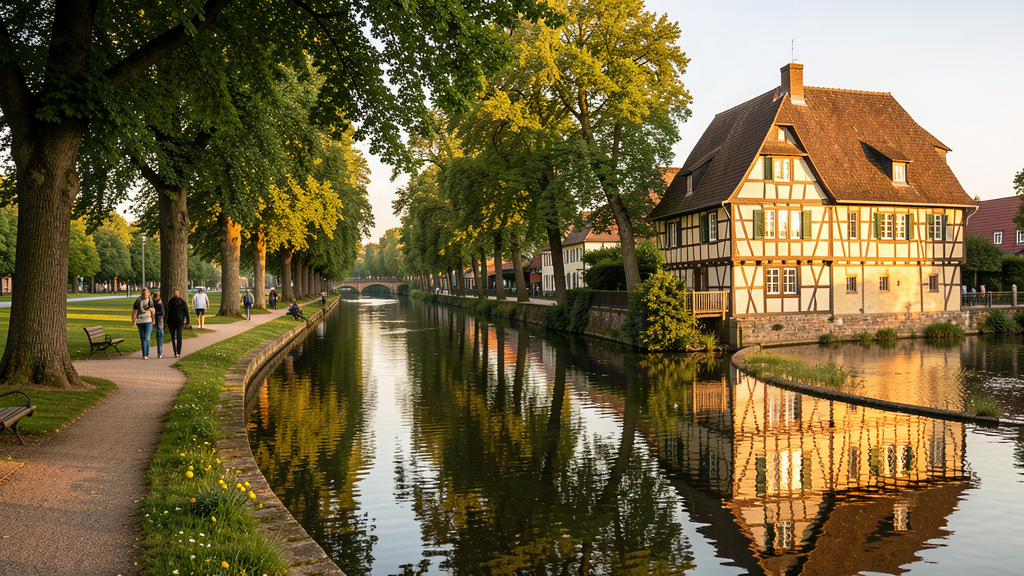
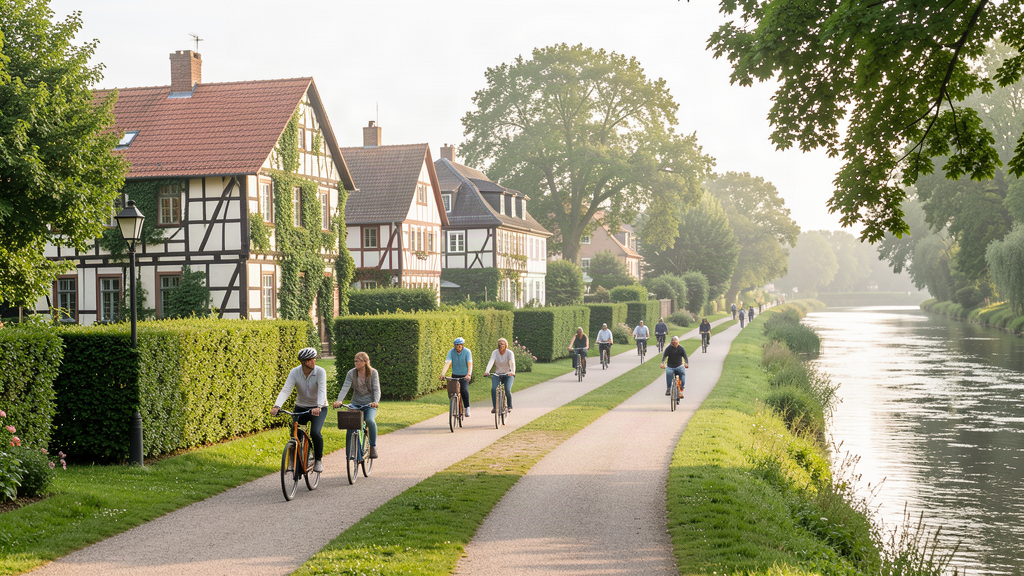
Cross toward the Aller and the mood changes. Dammaschwiesen and the meadow paths on the right bank open under wide sky: picnic grass, slow bikes, ordinary green after the gables close for the night. Thaer’s Garden and the medicinal plant plots sit nearby for a smaller pause. The Aller itself is no Rhine. Low banks, practical water that still shapes evening walks. A simple bank path often beats a short boat loop. Scale makes sense with timber on one side and Heath country on the other — large enough for real shops, small enough that Schloss, Garten, and river still orient a weekend.
Heath day-trips pull hard from here. Südheide Nature Park starts almost at the door; heather season draws the cameras. Go early if you go, then return for Altstadt evening light. Celle’s reward is the timber-to-garden-to-meadow sequence, not another Heath parking lot between ICE stops.
How Celle moves, and a clean day arc
Hauptbahnhof sits a practical walk west of the core. Trains link toward Hannover in under an hour, with lines toward Hamburg, Uelzen, and the Heath towns. Hannover Airport is the usual air door. Inside the center, feet beat parking puzzles. Confirm Schloss tour slots, church tower hours, museum Mondays, and kitchen rest days before you design a perfect arc onto closed doors. Two nights beat a single half-timber sprint between Hannover connections.
If I had two nights I would do it like this: early coffee near Stechbahn before Hoppener fills with cameras, Kalandgasse and Markt while delivery still outnumbers flags, a short Schloss exterior and moat loop, lunch off the loudest square edge, afternoon French Garden limes when timber streets warm, Aller meadows or Dammaschwiesen before dinner back under gables. Sleep close enough that the Altstadt is optional at dawn. Summer fills terraces; autumn clears the lanes; December markets hold Markt without erasing the garden.
Day-trip gravity pulls toward Hannover, Lüneburg, or Bergen-Belsen memorial routes. Resist at least one full day in town. If the Heath calls, treat it as morning out, evening back under carved beams.
Places to Stay
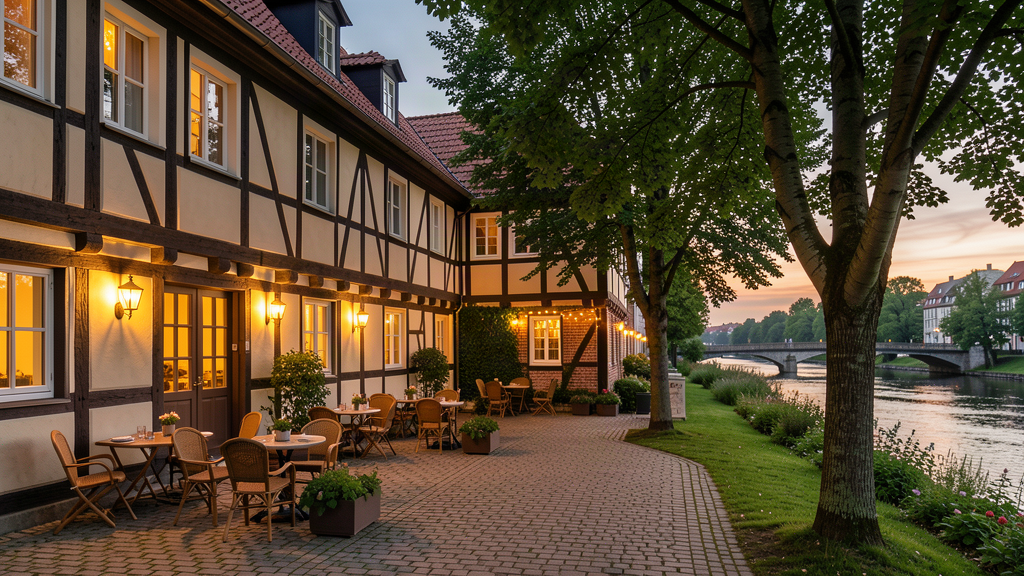
Hotel Schifferkrug (value, 1685 timber near station and Schloss) Speicherstraße 9, 29221 Celle Small privately run house in a 1685 Fachwerk building between Bahnhof and the old town — compact rooms, Weinstube, summer garden, kitchen that still cooks game and regional plates when you want dinner downstairs. Book when you want character without Stechbahn rates and a quiet side street after Congress or Schloss evenings. Rooms are few; confirm late arrival and a quieter room if you sleep light.
Hotel Celler Hof (mid, Stechbahn townhouse by the Schloss) Stechbahn 11, 29221 Celle Privately run three-star in a grand townhouse a few minutes from Schloss, Bomann Museum, and the Hoppener corner — warm rooms, solid breakfast, lobby bar with wine and tap beer, walk-out access to the Altstadt spine. Choose it when the doorstep should be timber lanes without full four-star spa rates. Paid parking is limited; feet win for the center.
Hotel Caroline Mathilde (upper, villa base near Aller and old town edge) Alter Bremer Weg 37, 29223 Celle Privately owned four-star villa-style house on the edge of the historic core toward the Aller — fifty-odd rooms and suites, pool and quieter grounds when weather turns, easy walk or short hop to Schloss and French Garden. Pick it when you want a proper front desk after Heath day runs and a calmer night than the loudest Markt terrace. Rates climb with summer weekends and event calendars; book a garden-facing room if street noise bothers you.
Restaurants and food
Gaststätte Zur Glocke (value-traditional, Piltzergasse plates) Piltzergasse 8, 29221 Celle Classic Gasthaus cooking a short walk off the main photo corners — schnitzel, seasonal greens, local portions without a stage-set menu. Good after Kalandgasse walking or before an early train. Come earlier on Friday nights; the room fills when town regulars and weekend visitors overlap.
Thaers Wirtshaus (mid, open kitchen energy on Thaerplatz) Thaerplatz 1, 29221 Celle Looser wirtshaus-bar hybrid near Congress Union — seasonal plates, Flammkuchen, steaks, lunch deals, brunch when the calendar lines up, terrace when weather allows. Useful after French Garden or Aller loops when you want a meal that still feels local without pure tourist-cellar polish. Kitchen runs long; weekends still want a reservation if you hate waiting.
Hotel Schifferkrug restaurant / Weinstube (upper-casual, Speicherstraße garden) Speicherstraße 9, 29221 Celle Small dining room and summer garden attached to the 1685 house — Heidschnucke, duck, fish when the market allows, wine list that fits a slow evening after Schloss or Dammaschwiesen. Come when you want the meal to feel like the timber town rather than a mall court. Confirm kitchen nights; hotel guests get the easy walk home.
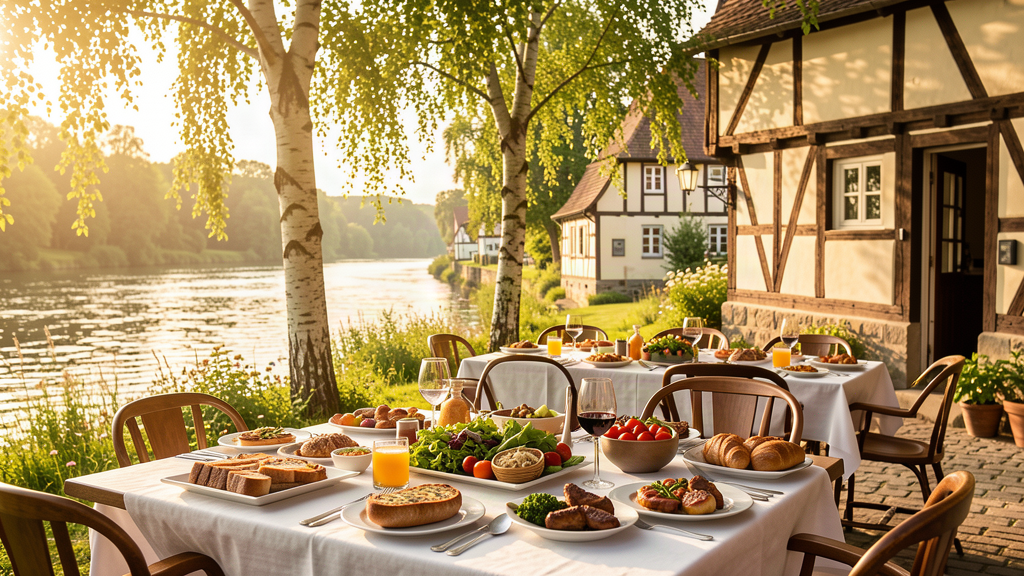
Regional food stays honest: bakery bread and cheese for a walking lunch on Großer Plan, Heath lamb when menus bother, Ratskeller cellar plates under the Altes Rathaus if hours still hold, café coffee under oriels while the tower trumpeter does the day’s quiet work. Stand under Hoppener carvings once in real morning light if you can. Let the French Garden set a slower middle. Sit on an Aller meadow long enough to feel river air after timber shade. Celle is better as beam-to-lime-to-bank than as another half-day Fachwerk stamp from Hannover.
