
![Vintage postcard featuring Syracuse, Italy: central 'Greetings from Syracuse Italy' with circular landmark images around the edges (cathedral, fortress, theater).] _note: remove _](https://thetravelbloggers.com/wp-content/uploads/2026/09/syracuse-Italy-postcard.png "syracuse-Italy-postcard - The Travel Bloggers")
I crossed the short bridge onto Ortigia late in the afternoon, when the stone still held the day's heat and the sea was turning that particular blue-green you only get here. Syracuse has Greek, Roman, Arab, and Norman layers stacked so thick the guidebooks can barely keep up. What stayed with me was simpler: laundry lines between balconies, kids kicking a ball in a tiny piazza, grilled fish drifting from a side street that never made a list of must-sees. The island is small enough to walk end to end in under half an hour, yet it keeps offering corners where the tour groups thin out and you can hear the water slap against the rocks.
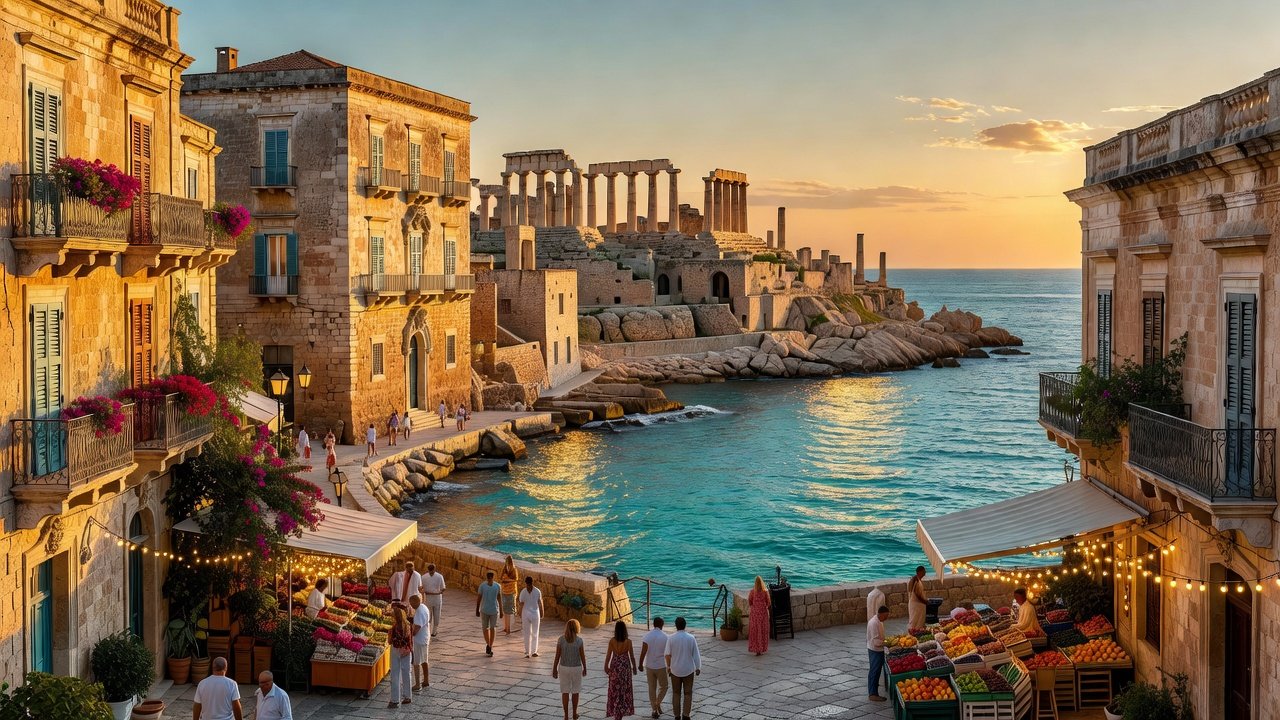
Most people come for the Duomo and the Greek theater on the mainland. Both are worth the time. I kept returning to the ordinary stuff instead—morning market noise, an empty stretch of lungomare at midday, a late walk when the streetlights came on one by one.
Morning at the market and the edges of Ortigia
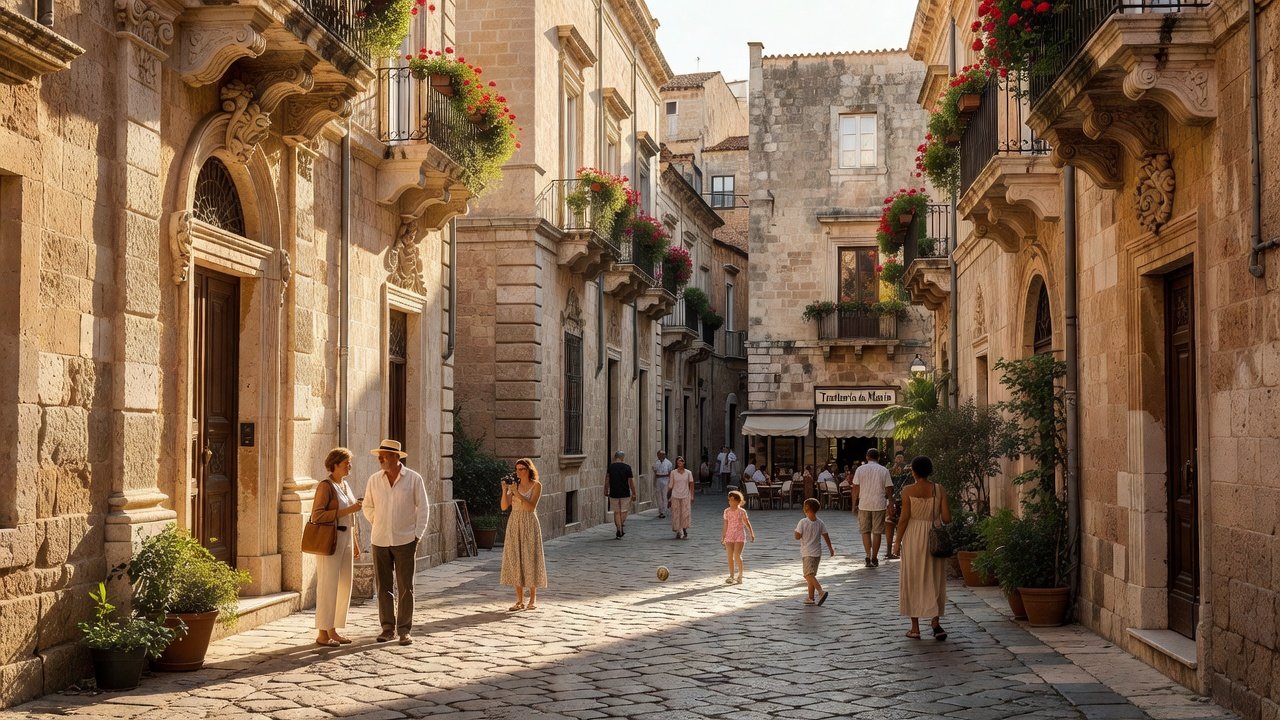
The market near the Temple of Apollo ruins starts early and runs most mornings except Sunday. It is smaller and less frantic than Catania's or Palermo's, which is part of why I liked it. Fish still wet from the boats, piles of purple eggplants, blood oranges, soft cheeses, and the kind of shouting that feels like theater more than commerce. I went twice. The first time I just wandered and watched. The second time I joined the line at Caseificio Borderi on Via Emanuele de Benedictis and waited for a panino built while you stand there—fresh mozzarella, tomatoes, herbs, whatever the counter person decides belongs together that day. Eat it leaning against a wall or walking slowly. Not a polished restaurant experience. Better.
From the market, the lanes of Ortigia open like a maze that never quite becomes confusing. Follow any narrow street and you eventually hit water or a small square. The Giudecca quarter still carries the memory of the Jewish community that once lived here. Deep below street level sits the mikveh, a ritual bath carved into the rock. Visiting it feels private, careful—someone else's history, not a box to tick. Above ground, the streets stay quieter than the areas around the cathedral. You hear footsteps more than engines.
I spent a long stretch sitting near Fonte Aretusa, the freshwater spring that sits almost in the sea, papyrus growing thick around the edges. Ducks and fish share the pool. The myth about the nymph and the river god is nice enough, but the real pleasure is watching locals pass with their dogs while the Ionian light shifts. From here you can walk the western lungomare as the afternoon cools. Couples, older men fishing from the rocks, kids chasing each other. No one is performing for visitors. The city is just going about its evening.
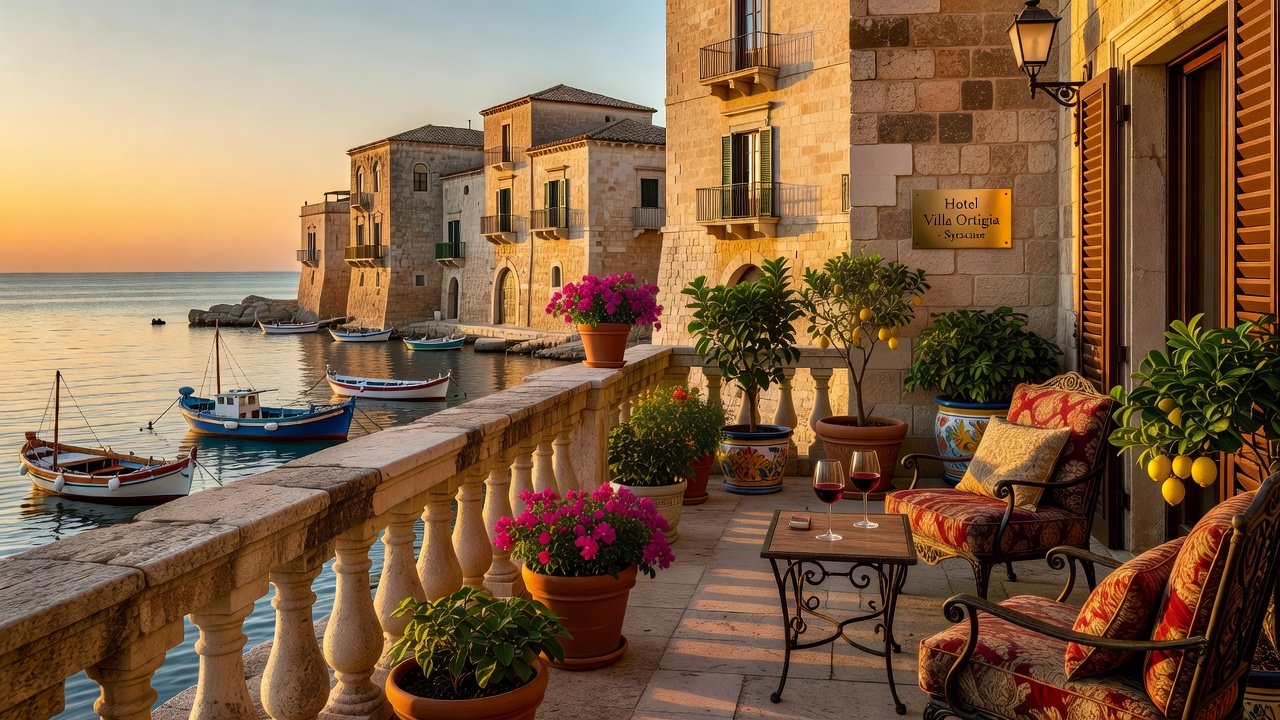
Rocks, water, and a slower mainland
Ortigia's southern tip near Castello Maniace has flat rocks where people swim when the weather cooperates. The water is clear and the castle wall cuts some of the wind. I went in the late morning when the tour buses were still parked at the big sites. The water was cold at first, then perfect. You dry off on the stone with salt on your skin and the sound of waves doing most of the talking.
Crossing back to the mainland, the Neapolis Archaeological Park holds the Greek theater, the Ear of Dionysius, and the Roman amphitheater. Go early or late if you can. Even empty, the theater has a gravity that photographs rarely capture. I found myself more interested in the Latomie, the old stone quarries turned into gardens and shaded paths. Light filters through the trees, and for stretches you can walk without hearing anyone else's conversation.
Further out, the city softens into ordinary neighborhoods. A short bus or taxi can get you to quieter swimming spots. Syracuse works better when you leave room for an unexpected gelato or a second coffee that turns into an hour of people-watching.
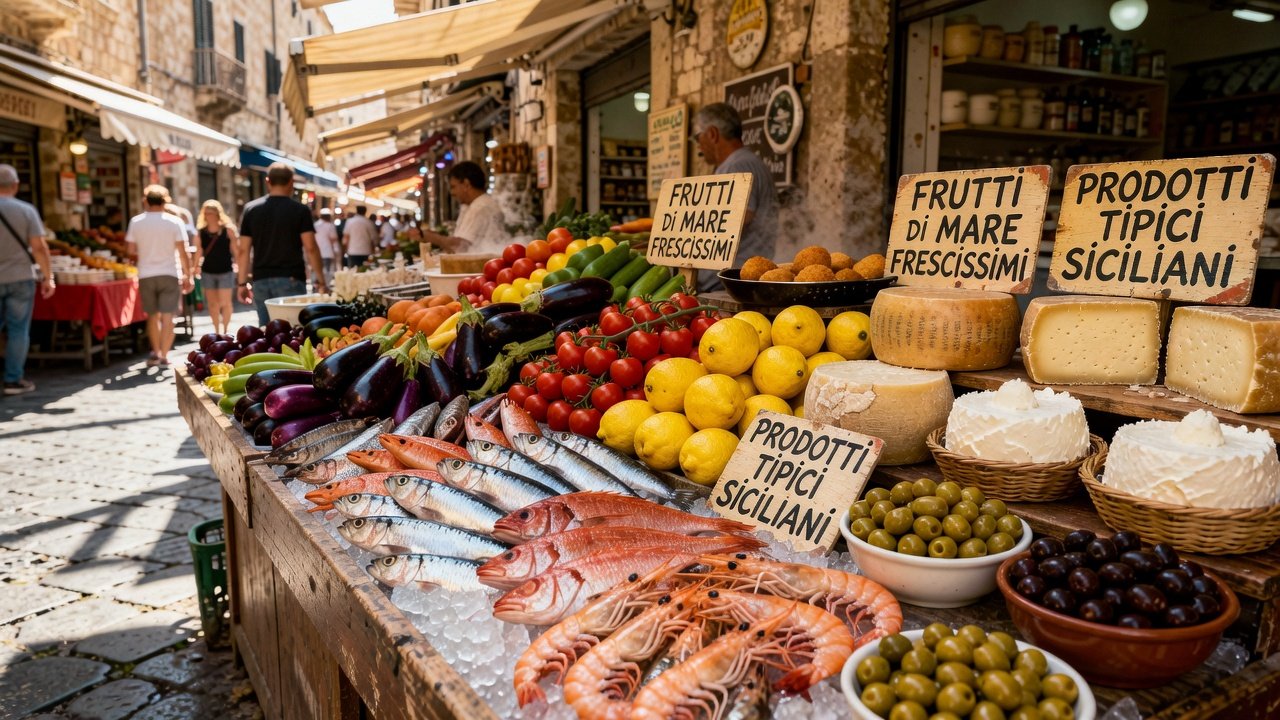
Where to stay
Three solid bases on Ortigia, different price points, all walkable to the market and the water:
- Hotel Gutkowski (Lungomare di Levante Elio Vittorini, 26, 96100 Siracusa SR, Italy) — Modest boutique place in restored fishermen's buildings on the eastern waterfront. Simple rooms, some with sea views, and a terrace that catches the morning light. Mid-range, strong location: you step out onto the promenade. Character without ceremony.
- Charme Hotel Henry's House (Via del Castello Maniace, 68, 96100 Siracusa SR, Italy) — Small hotel in a historic building near the southern tip, looking toward the Gulf. Rooms feel personal rather than corporate; you hear the sea at night. Mid-to-upper rates depending on season. Short walk to the swimming rocks and Castello Maniace, easy stroll toward the Duomo lanes.
- Algilà Ortigia Charme Hotel (Via Vittorio Veneto 93, 96100 Siracusa SR, Italy) — More polished boutique option on the waterfront across restored buildings, with sea views and higher service. Upper mid to luxury pricing. Quiet base after long walking days, historic center still minutes away on foot.
All three keep you on the island, which is where the real life of the visit happens. Mainland hotels can be cheaper and easier for drivers, but you will spend more time crossing bridges and looking for parking.
Where to eat
Beyond the market sandwich, three places that reward sitting down:
- Caseificio Borderi (Via Emanuele de Benedictis 6, 96100 Siracusa) — Already mentioned, but worth repeating. Morning only, market setting, legendary panini and cheese. Go early; they sell out of bread. Casual, loud, and worth the wait.
- Sicilia in Tavola (Via Cavour 28, 96100 Siracusa) — Small, family-run, traditional Sicilian cooking without unnecessary fuss. Pasta with fresh seafood, seasonal vegetables, secondi that taste like someone actually cooked them for you rather than for a photo. Reservations help in the evening. The room is intimate; conversations stay at neighboring tables without becoming performance.
- Don Camillo (Via Maestranza 96, 96100 Siracusa) — A step more formal, set in a historic space with careful Sicilian and seafood cooking. Good wine list, attentive service, plates that justify a longer meal. Popular for a reason, so book ahead. The kitchen still felt rooted in place, not chasing trends.
For evenings, the western lungomare fills with aperitivo tables as the light softens. Order something simple, watch the sky, and let dinner wait. Many restaurants stay open late enough that you never feel rushed.
Getting around and practical notes
Ortigia is best on foot. Streets are narrow, parking is limited, and walking is half the pleasure. Comfortable shoes matter more than a car. The mainland sites are a short bus ride or taxi from the bridges; the train station sits on the mainland side and connects to Catania and beyond. If you fly into Catania Fontanarossa, the bus or train to Syracuse is straightforward.
Summers are hot and busier. Shoulder seasons (spring and fall) give you milder weather and more space on the rocks and in the lanes. Winter can be quiet and atmospheric if you accept shorter days and occasional rain. Bring a light layer for evenings even in warmer months; the sea breeze cools things down.
Syracuse does not need you to conquer it. The Duomo's facade, the theater carved into the hillside, the papyrus in the spring—they're all still there if you want them. What stuck longer for me were smaller things: salt on my skin after swimming, a market sandwich eaten standing up, stone streets emptying after dinner while the water kept moving against the rocks. Give the place a few unhurried days and stay on Ortigia. It starts to feel less like a destination and more like a temporary neighborhood you are lucky enough to borrow.
