
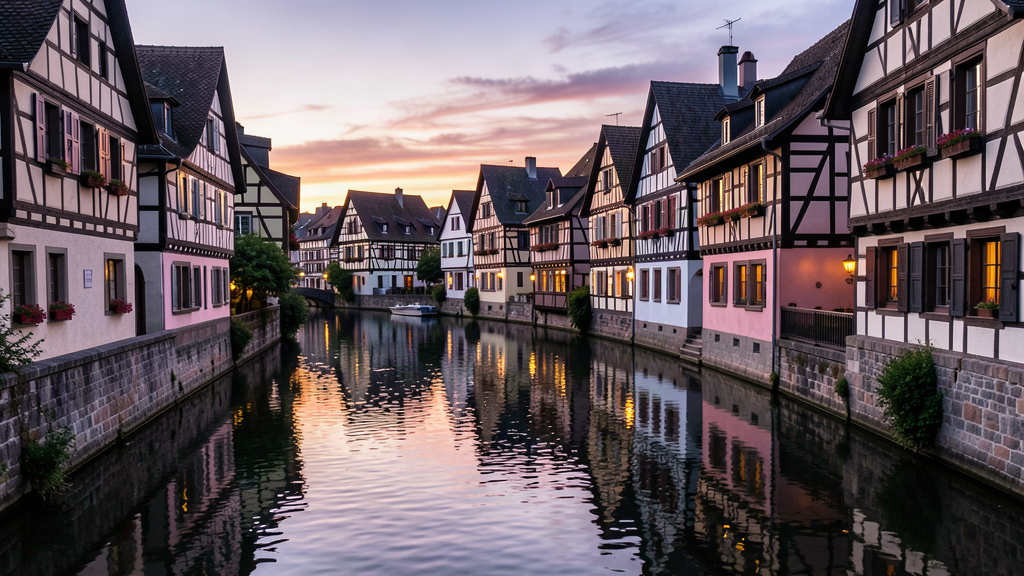
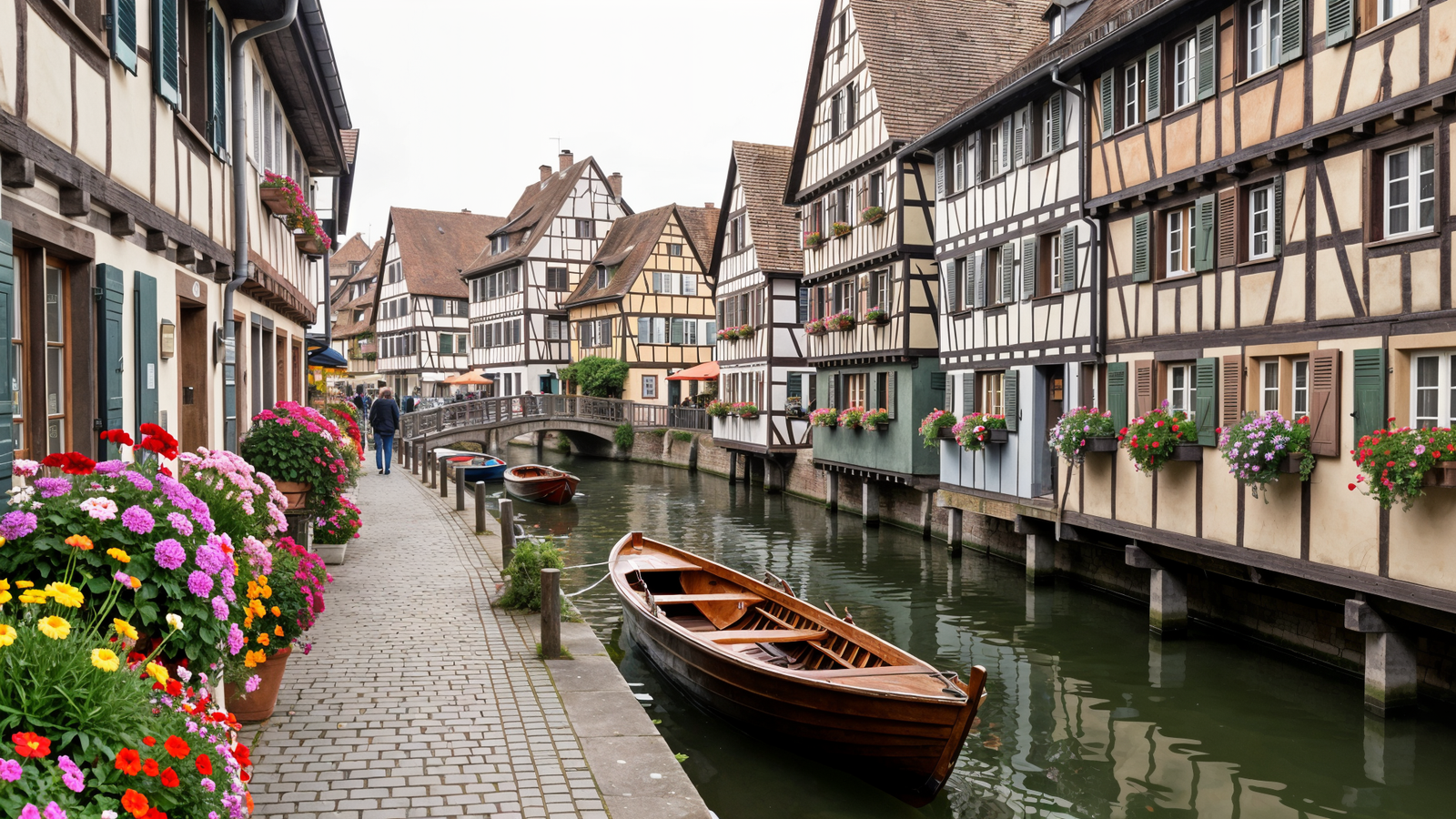
I start in Colmar where the Lauch narrows between half-timbered houses and flower boxes lean over the water. Petite Venise is the name on every map, but the stretch itself is quieter if you arrive before the boat queues form: a working canal that once fed tanners and fishmongers, still lined with shutters and laundry lines when the day is young.
Colmar sits in Haut-Rhin, Alsace, Grand Est — between the Vosges foothills and the Rhine plain, on the Alsace Wine Route and an easy train hop from Strasbourg or Basel. People come for the storybook façades. I stay for the water from the Koïfhus down past Quai de la Poissonnerie to the bridges at Turenne and Saint-Pierre, and for the streets just off the canal where bakers open and delivery vans still fit.
The canal before the boats fill it
Petite Venise follows the Lauch through the southeast of the old town. The district begins behind the Koïfhus, the old customs house, runs along the former fishmongers’ quay, and ends at the Turenne and Saint-Pierre bridges. Houses sit close to the water on both banks. Timber frames tilt. Window boxes drip geraniums in season. It is pretty, and people still live upstairs.
Walk without a checklist. Cross one bridge, then another. Look down at the green water and the stone edges. Early morning is best: joggers, a few residents with shopping bags, light on the plaster before tour groups stake out the classic photo spots. Midday brings more cameras and the small flat boats that glide under the bridges. Take a boat if you want the waterline view; you can also stick to the banks for free.
From the quays, side lanes climb back into denser timber. Notice doors and courtyard gates. The canal is the famous strip. The rest of the town feeds into it.
Tanners’ lanes and the older grain
North and west of the water, the Quartier des Tanneurs keeps a tighter, steeper feel. Rue des Tanneurs and the streets around it once hung leather to dry in the open air. The tall, narrow houses still look built for that work — high attic windows, dark wood, roofs that pitch hard. Climb, turn, and watch how the stone underfoot changes.
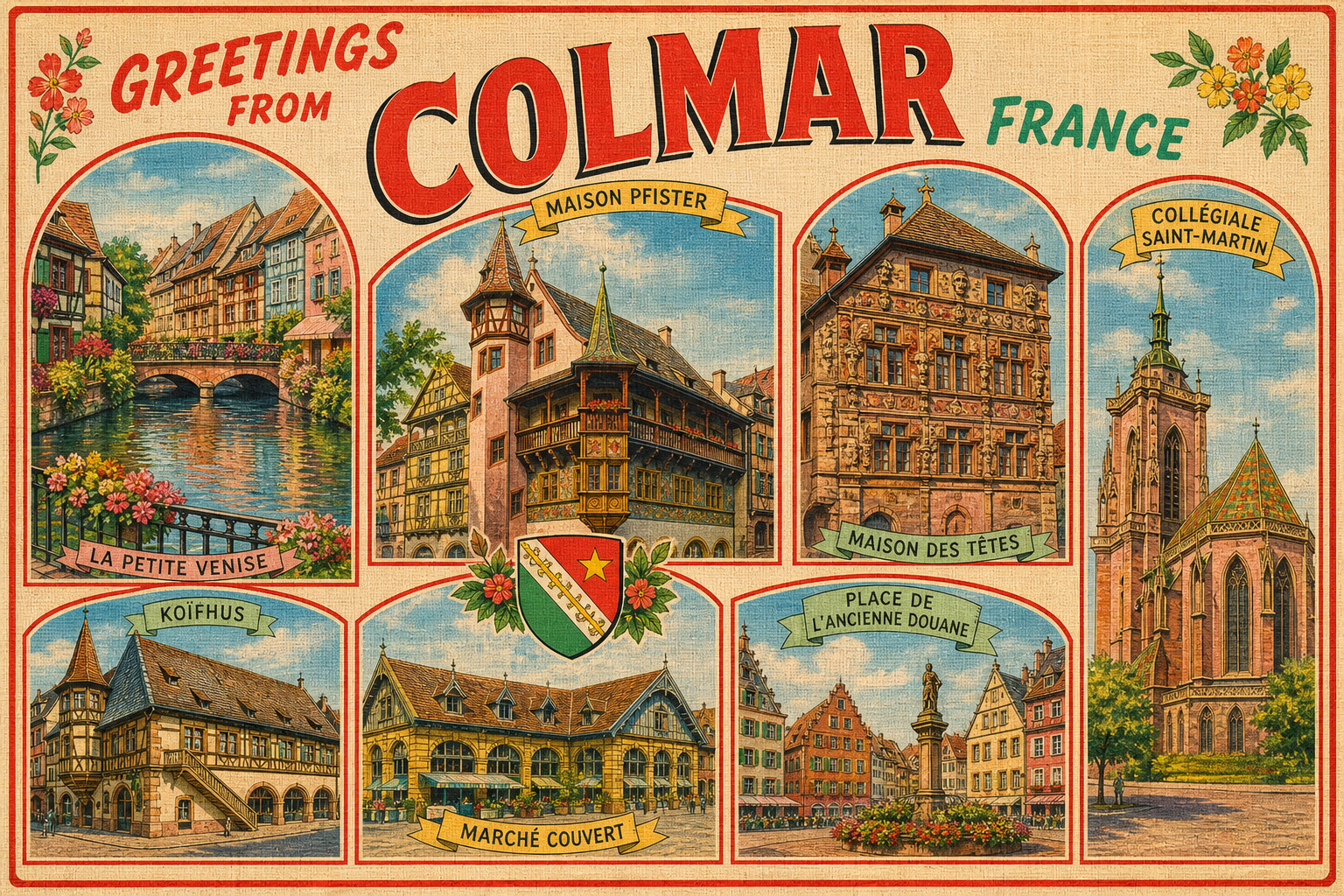
Nearby, Maison Pfister on Rue des Marchands is the carved and painted town house everyone points at. Give it two quiet minutes instead of a phone snap from the middle of the street. The Koïfhus marks the old commercial heart. Collégiale Saint-Martin, Colmar’s main church, holds the center with pink Vosges sandstone and a solid Gothic bulk. Duck inside when the square is loud; the stone cools the air.
I like looping from the tanners’ streets down to the Lauch and back up without forcing a perfect circle. Colmar’s old town is small enough that getting slightly lost still lands you at a bakery or a canal railing within ten minutes.
Unterlinden, then out again
Musée Unterlinden sits in a former Dominican convent and holds the Isenheim Altarpiece, among other works. Go if you care about painting and late medieval intensity; the altarpiece is not a quick glance. Timed or early entry helps when coaches roll in. Afterward, step back into ordinary streets — dark chapel light, then a café table and a glass of local white.
You do not have to spend the whole day indoors. One strong museum hour and a long outdoor wander usually beats three indoor hours and a rushed canal pass.
Wine edges and Alsatian plates
Colmar is a wine-route town as much as a timber town. Riesling, pinot gris, gewurztraminer, crémant — the labels are everywhere, and the surrounding hills hold the vines. You can book a cellar visit in town or drive (or take a short bus) toward Eguisheim or other villages if you want rows of vines on the same trip. Inside Colmar, a simple glass at a wistub is enough without a full tasting calendar.
Food here is Alsatian first: choucroute, tarte flambée (flammekueche), baeckeoffe when you find it done properly, munster if you like a strong cheese, kougelhopf in bakery windows. Portions run generous. Share if you want to walk afterward. Markets and food halls change with seasons; for a daily meal, a wistub table near the canal or on a side street beats hunting for a single best address.
Places to Stay
ibis Styles Colmar Centre
11 Boulevard du Champ de Mars, 68000 Colmar, France
A practical mid-budget base in a former malt house near the old town edge. Rooms are straightforward, breakfast is included in the usual Accor style, and you can walk to Petite Venise and Saint-Martin without a car. Good when Colmar is one stop on an Alsace run and you want something clean and central.
Hôtel Le Colombier
7 Rue de Turenne, 68000 Colmar, France
A small design hotel in a centuries-old town house right in Petite Venise. Beams, uneven walls, and a location that puts the Lauch almost at the door. You pay more for the setting than for sprawling luxury. Ideal if the canal is why you came and you want to step out before the day crowds build.
La Maison des Têtes
19 Rue des Têtes, 68000 Colmar, France
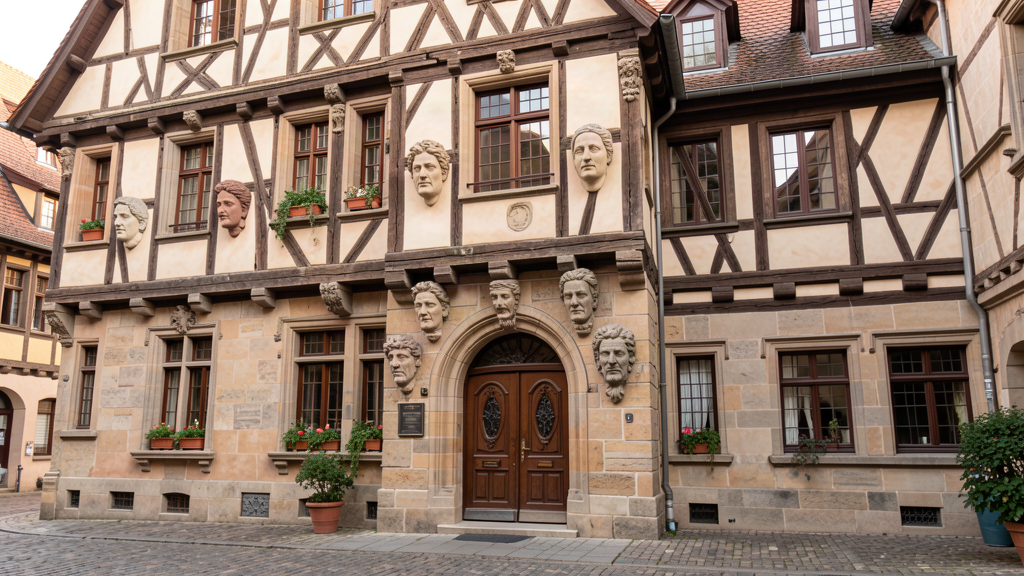
The splurge: a historic house in the center with a sculpted façade of carved heads, polished rooms, and serious dining on site. You stay inside the old town’s densest streets, close to shops and the main squares. Worth it for a short stay when the building itself is part of the trip and you want one polished base rather than hopping hotels.
Restaurants and Food
Wistub Brenner
1 Rue de Turenne, 68000 Colmar, France
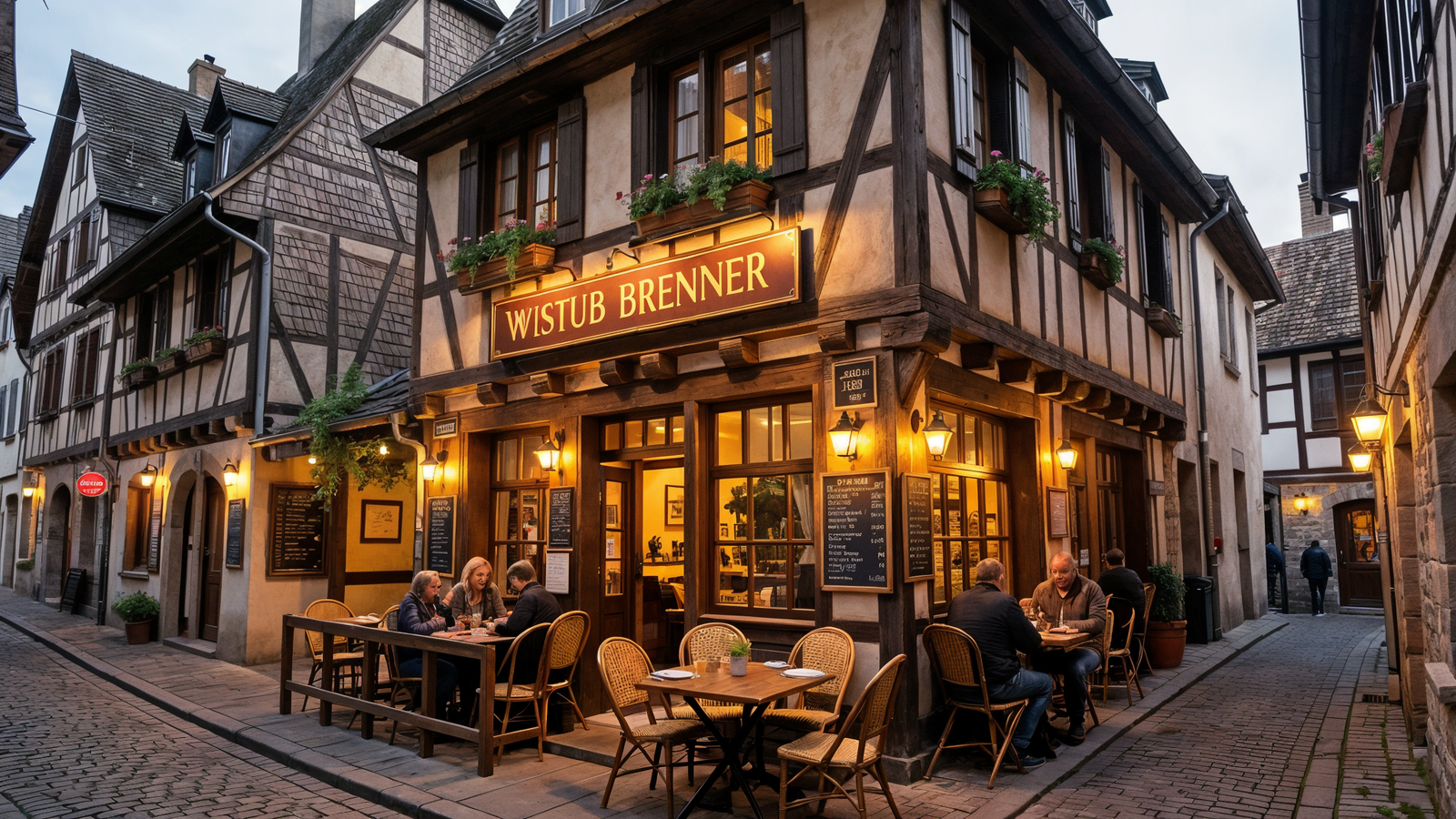
A classic Alsatian wistub a few steps from the Lauch — wood, local plates, the kind of room where choucroute and a carafe make sense after a canal walk. Expect traditional cooking more than invention. Reserve when the town is busy; walk-ins work better at off hours.
Le Fer Rouge
52 Grand’Rue, 68000 Colmar, France
On the main old-town artery, this address leans into homemade Alsatian cooking — choucroute, baeckeoffe, seasonal plates — in a historic building. Useful for a sit-down meal without leaving the walking core. Check the day’s specials; the room fills on weekends.
L’Atelier du Peintre
1 Rue Schongauer, 68000 Colmar, France
A more formal French table in an old house near the center, modern cuisine rather than pure wistub comfort. Come when you want one slower, reserved dinner after days of tarte flambée and canal loops. Opening days are limited; book ahead and confirm hours.
Between reservations, grab a bakery kougelhopf or a simple tarte flambée and sit on a bench by the water. Colmar is kind to the unplanned lunch.
Getting around and small practical notes
The historic center is walkable. Cobbles and bridges ask for decent shoes. A car is a burden inside the old core; use edge parking or arrive by train. Colmar’s station links to Strasbourg, Mulhouse, Basel, and Paris (with connections). Local buses and taxis cover farther hotel stays. Bikes work on flatter stretches if you want to ride toward nearby wine villages.
French is the working language; German and English turn up in tourist-facing spots. Cards are common; small bakeries may prefer cash for low amounts. Summer and December (Christmas markets) are the heavy seasons — book beds and dinner then. Shoulder months give you the Lauch with fewer elbows.
If you only have one day: early walk along the Lauch from the Koïfhus toward the Turenne bridge, late morning in the tanners’ lanes and past Maison Pfister and Saint-Martin, afternoon at Unterlinden or a long lunch, evening back on the quays when the light softens. Two days let you add a wine village, a second canal pass at dawn, and a proper reserved dinner without watching the clock.
A last pass on the water
On my last evening I walked from Rue des Tanneurs down to Quai de la Poissonnerie as the tour boats tied up. Shutters closed one by one. Someone watered window boxes. The Lauch held the last sky color between the timber frames.
Start on the Lauch. Drift into the side streets when you feel like it. The water will still be there when you come back.
