
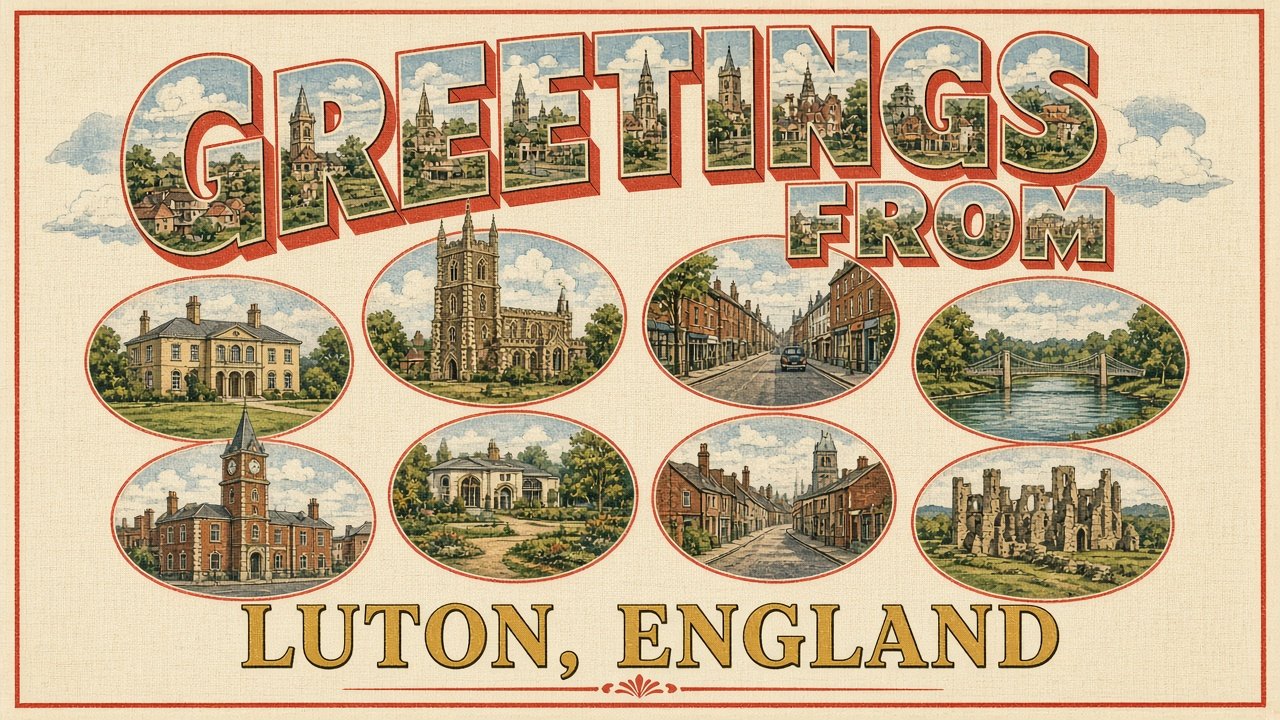
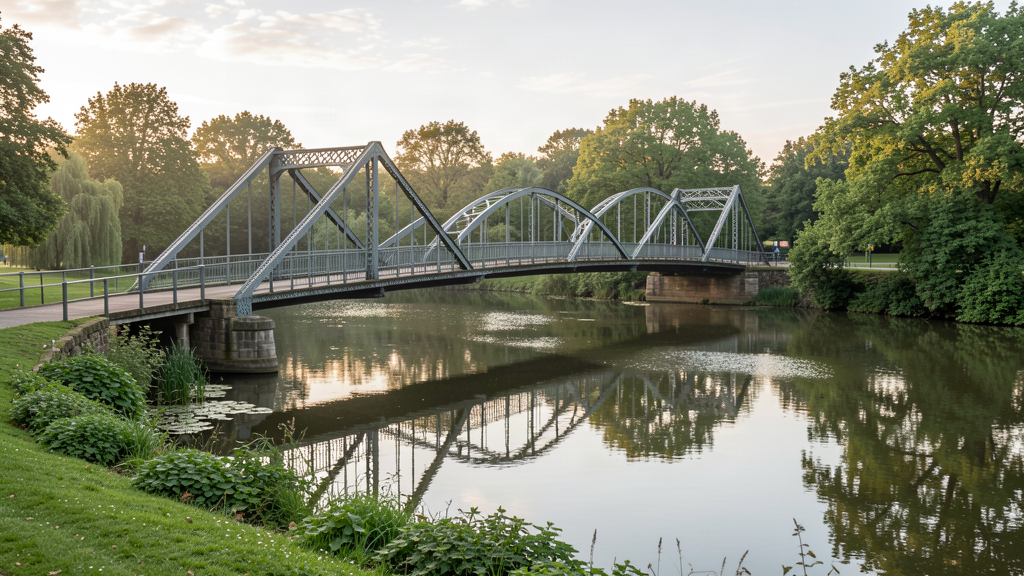
Luton gets sold as airport and football: terminal buses, Parkway taxis, the Kenilworth Road roar. Fine if that is all you need, a bed and a flight. I keep coming back for the short pedestrian suspension bridge over the Lea lake in Wardown Park, one of the shortest in the country, restored and still in daily use, and the tight hat-trade streets of Plaiters’ Lea between station and square. Airport town, yes. Also a Saxon river settlement with a Victorian mansion museum and, south of the dual carriageway, Europe’s largest collection of horse-drawn carriages. Start at the lake. The departure boards can wait an hour.
Wardown Park, the Lea lake, and the short bridge
Wardown Park opens north of the centre along Old Bedford Road, land the corporation bought in 1904 and opened as a park in 1906. The River Lea, which gives Luton its name from the Saxon settlement on the river, widens here into a boating lake with an island, willows, and a pedestrian suspension bridge put up in 1908. Locals call it short. Council notes put it among the shortest suspension bridges in the country. After years of repair, it reopened properly in 2016. Cross it. Stand mid-span and watch the water hold a quiet rectangle of sky between bank and island.
Pedal boats work the lake in season through Wardown Leisure Boating. You do not need a boat. The free loop of path, bridge, and willow shade is the best hour on a weekday morning before the playground fills. Ducks own the island. Dog walkers know the circuit without looking at a map. Sixty quiet minutes at the lake edge beat another coffee in the terminal.
Wardown House sits in the same park: a Victorian mansion that is now Wardown House, Museum and Gallery (Old Bedford Road, Luton, LU2 7HA). Free entry most days. The galleries cover Luton’s hat industry, local archaeology, and art that still feels municipal rather than branded. Go inside for the hat displays if the weather turns; otherwise keep the mansion as a backdrop and stay on the water. The park is the point. The museum is rainy-day insurance.
Plaiters’ Lea, Bute Street, and the hat-factory strip
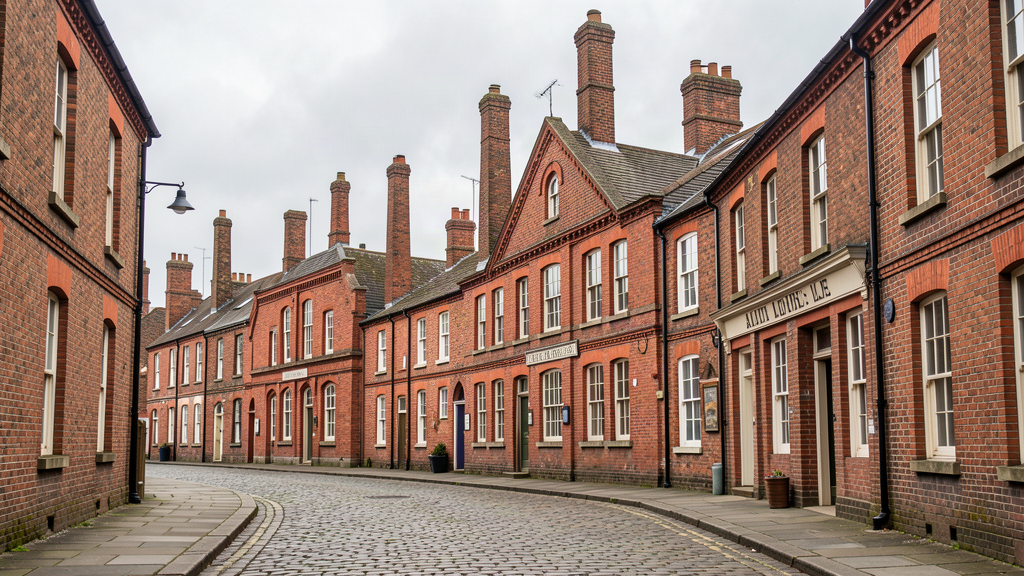
South from the station toward the town centre, Plaiters’ Lea is the conservation pocket that still reads as a hat town. The area is small, under five hectares, with a hub at the crossroads of Guildford Street and Bute Street. Barber’s Lane, Cheapside, and Silver Street mostly follow older routes reworked for purpose-built factories, workshops, and showrooms for plait, blocking, and finished hats. Luton once dressed a large share of British heads. The brick and terracotta fronts still carry that trade even where the tenants have changed.
The Hat Factory at 65–67 Bute Street (LU1 2EY) is the obvious anchor: a former factory now an arts center with café, studio space, and evening events. You do not need a ticket to walk the street. Read the elevations: multi-story workshops, showroom windows, industrial brick between railway and market. High Town, a short climb north of the station, holds more of the domestic workshop side of the same industry if you want a second loop: modest yards and residential scale rather than the multi-story showrooms on Bute. Use Plaiters’ Lea as a hinge between arrival and the park, not as a mall detour. Twenty honest minutes on Bute and Guildford beat an hour in the shopping center.
St Mary’s Church sits in the town core a short walk from the hat streets: one of the larger parish churches in Bedfordshire, with fabric that reaches back through medieval rebuilds and the Wenlock Chapel. Slip in between services if the door is open. Ten minutes under the nave is enough. Pair it with the factory strip the same morning.
Stockwood Discovery Center and the Mossman carriages
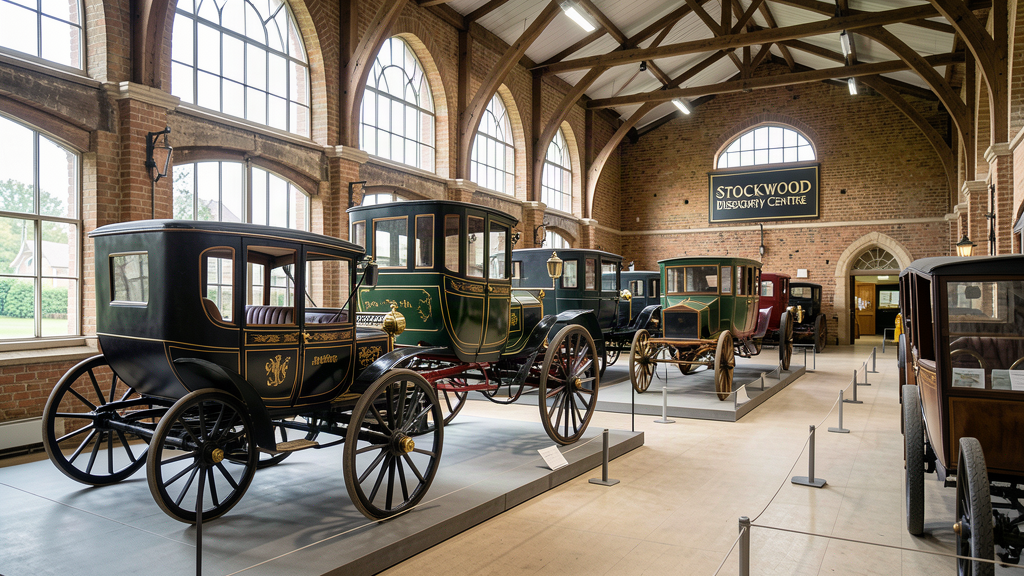
South of the center on London Road (LU1 4LX), Stockwood Discovery Center sits in Stockwood Park with free museum entry and period gardens. The draw for me is the Mossman Collection: Europe’s largest gathering of horse-drawn vehicles, carriages and coaches parked in quiet ranks under cover. Rural crafts, local archaeology, and garden history fill the rest. Go when you have a half-day and a bus or short taxi from the station; it is farther than Wardown and rewards the hop.
The gardens step through centuries of outdoor fashion without asking you to care about fashion. Period rooms open onto lawn and border. On a bright afternoon, the carriages and a slow garden circuit make a good south-side counterweight to the Lea lake up north. Skip the dual-carriageway mindset. Stockwood still feels like estate fringe the town absorbed rather than a bolted-on attraction.
Places to Stay
OYO The Red Lion Hotel – 2 Castle Street, Luton, LU1 3AA. Lower spend pub hotel on Castle Street near the town core, practical when Plaiters’ Lea, St Mary’s, and a morning train are the daytime plan. Simple rooms above a working bar, walkable to station approaches and the hat streets. Book ahead when airport spill fills the centre. Leave the lobby for the Lea lake rather than another terminal transfer.
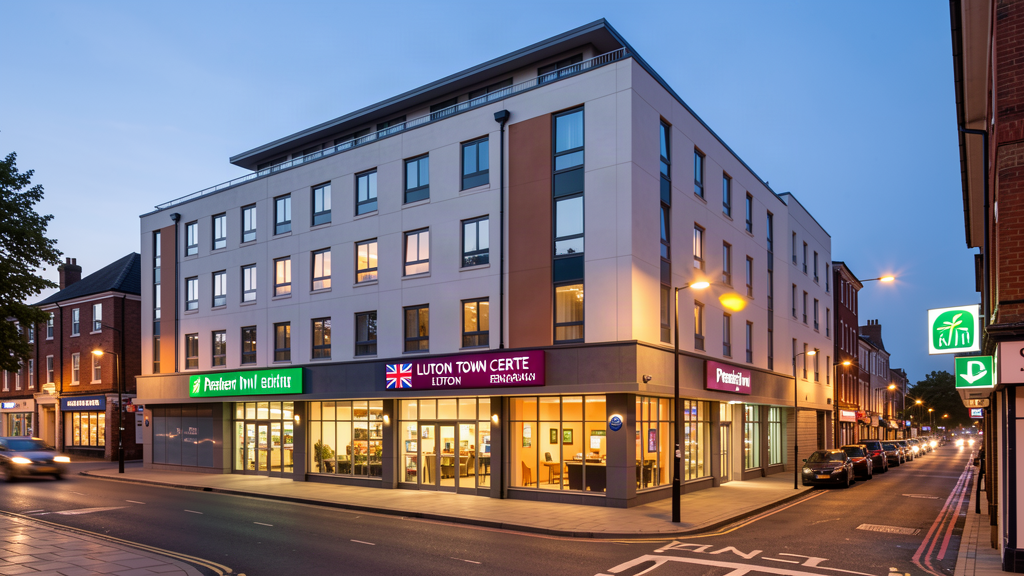
Premier Inn Luton Town Centre – Regent Street, Luton, LU1 5FA. Mid range stay on Regent Street, a short hop from the station side and useful when Wardown Park, Bute Street, and a quiet evening in town are the point. Reliable beds, on-site food, easy bag drop after rail arrival. Park once if you drove, then finish on foot and bus. The mall can wait.
Hilton Garden Inn Luton North – Butterfield, Hitchin Road, Stopsley, Luton, LU2 8DL. Higher spend full-service stay on the Stopsley side, a comfortable base when you want a proper hotel night without sleeping airside. Fitness room, brasserie pace, free parking for the Stockwood hop. Use it when Wardown, the hat streets, and dinner in town are both the plan and the flight can wait until morning.
Where to Eat
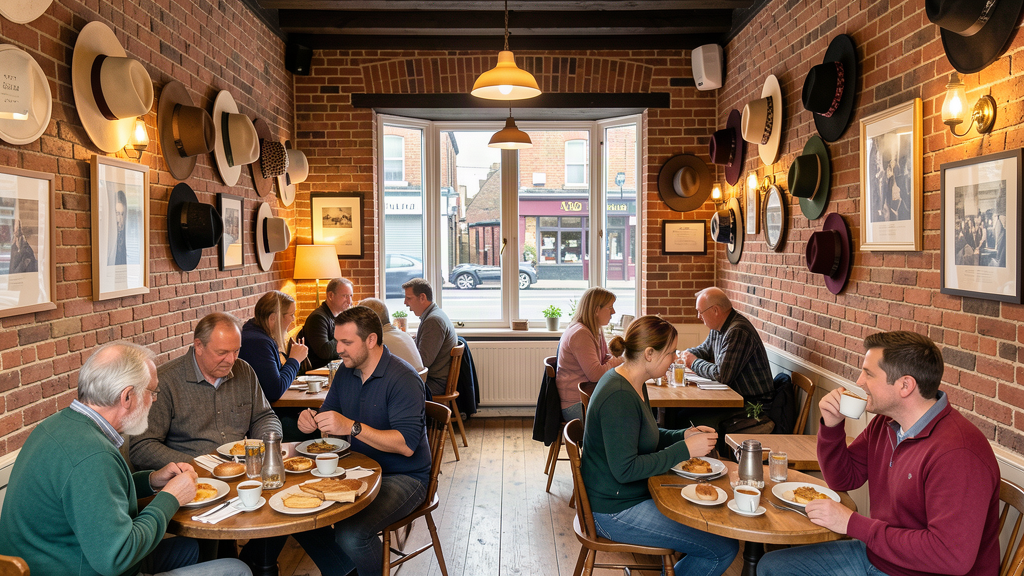
Hat Factory Café – 65–67 Bute Street, Luton, LU1 2EY. Daytime café inside the old factory arts centre: coffee, simple plates, pizza and waffles when you want a sit-down between station and square. Open roughly 9am to 4.30pm most days. Boots from the park path are fine. Use it as a hinge after Plaiters’ Lea and before the bus to Stockwood.
La Trattoria – 66 Bute Street, Luton, LU1 2EY. Family run Italian on the same hat-factory strip, white-tablecloth pace without losing the town-centre location. Long local run; book for dinner. The right close when the suspension bridge and St Mary’s have already done the serious walking. Keep lunch short if Stockwood still needs daylight.
Rathiga Restaurant & Bar – 276 Dunstable Road, Luton, LU4 8JL. North and South Indian plates on the Dunstable Road / Bury Park side, generous portions and a warmer room when you want a sit-down after a match day or a long park circuit. Locals point here when chain rows disappoint. Book at peaks. Taxi or bus from the centre; worth the short hop.
Getting around and leaving room
Luton sits in Bedfordshire on the River Lea, roughly thirty miles northwest of central London, with the airport east of town and the main station feeding both London and the Midlands. Luton Airport Parkway is the fast London link; Luton station drops you closer to Plaiters’ Lea and the walk toward Wardown. Local buses cover Stockwood, Stopsley, and Bury Park; for Stockwood Discovery Center, a bus or short taxi saves time.
Road arrivals should park once at a town multi story, Wardown fringe, or Stockwood, then finish on foot and bus. Sleep in town when you can; treat the airport as a station, not the destination. The Lea starts here and runs south toward the Thames. You do not need the whole river. You need the short bridge and the factory brick.
Useful day shape: Wardown Park for the suspension bridge and lake circuit, museum if wet; south into Plaiters’ Lea and the Hat Factory strip; St Mary’s if the door is open; bus or taxi to Stockwood for the Mossman carriages and gardens. A second block can add High Town workshops or a slower return along the park.
Most visitors ticket the airport bus, ride Parkway, and leave before the Lea lake gets an honest circuit and Bute Street gets twenty minutes of hat-factory brick. Stay long enough for the short bridge and the carriage ranks to feel like the real map under the terminal noise. Lake light on the suspension span, terracotta on Guildford Street, coaches at Stockwood. That is the bit I would keep.
