
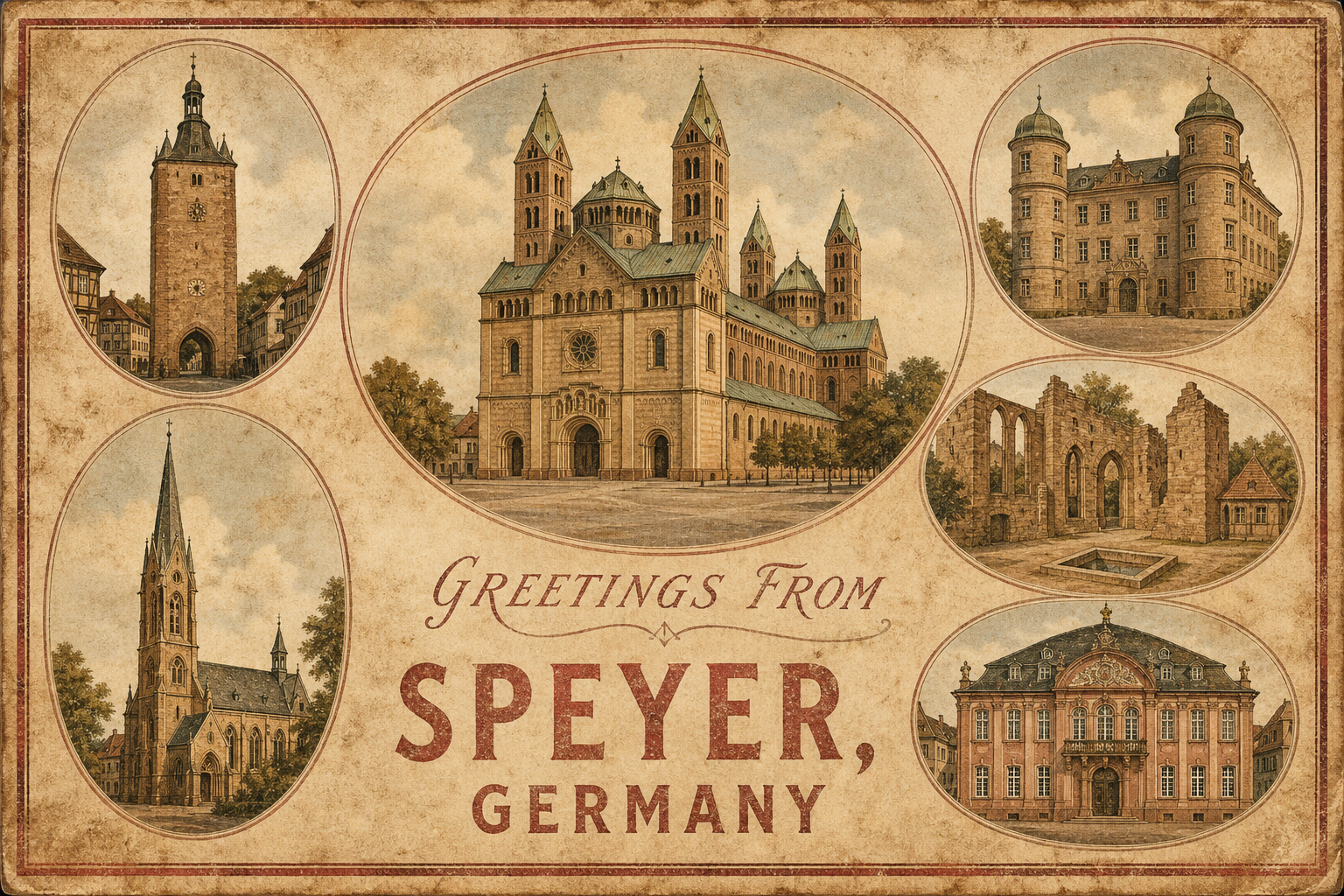
Most travelers pin Speyer to a Dom postcard, a Boeing on stilts at the Technik Museum, or a quick Maximilianstraße gelato between Mannheim and Heidelberg. Fine if the city is only red sandstone and a river bend. Less fine if you like Judenhof when the mikveh still cools your ankles before tour groups thicken the lanes, Altpörtel when it still reads like a working gate, and Leinpfad tables that face ordinary Rhine traffic with no coach timetable in sight.
I take the mikveh early, while stone holds night damp. Maximilianstraße next, when pastel facades belong to errands more than tours. Altpörtel if the short seasonal window is open. Domgarten after that, while Domnapf sits empty as a stone bowl. The river later, when barges slide past Alter Hammer. Courtyard, axis, gate, water. That order holds when Brezelfest noise and museum queues can wait one quieter day.
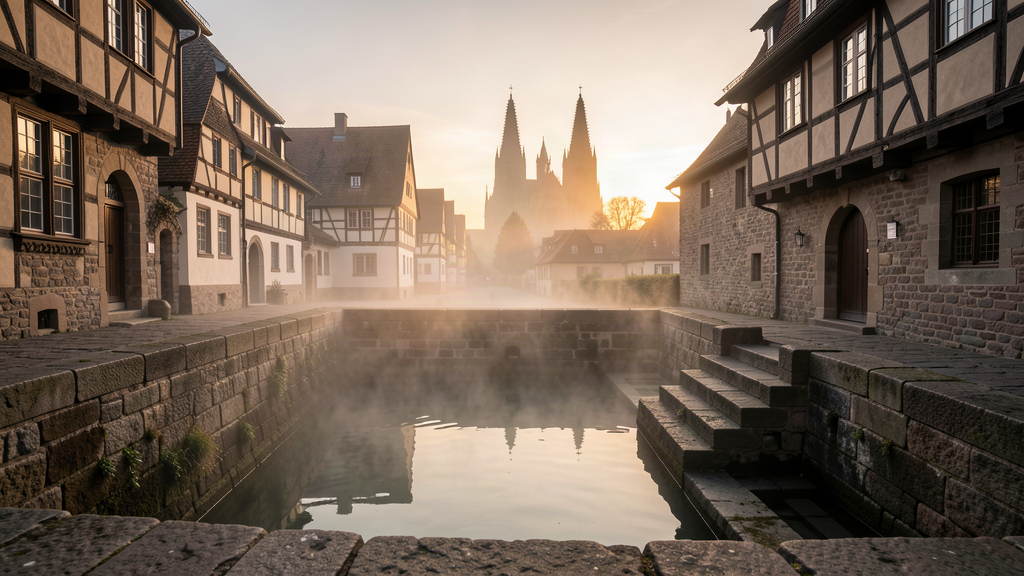
Judenhof steps, SchUM quiet, and Dom stone that cools the afternoon
Speyer sits in Rheinland-Pfalz on the Upper Rhine — free imperial city bones, Salian emperors under Dom vaults, and the SchUM triangle with Worms and Mainz that UNESCO named as one story rather than three separate plaques. Brochures sell Kaiserdom scale, Technik Museum walk-on wings, and Sea Life tanks for kids who need a break from sandstone. I trust the short walk into Judenhof more. The medieval Jewish courtyard still feels like a working site: synagogue wall lines, women’s school traces, and the mikveh shaft cut deep enough that groundwater darkens the lowest steps.
Come early enough that the ticket desk drops you into hush, and the walk from Maximilianstraße feels like a local side street. Stand once at courtyard level for the community footprint, once at the bottom of the mikveh for the cool that never quite leaves the stone, then leave without turning grief into content. The bath is among the oldest preserved ritual mikvaot north of the Alps. Treat the courtyard as a lived place — residual walls, ordinary air after rain — not a stop after a Dom selfie.
Kaiserdom zu Speyer anchors the east end of the old axis: red sandstone, Romanesque bulk, an imperial crypt that cools the afternoon when heat sits on the pedestrian street. I go after Judenhof, not before. Domgarten lawns wrap the apse and the little Heidentürmchen remnant. Domnapf, the huge stone bowl once filled with wine when a new bishop took office, sits near the west front like a civic joke that never fully retired. Historisches Museum der Pfalz on Domplatz holds deeper finds when weather turns.
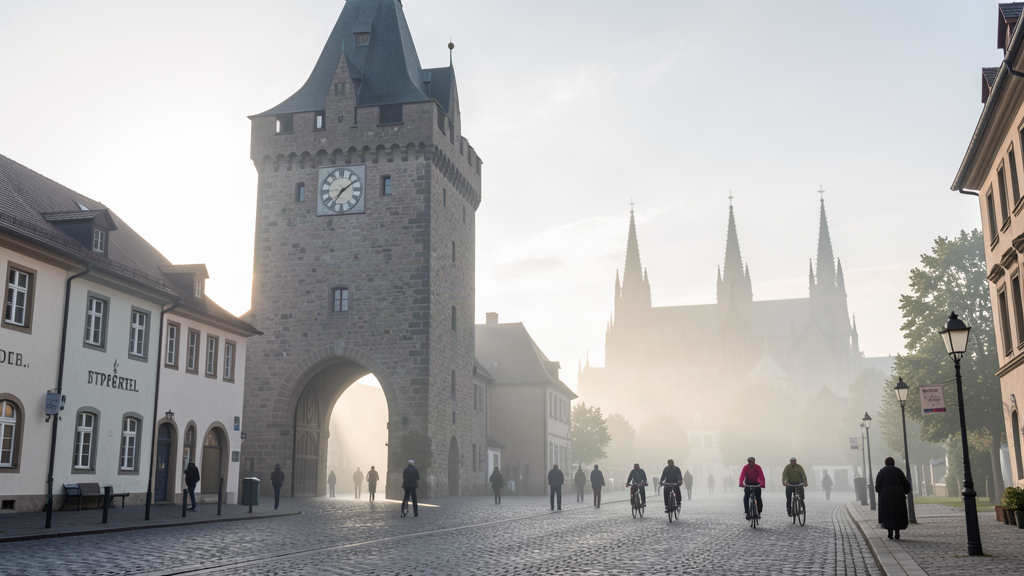
Altpörtel roof, Maximilianstraße light, and river tables that face barges
West of the Dom, Maximilianstraße runs dead straight as the old Via Triumphalis — processional spine turned shopping street, pastel fronts, café tables, pretzel bakers who treat Brezel as ordinary breakfast rather than festival mascot. I use the street as breathing space between heavy stops: coffee when the lane smells like roasted beans more than tour groups, a bakery bag when errands still mean lunch, a slow look back toward Altpörtel and forward toward Dom towers so the whole town layout lands in one glance.
Altpörtel at the western end is among the tallest surviving city gates in Germany — thick base, clock face, pointed roof you spot from blocks away. Climb when the April-to-October window is open and the fee is small cash at the door; the view straight down Maximilianstraße to the Dom towers shows the walk you already did. Off hours, treat the gate as a landmark and keep moving. Side lanes hold Alte Münze on Korngasse when you want a Fachwerk room and lunch before heavier stone.
South and east the city tips toward water. Rheinpromenade and Leinpfad paths take barge wash, dog walkers, and free benches. Alter Hammer at Leinpfad 1c pours beer-garden plates when weather allows. Rentschlers at Rheinallee 4 handles a more careful riverside evening when the day already included mikveh cool and Dom crypt damp. Technik Museum Speyer with its Boeing and Buran sits far enough south that it wants its own afternoon rather than a tired add-on after Judenhof steps. I leave the jumbo jet for travelers who came for machines. The quieter Speyer day ends at river light, not under a wing.
How Speyer moves, and a clean day arc
Speyer Hbf sits a short walk west of Altpörtel, so the gate-to-Dom axis stitches the old town better than a car day among one-ways and river-edge parking hunts. Feet handle Judenhof, Maximilianstraße, Domgarten, and the walk toward Leinpfad once you are downtown. Buses cover Technik Museum and outer edges when legs protest. Regional trains link Mannheim and Heidelberg in roughly half an hour. On Judenhof mornings and Dom stone, walk after you arrive. Validate tickets where the local rules ask.
Confirm Judenhof hours and mikveh access, Altpörtel seasonal climb windows, Dom service times when nave access tightens, brewery rest patterns, and restaurant Ruhetag before you build a perfect Saturday onto locked doors. Two nights beat a single Dom silhouette between Mannheim ICE stops. If I had two nights: early Judenhof while groundwater cools the shaft, Maximilianstraße coffee while facades belong to errands, Altpörtel climb if open, Dom and Domgarten while sandstone smells damp, Leinpfad or Alter Hammer before dark, and a slower Rhine lap the next morning if legs remain. Brezelfest weeks rewrite buses and rates — book early when calendars stack the better rooms.
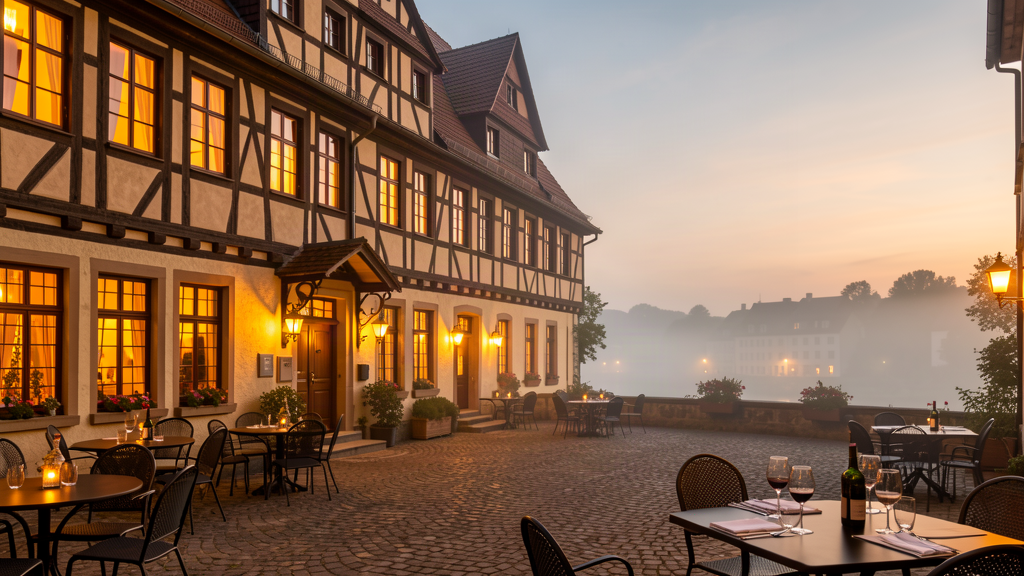
Places to Stay
Hotel Alt Speyer (value, Gailergasse practical)
Große Gailergasse 1a, 67346 Speyer
Family-run garni a short walk from Altstadt lanes, Judenhof approaches, and Maximilianstraße — free Wi-Fi, bike-friendly calm, a simple base. Book when mikveh mornings and Dom evenings come first. Ask for a quieter room if street noise bothers you; center nights run livelier on festival calendars.
Hotel Trutzpfaff (mid, Webergasse center walk)
Webergasse 5, 67346 Speyer
Modern rooms a short walk from the old-town core with breakfast rhythm and free parking that matters in Speyer’s tight center — free Wi-Fi, a stay tied to pedestrian lanes rather than station corridors. Choose it for Dom-first afternoons, Judenhof mornings, and dinner toward Alte Münze or Domhof without shuttling back across town. Weekend visitors fill the better rooms; lock dates early.
Hotel Domhof (upper-casual, Bauhof Dom shadow)
Bauhof 3, 67346 Speyer
Established house steps from the Kaiserdom portal with sharper comfort and easy reach of Domgarten, Historisches Museum, and the walk west along Maximilianstraße — solid rooms, Wi-Fi, a base when two nights matter more than the cheapest Gailergasse address. Pick it for Dom-adjacent walking days and a longer evening toward Hausbrauerei Domhof or Rhine tables after crypt legs. Business and festival weeks push rates — book ahead.
Restaurants and food
Alte Münze (value, Korngasse Fachwerk table)
Korngasse 1A, 67346 Speyer Weinstube and restaurant in a historic timber house a few minutes from the Dom with plates that feed neighbors after work. Useful when sandstone already carried the afternoon and hunger turns toward Pfälzer weight — no fuss if you arrive early. Good after Judenhof or a Maximilianstraße loop. Confirm busy festival nights; indoor tables fill when weather turns wet.
Hausbrauerei Domhof (mid, Dom-edge brewery pour)
Große Himmelsgasse 6, 67346 Speyer
House-brewed beer and hearty plates in the Domhof complex with sudhaus glass and garden tables when weather allows — come when mikveh cool and Dom crypt already did their work and the day wants malt facing sandstone. Reserve on warm weekends; the brewery room is a destination as much as a Dom add-on. Navigation often prefers Bauhof 3 for the same block.
Alter Hammer (upper-casual, Leinpfad Rhine garden)
Leinpfad 1c, 67346 Speyer
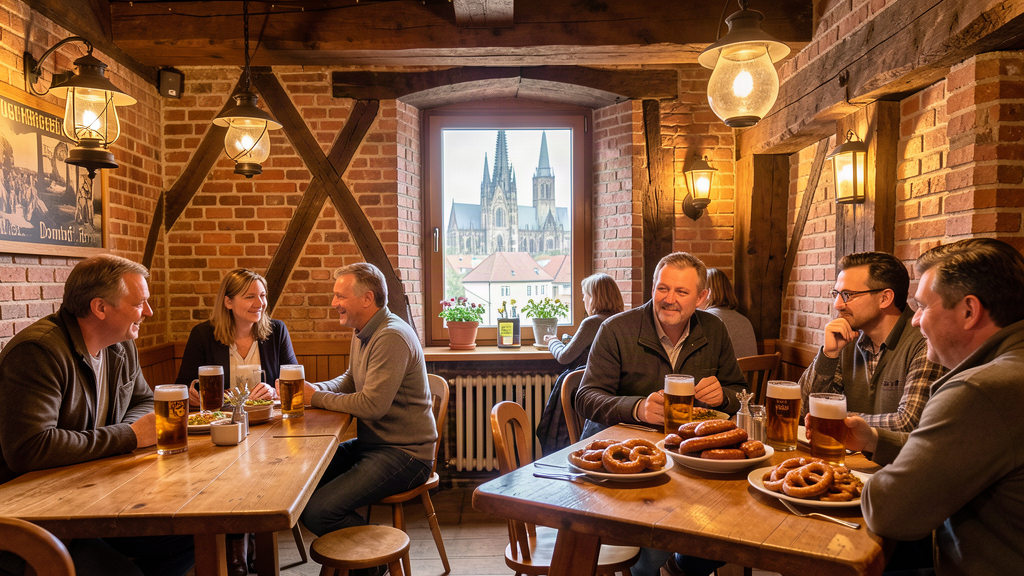
Classic Speyer beer garden and restaurant right on the Rhine with wurst salad, fries, and terrace air when barge wash looks ordinary — choose it when the evening wants water light after Judenhof quiet and Domgarten benches. Rest days and weather matter; book ahead for weekend evenings when the garden fills. Rentschlers at Rheinallee 4 is the careful alternative next door if you want a weekly menu with more deliberate cooking.
Keep the food plain. Coffee on a Maximilianstraße edge while Dom towers cool the axis. A warm Brezel when errands still mean breakfast. Alte Münze when hunger turns serious after Judenhof steps. Domhof when brewery malt owns the late afternoon. Alter Hammer when Rhine light already owns the evening. Festival menus can wait until you have stood once in mikveh groundwater cool and watched the Dom axis hold ordinary traffic while Altpörtel clocks the street. Speyer holds up better courtyard-to-axis-to-gate-to-river than as another half-day silhouette between ICE connections.
