
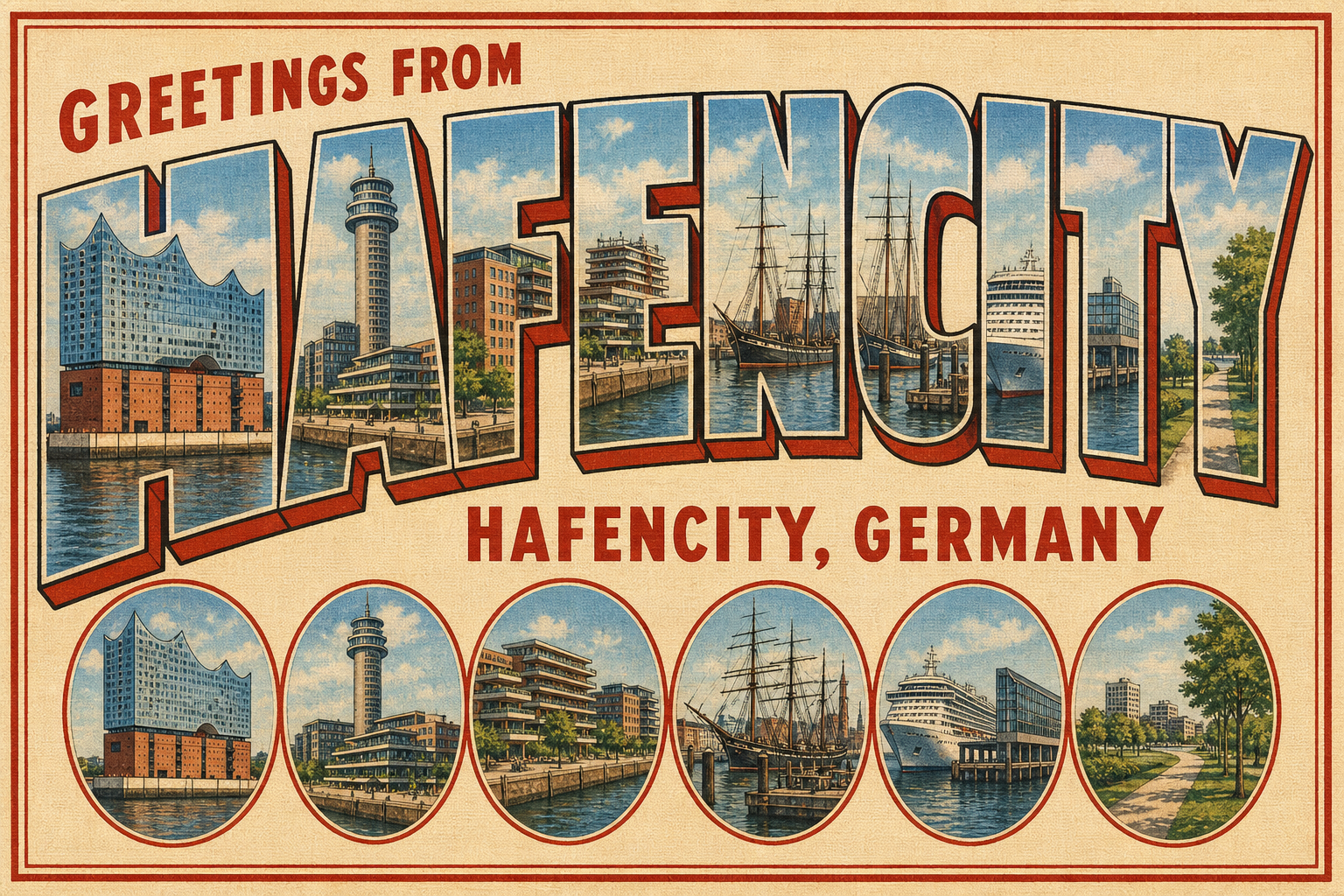
Most people come to HafenCity for the glass wave of the Elbphilharmonie and leave with a Plaza selfie. I start one basin east, on the floating walk at Sandtorhafen, where restored harbor cranes lean over old ships and the water still smells faintly of tar and diesel. The better day is smaller: pontoons under warehouse iron, brick Speicherstadt across the fleets, tea on Kaiserkai, fish in a scrap of a former customs house. You can see the Elphi from almost everywhere. You don’t need it as the plan.
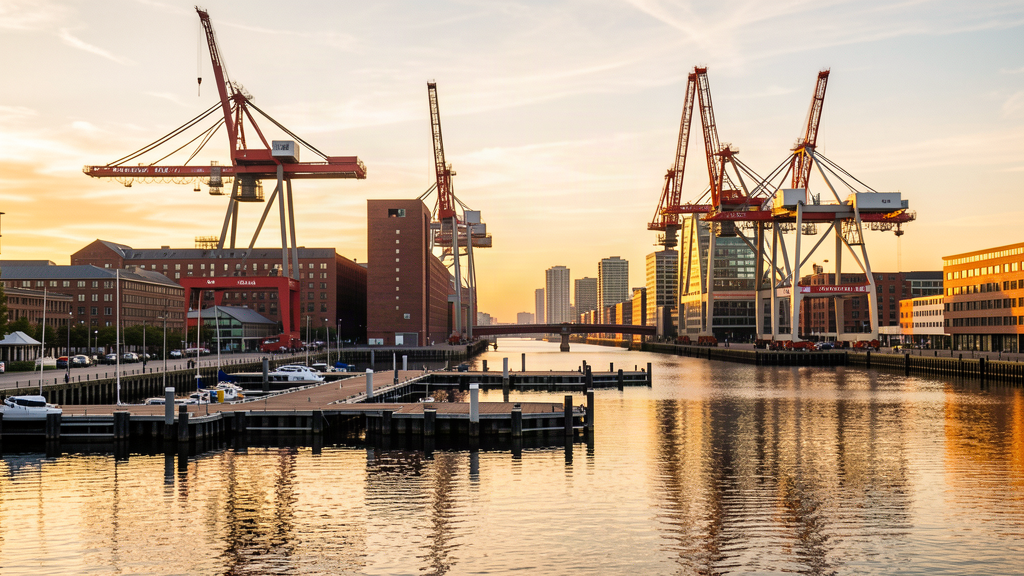
HafenCity sits on old free-port ground between the Norderelbe and the Speicherstadt. Raised platforms handle storm surges. Bridges stitch basins that once held barges of coffee and rubber. West is the concert-hall postcard; the middle is residential glass and office brick; east still feels half-built and useful. Walk it as a working water edge with decent coffee, not an architecture brochure.
Onto the Sandtorhafen from the brick side
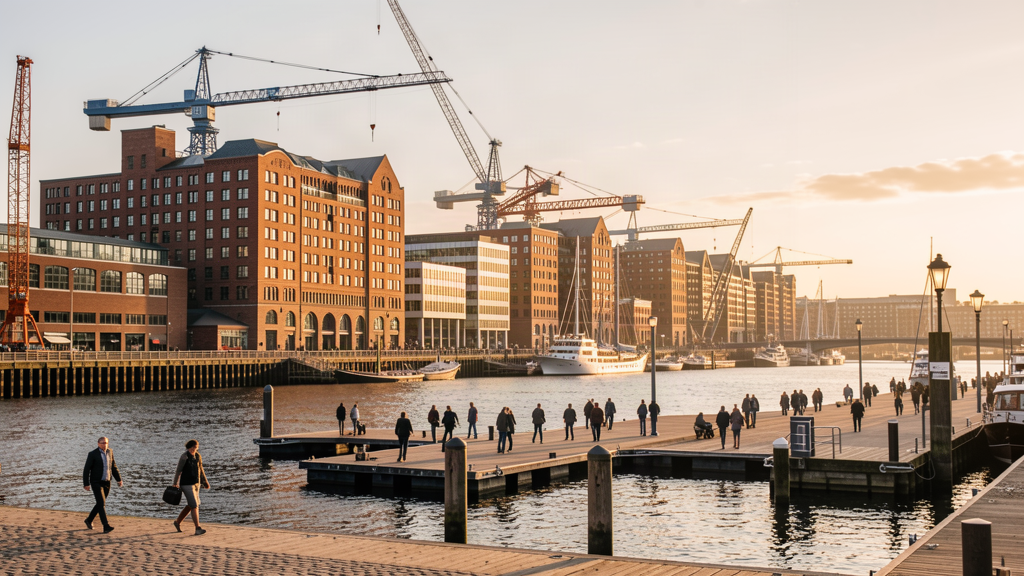
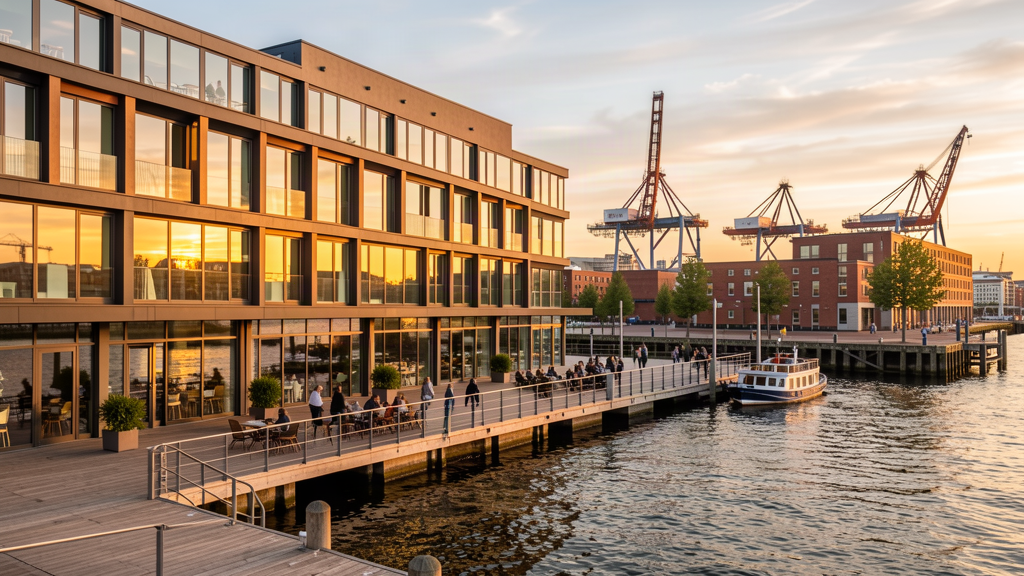
I like arriving from the Speicherstadt rather than dropping straight out of Überseequartier U-Bahn into retail. Cross from Am Sandtorkai onto the Magellan and Marco Polo terraces, then step down toward the pontoon that runs Sandtorhafen. Water level is the point. Up on the quays you get skyline. Down on the floating walk you get hulls, mooring lines, and harbor chop against wood.
The cranes are restored free-port shapes lined against modern façades that pretend they always belonged here. Between them sit museum ships and old harbor craft — less theme park than a parking lot for vessels that outlived their routes. Quiet mornings mean joggers and residents walking dogs past bollards. Cruise days thicken the path; you learn to step aside without apology.
Give the first hour to this strip alone. Walk west toward Kaiserkai until the Elbphilharmonie fills the frame, then turn back east without climbing the Plaza yet. The neighborhood reads better at water height: residential blocks stepped back from flood levels, public stairs that double as seating, bridges named for partner ports — Busan, Shanghai, Dar es Salaam — like a harbor Rolodex someone left open.
Kaiserkai tea and the slow middle of the district
When the pontoon wind picks up, climb to Kaiserkai. Meßmer Momentum at Kaiserkai 10 is an odd, specific pause: tea museum, lounge, shop, and the mild polish of a brand that has sold leaf in Germany since the nineteenth century. Not a secret. Still a better reset than another harbor-view Aperol. Order something simple, sit with the cup, watch basin traffic. HafenCity pushes continuous spectacle; the tea room slows the tempo whether you asked it to or not.
From here the district opens in layers. Dalmannkai holds short terrace galleries — Hafenliebe, Nissis Kunstkantine — that rotate shows monthly. Magdeburger Hafen runs the International Maritime Museum in the old Kaispeicher B brick mass at Koreastraße 1; even if you skip the model ships, the building anchors the view. Überseeboulevard farther east is shops and rotating outdoor art, useful in bad weather or for a supermarket run. I treat the boulevard as infrastructure, not a destination.
The Altes Hafenamt on Osakaallee, the oldest fabric in this stretch, now holds design-hotel energy and NENI upstairs — free-port brick meeting new glass without much ceremony. Cross Busanbrücke when you want the museum side without looping back through retail.
Brooktorkai, fleets, and the Speicherstadt seam
HafenCity makes more sense if you keep crossing into the Speicherstadt. The UNESCO warehouse rows on oak piles aren’t a separate day trip; they’re the other bank of the same water. Brooktorkai is the seam. Office brick faces warehouse brick across Brooktorhafen. The Shanghaibrücke is almost as wide as it is long — a plaza that happens to span water. Sit on the stone sofa stretches and watch barges share the fleet with tour boats.
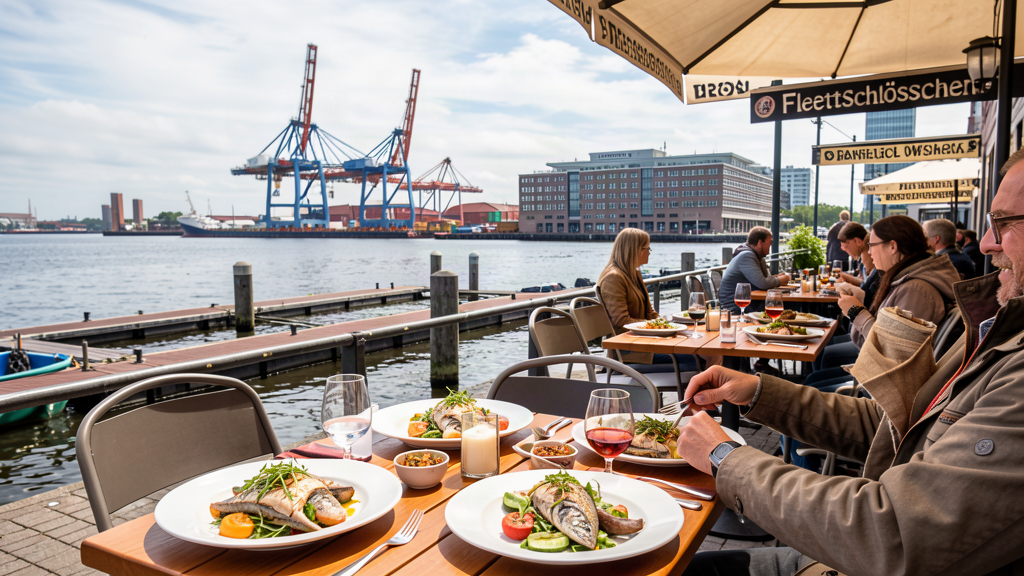
Fleetschlösschen at Brooktorkai 17 is the small brick house on stilts that locals still claim with mild pride. It began as free-port machinery — fire watch, toilet house, workers’ coffee hatch — and now serves north German fish in a room half museum, half kneipe. Wooden tables, iron stove pipe, boats at the windows. Come for Fischsuppe or a simple plate, not a tasting menu. The building is tiny; timing matters.
East of the tourist core, Oberhafenquartier around Stockmeyerstraße still holds grit: creative spaces, music, manufacturers in former freight fabric. If the western basins feel too staged after noon, walk that way until the storefronts thin. You’re still in the district. You’re just off the Plaza axis.
Getting around the basins without a car
HafenCity is a walking map with U-Bahn anchors. U4 at Überseequartier and HafenCity Universität covers the spine. U3 Baumwall drops you at the Speicherstadt west end for the Elbphilharmonie approach. Bus 111 threads the waterfront. Harbor tours are optional once you have the pontoons.
Bikes work on the promenades and wider bridges. Skip cars unless you’re loading luggage. Wear something for Elbe wind; the basins amplify weather that feels mild two streets inland. In summer the Magellan and Marco Polo terraces fill like a city beach. In gray months they empty to residents and photographers waiting on brick reflections in the fleets.
A simple loop: morning onto Sandtorhafen from Am Sandtorkai, pontoon walk under the cranes, tea at Meßmer Momentum, gallery drift on Dalmannkai, lunch at Fleetschlösschen, afternoon Speicherstadt bridges, dinner back on Kaiserkai or Überseeallee, sleep inside the district so morning coffee still faces a basin.
Places to Stay
25hours Hotel Hamburg HafenCity (value, design energy)
Überseeallee 5, 20457 Hamburg
Port-themed rooms in the Altes Hafenamt cluster, lively ground floor, heimat restaurant and NENI in the building, Überseeboulevard at the door. You trade hush for location and a social lobby. Good when you want HafenCity without a glass-tower rate and still walk to Sandtorhafen in minutes.
PIERDREI Hotel HafenCity Hamburg (mid, neighborhood hub)
Am Sandtorkai 46, 20457 Hamburg
Modern house facing the Speicherstadt across the water — rooftop garden bar Moon 46, cargo-bike hire, cinema next door, kitchen and bar spaces used by neighbors as much as guests. Sleep here when the trip is the Sandtorhafen strip itself and you want the stay on the same quay as the pontoons.
AMERON Hamburg Hotel Speicherstadt (upper, warehouse brick)
Am Sandtorkai 4, 20457 Hamburg
The rare hotel inside listed Speicherstadt fabric — mid-century-leaning rooms, cantinetta ristorante, spa up top with roof views over fleets and new HafenCity glass. Choose it when you want to wake in warehouse brick and walk straight onto Am Sandtorkai toward the pontoons.
Confirm breakfast hours and late check-in; smaller front desks here still run on neighborhood rhythm more than airport-hotel clocks.
Restaurants and food
Fleetschlösschen by Daniel Wischer
Brooktorkai 17, 20457 Hamburg
Tiny former customs-and-coffee hatch on the fleet — fish soup, north German plates, boats at the window. Come early or book when you can; the room does not stretch. This is the meal that ties HafenCity to Speicherstadt without a skyline pitch.
heimat restaurant (25hours HafenCity)
Überseeallee 5, 20457 Hamburg
Alpine-to-Baltic cooking on the hotel’s ground floor — shareable plates, local fields and waters, useful after a full pontoon day when you want a sit-down without crossing half the city. NENI upstairs covers the louder Middle Eastern table if the group splits.
Restaurant VLET
Am Sandtorkai 23, 20457 Hamburg
Northern German room on the Sandtorkai edge, evening-leaning, close enough to the pontoons that dinner still feels like part of the water walk. Book on fair-weather weekends; good light fills every table on this quay.
For lighter hours, Meßmer Momentum (Kaiserkai 10, 20457 Hamburg) covers tea and a slow sit; Markthalle Speicherstadt energy around Am Sandtorkai 23 handles casual bites.
A day that stays on the pontoons on purpose
Ride the U4 to Überseequartier or walk in from Baumwall through the Speicherstadt. Don’t race the Elbphilharmonie Plaza first. Drop to Sandtorhafen while the cranes still throw long shadows. Walk the floating path twice if you need to — once looking at ships, once looking at the new city above the flood line. Take tea on Kaiserkai. Cross Brooktorkai for fish in the little brick house. Let the Speicherstadt fleets be the afternoon, not a museum sprint. Eat back on Sandtorkai or Überseeallee. Sleep where morning starts with water again.
The rest of Hamburg stays on the same transit map. HafenCity works better when you give it the whole day as pontoons and warehouse brick, and climb the Plaza only if the light is worth it — not because a guidebook ranked the glass first.
