
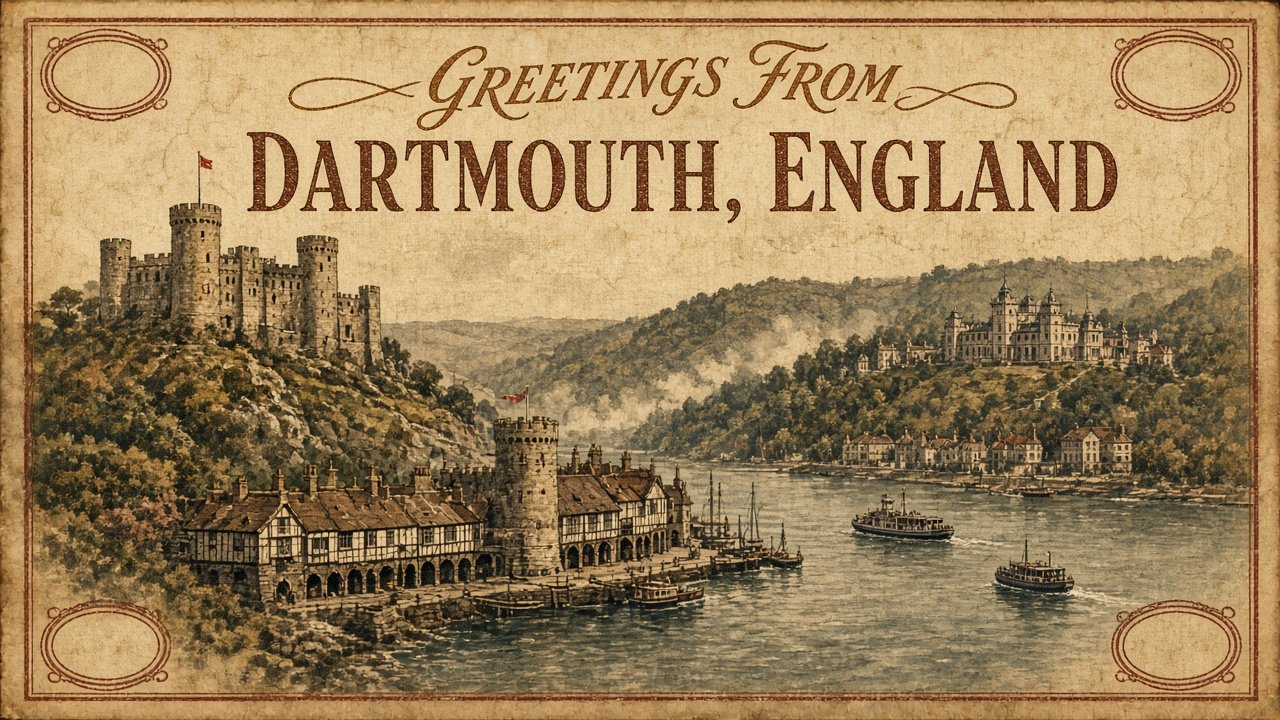
Dartmouth is royal-naval Devon for a lot of people — Britannia College on the hill, paddle steamer on the postcard, cream tea above the Boat Float. I start where the river still works as a street: Lower Street and the Lower Ferry, the last tug-and-float crossing left in England, sliding past the cobbles at Bayard's Cove. The tug hooks the open pontoon. Cars and walkers ride the raft, and the Dart does the rest. Stand on the slip with Kingswear opposite and the castle headland down-estuary, and the town stops feeling like a yacht brochure.
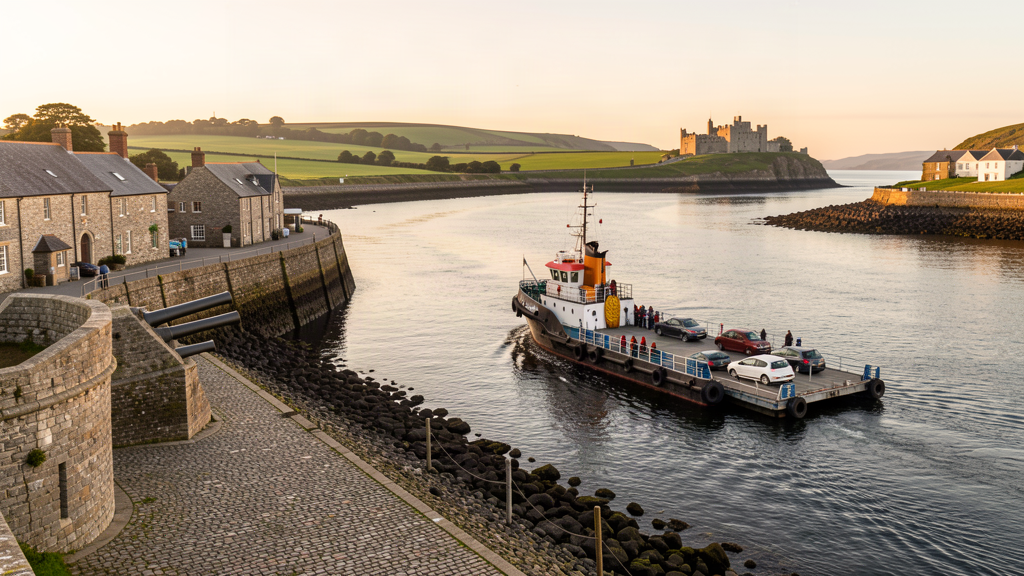
I do Bayard's Cove early, ride the Lower Ferry while the tide still shows the quay steps, walk the South Embankment and Boat Float, then climb Castle Road or take the short castle ferry if legs want the mouth without the full coastal slog. The tug and float are not nostalgia props. They are how this bank still crosses deep water without a bridge.
Bayard's Cove, Lower Street, and the tug-and-float ferry
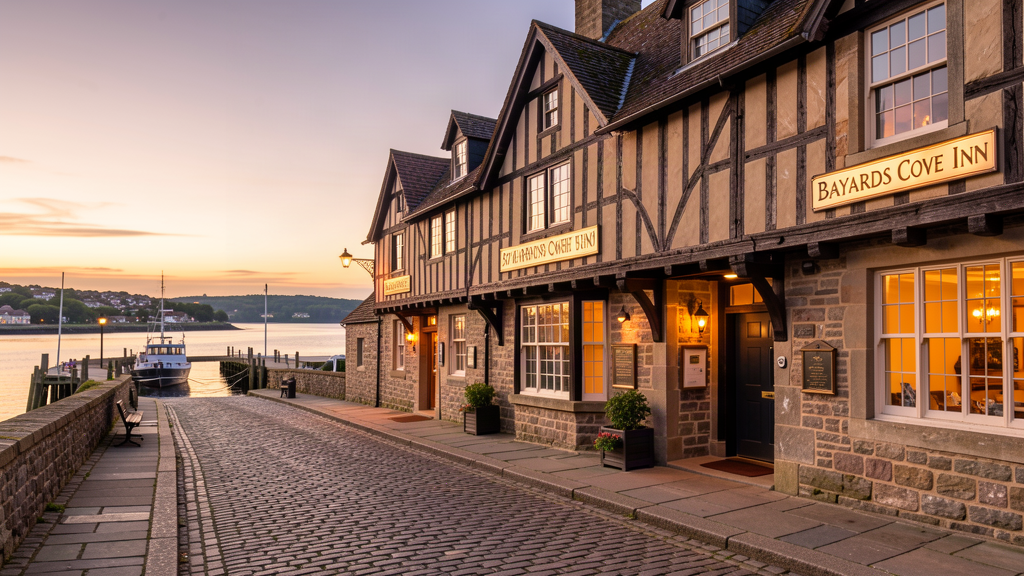
Bayard's Cove sits at the south end of the waterfront — cobbled quay, stone warehouses turned houses, the low Tudor gun battery of Bayard's Cove Fort facing the channel. Pilgrim Fathers lore hangs on the plaques; the more useful fact is the slip itself. The Lower Ferry loads from Lower Street near the fort: a small tug pushes or tows a separate floating platform, the last of its kind in the country, over to Kingswear. No cable, no bridge deck — open raft, working river.
Most visitors photograph the Butterwalk on Duke Street and never bother with the float. I use the crossing to get my bearings. Town-to-Kingswear underfoot, timetable and tide sharing the logistics, then walk the far bank or ride straight back. Shoulder-season mornings keep the slip quieter. Even one round trip is enough: boat, pontoon, and current in the same minute.
Lower Street runs the short waterfront spine above the cove — Agincourt House and the older merchant fronts, then the climb into the lanes. I walk it after the ferry, not before. Raft and diesel tug first, then the stone that once backed warehouses and boat yards. Bayard's Cove Fort is free to enter when open; the gun ports frame Kingswear and the water toward the castles. That view beats another cream-tea queue on The Quay.
South Embankment, the Boat Float, and the Higher Ferry
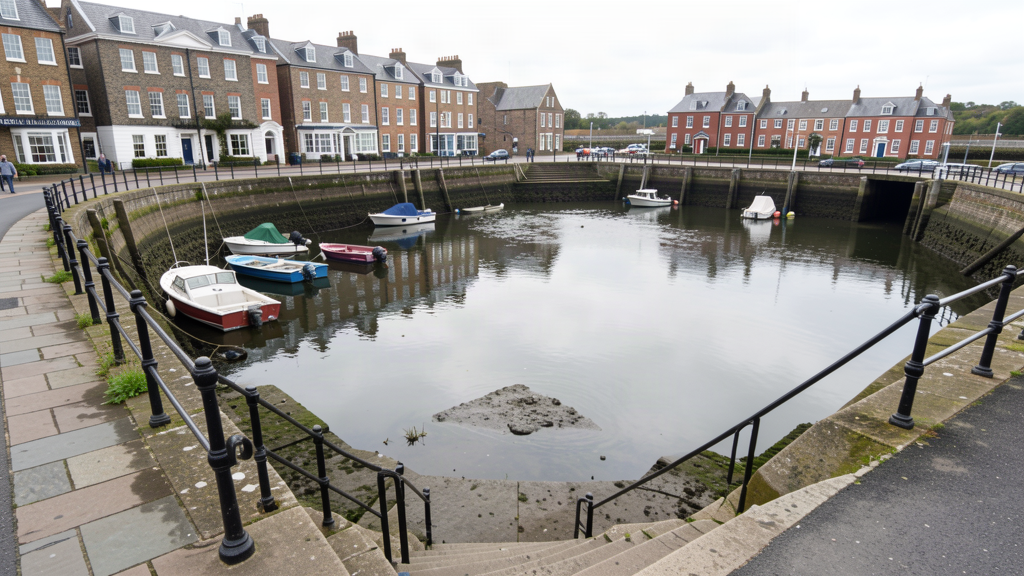
North from the cove, the South Embankment carries the town face of the river — railings, ferry notices, crab lines off the wall when kids are out. Rockfish and The Seahorse sit on this stretch. Even with tables, the embankment keeps quay logic. Boats first, lunch second.
The Boat Float is the enclosed tidal basin by The Quay and Royal Avenue Gardens — water held inside the town fabric, dinghies on a controlled sheet rather than the open channel. Reclaimed ground made this possible; today it is the pause between embankment stroll and Duke Street shops. I stop here after the Lower Ferry, not instead of it. The Float is the still pool. The Lower Ferry is the working crossing.
Further upriver, the Higher Ferry (the Dartmouth–Kingswear Floating Bridge) is the vehicle cable ferry on chains — cars, vans, the A379 link when you are not walking. Different machine, same river problem: no fixed bridge at the town. Higher Ferry is logistics; Lower Ferry is the story. One moves traffic. The other still looks like the harbour invented it yesterday.
Butterwalk, Duke Street, and the climb above the water
Inland of The Quay, Duke Street holds the Butterwalk — the 1630s colonnaded front with shops under the timber overhang. Tour groups bunch here for the photograph. I walk it once for errands and once without stopping for the facade. The useful bit is the old town above the water: Foss Street, Fairfax Place, the steep lanes that force hill or harbour.
Anzac Street is a quieter cut — residential scale, less gift-shop density, a side street where a small bistro beats another waterfront queue. Climb when the embankment feels crowded. The Royal Naval College dominates the northern skyline, but you do not need a tour ticket to feel how the town stacks above the Dart. Drop back to the water when you want ferries again.
Castle Road, the mouth, and the far bank
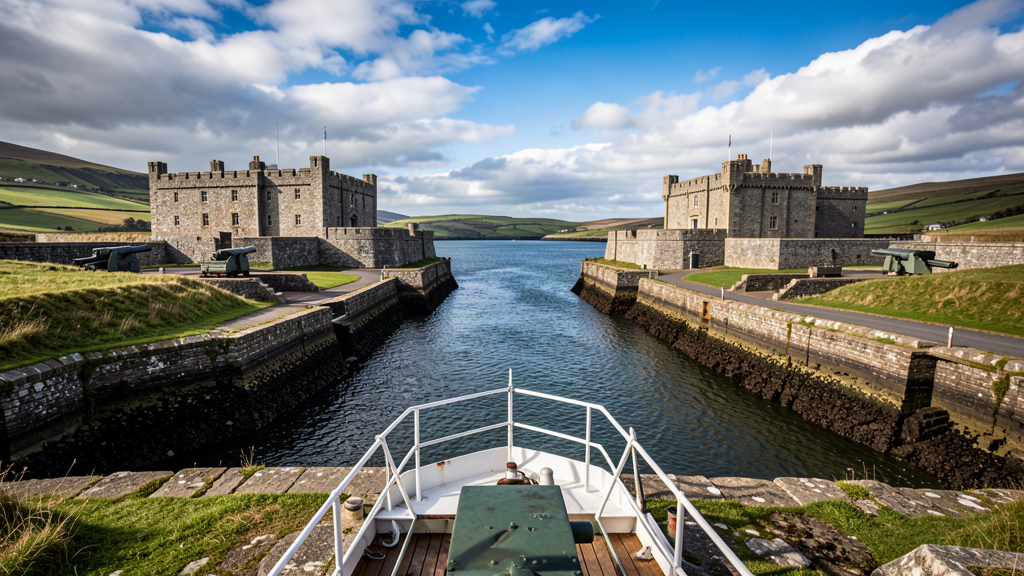
Dartmouth Castle and Kingswear Castle still face each other at the estuary mouth — gun positions that once controlled the entrance with a chain boom between them. From town, Castle Road and the coast path walk out above the water; in season a small passenger ferry runs toward the castle landing so you can skip part of the hill. I time the castle end for late morning or a clear afternoon, after Bayard's Cove. The point is less another keep on a leaflet than the reminder that Dartmouth exists because this mouth could be shut.
Kingswear is the railway bank opposite — steam trains into the station when the heritage line is running, footpaths up the far hill. The Lower Ferry lands you there without ceremony. Walk a loop if legs allow, or turn straight back. The tug-and-float trip is the hinge; the castle pair is punctuation at the Channel end.
Places to Stay
The Ship in Dock Inn — 1 Ridge Hill, Dartmouth, Devon TQ6 9PE Lower-spend pub rooms above a small bar looking toward Coronation Park and the river. Family-run, short walk into town and the embankment, useful pillow without marina rates. Expect pub-hour noise on busy nights; that is the trade for price and a proper local bar downstairs.
Bayards Cove Inn — 27 Lower Street, Dartmouth, Devon TQ6 9AN Mid-spend boutique rooms in a Tudor merchant house on the cove the ferry serves — seven en-suites, restaurant and bar downstairs, dogs and children welcomed. Best when Bayard's Cove and the Lower Ferry are half the reason you came. Book early for summer weekends; cove frontage is finite.
Dart Marina Hotel — Sandquay Road, Dartmouth, Devon TQ6 9PH Higher-spend riverside hotel on the marina reach — rooms facing the Dart, spa and dining on site, short walk into the embankment. Good when you want river light and a quieter base than the gift-shop streets. Confirm parking; summer Dartmouth punishes casual leaving.
Where to Eat
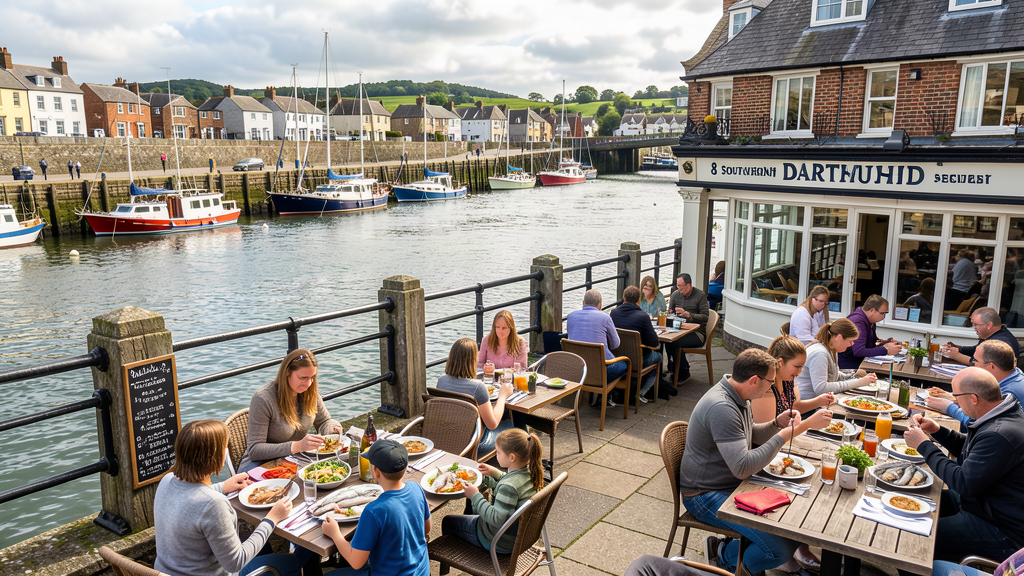
Rockfish Dartmouth — 8 South Embankment, Dartmouth, Devon TQ6 9BH The original Rockfish, seafood on the embankment over the Dart — fish handled simply, family tables, the Mitch Tonks model before the chain spread. Fits a day that started on the Lower Ferry and walked the quay. Book for dinner in season; waterfront seats go first when the weather holds.
Anzac Street Bistro — 2 Anzac Street, Dartmouth, Devon TQ6 9DL Small side-street bistro off the main waterfront crush — refined plates in a quieter lane, useful when you want dinner without railing photos behind every course. Walk up from the embankment after the cove. Check sittings; it is not a walk-in warehouse.
The Seahorse — 5 South Embankment, Dartmouth, Devon TQ6 9BH Seafood a few doors along the same embankment — entrance through the small bar, serious fish, slower evening pace than the fish-and-chips end of the quay. Best for one proper sitting after a ferry-and-castle day. Reserve; it fills when the town is full.
I would rather eat once well on the embankment or up Anzac Street than stack three mediocre harbour lunches just because a yacht mast was in the background.
Getting around and leaving room
Dartmouth has no mainline station in town. Practical rail is Paignton or Totnes with bus, or the steam railway into Kingswear plus ferry across. Once here, Bayard's Cove, Lower Street, South Embankment, the Boat Float, and Duke Street are foot territory if you accept hills. The Lower Ferry replaces a long drive around the estuary when you only need the far bank; the Higher Ferry moves the car. Castle Road walks out to the mouth; the castle ferry shortens it in season.
A loop that works for me: Bayard's Cove and the fort first, Lower Ferry to Kingswear and back while the tug is running, South Embankment and Boat Float, Butterwalk once without lingering, Anzac Street or the lanes for a quieter hour, then Castle Road or the castle ferry if the weather holds. Dinner on the embankment or up the side street. Shoulder-season weekdays beat bank-holiday crush on the float.
Most visitors squeeze Dartmouth into a naval-college photograph, a steamer ticket, and a slow crawl for parking. Give the Lower Ferry ride its full minute — tug, raft, current — until Bayard's Cove feels like a working slip rather than a postcard edge. Give the embankment and Boat Float enough time that the quay reads as work, not backdrop. Let the castle pair show why the mouth still matters before you decide the day is done. The cove slip, the Butterwalk, the ferry steps — that stretch is what I would keep.
