
Most visitors meet Speicherstadt between Miniatur Wunderland and the Elbphilharmonie — red brick, a canal selfie, then the next ticket queue. I like it better when the first doors open on Kehrwieder and the roast smell still beats the tour-group noise. Coffee floors above the fleets, slow bridges over water that once carried duty-free sacks, and enough quiet between the big stops that you remember this was a working free-port city, not a backdrop.
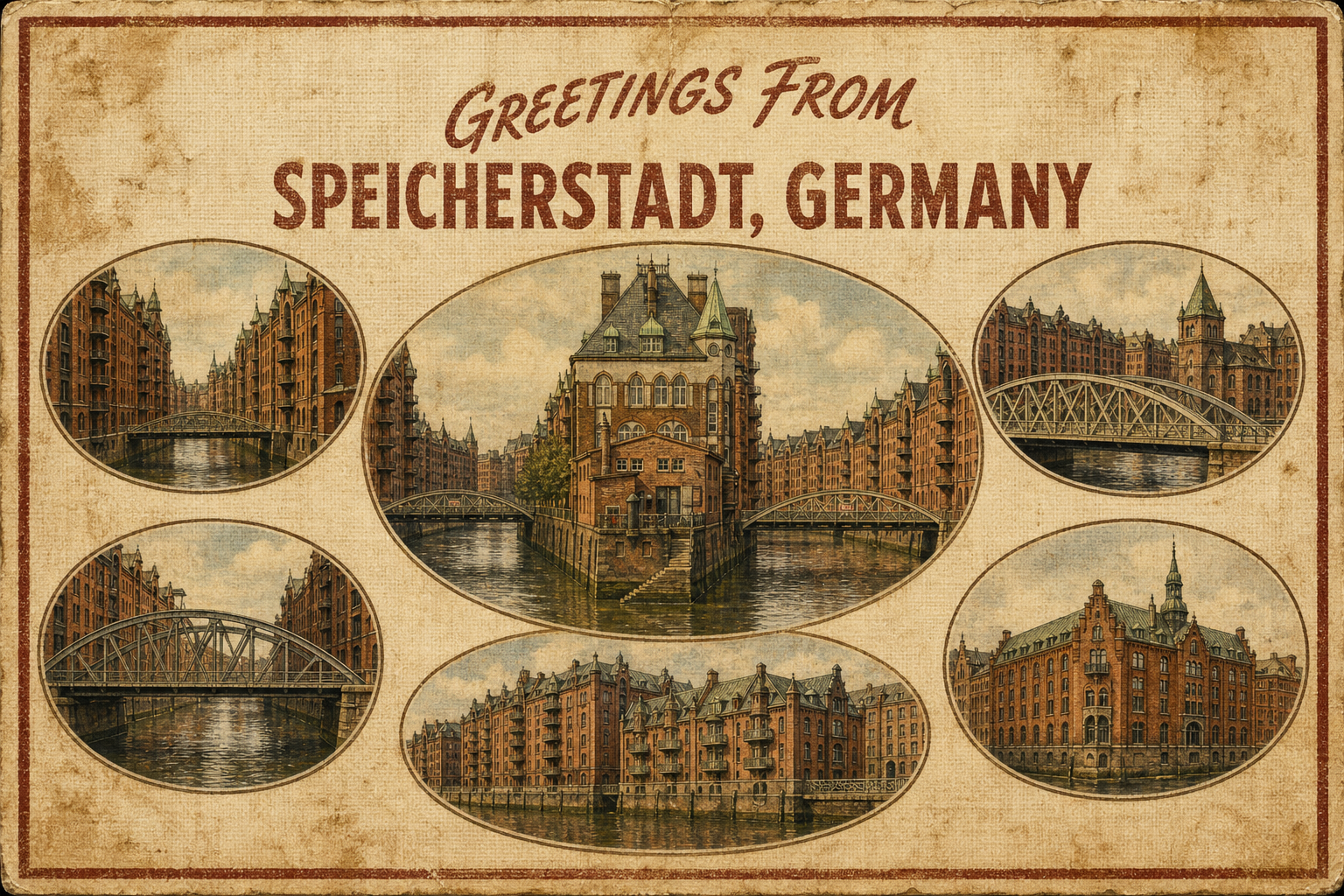
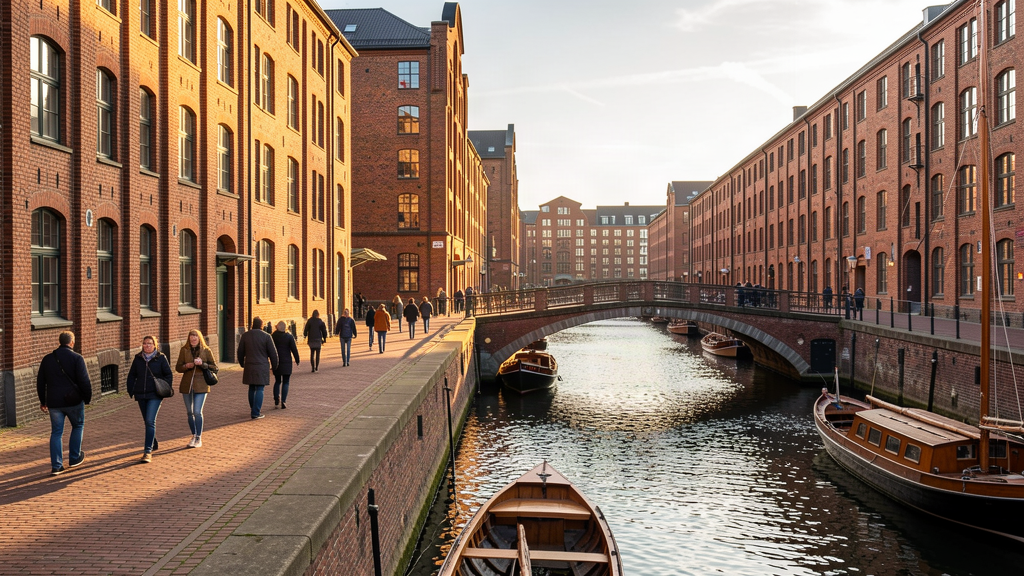
Speicherstadt is Hamburg’s warehouse island grid: neo-Gothic brick on oak piles, canals locals call Fleete, iron bridges tying blocks that once held coffee, tea, spices, rubber, and carpets outside the customs line. UNESCO listed it with the Kontorhausviertel in 2015. Treat it as infrastructure first. Hoist beams still bolted above loading doors. Water that once carried barges. Offices and rug dealers still using floors that never fully turned into lifestyle.
Kehrwieder before the queues thicken
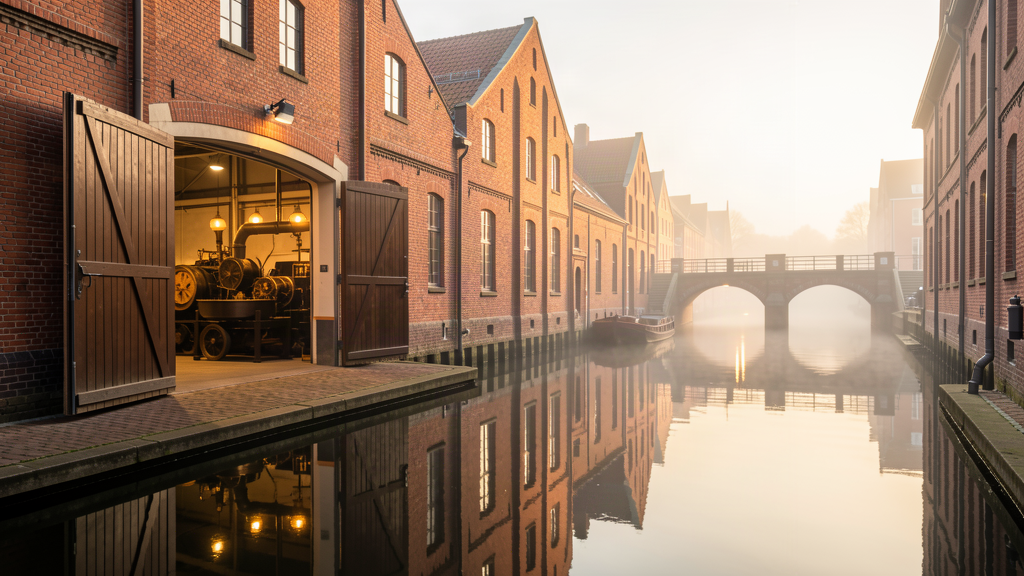
I start at Kehrwieder rather than dropping straight into the Wunderland line. The street name is one of those Hamburg jokes that stuck — “come again” — and the warehouses answer with green doors, high windows, and the smell of drum-roasted beans before noon. Speicherstadt Kaffeerösterei sits in an 1888 warehouse floor at Kehrwieder 5. Go inside because the room still belongs to the trade that paid for these walls, not because someone put it on a list. Oak boards, old roasting gear in view, coffee that tastes like it belongs here.
Order something ordinary. Sit long enough to watch who comes through: office people on a break, visitors who wandered off the bridge route, someone carrying a bag of beans home. These cafés work best as pauses between fleets, not fuel stops before the next attraction.
From Kehrwieder the brick canyon opens both ways. Look up. The gables and copper details were never pure decoration; merchants wanted warehouses that announced money as clearly as they held weight. Look down. The water is tidal, sometimes low enough to show the engineering that keeps a city of storage standing on piles driven into river mud. You do not need a boat tour for that. A few minutes on a quiet bridge is enough.
Bridges, fleets, and the postcard that earns its keep
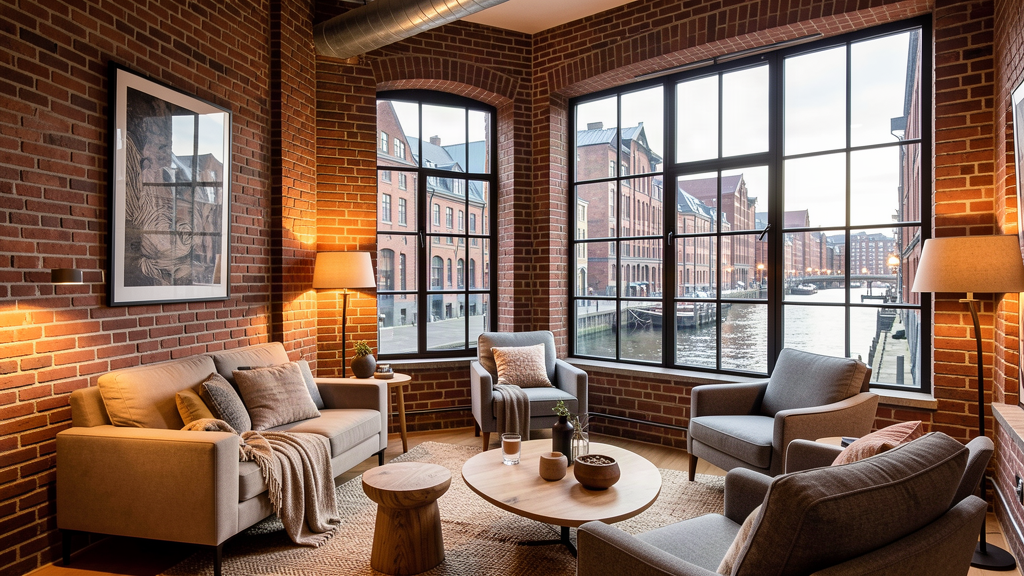
Cross toward Poggenmühlenbrücke while the light is still soft. This is the view everyone already knows — Wandrahmsfleet running toward the Wasserschloss, warehouse facades mirrored in the canal — and it is popular for a reason. Arrive early or late and the postcard thins out. Midday it fills with phones. Stay long enough to notice how the bridges stitch a private city of goods into ordinary walking ground.
The Wasserschloss at the canal junction looks fairy-tale until you learn it housed workshops and living quarters for the people who kept the hydraulic cranes running. Built 1905–1907, it survived the war better than many neighbors. Today it is a tea house and a photo magnet. I walk past more than I book it, but the building still explains the district: labor infrastructure wearing Gothic brick so well that tourists call it a castle.
Keep moving along the fleets rather than looping the same two bridges. Twenty-odd crossings link the grid. Some are crowded. Some are just connectors with a better angle on a loading door. Speicherstadt rewards the second pass — which floors still smell faintly of spice, which still store carpets, which hide glass meeting rooms behind old hoist frames.
Spice floors and the warehouse as it was
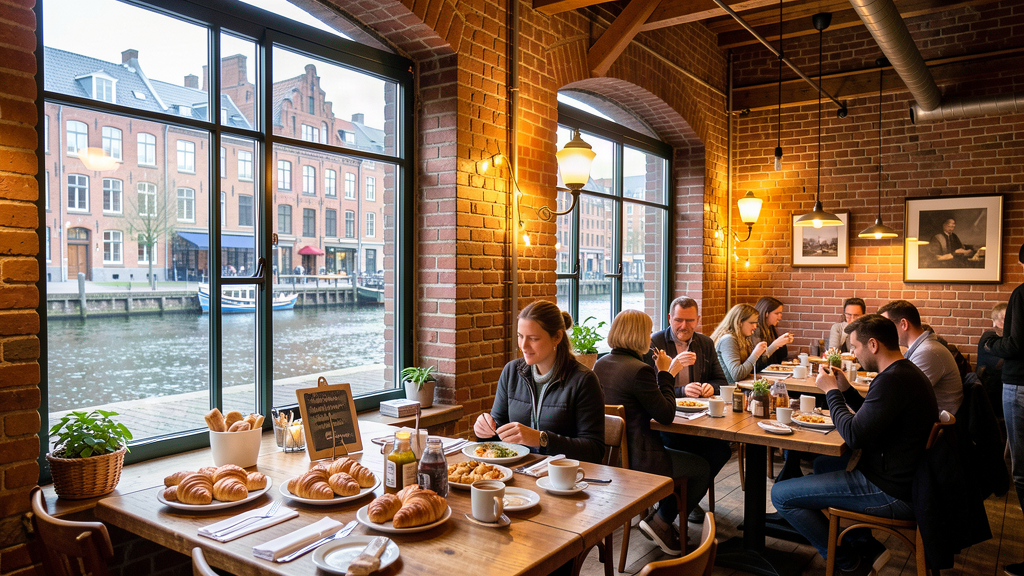
When you want the interior version, Spicy’s Gewürzmuseum and the Speicherstadtmuseum do different jobs. Spicy’s puts you on an original warehouse floor among hundreds of spice varieties — cool brick, wooden boards, your nose doing more work than any plaque. The Speicherstadtmuseum, in Block L on Am Sandtorkai, keeps tools, coffee and tea trade history, and the plain fact that these buildings were workplaces long before they were heritage.
Pick one sensory stop and one history stop, then go back outside. The best exhibit is still the outdoor room: brick canyons, water, sky, footsteps on iron. Miniatur Wunderland and the Dungeon pull huge crowds into Block D; walk the exterior even if you skip the ticket. The hoists above the windows are the sentence the museums keep trying to illustrate.
South and east, HafenCity’s glass presses the old free-port edge. That contrast is part of Speicherstadt now. Step into modern waterfront for sky, then duck back into warehouse lanes for older scale. Sandtorhafen belongs to that neighboring story. This walk stays with the fleets and the roast.
Getting around without a car
Speicherstadt is a walking district with U-Bahn anchors. Meßberg (U1) and Baumwall (U3) bookend easy approaches. Buses along Am Sandtorkai and Auf dem Sande fill gaps. From Baumwall, Niederbaumbrücke reaches the older warehouse rows in a few minutes.
Skip the car. Contipark Speicherstadt at Am Sandtorkai 6 exists, but parking turns a fleet walk into an errand. Wear shoes that can handle bridge gratings and wet brick. Wind funnels between blocks even on mild days. Evening light washes the facades after dusk if you want a quieter second circuit.
A simple loop works: morning U-Bahn to Meßberg or Baumwall, Kehrwieder roastery first, Poggenmühlenbrücke while the light is clean, one museum or spice floor, lunch in a canal house, afternoon bridges you skipped, early evening brick glow, sleep beside the warehouse grid so morning still starts on fleet time.
Places to Stay
ibis budget Hamburg City (value, walk-in range)
Amsinckstraße 1, 20097 Hamburg
Simple rooms near Deichtorplatz and the eastern approach to Speicherstadt. No warehouse romance in the lobby, but a fair base when the trip is bridges and coffee floors rather than suite views. Breakfast is functional. The win is walking distance to the fleets without paying free-port rates.
PIERDREI Hotel HafenCity (mid, port edge)
Am Sandtorkai 46, 20457 Hamburg
Design-forward house on the Sandtorkai strip, two minutes from the warehouse rows and close enough to HafenCity that you feel both grids. Use it when you want a full hotel rhythm — restaurant and bar life downstairs, easy return after night brick walks — without sleeping inside a pure business tower.
AMERON Hamburg Hotel Speicherstadt (upper, former coffee exchange)
Am Sandtorkai 4, 20457 Hamburg
The only hotel actually inside the listed Speicherstadt ensemble, seven storeys in the historic coffee-exchange complex. Mid-century and contemporary rooms, event floors that still carry trade-floor bones, Contipark next door. Choose it when waking up inside the UNESCO brick matters more than saving the night’s rate for museum tickets.
Confirm weekend event noise and bridge construction. The district is calm by residential standards, but not silent when festivals or night lighting draw crowds.
Restaurants and food
Speicherstadt Kaffeerösterei – Caféhaus
Kehrwieder 5, 20457 Hamburg
Warehouse-floor café with roasting history in plain sight — coffee, cake, breakfast plates, windows over the water when you get the right seat. Open through the afternoon most days. This is the meal that sets the Kehrwieder tone before you start collecting bridges.
Fleetschlösschen
Brooktorkai 17, 20457 Hamburg
Tiny former customs and fire-watch house on the fleet — later a workers’ coffee hatch, now a bar-bistro with fish and north German plates at rough wooden tables while boats slide past. Small room, big location. Book or time it off-peak; the building is the size of a story, not a banquet hall.
Chefs Warehouse Canteen & Bar
Sandtorkai 29, 20457 Hamburg
Casual fine dining in the old Maschinenzentralstation, the machine house that once powered Speicherstadt’s hydraulic systems. Open kitchen, sharing plates, wine and cocktails in heritage brick a short walk from the Elbphilharmonie edge. Come for dinner when you want the industrial bones of the free port still holding the room.
For a canal-terrace pause between those, Schönes Hamburg at Alter Wandrahm 15, 20457 Hamburg covers coffee, cake, and seasonal plates with a Kornhausbrücke view when the weather holds.
A day that starts with roast air
Speicherstadt will sell you wonderland tickets and night-light postcards without trying. Take them if you want. Keep the center of the day on Kehrwieder’s roastery doors, the fleet bridges that still feel like work routes, and the warehouse floors where spice and coffee history has not been fully sanded into lifestyle. Hamburg’s free-port wealth was stacked in these blocks one sack at a time. Walking them slowly is still the honest way to read the city they built.
