
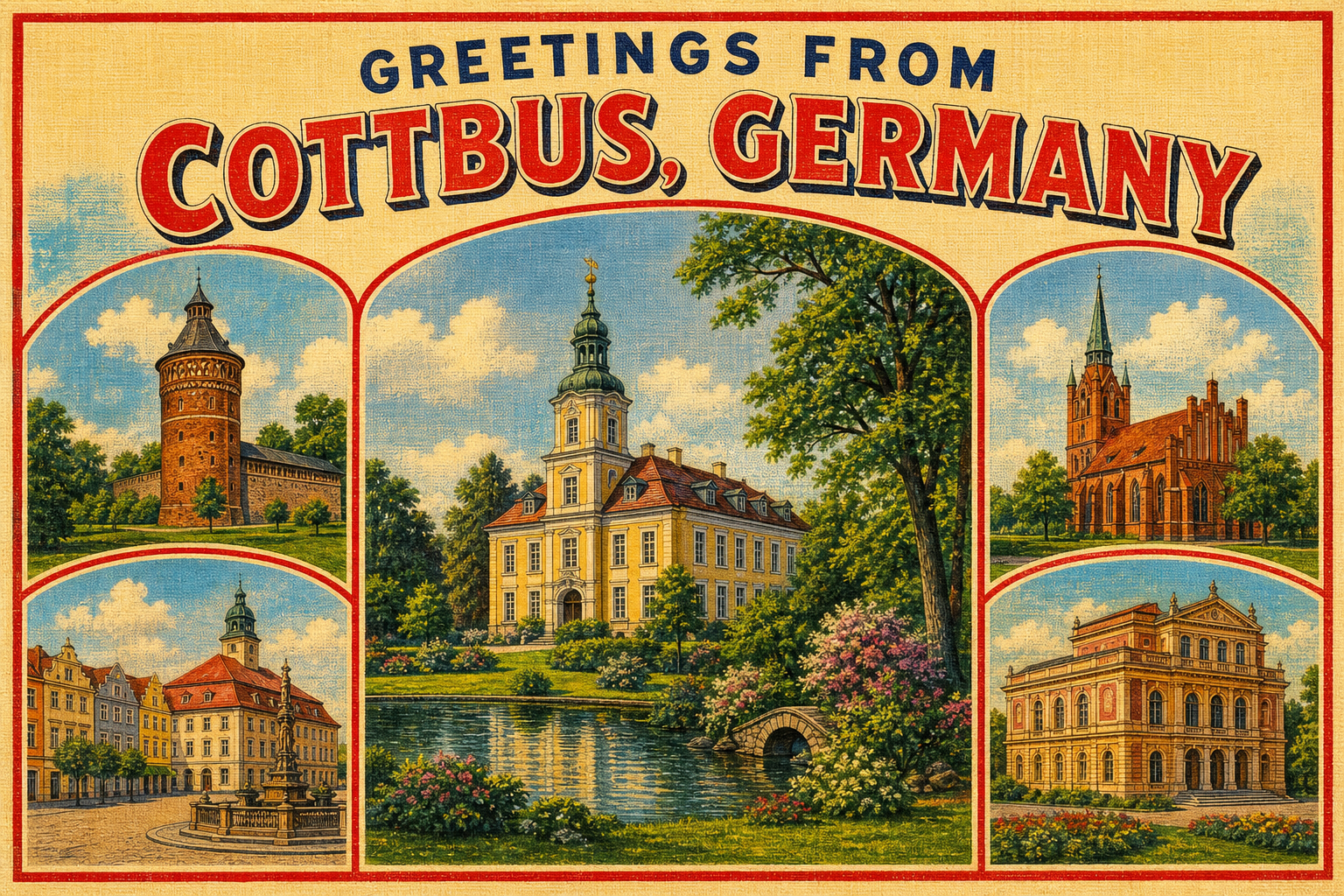
Berliners clock Cottbus as a stop on the way to the Spreewald, or skip it for Dresden. I get off at the Hauptbahnhof and walk toward the Spree instead. Cottbus — Chóśebuz in Lower Sorbian — sits in Lower Lusatia with bilingual street signs, a compact old town, and Branitz Park, where Prince Hermann von Pückler-Muskau buried himself under an earthen pyramid in a lake.
The city is Brandenburg’s second-largest after Potsdam, a university town on the Spree about 125 km southeast of Berlin. Textile mills and lignite left marks. I come back for quieter things: Spremberger Straße before the shops fully open, the mill canal by Schlossberg, and the long walk out to Branitz when the grass pyramids still hold dew. One night works. Two let the park and the old town stop fighting over the same afternoon.
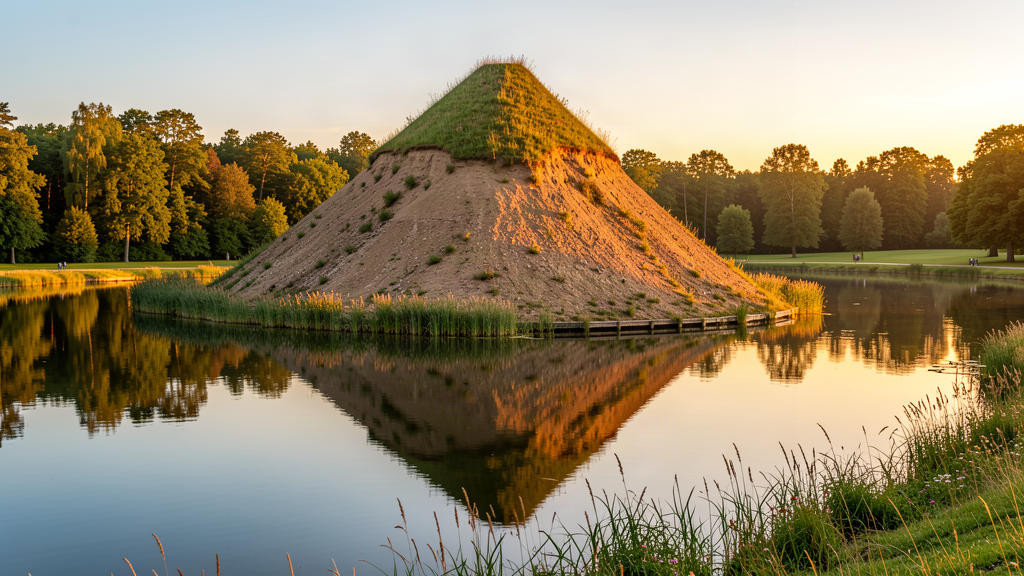
Spremberger Straße and the old town loop
Spremberger Straße is the pedestrian spine. It runs from the Spremberger Turm — a 13th-century gate tower that still pins the skyline — toward Altmarkt. Stepped roofs, shop windows, a mix of rebuilt fabric and older bones. Bilingual signs in German and Lower Sorbian just sit on the poles and corners. You do not need a festival for the Sorbian layer; it is already on the street names.
I walk this strip early, when delivery vans still have the right of way and café chairs are stacked. Later it fills with students and errands. Early is when the street still belongs to people who live upstairs.
Altmarkt is a proper square: cobbles, façades, outdoor tables when the weather holds. From there the old town is small enough to loop without a map. Medieval wall fragments, towers, short side streets that dead-end on water. The Staatstheater Cottbus sits a short walk away — Art Nouveau, and still Brandenburg’s only state theater. Check the board if you want an evening. I have done a weeknight ballet after a day of park paths and bread.
Schlossberg holds the oldest surviving piece of the city: the castle tower on the sand island where Sorbs first fortified the Spree bank. Neo-Gothic court buildings and the old electricity works line the mill canal. Brick, water, a little grit. I linger on the canal more than in any interior. Ducks, a bike on wet stone.
If the weather turns, the Wendisches Museum on Mühlenstraße 12 is the indoor stop that belongs here — Sorbian and Wendish culture, language, costume, everyday objects. It is small, which helps. You leave with a clearer sense of why the bilingual signs are not decoration.
Branitz: grass pyramids and Pyramid Lake
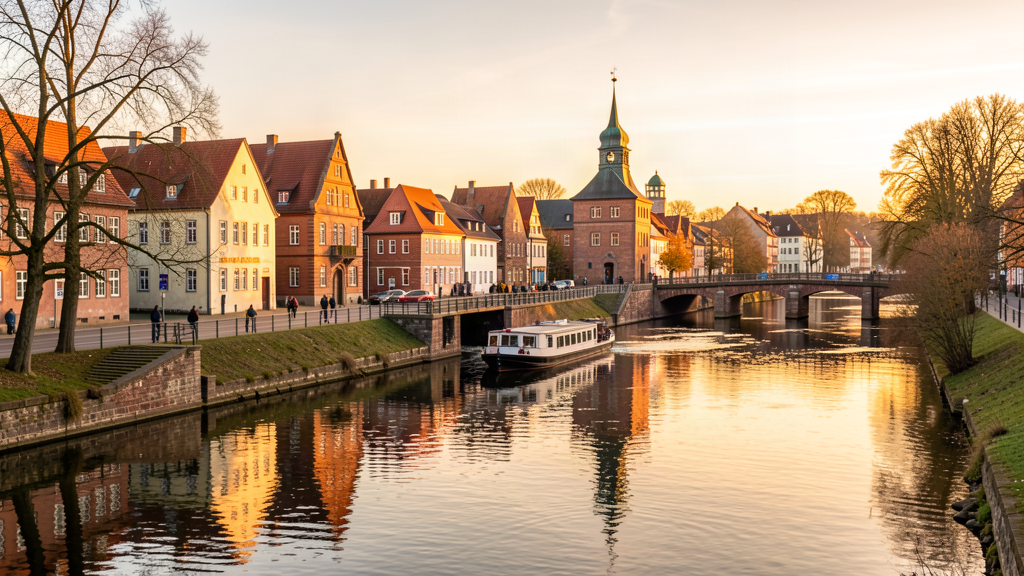
Branitz Park is why I stretch the stay. Pückler started reshaping the sandy ground in the 1840s after selling Muskau. Count the outer ornamental farm and you get roughly 600 hectares of English-style landscape. The inner park around Schloss Branitz is tighter: lakes cut from high groundwater, tree clumps like stage wings, paths that refuse a straight line.
The signature is the pair of earth pyramids. The larger tumulus sits in Pyramid Lake, covered in vegetation. Pückler’s tomb. It is a strange, earnest pile of earth — a traveler’s souvenir of the Orient built in Lusatian dirt. I walk out to the water edge and stay longer than the guidebook loop suggests. On a quiet morning you hear almost nothing except geese and wind in the reeds.
Schloss Branitz (Robinienweg 5, 03042 Cottbus) holds interiors and the Pückler story when you want labels. The Marstall, Cavalierhaus, park smithy, and gatehouses stitch the estate together. I do the castle once, then give the rest of the day to walking. Bring a sandwich. There is a park café for cake and Pückler-style ice cream. I still prefer the slow circuit past the reed lake, the pleasure ground, and the outer meadows where the design thins into farmland.
From the center, Branitz is a tram or bike ride, or a longer walk if you like arriving on foot. The historic park railway links parks in season; I usually bike. Flat ground, tree cover, the Spree somewhere off your shoulder. Spreeauenpark and the zoo sit in the same green belt when you want playground noise and open lawns after Branitz’s quieter paths.
Food that fits the pace
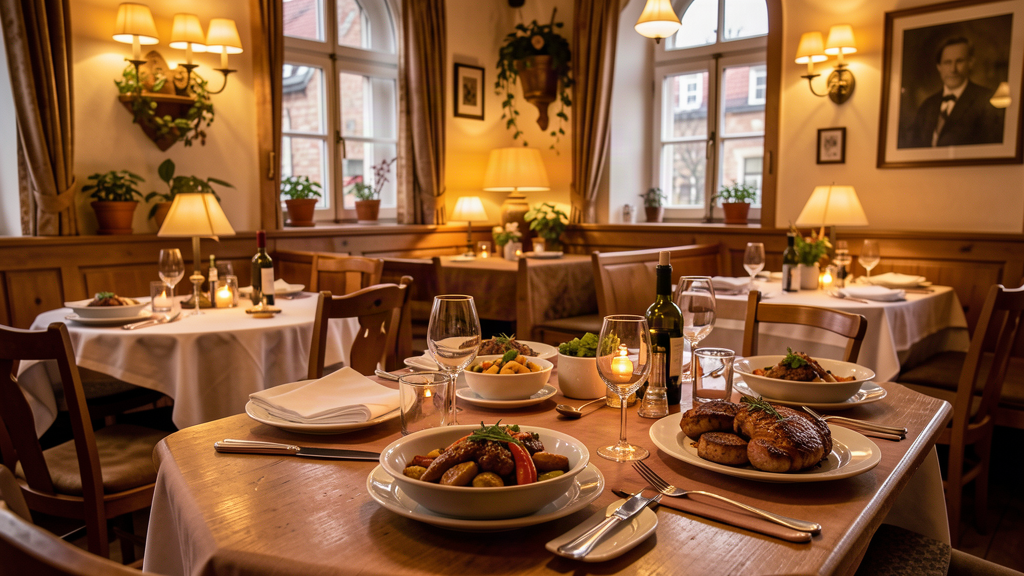
Cottbus cooking leans regional: Spreewald pickles on the side, linseed oil with potatoes and quark when you find it, solid German plates, the odd Greek or international room on the square. I am not chasing stars. I want a table I can reach after a park walk without calling a taxi.
Brau & Bistro — Am Altmarkt 18, 03046 Cottbus
Brew-house energy right on the old market. Regional German food, beer that matches it, terrace seats on the square in summer. Breakfast through dinner. I use it for a straightforward sit-down after Spremberger Straße — schnitzel or a stew, nothing precious, locals at the next table. Weekday lunches are calmer than Saturday nights.
Mosquito — Altmarkt 22, 03046 Cottbus
Bar-restaurant-café on the same square: grill and wok plates, fish when you want it, cocktails later. Handy when half the table wants another beer and half wants dinner. Terrace in good weather; inside when Brandenburg wind picks up. Flexible evening option — book if the square is busy, walk up if it is not.
Spreewehrmühle — Am Großen Spreewehr 3, 03044 Cottbus
Café and restaurant on the Spree with a wide terrace and a view of the water, a short hop from the densest old-town core. Regional lean, calmer pace than Altmarkt. My pick after Branitz when I want the day to end facing the river instead of a shopping street. Go earlier for daylight on the water; evenings work if you have already walked enough cobbles.
Bakeries along Spremberger Straße and around Altmarkt cover the gaps — rolls, cheese, something sweet for a Branitz bench. Market stalls help when timing lines up. Spreewald gherkins show up in jars and on plates; buy a small jar if you are heading into the biosphere the next day. I lock one dinner and leave lunch open. Stay near the square and the river and Cottbus feeds you between walks.
Places to Stay
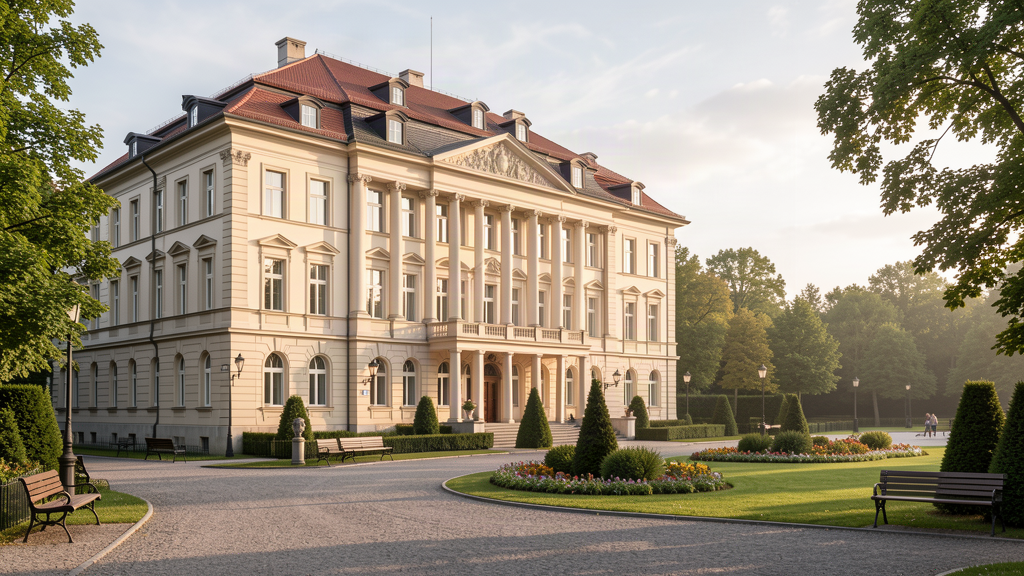
Hotel Dorotheenhof Cottbus — Waisenstraße 19, 03046 Cottbus
Smaller, practical stay in the center. Budget-to-lower-mid for the location. You walk to Altmarkt and Spremberger Straße in a few minutes. Rooms are simple; the point is the address and a quiet return after dark. Good when the trip is about Branitz and the old town, not spa menus.
SORAT Hotel Cottbus — Schloßkirchplatz 2, 03046 Cottbus
Mid-range right in the old town, steps from the pedestrian zone and the Schlosskirche. Towers and gates as neighbors. Full-service hotel bed, elevator, underground parking nearby on Neustädter Straße if you drove. I default here when I want evening streets without a bus plan. Breakfast covers a slow start before the park.
Radisson Blu Hotel, Cottbus — Vetschauer Straße 12, 03048 Cottbus
Higher tier toward the southern edge of the center, walkable to the theater and a manageable push toward Branitz. Spa, restaurant, a room you are glad to have after a full day on park paths. Book when the stay is a short break and comfort matters as much as the old-town doorstep. Tram or a twenty-minute walk links you back to Altmarkt.
Getting there, and how long to stay
Cottbus Hauptbahnhof is roughly 1.5–2 hours from Berlin by regional train, depending on the connection. From the station the center is a walk or a short bus or tram hop. Local trams and buses cover Branitz, Spreeauenpark, and outer neighborhoods; buy and validate tickets. The city is flat and bike-friendly — rent if you plan park days. Cars help for Spreewald villages and Bad Muskau; they fight parking once you are central.
One full day: old town morning, Branitz afternoon, dinner on Altmarkt. Two nights are better — one slow Spremberger morning, one full Branitz day with room for the Wendisches Museum or a theater evening. Three days open a Spreewald day trip — Lübbenau or Burg for punts and pickles — or Muskauer Park on the Polish border if Branitz hooked you and you want another Pückler landscape. The Cottbuser Ostsee, a huge artificial lake from former mining ground, is there when you want open water and new shoreline.
I leave from the edge of Pyramid Lake, when the tumulus is just a dark shape in the water and the path back toward town is half shadow. Berlin is ninety-odd minutes north. The grass pyramid does not care about that timetable.
