
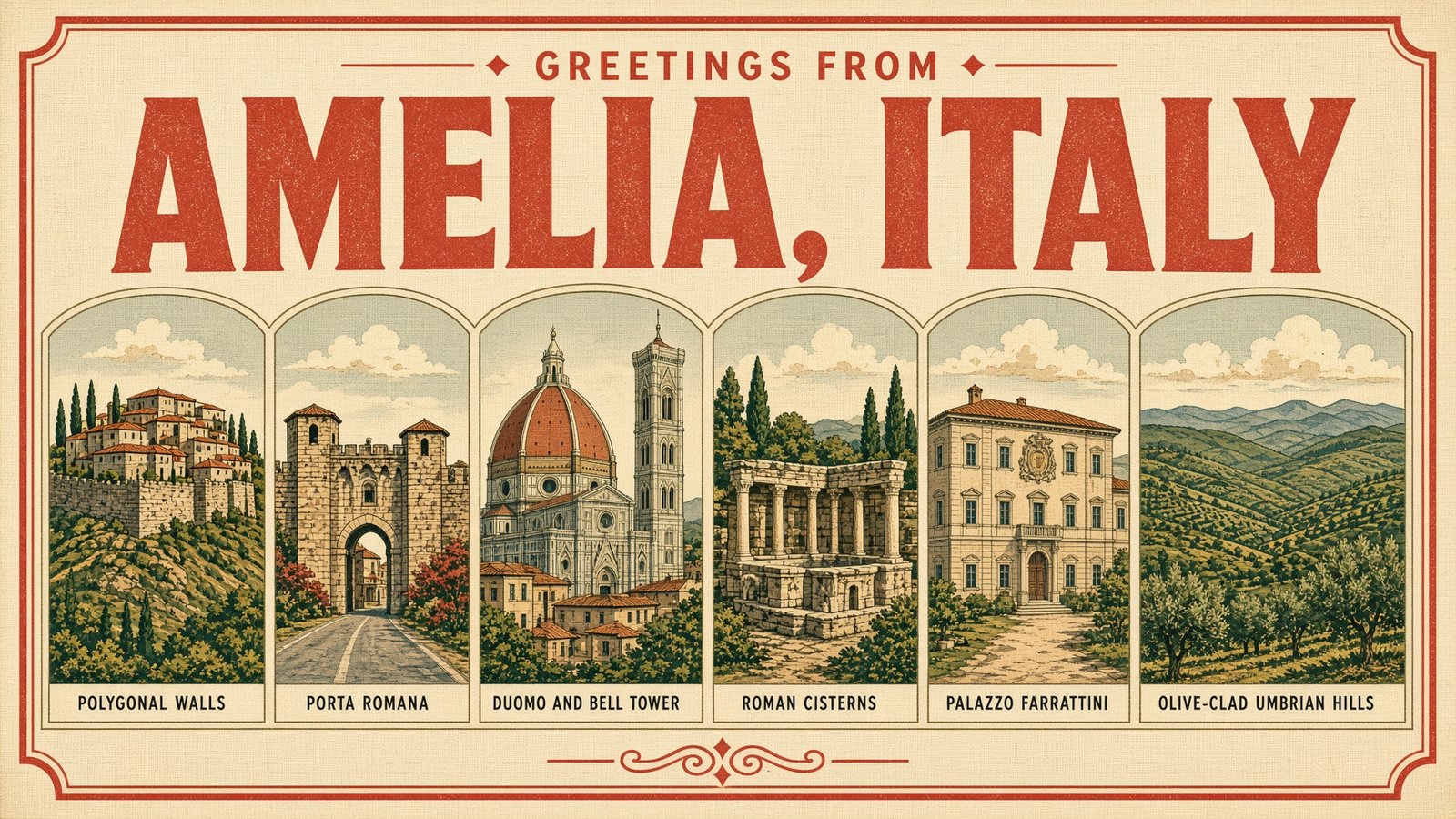
Amelia does not apologize for looking older than the brochure circuit. Before you even park, the walls announce it: irregular blocks the size of furniture, stacked dry, edges fitted with a patience that makes modern concrete look impatient. This is not a pretty curtain wall for photographs. It is pre-Roman work still standing in the Amerino hills.
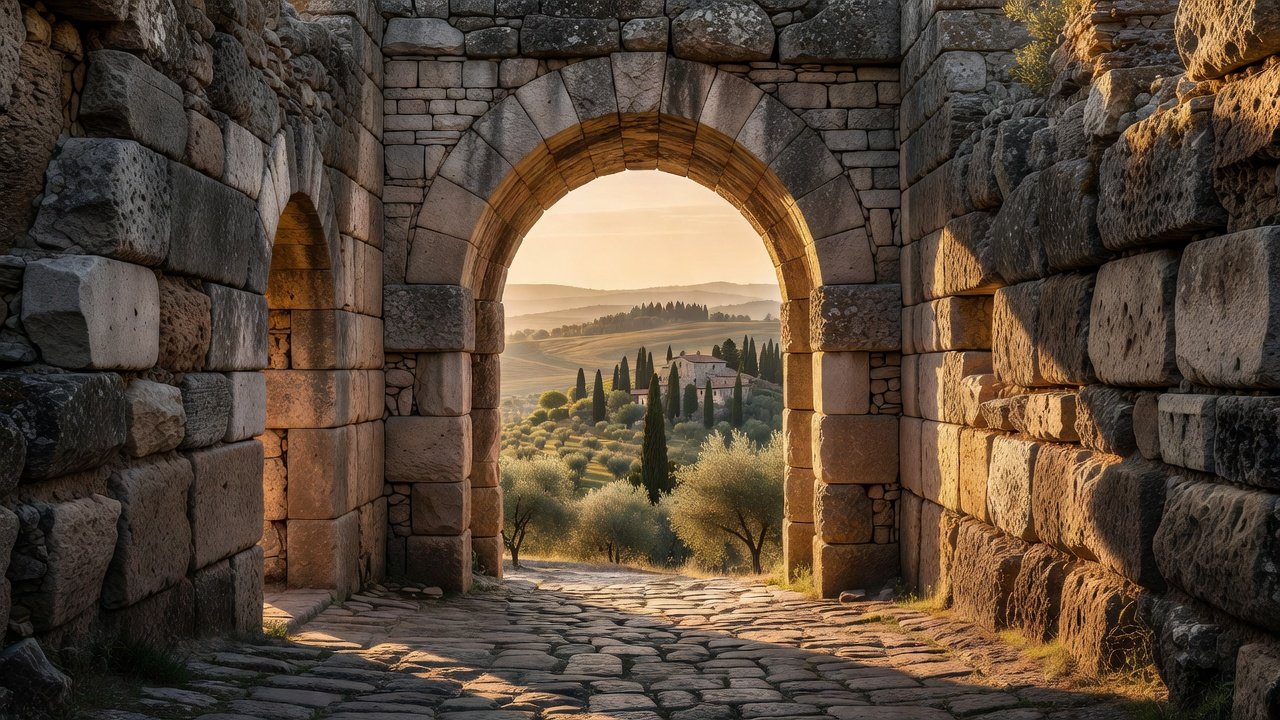
I came south from the usual Umbrian ridge list expecting a quiet lunch between Narni and Todi. What I found was a hill town less curated than its famous neighbors: cyclopean masonry, Roman water under the main square, a bronze general in a former college, and Colli Amerini oil that does not need a tasting speech.
Start at the gate that still means gate
Enter through Porta Romana. The modern road arrives where Via Amerina once fed the Roman town; inside, the climb becomes Via della Repubblica, the old cardo under a different name. Stop before you rush the centro. Walk a few meters left and right along the outer face of the wall. The polygonal work — mura poligonali — is why Amelia shows up in serious guidebooks even when tour buses do not.
The stones are not neat rectangles. They are angled, wedged, locked. No mortar. Seventh to fourth century BC, depending on the stretch and which archaeologist you trust over coffee. You do not need the full chronology. Give the joints ten minutes. They have outlasted empires and parking rules.
From the gate the Duomo and civic tower sit at the high point ahead. That climb is the town’s shape: up, flatten into squares, climb again. Amelia is not a single piazza with a ring-road selfie. It is rooms stacked on a hill over the Tiber and Nera valleys.
Squares that still work like rooms
Piazza Vera opens soon after the gate — San Francesco on one side, the old Collegio Boccarini holding the archaeological museum and pinacoteca. The war memorial sits in the middle like a pause button. Reset your pace here. Delivery vans and school kids still own the morning.
Higher up, Piazza Marconi was the medieval main square: patterned paving, the Loggia dei Banditori, palazzi that still look like they keep accounts. The Arco di Piazza — double arch, Roman blocks reused — marks an older threshold. Frieze fragments and columns show up in house walls if you slow down on Via della Repubblica. Amelia is bad at hiding its layers.
Piazza Matteotti sits on the Roman forum level. Palazzo Comunale on one side, ordinary life on the others, and under the paving real hydraulic work: interconnected Roman cisterns from the second century AD. Guided access when the desk is open. Go underground when you can. The air cools; the vaults make plain how the hill held water. Above, people cross for coffee without thinking about reserve capacity.
If you buy one ticket, split it between the cisterns and the museum. The streets will do the rest for free.
Germanicus and the quiet museum hour
The Museo Archeologico in the Boccarini complex holds what people mean when they say Amelia has a masterpiece: the bronze Germanicus, recovered near the walls in the 1960s, restored, still able to stop a room. Roughly two meters of bronze, imperial posture intact, found outside a hill town that was already ancient when he marched.
Give the galleries more than the statue shot. Necropolis finds, inscriptions, ordinary Roman clutter that proves Amelia was not a footnote. The pinacoteca upstairs is smaller and local — useful after too many famous fresco cycles elsewhere in Umbria. This museum knows its job.
Outside, side streets keep offering leftovers: mosaic floors under later cellars, a column in a façade, baths remembered in the fabric around Palazzo Farrattini. You are walking a town that renovated itself without erasing the previous owners.
Walls, oil, and the Amerino pace
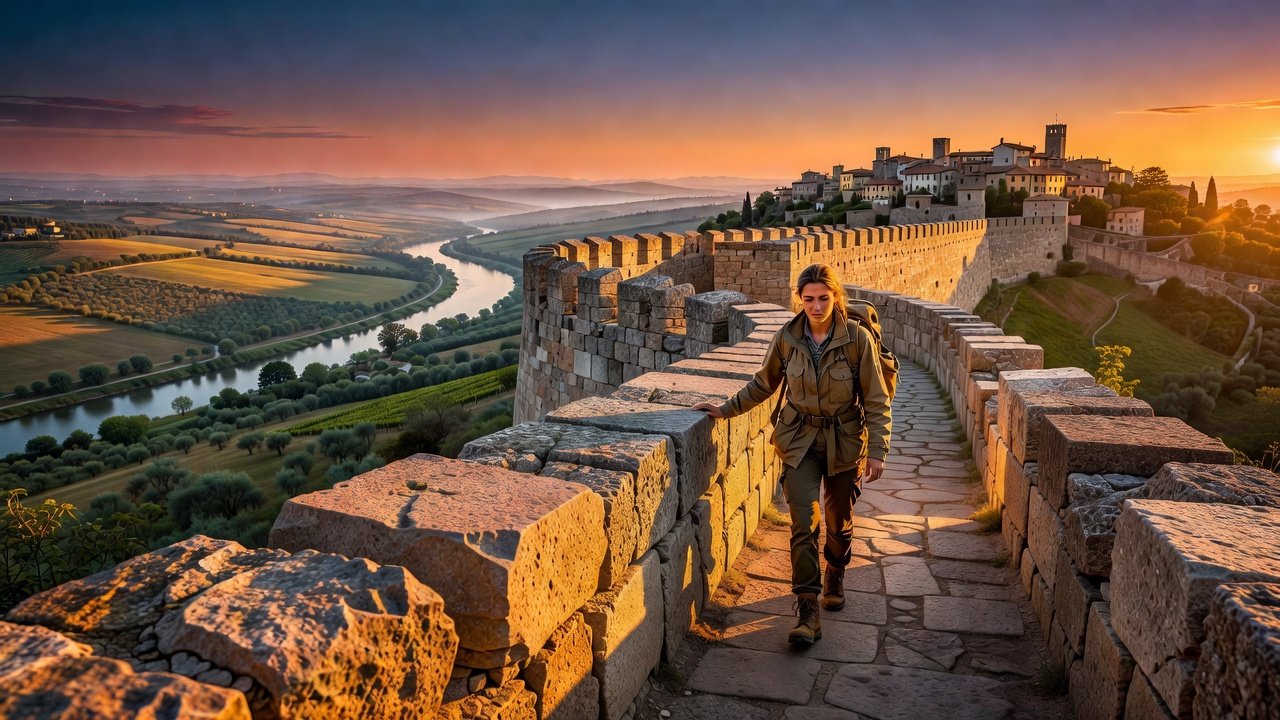
Loop the walls where paths allow. Porta Leone, Porta della Valle, Porta Posterola still work as thresholds between centro and countryside. From Valle the view drops into green; from Posterola you feel the drop toward the Rio Grande. The oldest polygonal stretches reward the outside walk as much as the interior climb.
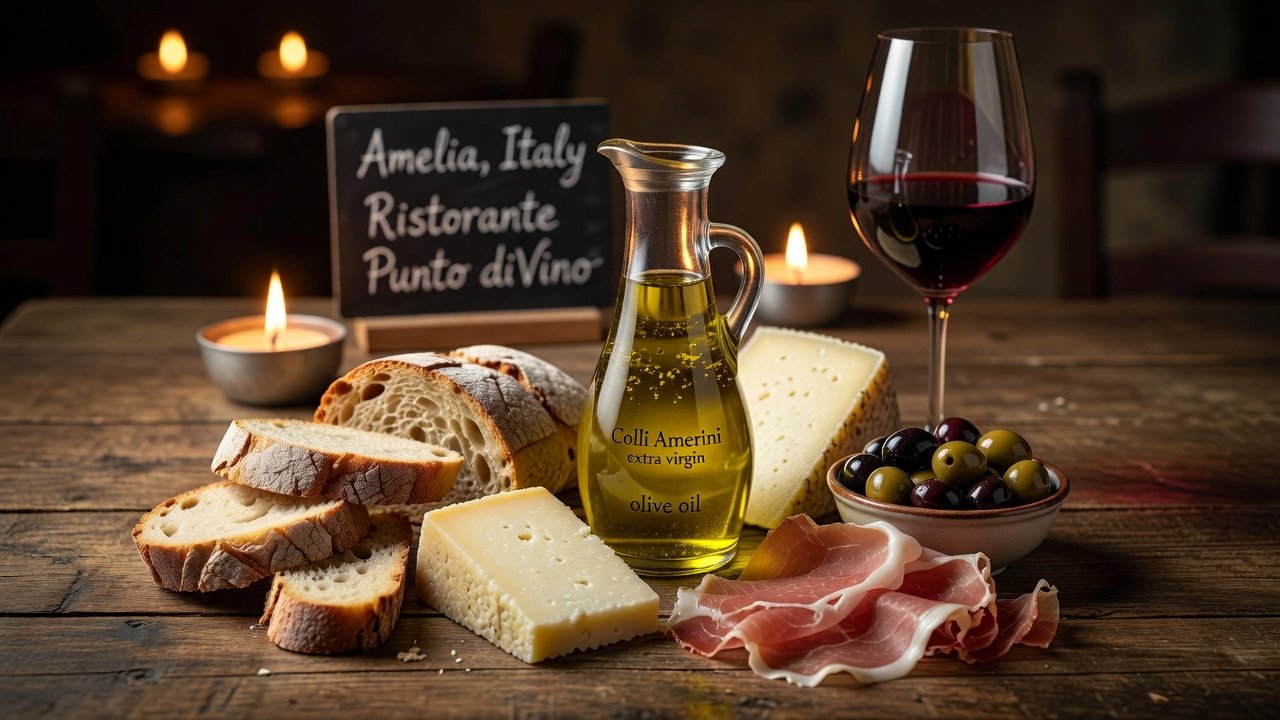
This is oil country. The Colli Amerini pour is what locals reach for: grassy, peppery when new, honest on unsalted Umbrian bread. Ask for the current harvest. Taste it on bread first — not as a trophy sip. Wine is present without Montefalco’s brand volume; drink what the kitchen opens. Amelia is Cittaslow in practice: the town would rather you stay for dinner than tick three churches before noon. One full afternoon and an overnight beat a drive-by from Orvieto.
Where to eat
Ristorante Punto diVino Via della Repubblica 25, 05022 Amelia TR, Italy
On the climb from Porta Romana, close enough to walk off dinner past polygonal stone in the dark. Wine-forward without forgetting the food — Umbrian cooking, a centro address, solid first night inside the gates. Book on weekends; confirm seasonal hours.
Ristorante Il Carleni Via Pellegrino Carleni 21, 05022 Amelia TR, Italy
Historic-center dining with a reputation that predates the listicles. Traditional Amerino and Umbrian plates, a room that fills with residents as much as overnight guests, a kitchen where the specials board still matters. Monday closures have been the pattern — check before you build the evening around it. Walk here after the museum; the streets between are half the point.
La Gabelletta Via Tuderte 20, 05022 Amelia TR, Italy
Just outside the tightest centro toward Foce — hotel and restaurant, countryside air, easier parking than the ZTL puzzle. Useful after a wall-and-oil day when the hill climb has done enough. Call ahead; countryside kitchens keep their own calendars.
Between meals, stand at a bar near Piazza Matteotti for espresso and whatever is under the glass. If new oil is on the counter with bread, do not be polite about refusing.
Places to stay
Sleep inside the walls for bells, short walks to the cisterns, and Porta Romana at blue hour. Sleep just outside for a car, a garden, and fewer stairs after dinner. The centro is compact; the mistake is refusing to park and walk.
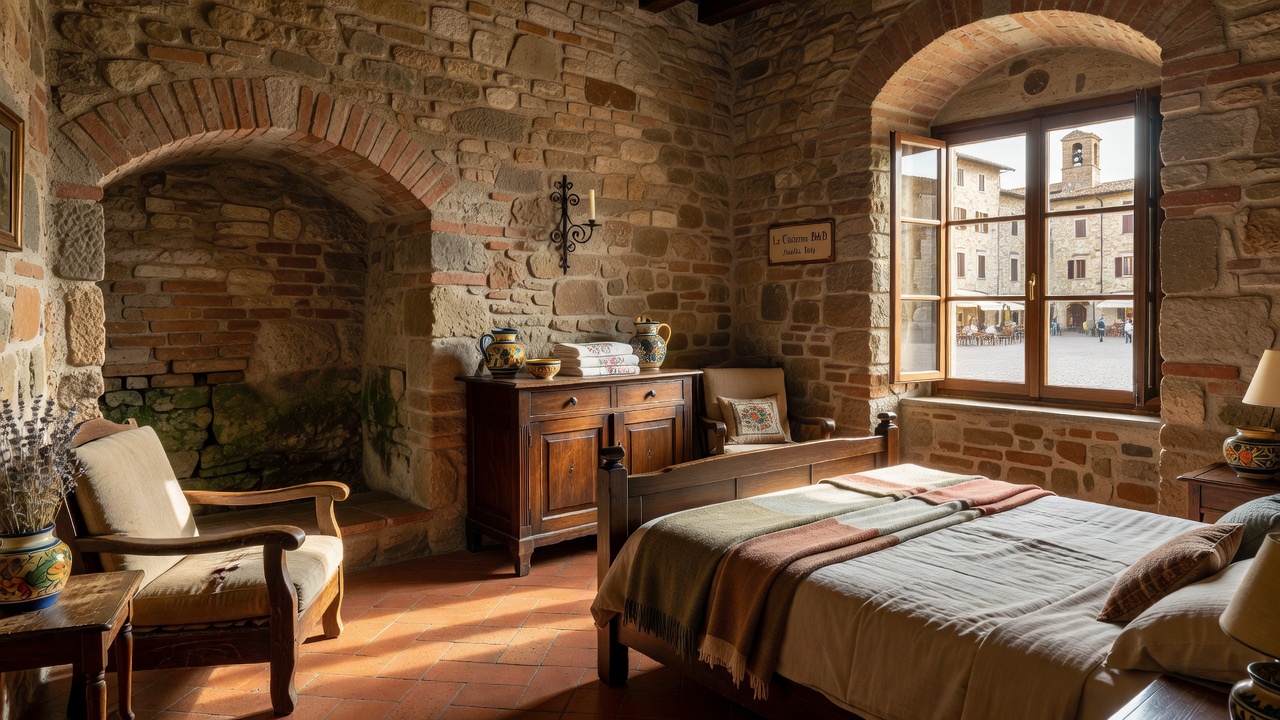
Le Cisterne B&B — value / practical, on the forum square Piazza Giacomo Matteotti 5, 05022 Amelia TR, Italy
Small B&B above the Roman cistern story, main-square location, walk-everywhere base without boutique markup. Best when Amelia is the point of the trip and you want the historic center under the window.
La Gabelletta — mid-range, edge of town with table on site Via Tuderte 20, 05022 Amelia TR, Italy
Rooms with a proper restaurant a short drive or determined walk from the gates. Easier with a car, quieter nights, walls still a morning errand. Good middle path if you want countryside calm without a generic agriturismo twenty minutes out.
Palazzo Farrattini — splurge, family palazzo inside the walls Via Farrattini 52, 05022 Amelia TR, Italy
A handful of rooms in a historic palazzo with countryside views off the edge of the centro — the building is half the reason you came. The address puts you in the layered streets between Via della Repubblica and the walls. Book early; inventory is small. Worth it when the overnight is what you take home.
Two nights beat one. One night turns the walls into a photo stop and Germanicus into a checkbox. Give yourself a Porta Romana morning, a cistern hour, a quiet museum corridor, a wall loop at the edge of day, and a dinner you do not rush.
Getting there and moving around
Amelia sits in the province of Terni, southwestern Umbria, above the Tiber valley near Narni, San Gemini, the Marmore road, and the Todi corridor. A car is the practical choice. Park outside the tightest core and walk. The climb is real; distances inside the walls are short. Summer stone holds heat — do walls and open squares earlier or later. Winter midweeks can go quiet in kitchens; confirm before you bet dinner on one door.
Day trips pull toward Narni, Todi, Orvieto, or Marmore. Fine. Just do not treat Amelia as filler. The dry-fit megastones only make sense if you give them a slow circuit, then climb into a town that still uses its squares for errands.
Amelia does not need a festival weekend to justify the stop. Stand at Porta Romana until the joints stop looking like scenery and start looking like work. Then go underground at Matteotti, say hello to Germanicus, and take a table where the oil still tastes like the hills outside the gate. The town was old before Rome filed the paperwork. That is still the point.
