
Most people who pass through Poitiers are going somewhere else. Futuroscope is north of town. The TGV stops, bags roll, and the plateau gets a glance from the window. Fair enough. This is not a city that dresses up for visitors. What it does have, if you stay long enough to walk downhill, is a strip of sand on the Clain where locals put their feet in the evening and let the week go slack.
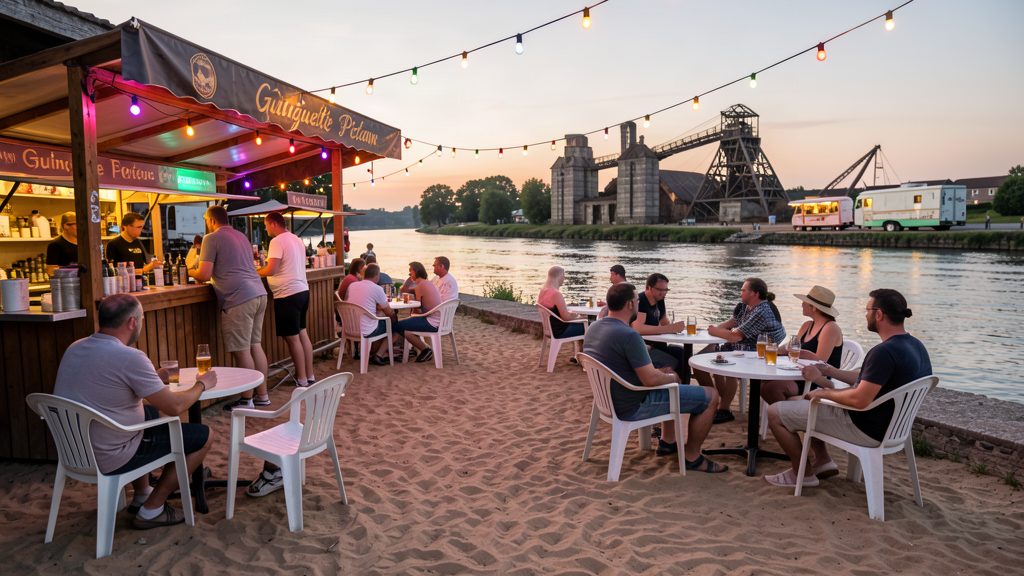
That strip is Îlot Tison. The bar is Guinguette Pictave at 5 Chemin de Tison. Food trucks, plastic chairs, arcade noise when kids are out, colored lights after dark. You drink with sand under your shoes while the river slides past an old sawmill site. For me it is the city’s living room. Not the carved church front, not the student rush up on the plateau. Just the place people pick when they want air.
Îlot Tison before the churches
Start at the river if you can. Chemin de Tison drops you onto the island in a few minutes from the lower edge of the center. The guinguette opened in 2018 and already feels older, the way outdoor bars do once regulars claim them. Daytime is soft drinks and ice cream and people half-watching kids. Evening is apéro, trucks lining up, music that stays in the background.
I go once without a plan. Sit. Watch the Clain. Order whatever is on the board. No reservation culture here. You need weather that holds and a reason to leave the stone streets above. Shoulder season thins the crowd. It feels more like a neighborhood hangout then, which is when I like it best.
If the guinguette is closed or the night is cold, walk the bank anyway. Paths along the Clain and the Cours du Clain give you water and trees without a ticket. Poitiers sits on a spur. Once you stop treating the plateau as the whole city, the drop to the river starts to make sense of the place.
Up the spur: stone, students, ordinary errands
Climb back into the center and everything tightens. Half-timber and limestone, steep little streets, students who keep the cafés open and the lunch menus cheap. Poitiers has been a university town for a long time. You notice it in bookstores, people with folders under their arms, Romanesque doors they walk past without looking up.
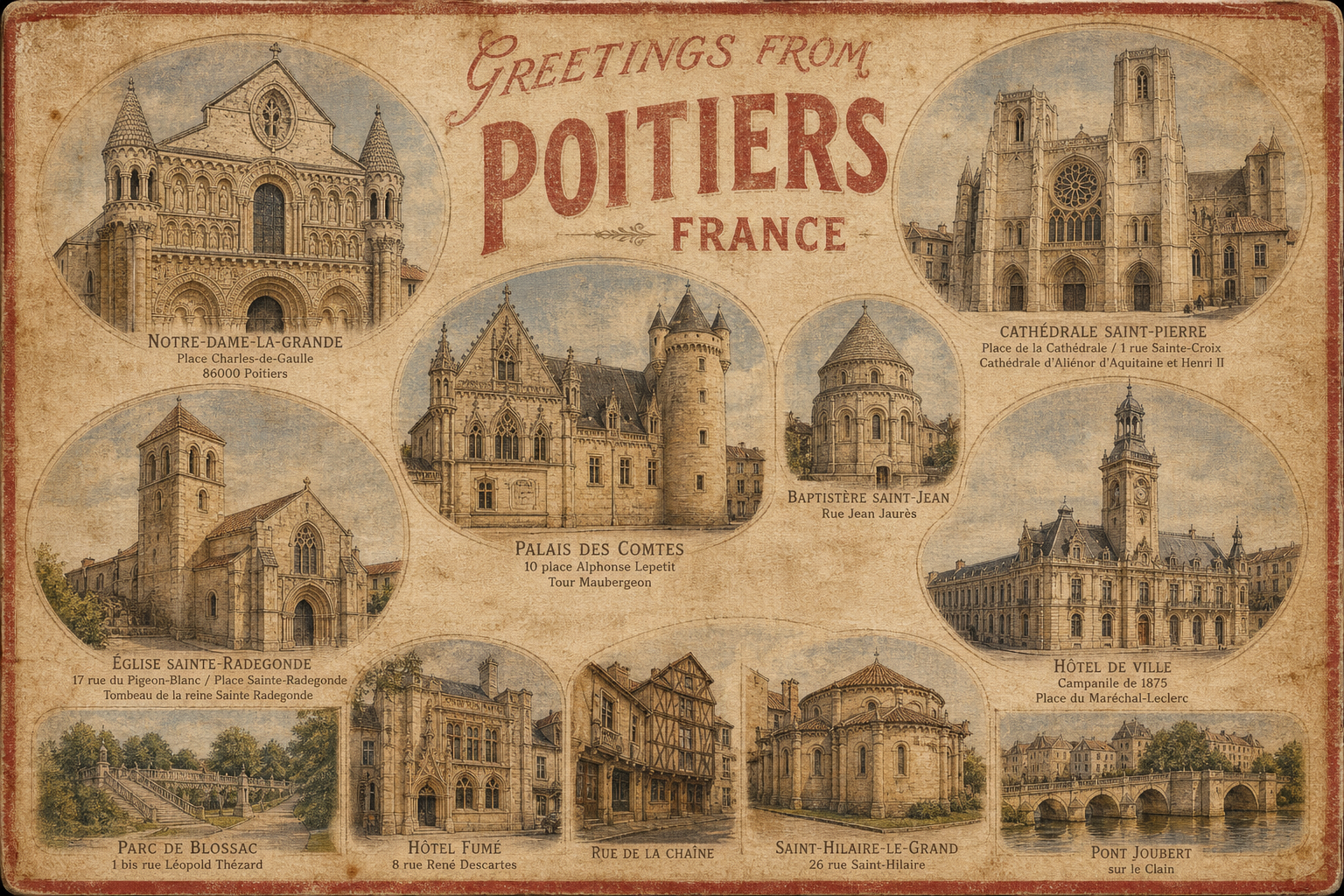
Notre-Dame-la-Grande on Place Charles-de-Gaulle is the façade everyone photographs. Carved saints, patterns that catch late light. Go inside if it is open, then step back out and watch the square behave like a square: market spillover some mornings, kids on scooters, someone late for a bus. I use the church as a compass point and keep moving.
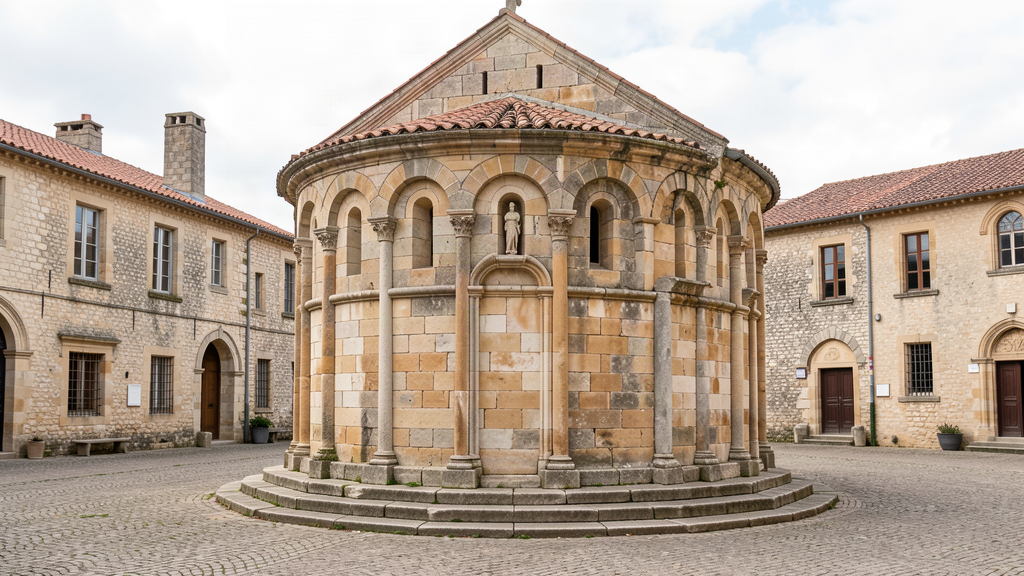
A short walk away, the Baptistère Saint-Jean is quieter and better. It is among the oldest Christian buildings in France — small, plain from some angles, heavy once you are inside. Twenty focused minutes is enough. Stacking it onto a ten-stop checklist misses the point. A working city still runs around a baptistery older than most of what people come to France to see.
Cathédrale Saint-Pierre sits a little apart, twin towers, palace quarter nearby. Fine if you want a big Gothic room. Skip it if your feet are already happy with the river and the small streets. Poitiers is better when you edit. Two or three stone stops beat a forced full circuit.
A day that fits without forcing it
Morning on the plateau: coffee, Notre-Dame from outside, the baptistery if the hours line up, then a drift through side streets toward the Hôtel de Ville. Midday near Place du Marché if you hit a market day — cheese, fruit, nothing clever. Afternoon rest, or a longer drop to the Clain paths. Late day back to Îlot Tison.
That loop is enough. Futuroscope can wait for another trip or a family day with a car. The center-to-river walk is the Poitiers I come back for. Compact, a bit vertical, more lived-in than polished.
Rain changes the plan without wrecking it. Covered passages are thin on the ground, so museums and long lunches matter. Musée Sainte-Croix has regional archaeology and fine arts when you need dry hours. One solid indoor stretch beats a soggy march past façades you will not remember.
Places to stay
Three bands. All work if you want the center and the river walk without a car.
Budget — ibis budget Poitiers Centre Gare 12 boulevard du Pont Achard, 86000 Poitiers
Plain, efficient, two minutes from the station. You are buying a clean bed and a short walk into town, not a design story. Fine when daylight belongs to the Clain and the plateau and the room only has to hold a suitcase. Early trains and late arrivals make more sense here than in a quiet courtyard hotel.
Mid-range — Logis Hôtel de l’Europe 39 rue Carnot, 86000 Poitiers
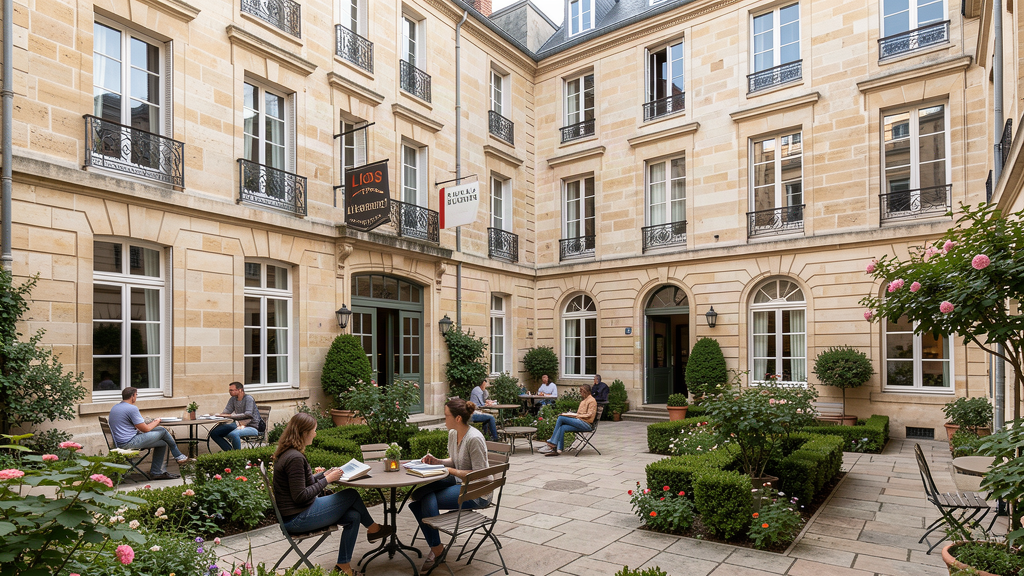
A calmer city hotel on rue Carnot with a garden people actually use when the weather holds. Still central. Cathedral and Notre-Dame are walkable, but you can sit outside with a book instead of staring at traffic. Proper breakfast, local feel, no lobby performance required.
Splurge — Best Western Plus Poitiers Centre Le Grand Hôtel 28 rue Carnot, 86000 Poitiers
Four stars in a quiet interior court off the same street as the Europe. Larger rooms, more polish, easy walking to restaurants. Use it when the stay is part of the trip and you want a softer landing after stone streets and river steps. Rue Carnot is handy at night. You are not stuck out on a ring road.
Where to eat
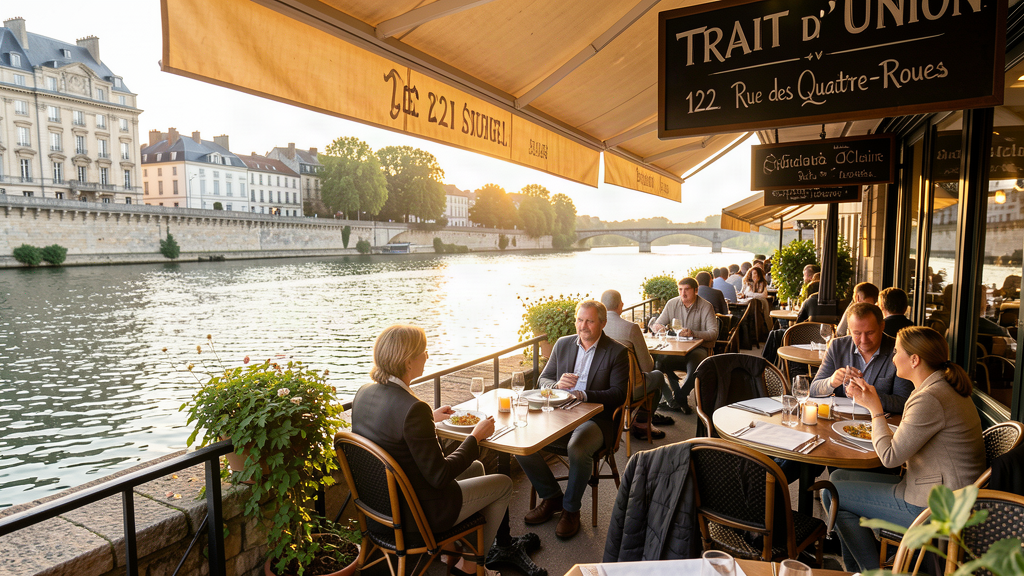
Le Trait d’Union 122 rue des Quatre-Roues, 86000 Poitiers
On the Clain with a terrace facing the water. French cooking with a real vegetarian lane, which is rarer than it should be in smaller French cities. I come here for a proper sit-down without climbing back to the noisier plateau streets. Book if the weather is good and the terrace is why you came.
Chez Michel (Chez Jean-Michel) 13 rue Magenta, 86000 Poitiers
Center-ville restaurant and bar, long hours, mixed crowd. Locals, students, people who want côte de boeuf or a burger without ceremony. Useful after a walking day when you do not want a chapel vault or a riverside reservation. Solid, social, central.
Les Archives 14 rue Édouard Grimaux, 86000 Poitiers
A former Jesuit chapel under high vaults, later departmental archives, now a gastronomic room that still startles people when they walk in. Go for the setting as much as the plate. Dress a notch above river-sand clothes. One dressed-up dinner here and an evening at Guinguette Pictave (5 Chemin de Tison) covers both moods: sand underfoot, then stone overhead.
Getting here and getting around
TGV and regional trains put you at Gare de Poitiers on the west side of the center. From the station it is a walkable rise into town. The ibis budget sits almost on the doorstep. By car, park once and forget the vehicle. The spur is made for feet, and the drop to Îlot Tison is shorter than it looks on a map once you stop fighting one-way streets.
Inside the center you barely need a bus. Comfortable shoes matter more than a transit app. The vertical bits surprise people who expected something flat like a Loire town. If stairs are hard, split river time and plateau time with a taxi rather than forcing one long loop.
English is patchy outside hotels and the more tourist-facing rooms. French gets you warmer service and better tips on what is open. Normal regional France. Not a snub.
When to go
Late spring and early autumn suit the guinguette and the walking. High summer works if you can stand heat on the stone and book lodging ahead when events hit. Winter is quieter and greyer — fine for chapel dinners and short daylight loops. The sand-and-lights version of Îlot Tison is more of a fair-weather thing.
I would not treat Poitiers as a one-hour stop between trains. Give it a night, ideally two. Morning stone, afternoon river, evening with your feet in the sand. The spires and the university noise are real. What sticks with me is still the Clain at dusk, a plastic chair that sinks a little, and a city that stops looking like a transit point and starts looking like a place people chose.
