
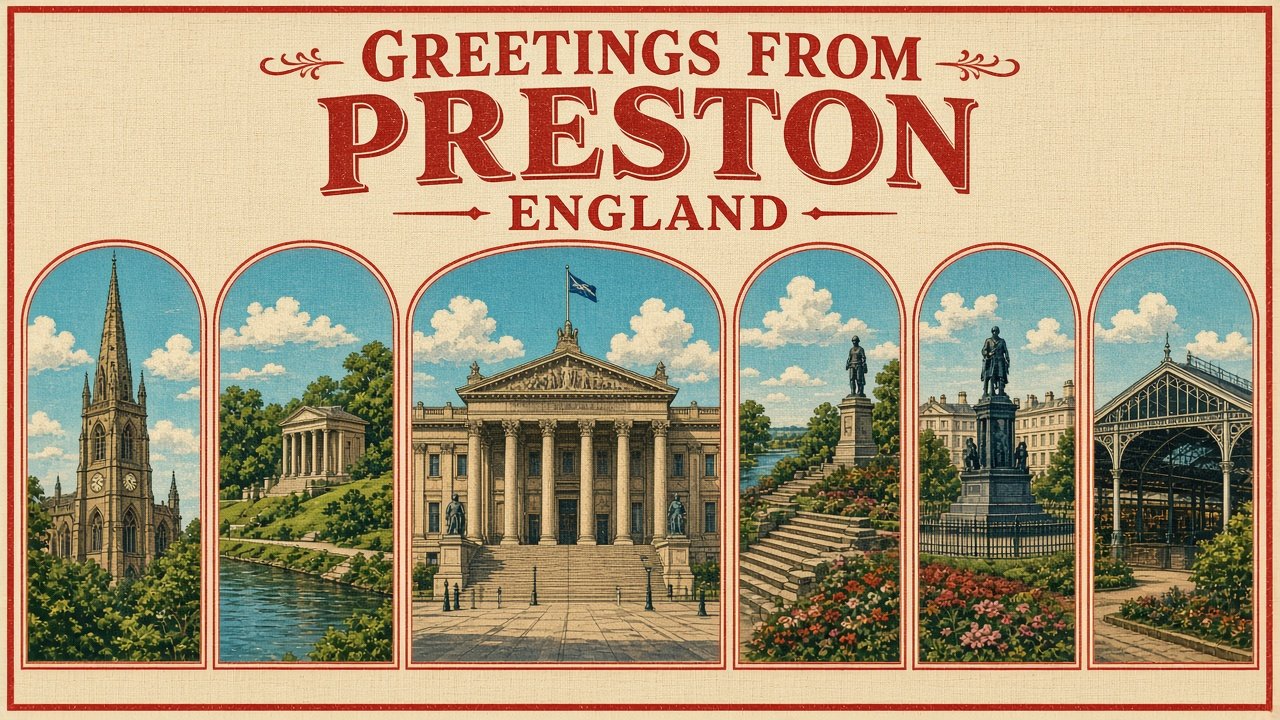
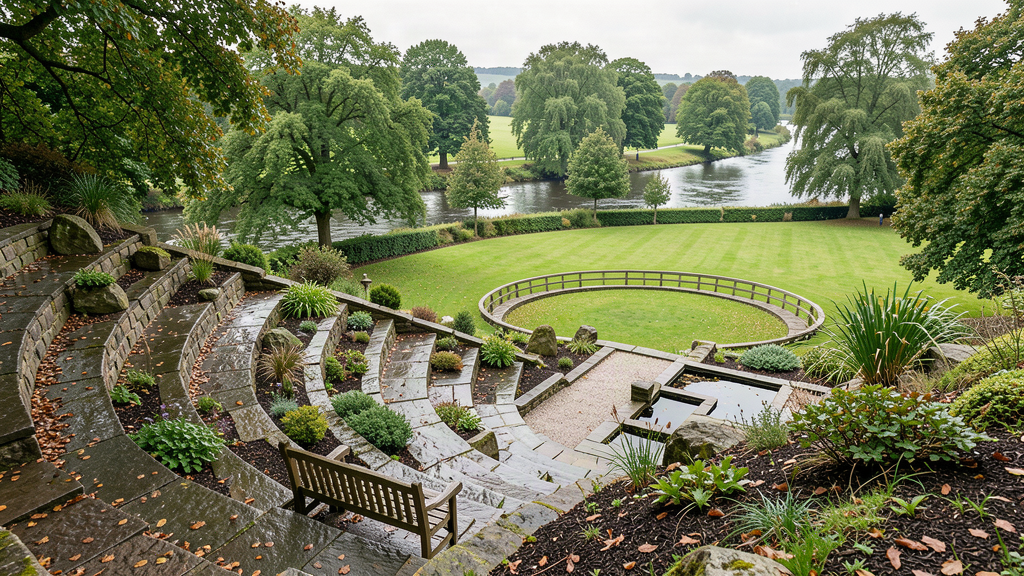
Preston gets filed under county town on the way to Blackpool or the Lakes. Station, shopping street, maybe the Harris if the rain holds, then out. Fair enough if the high street is the whole trip. What holds me is south of the core, where the land drops into a Victorian park bowl above the River Ribble and a 1930s Japanese rock garden still works its ledges and pools on the slope. Stand mid-amphitheatre with the Ribble sliding past the far bank, and the town’s civic story reads cleaner than any Guild Wheel leaflet. Fishergate can wait. Start in the bowl.
Avenham Park, rock gardens, and the river bowl
Avenham Park sits in a natural amphitheatre just south of the Georgian streets around Winckley Square. It opened as a municipal park in the early 1860s and was later listed Grade II*. The design takes the fall of ground toward the Ribble and turns it into lawn, tree belts, and paths meant for walking rather than a showpiece. The Japanese Rock Gardens opened in November 1936 under Mayor James Harrison: stepped stone, water, planting, seats that face the slope rather than a stage. On a quiet weekday the place behaves like a working garden inside a public park. Damp stone, leaf litter, water sound when the pumps and weather agree.
Reach the park from the Winckley / Ribblesdale Place side and drop downhill, or come along the riverside and climb into the bowl. Give the first half hour to the rock garden and the open grass before you rush the fountain next door. Coach parties thin out here compared with the Flag Market on a busy Saturday. The amphitheatre is why Preston kept this river edge as civic green space. The Ribble is why mills, docks, and later parks clustered south of the ridge.
Keep the first loop short. Rock garden ledges, one long look across the bowl to the river, then the path that pulls you west into Miller Park. The city centre is a ten-minute climb when you want shops. It does not need to be the opening move.
Miller Park, Avenham Walk, and the Ribble bank
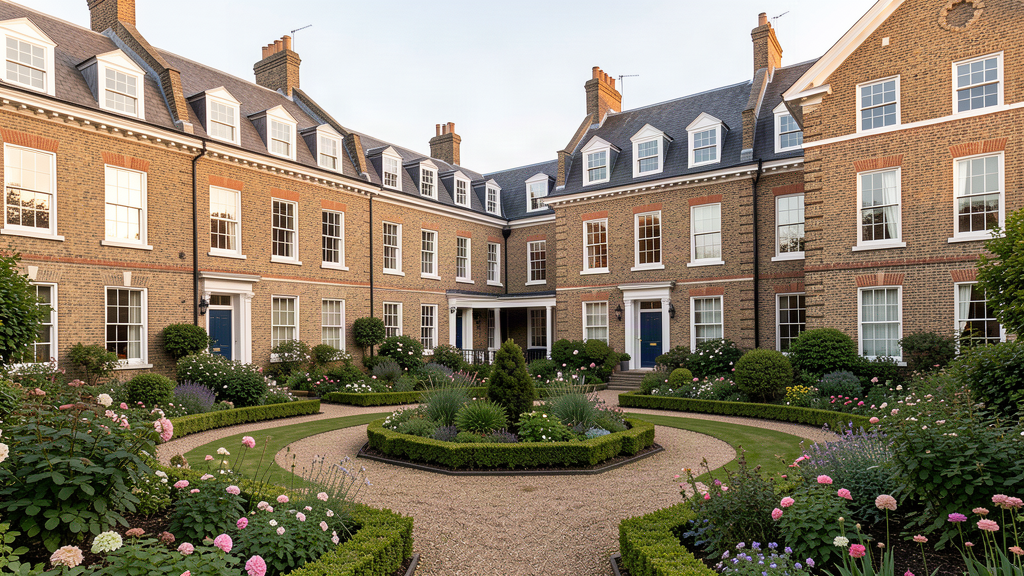
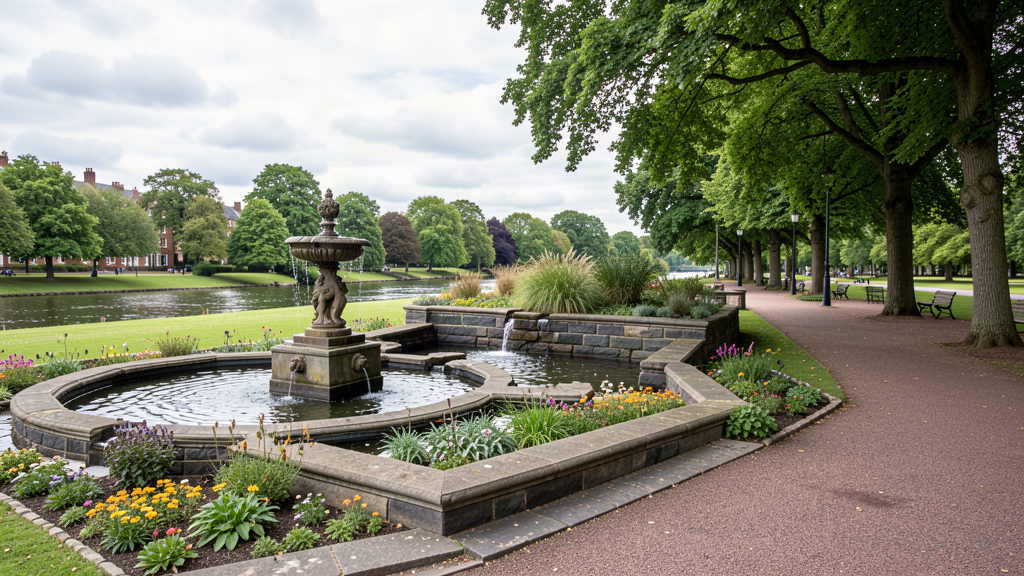
Miller Park joins Avenham on the west, more ornamental than the amphitheater, with a listed water fountain, rock features, spiraling beds, and a basalt block said to come from the Giant’s Causeway. The two parks share Avenham Walk, the long tree-lined path that runs beside the Ribble through both. Derby Walk climbs the bank with flowerbeds and the Earl of Derby statue looking out over Miller Park and the river. Use the height for orientation: station and Fishergate behind you, river corridor ahead, Penwortham across the water.
The Ribble here is a working northern river, not a postcard canal. Paths follow the bank toward the old dock country and the Guild Wheel loop if you want longer legs later. For a first day, the park pair is enough. Walk Avenham Walk end to end once without headphones. Notice where the Victorian rail corridor still cuts the edge of the green, and where ornamental structures dress the engineering. The parks were never pure wilderness. They are civic design on floodplain ground, used by dog walkers, people on lunch breaks, and residents from the Georgian streets upstairs.
When the weather turns, wet stone in the rock garden still reads better than a glossy brochure shot. If you only have an hour south of the centre, spend it here rather than adding a third indoor gallery you will half-see.
Winckley Square, Miller Arcade, and a tighter center hour
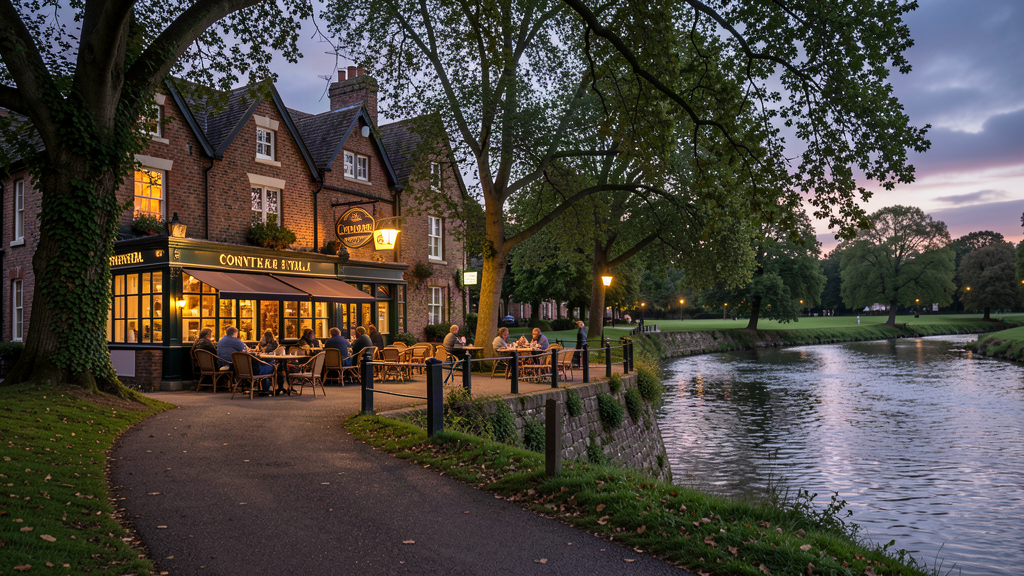
Climb back toward town and the grid tightens into Winckley Square: Georgian townhouses around a garden square, quieter than Fishergate, still residential in feel even where hotels and offices have moved in. Ribblesdale Place and Camden Place put you within a few minutes of both the park drop and the shopping spine. Sleep or eat near the square, walk downhill for the Ribble, walk north for markets and museums.
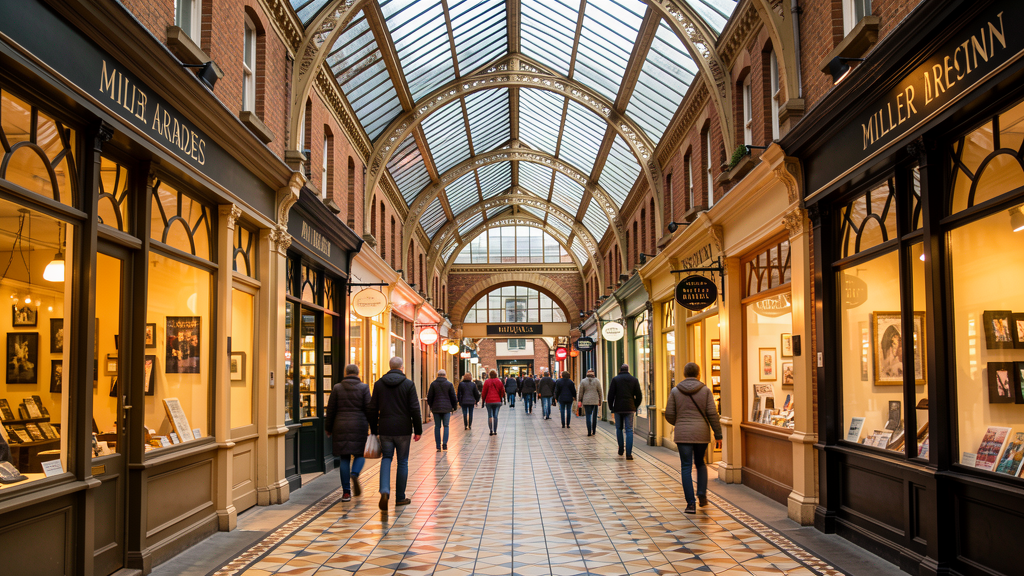
Fishergate is the main high street. At the east end, Miller Arcade opens as a Victorian covered shopping passage with a glass roof, tiled floors, and small units, the kind of indoor street Preston built when rain was a given. Walk through once for the fabric, not for a shopping list. Across the Flag Market, the Harris (museum, art gallery, library) fronts the square in heavy civic stone. Ticketed or free rooms depending on the current program; the exterior and the market space still work when you skip the galleries. Preston is a working city first. Treat the center as the upper story after the river parks, not the whole day.
University life and office traffic keep the streets moving. That is fine. You came for the amphitheater and the rock garden ledges, not a polished heritage village. Once the Ribble bank is in your legs, Harris stone and arcade glass land as the same town’s civic layer.
Places to Stay
Premier Inn Preston Central — Fox Street, Preston, Lancashire PR1 2AB
Lower-spend chain stay on the north side of the center, practical when the station, Flag Market, and Harris are the daytime grid, and you will walk south to Avenham later. Reliable rooms, on-site food, easy foot access once bags are down. Book ahead for weekday business peaks and weekend events.
Holiday Inn Preston — The Ringway, Preston, Lancashire PR1 3AU
Mid-range full-service hotel on the Ringway edge of the core, with restaurant and bar on site and a short walk or hop toward Fishergate, Winckley Square, and the park drop. Use it when you want a proper desk and a quieter exit to the ring road after river miles, without leaving the city for a motorway box.
Winckley Square Residences — 18 Ribblesdale Place, Preston, Lancashire PR1 3NA
Higher-spend aparthotel rooms across listed townhouses facing Winckley Square Gardens: studio and apartment scale, kitchen space, garden views on many units. Best base when the Avenham and Miller walk is the point of the trip, and you want the square, then the downhill bowl, without a bus. Winckley Square Hotel at 10–11 Camden Place, Preston PR1 3JL is the sibling boutique option on the same grid if residences are full.
Where to Eat
Baker Street — 30–34 Avenham Street, Preston, Lancashire PR1 3BN
Neighborhood rooms a short walk from Winckley Square and the top of Avenham Park. Pub energy, plates that work for lunch after the rock garden or an early supper before a second riverside loop. Handy when you want food without climbing all the way back to Fishergate. Busy at peak; go slightly off-wave if you want a quieter table.
The Continental — South Meadow Lane, Preston, Lancashire PR1 8JP
Riverside pub and music room at the park edge where Broadgate and the Ribble path meet South Meadow Lane. Real ale, food, outdoor space when the bank is kind, live bands many nights. Walk Avenham Walk west, finish under the railway bridge corner, eat without reclaiming the high street. Check the door time if you are coming for a gig rather than a meal.
Aven Restaurant — 10 Camden Place, Preston, Lancashire PR1 3JL
Small contemporary dining room by Winckley Square (inside the Winckley Stays/hotel block). Seasonal tasting-led cooking, tight covers, the sit-down option when the parks are already filled, and you want the Georgian grid rather than a riverside pint. Book ahead; lunch can be calmer than Saturday night if the square is your base.
Getting around and leaving room
Preston sits on the River Ribble in Lancashire, inland from the Fylde coast, with the West Coast Main Line station on the south-west edge of the center and the M6 a short hop east. Train arrivals can walk Fishergate and drop to Avenham on foot. Road arrivals should park on the fringe or use a central multi-story car park, then finish south of Winckley on foot once the parks are the point. The Guild Wheel is a 21-mile loop for another day. It should not erase the amphitheater walk you came for.
Useful day shape: station or fringe arrival, Winckley Square orientation, drop into Avenham Park and the Japanese rock gardens, Avenham Walk into Miller Park, fountain, Derby Walk height, optional Harris and Miller Arcade hour, then Baker Street, Continental, or Aven by mood, stay by budget. A second block can add Brockholes upriver, the dock and steam railway west, or a longer Guild Wheel segment without turning the rock garden into a drive-by photo.
Most visitors photograph the Harris steps, buy something on Fishergate, and leave before the Ribble amphitheater gets an honest hour with wet stone underfoot in the 1930s garden. Stay long enough for Avenham’s bowl to feel like designed ground rather than a green logo on a map, and for Miller’s fountain path to read as the same civic project. I would keep the Japanese rock ledges, the Victorian park lawn, and the river under ordinary Lancashire cloud.
