
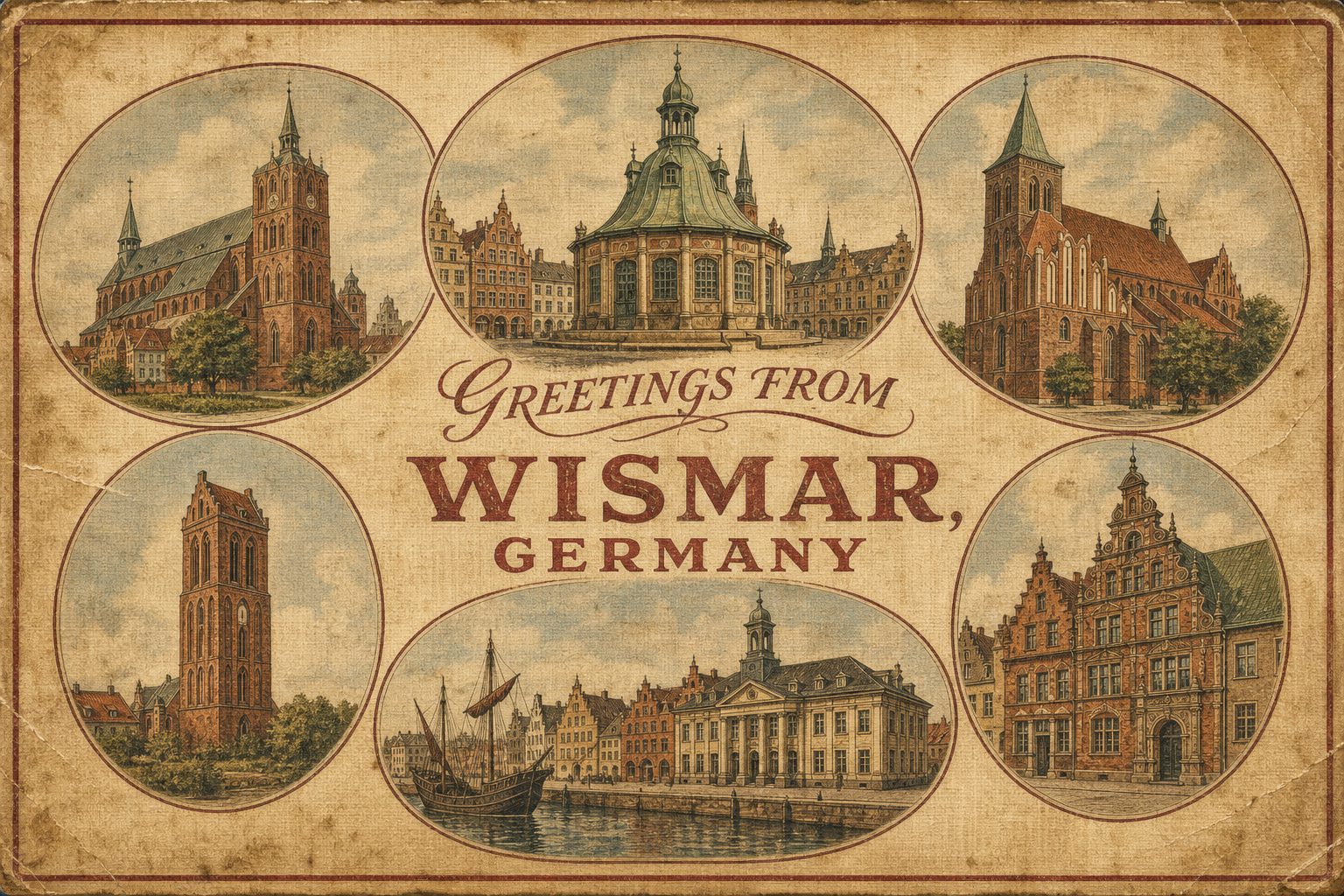
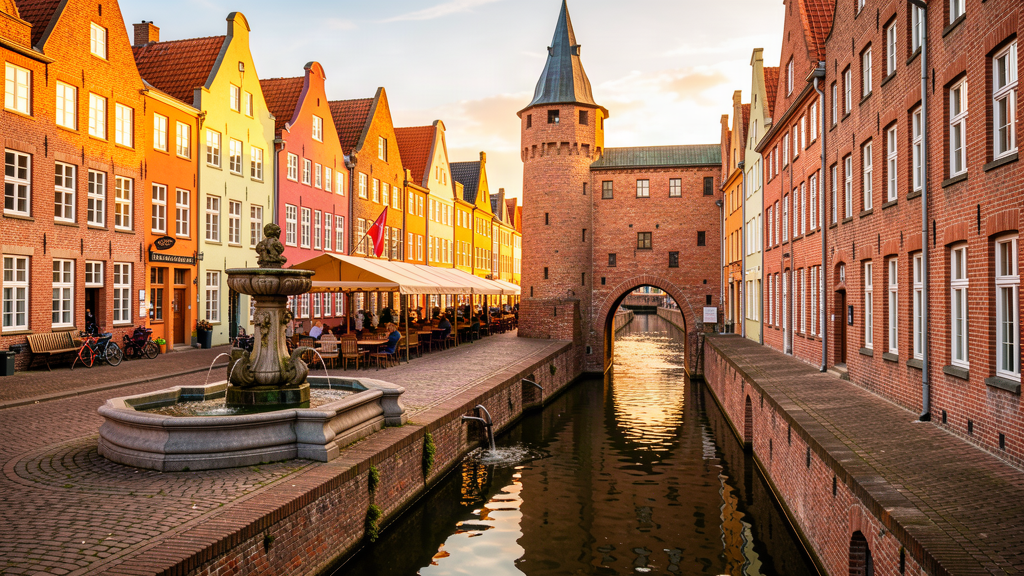
Most visitors treat Wismar as a UNESCO brick postcard between Lübeck and Rostock, or a one-hour stop for Wasserkunst photos and a harbor selfie. Fair if the train is tight. Wrong if you have soft shoes and a morning not already sold to a cruise schedule. This is a Hanseatic Baltic town with salt-trade memory and a couple of Swedish centuries still showing in the gables. A canal called the Grube threads the old town toward the water. The better hour starts when you leave the square cameras and follow that water downhill.
I start on the Markt, then walk the Grube. Copper dome first, Wassertor last. Civic water machine, merchant canal, harbor gate. That pairing is the Wismar detail I keep.
Markt, Wasserkunst copper, and the square that is larger than it needs to be
Wismar’s Markt feels almost too open until you slow down. The Wasserkunst sits in the middle like a small Dutch-Renaissance machine someone left as a monument: copper, ironwork, a pavilion that once pulled drinking water for the town. Around it you get stepped brick gables, the white classicist Rathaus face, and the Alte Schwede house from 1380, which still reads as a merchant front more than a museum prop.
Do the exterior loop before any interior. Morning light is kinder on brick than noon coach arrivals. Stand long enough to notice bikes, grocery bags, ordinary life under the UNESCO label. Alte Schwede’s stepped gable is the easy anchor. Use it, then leave it. Side streets off the Markt — Breite Straße, Lübsche Straße, quieter shop lanes — keep second gear. Soft shoes matter. Cobbles punish the wrong sole faster than any guidebook warning.
Down the Grube: canal lanes, Gewölbe timber, harbor pull
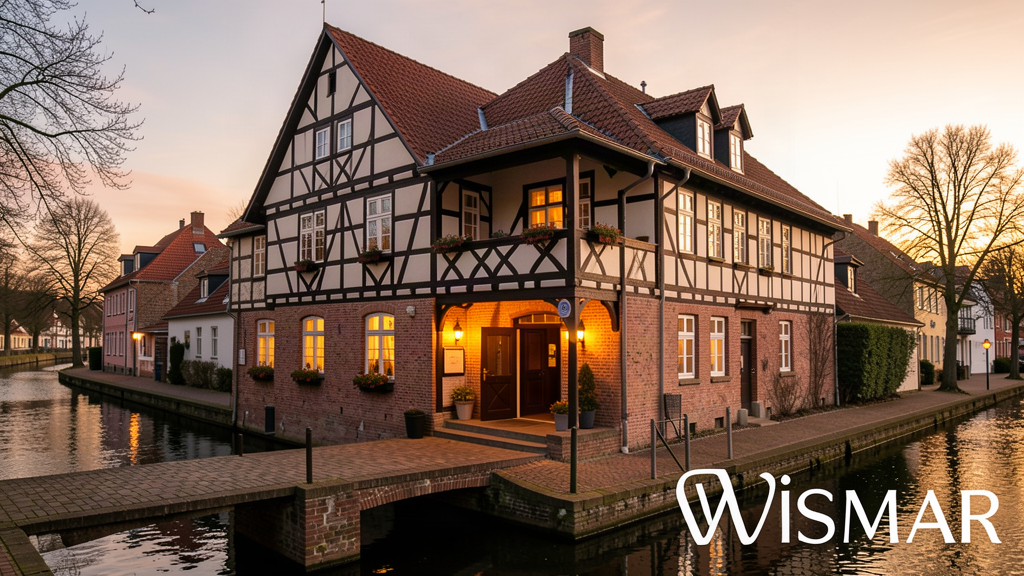
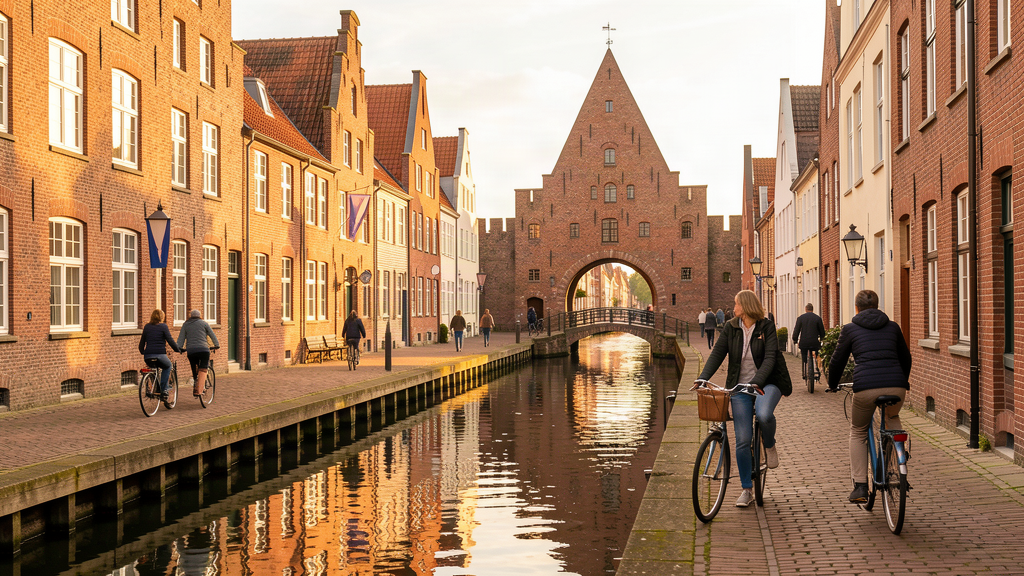
The Grube is Wismar’s quiet trick. A canal cut through the old town, once practical water for trade and fire, now a dark ribbon with half-timber leaning over it and bridges that force a slower pace. From the Markt edge you can drop toward the harbor without joining a tour group’s stride.
The Gewölbe is the image people save: timber spanning the water, colorful, slightly improbable, closed to casual entry but open as a landmark you walk under and past. Pause once. Do not let it kill the rest of the day. Keep walking. Canal logic pulls you toward Lohberg and the harbor edge — brewery timber, fish smell when the wind is right, a town that still ends at boats rather than a ring road. No ticket desk. Just water and brick, and the habit of following both.
If rain hits, the Grube still works. Wet timber darkens, reflections double the gables, café awnings become useful without turning the day into indoor shopping only. Locals cut through between errands. Day-trip density thins once the first harbor loop is done. Stay in that thinning.
Alter Hafen, Wassertor brick, Baumhaus, Baltic ordinary life
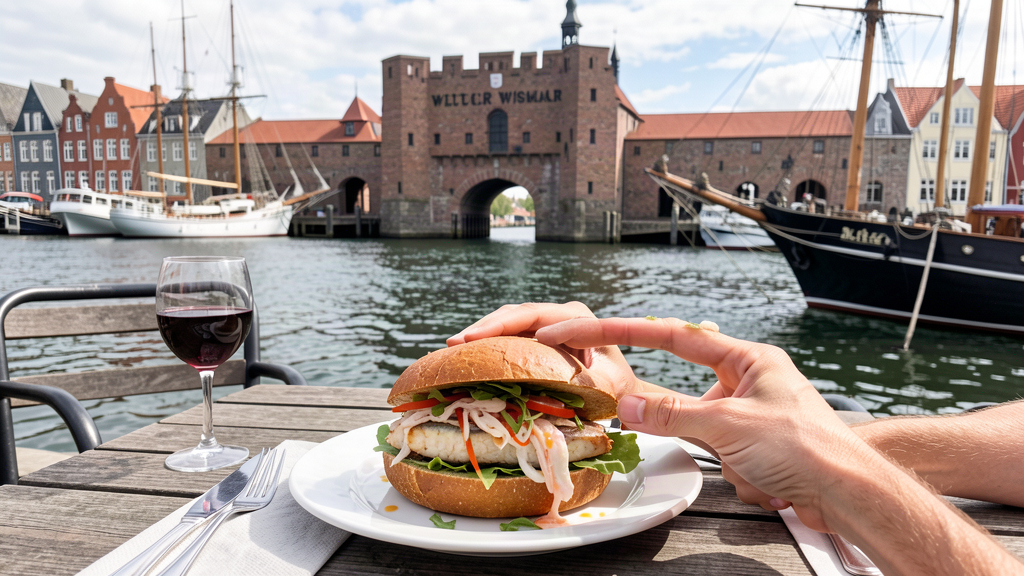
Alter Hafen is human-scale: cutters, restored Speicher, promenade chairs, fish-roll smell when lunch lines form. The Wassertor is the last surviving old city gate, brick Gothic still sitting on the threshold between town and water. Walk through it both ways. Gates mean more as doors than backdrops.
Baumhaus sits on the harbor edge, the small historic building that once controlled night closure and danger signals for the port. Nearby, when she is in, the Poeler Kogge Wissemara ties medieval trade to a real hull. Ten honest minutes of mast against Speicher brick beat a full ship-museum siege. Then a seat facing water.
Fischbrötchen is the honest lunch: counter, salt air on the bun, no cloth-napkin theater. Harbor festivals raise the volume; shoulder months keep the quay calmer. Either way, this is where Wismar stops performing UNESCO and just acts like a Baltic working town that also happens to be beautiful.
Nikolaikirche rises not far inland, the sailors’ and fishermen’s church, with a nave height that still startles. Pair a short visit with the harbor walk rather than stacking three church interiors in one afternoon. St. Georgen and the Marienkirche tower fill other hours if brick Gothic is your whole reason for coming. They do not have to own the only day.
Swedish centuries, seasons, and moving slow
Swedish rule left more than a plaque. Two hundred years of Baltic power show up in gables, street logic, the Schwedenfest when it runs, and a civic pride that is not only German Hanse branding. One Markt pause at Alte Schwede and one harbor-gate walk are enough to feel the layered centuries underfoot. Film buffs know the Altstadt doubled for Nosferatu. Evening alleys and harbor wind between gables beat hunting every camera mark.
High summer and festival weeks change the noise more than pure season. Spring and early autumn keep Grube walks and morning harbor light quieter. Confirm church and ship hours before promising a full brick morning on a rest day. Insel Poel sits offshore as a half-day of sand and ferry air if a second day opens. Add-on, not a replacement for Wismar’s own water edge.
Wismar Hauptbahnhof is a walkable stretch from the Altstadt core. Hamburg and Lübeck anchor the west; Rostock and Schwerin stitch the Mecklenburg-Vorpommern side. Walking covers Markt, Grube, Wassertor, and Alter Hafen. Buses help for Poel. A car is optional inside the core and a mild headache near harbor parking in peak weeks.
A clean day runs like this: morning Markt and Wasserkunst while the square is kind, Grube and Gewölbe toward the water, Wassertor and Alter Hafen before lunch, Nikolaikirche or a side-street loop in the soft afternoon, harbor table or Lohberg beer before dark. Sleep close enough that the gate is not a negotiation at 9 a.m. Two nights let Poel or a second church breathe without stealing the only full day.
Places to Stay
Pension am Wassertor (value, harbor gate edge)
Spiegelberg 66, 23966 Wismar
Small pension on the historic harbor line near the Wassertor: modest rooms, walking minutes to Alter Hafen, Baumhaus, and the climb back toward the Markt. Honest prices, no spa branding. Book for sleep and water noise, not design magazines. Bags down, then harbor air before square cameras thicken.
Hotel Am Alten Hafen (mid, quay and Zollhaus side)
Spiegelberg 61–65, 23966 Wismar
Three-star garni on the old harbor with modern rooms and optional apartments in the protected Zollhaus building. Free parking when available, bike-friendly storage, steps from Wassertor and a short walk to Nikolaikirche and the Markt. Practical comfort with cutters as the default view. Good when you want harbor mornings without resort rates every night.
Restaurant & Hotel Wismar (upper-mid, Breite Straße Altstadt)
Breite Straße 10, 23966 Wismar
Central old-town stay a short walk from the Markt and the lanes down toward the harbor. Larger rooms, maritime restaurant downstairs, yard parking when you arrive by car. Choose it when one refined night and a next-morning Wasserkunst-to-Wassertor walk share the same key, and you want Altstadt doors more than pier noise.
Confirm peak summer, Schwedenfest weekends, and holiday bridges early. Wismar fills when Baltic traffic and harbor events stack. Shoulder seasons keep the Grube kinder.
Restaurants and food
Brauhaus am Lohberg zu Wismar
Kleine Hohe Straße 15, 23966 Wismar
Historic brew-house timber near the harbor canal line. House beer, including the local Mumme tradition, hearty plates, courtyard, and indoor rooms that fill after brick walking. Come earlier for outdoor seats when the weather holds; evenings book up in high season. Middle ground between sailor snack and hotel dining, still tied to Lohberg water. Pair a lunch Fischbrötchen from the Alter Hafen counters with this for dinner if you want both quay salt and brewery timber in one day.
Gasthaus To’n Zägenkrog
Ziegenmarkt 10, 23966 Wismar
Long-running maritime gasthaus a short walk from Gewölbe and the harbor edge. Fish specialties, low timber rooms, captain’s-cabin corners when you want a slower plate after the Grube walk. Book by phone when a full dinner should match Baltic evening light outside. Walk the Wassertor after so the meal stays tied to gate brick, not only the menu card.
Restaurant Alter Schwede
Am Markt 19, 23966 Wismar
Kitchen inside one of the oldest surviving merchant houses on the square. North German plates under the stepped brick gable that already stopped your morning. Use it when a slower meal should match the Wasserkunst copper outside, and you are willing to book. Step back onto the Markt after so dinner ends on civic brick, not only dessert.
Two nights beat one rushed UNESCO hour. Follow the Grube once without headphones. Let Wassertor be a door you use twice. Wismar rewards the downhill walk more than another identical brick-square checklist on the Baltic coast.
