Cloister Mornings in Le Sauvage’s Stone Courtyard
The first light in Besançon slips between the old cloister arches at Le Sauvage and lands on a single wooden table in the garden. A pot of coffee steams beside a wedge of Comté that still carries the faint tang of the Jura pastures. The city beyond the walls is already moving—trams crossing the Doubs, students heading toward the university—but here the air stays cool, and the only sound is the soft scrape of a knife on a cutting board.
I came for the river loop and stayed for the way the light changes in this former monastery. The hotel sits tucked against the Citadelle hill, its thick stone walls keeping the noise of the modern streets at bay. Breakfast in the garden feels like borrowing a private cloister for an hour. The staff moves quietly, refilling cups without ceremony, and the Comté they serve comes from a small producer whose name I never catch but whose wheels I recognize from the market stalls two streets away.
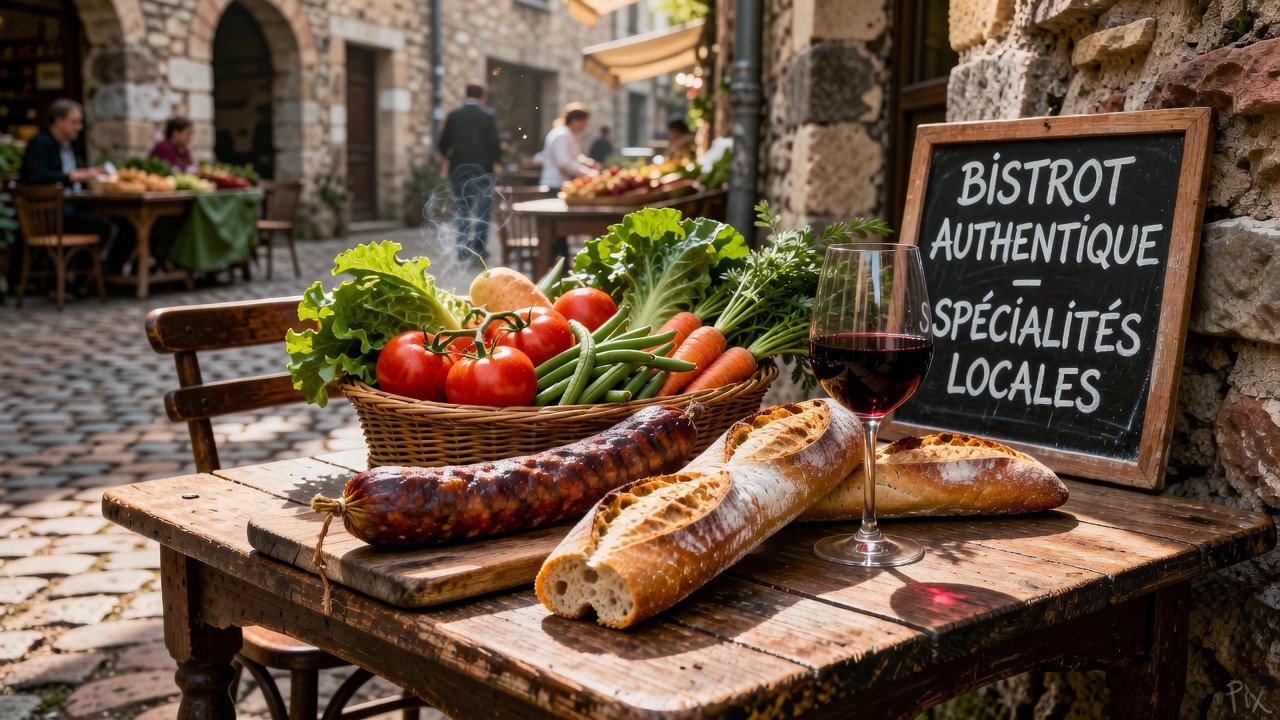
The Marché des Beaux-Arts opens early on Rue Claude Goudimel. Inside the covered hall, the air is thick with the smell of fresh bread, smoked sausage, and the nutty sweetness of aged cheese. On Tuesdays through Sundays, the vendors set out their best. One woman cuts thin slices of Morbier for tasting; another weighs wheels of Comté that have been maturing for eighteen months. I buy a small round to take back to the garden at Le Sauvage and a bag of still-warm pains aux raisins for the walk along the river.
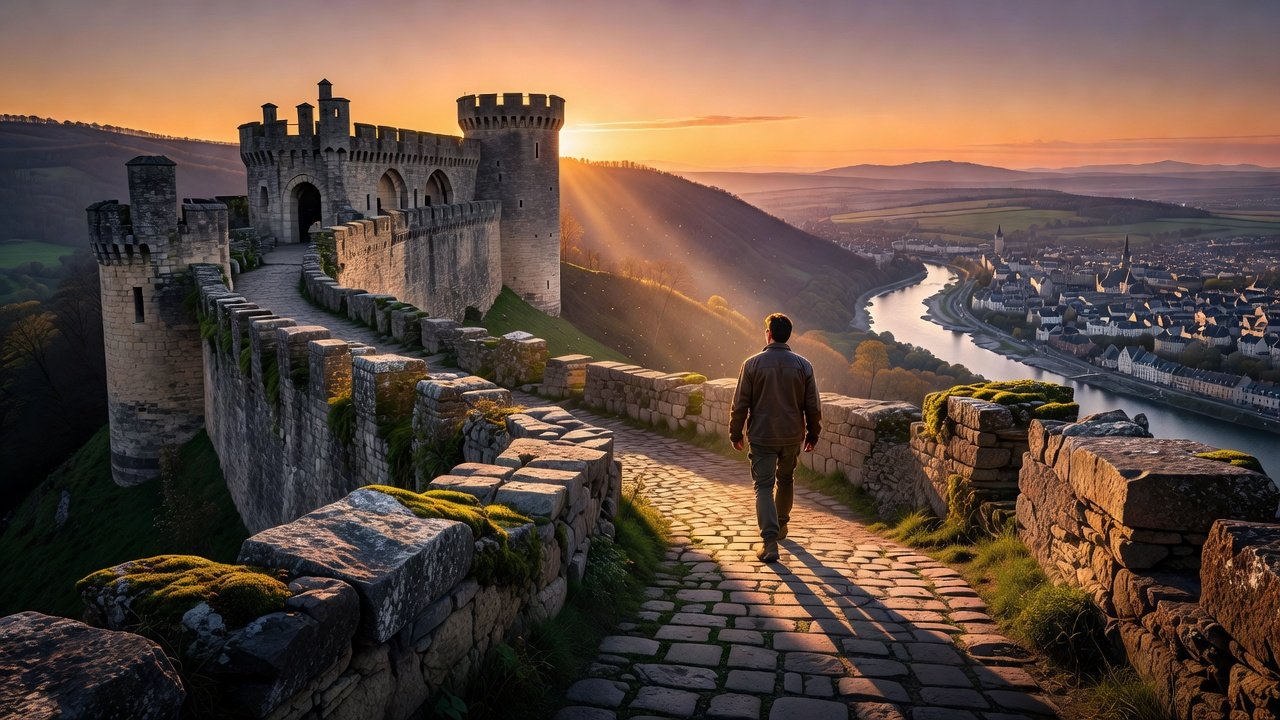
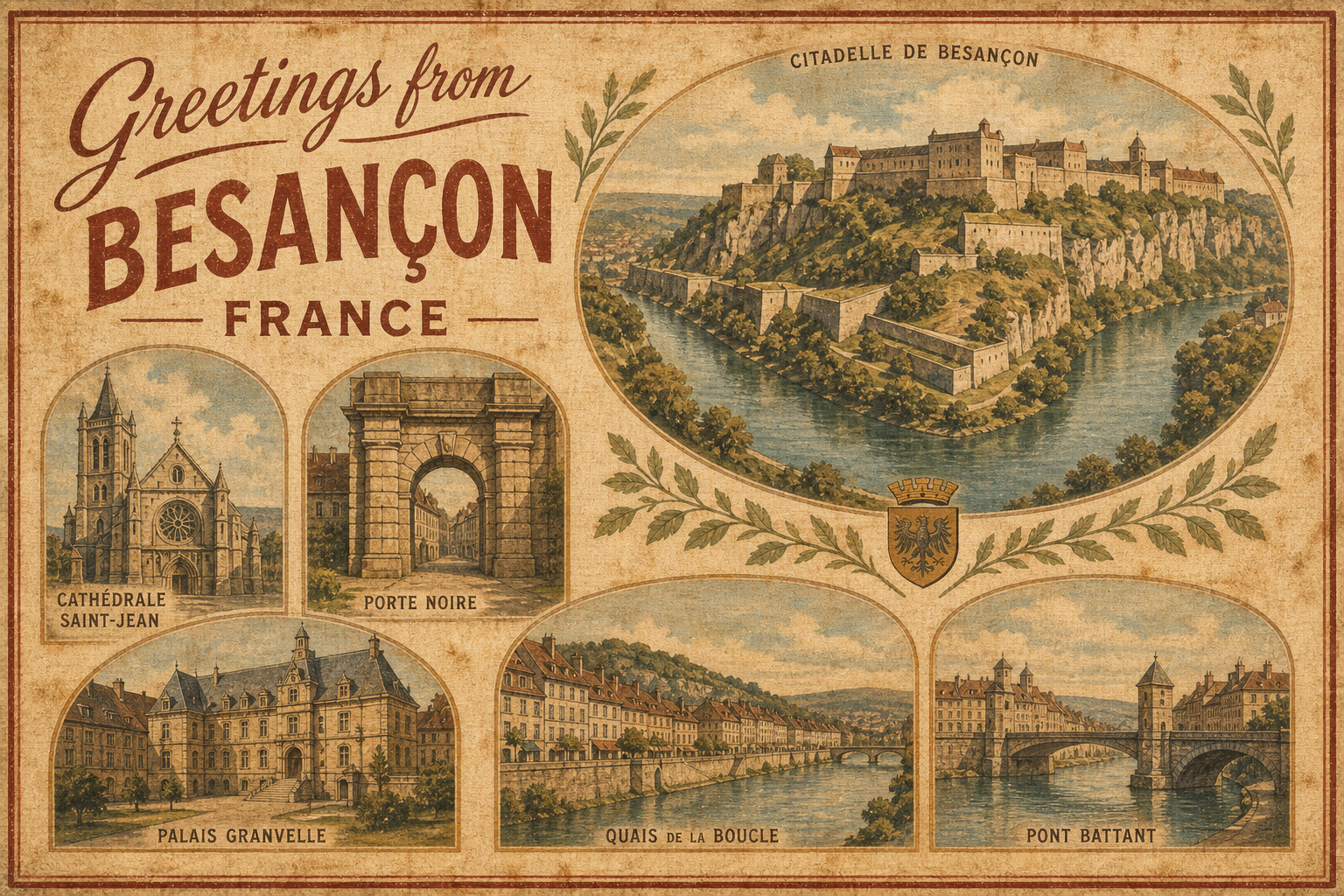
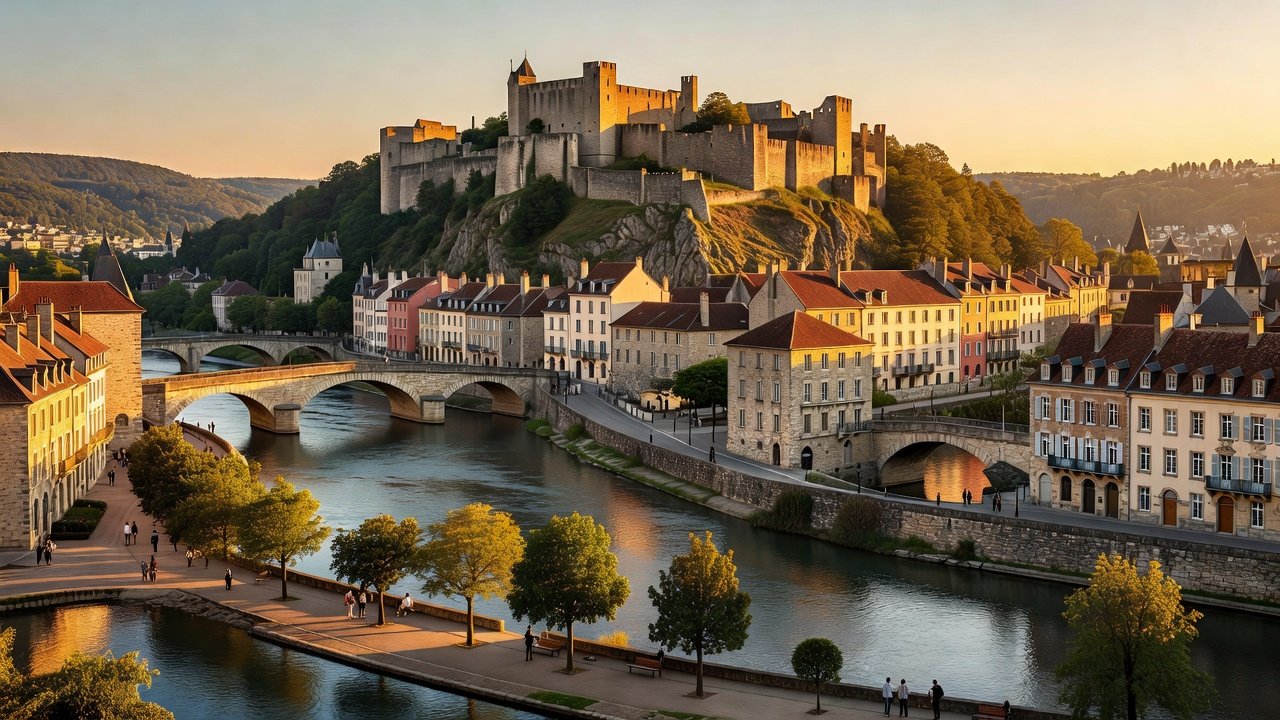
The Doubs curves tightly around the old town. From the Pont de la République, the water runs dark green between stone embankments. On the far bank, the Citadelle rises in layers of ramparts and gardens. Most visitors head straight for the citadel’s zoo and museums, but the lower quays offer a slower circuit. I follow the path past the old tannery buildings, now converted into apartments whose windows open onto the water. A few kayakers glide by in the morning calm. At the Gare d’Eau basin, the water widens, and locals spread blankets for picnics even on ordinary weekdays.
One afternoon I cross back into the center and stop at La Cave aux Fromages on Rue Gustave Courbet. The shop is small, its counters lined with local wheels and a few bottles of vin jaune. The owner slices a piece of aged Comté and lets it sit on the board while we talk about the difference between summer and winter milk. I leave with a paper-wrapped parcel and the recommendation to try Les Tables d’Antan for dinner.
The restaurant sits on a quiet side street near the market. Inside, the room is plain—wood tables, white walls, a blackboard listing three plats du jour. The saucisse de Montbéliard arrives with lentils and a sharp mustard that cuts the richness. A carafe of local red keeps the table company. Service is brisk but friendly; the couple at the next table are regulars who chat with the chef through the open pass.
Later in the week I walk the full river loop again, this time at dusk. The lights from the old town reflect on the water in long ripples. Near the Pont Battant, a small bar spills tables onto the quay. I order a glass of wine and watch the last kayakers pull their boats onto the bank. The Citadelle above is lit from below, its stone walls glowing warm against the deepening sky.
For lodging that matches this unhurried pace, three places stand out.
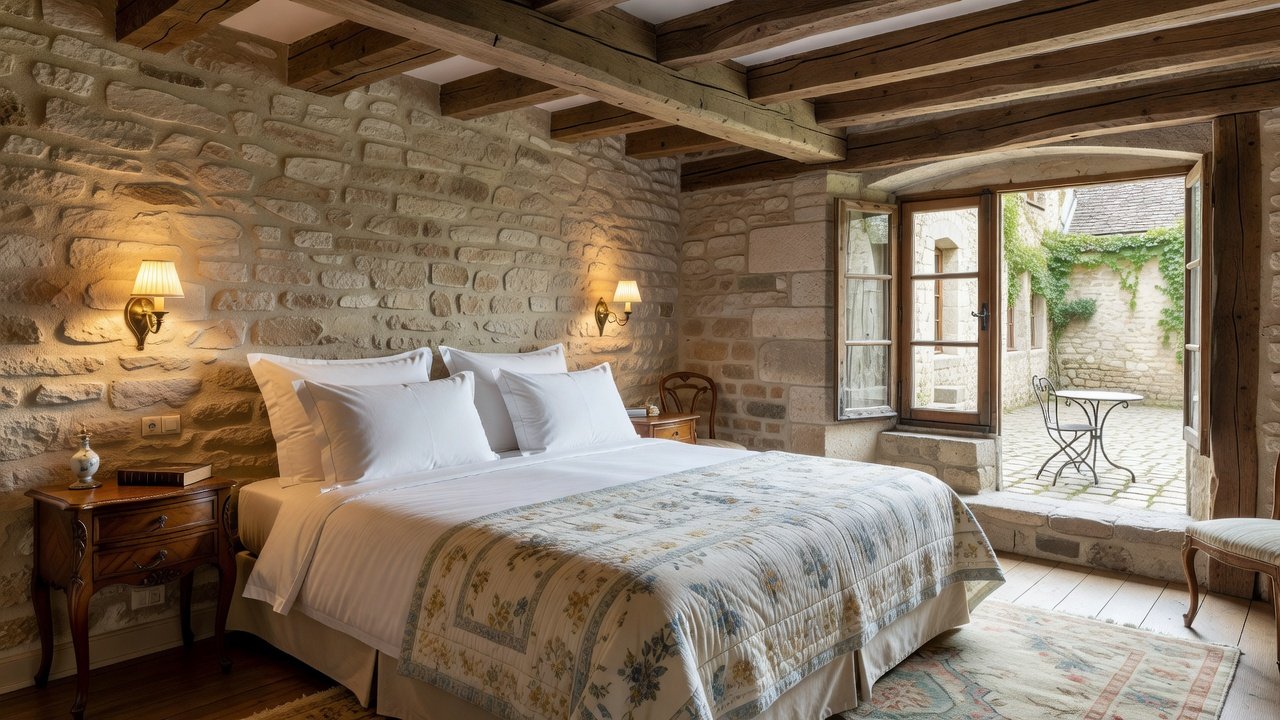
Le Sauvage at 6 Rue du Chapitre occupies the former Clarisses monastery. The 18 rooms keep the monastic calm—stone floors, heavy linen, small courtyards or balconies overlooking the garden. Breakfast in the cloister is included, and the on-site restaurant serves refined Comtois dishes. Rates run from about €140 to €220 depending on the season and room type. It is the most distinctive stay in the city and books quickly on weekends.
For a more central but still characterful option, Hôtel de Paris sits in the historic heart with secure private parking—a rare luxury inside the old walls. The renovated rooms are bright and comfortable, with good soundproofing. Breakfast is served in a small salon or on the terrace when weather allows. Expect €90–€140 per night. The location makes walking to both the market and the river effortless.
On the budget side, ibis budget Besançon Centre Gare at 5 Avenue Maréchal Foch sits directly opposite the Viotte train station. The rooms are compact and clean, with the usual reliable chain standards. It is a five-minute tram ride or a pleasant twenty-minute walk into the old town. Rates hover around €55–€80. Useful when trains or early departures dictate the schedule.
Three food stops worth planning around:
Les Tables d’Antan serves straightforward Franche-Comté classics in a no-frills dining room. The Montbéliard sausage and local cheeses appear regularly on the changing menu. Address: central side street near the Beaux-Arts market.
Lulu Muc et le Lapin at 52 Faubourg Rivotte is both a shop and a casual counter. Stock up on Comté, Morbier, and other regional cheeses, or stay for a simple plate and a glass of wine. The Sunday market just outside supplies much of their stock.
La Cave aux Fromages at 2 Rue Gustave Courbet is the place for serious cheese conversation and carefully sourced wheels. The owner will cut tasting portions and suggest pairings. It is steps from the fine-arts museum and easy to combine with a market morning.
Besançon reveals itself best on foot and at the pace of its markets and river. The cloister garden at Le Sauvage stays with me longest—not because it is grand, but because it offers a quiet frame for the city’s everyday rhythms. The Comté tastes sharper there, the light lingers longer, and the urge to linger another day is hard to shake.