
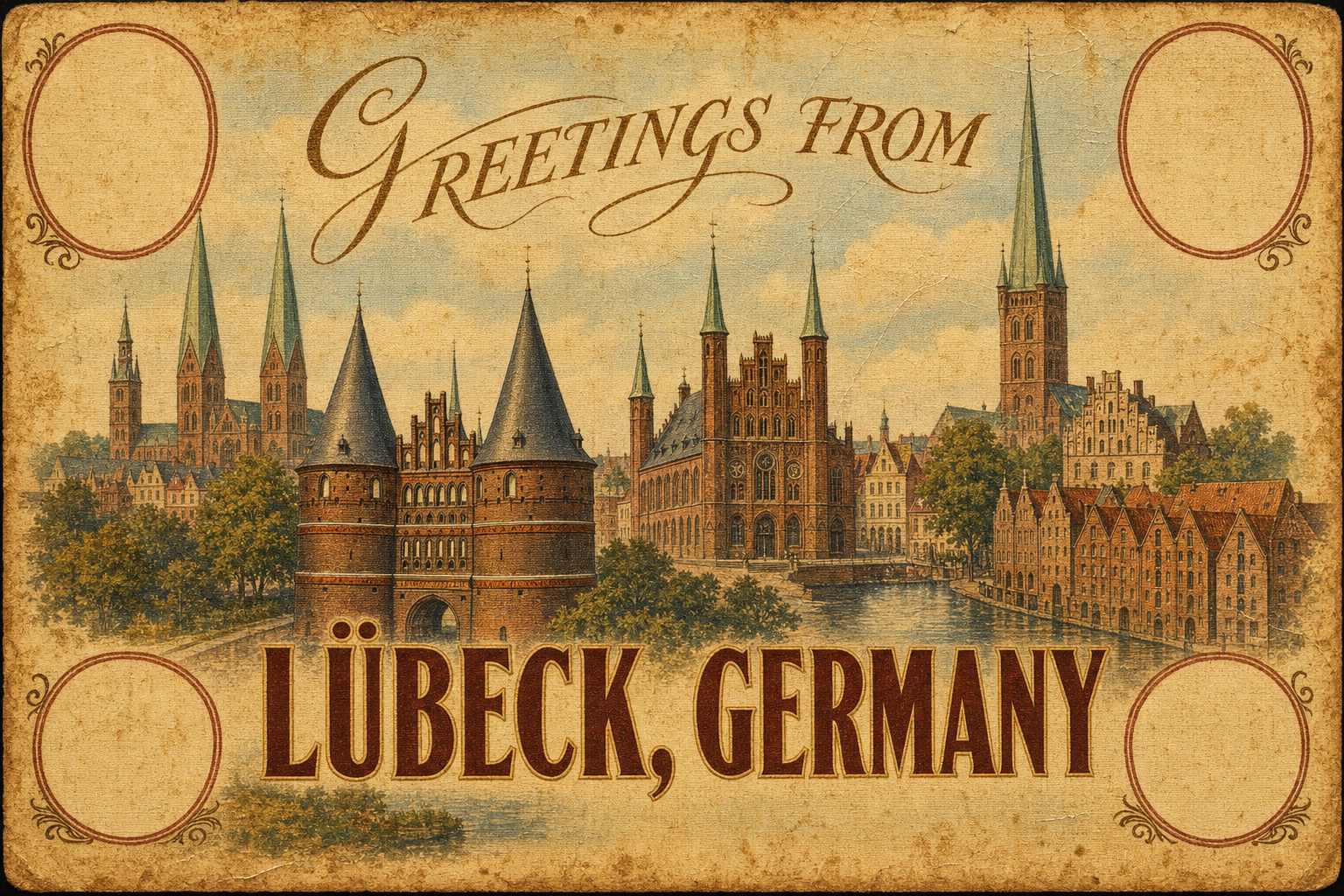
Travemünde is Lübeck’s Baltic mouth, not Lübeck’s Altstadt. The brick-Gothic skyline sits twenty kilometres inland. Out here the Trave opens into Lübeck Bay, freighters and Scandinavia ferries slide past the promenade, and a small foot ferry still stitches the town side to the Priwall peninsula. Most day-trippers treat the place as beach plus ice cream. The better visit follows the river mouth: lighthouse, channel, ferry, and the four-master sitting across the water.
You come for ship traffic at human scale, Strandkorb rows on open sand, and the habit of crossing the Trave just because the other bank is there. Stay long enough to watch a large hull clear the pilot station and to walk Priwall when the town promenade fills. Travemünde runs on water and wind first — Hanseatic resort buildings with a working fairway right in the view.
Passat, Priwall, and the short ferry across the mouth
Priwall is the spit and peninsula opposite the old resort core. From Nordermole you board a passenger ferry that runs on a tight daytime rhythm and drops you a few minutes later on the far bank. Bring coins or a card; bikes usually cost a little extra. The crossing is not a scenic cruise. It is a practical hop over a federal waterway, and that is why locals still use it.
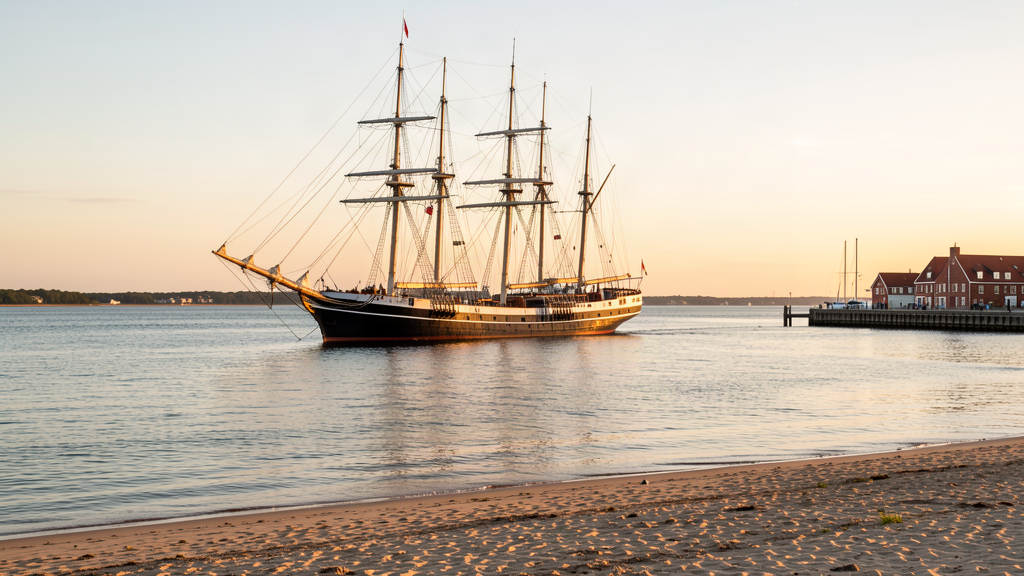
On the Priwall side the four-masted barque Passat sits at Passathafen — launched in Hamburg in 1911, now museum ship, event space, and the silhouette every postcard already shows. Visit when the season lets you aboard. Even from the quay, the sparred profile explains Travemünde better than another beach selfie. Around it the Priwall promenade mixes newer holiday builds with quieter walking routes south toward dunes and protected ground. Südlicher Priwall wants you on marked paths. The peninsula is not endless wilderness, but it is the side of the mouth where the resort noise thins.
If you have half a day, make a loop: town bank, ferry, Passat and Priwall waterfront, ferry back, then Nordermole and the beach. Two short rides turn one waterfront into a circuit with the channel always in play.
Vorderreihe, the old lighthouse, and ships at eye level
On the town side, Vorderreihe is the working front row — shops, fish stands, cafés, and plenty of reasons to pause when a ferry or freighter fills the channel. The Trave promenade and pilot station keep the industrial truth visible: this is still a harbour approach, not a theme-park lagoon. A yellow buoy near the pilot area marks memory of the former inner-German border in Lübeck Bay. Skip the history lecture. Take ten quiet minutes watching traffic clear the mouth.
Germany’s old lighthouse at Am Leuchtenfeld 1 (Alter Leuchtturm, roots in the sixteenth century) holds a small museum of light and seamarks when open, plus a gallery view over bay and Priwall. Climb if the hours cooperate. Pair it with St. Lorenz in the old fishermen’s quarter (Jahrmarktstraße 14) and the volunteer-run Seebadmuseum at Torstraße 1 if you want resort history without a full Lübeck day. Lighthouse, church lanes, Vorderreihe, Nordermole — all sit inside an easy walk once you are off the train at Strandbahnhof.
Brodten’s low cliffs and coastal path sit a little north of the densest beach strip if you want height and longer views without leaving the bay. High summer still packs the Strandkörbe; shoulder seasons give you more wind and less queue. Either way, treat the beach as one layer. The channel does more of the talking.
Places to Stay
Sleep by waterfront character as much as by star count. Strandbahnhof and Vorderreihe put you on foot for ferry, lighthouse, and evening ship-watching. Quieter side streets trade the first-row noise for easier nights.
Landhaus Bode, Fehlingstraße 67, 23570 Lübeck-Travemünde, is the practical mid-budget house a short walk from beach and Strandbahnhof: family-run, antique-leaning rooms, breakfast on the veranda, free parking when available, and the house restaurant Zum Kugelfisch for nights you do not want another promenade hunt. Use it for price control without parking chaos.
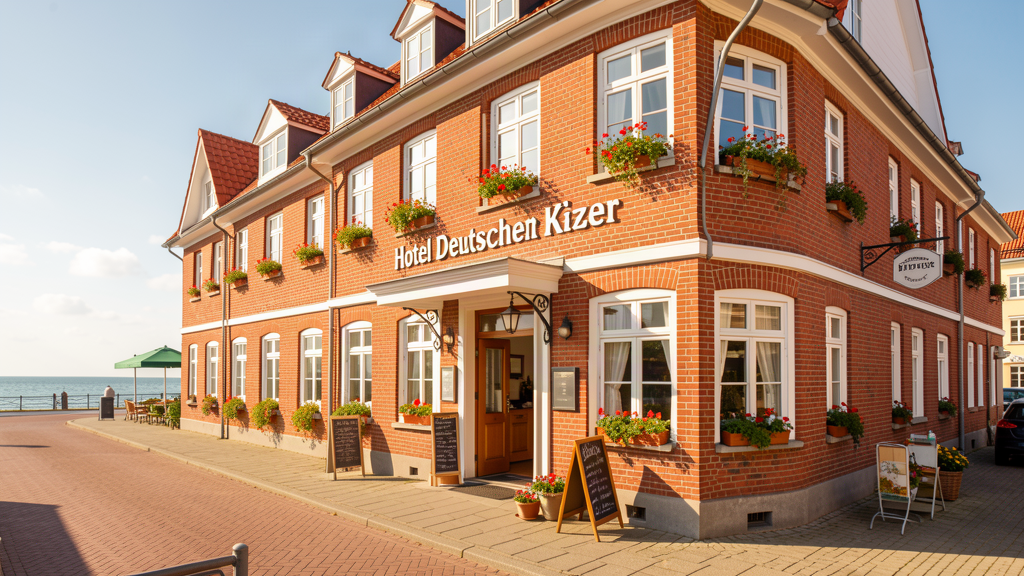
Hotel Deutscher Kaiser, Vorderreihe 52, 23570 Lübeck-Travemünde, sits on the Trave front row itself — mid-to-upper house scale, river and ship views, sauna and fitness when you want them, breakfast included in the usual rates. Book here when the stay should be the promenade, not a shuttle to it.
A-ROSA Travemünde, Außenallee 10, 23570 Lübeck-Travemünde, is the big spa stay in the old Kurhaus line: Ostsee water treatments, resort dining, and full wellness facilities. Book when the budget allows and you want the hotel itself to carry half the trip. ATLANTIC Grand Hotel Travemünde at Kaiserallee 2 is the historic casino-building alternative if you prefer beach-avenue grand hotel over spa campus.
Restaurants / Food
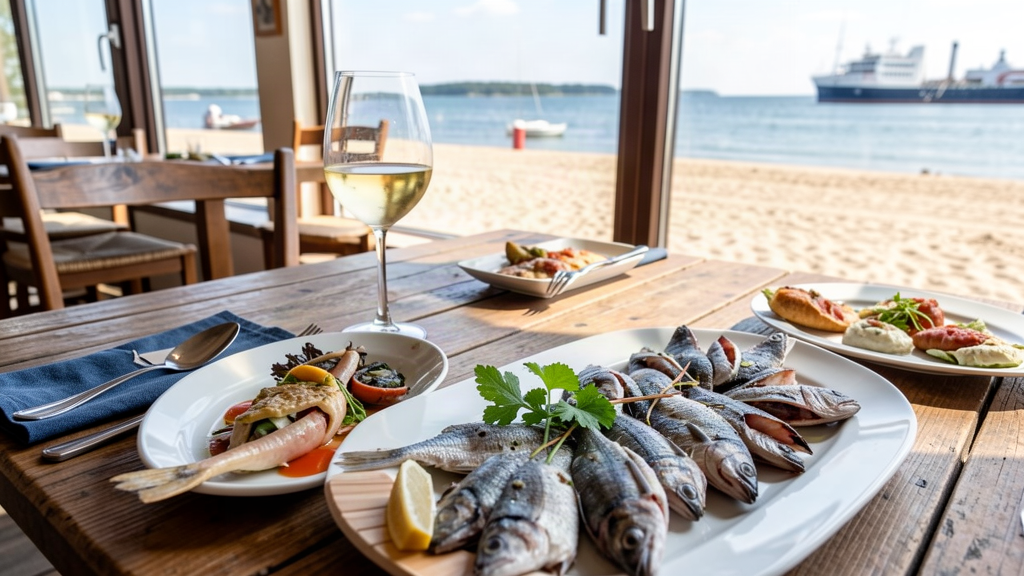
Travemünde eats fish first, then café plates with a view of moving hulls. Reserve proper dinner rooms in season; grab Fischbrötchen when the counter line looks honest.
GOSCH SYLT Travemünde, Vorderreihe 64a, 23570 Lübeck-Travemünde, is the reliable harbour-side fish stop at the start of the Trave promenade: rolls, fried fish, outdoor standing room when the weather holds. Tourist-visible and still useful because the channel is the point — eat, watch a ship clear, move on.
Restaurant Café Fisch & Meer in the Alte Vogtei, Vorderreihe 7, 23570 Lübeck-Travemünde, faces the Priwall ferry landing in the 1551 brick house that once held Lübeck’s local authority. Family-run rooms from Kaminzimmer to Biergarten, fish and broader plates, cake when you only came for coffee. Come before or after the ferry; the building is part of the walk.
Restaurant & Café Traveblick, Vorderreihe 148, 23570 Lübeck, puts tables close enough to the water that a passing hull can change the mood — fair prices by seaside standards, simple plates, evening Absacker when the light softens on the channel. For a quieter dinner inland of the loudest strip, Zum Kugelfisch at Landhaus Bode (Fehlingstraße 67) does house cooking without promenade theatre.
A simple arc: GOSCH or a beach-side roll after the morning ferry, lighthouse and Vorderreihe on foot, Fisch & Meer or Traveblick when you want a table, Kugelfisch when you are already sleeping on Fehlingstraße.
Getting around without fuss
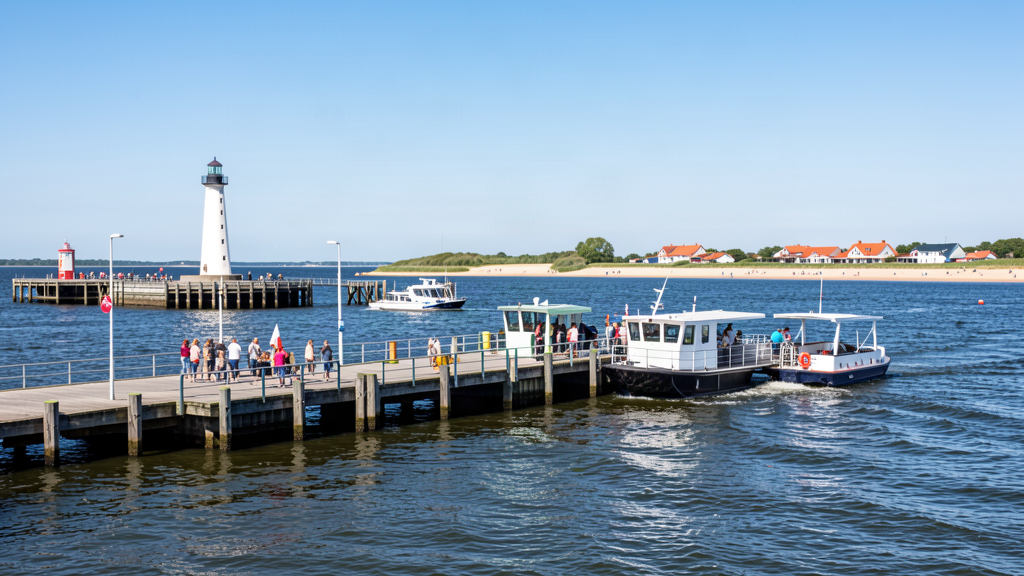
Most visitors arrive by regional train to Lübeck-Travemünde Strand (Strandbahnhof) or Hafen, by car off the A1/A226, or as a side trip from Lübeck’s UNESCO centre. The resort core is compact on foot. The Priwall foot ferry from Nordermole is the key local move; schedules tighten or thin by season, so check Stadtwerke Lübeck times rather than assuming late-night service.
Skandinavienkai — the big international ferry terminal for TT-Line, Finnlines, Stena and the rest — is a separate port area, not the beach promenade. Foot passengers bound for Trelleborg, Malmö, Helsinki or Liepāja need the signed bus, taxi, or car transfer. Do not treat Strandbahnhof as check-in. Within Travemünde, bikes help for Brodten and longer beach stretches. Parking near the front row fills fast in July and August.
Lübeck Altstadt is an easy half-day add-on by train or car if you want Holstentor and marzipan after the salt air. Travemünde itself rewards two nights more than a single hurried afternoon: one full circuit of ferry and Passat, one slower beach and lighthouse day, evenings on Vorderreihe when the day-trip coaches have left.
Why linger
Travemünde is easy to treat as Lübeck’s beach annex. That misses the Passat holding the Priwall quay while a foot ferry stitches the mouth, the pilot station working real traffic, and the old light at Am Leuchtenfeld watching freighters clear into the bay. Walk the loop without rushing the postcard shot. Stand long enough that ship noise becomes ordinary.
Stay two or three nights if you can. Day-trippers get a Strandkorb hour and a fish roll. The longer stay gets a morning crossing to Priwall, an afternoon on Brodten or the open sand, St. Lorenz lanes after the crowds thin, and Vorderreihe at evening when the channel still moves and the cafés finally have room. That is when Travemünde stops reading like a sidebar to Lübeck and matches what the Trave mouth already is: a small Baltic resort that still shares its main street with the sea lane.
