
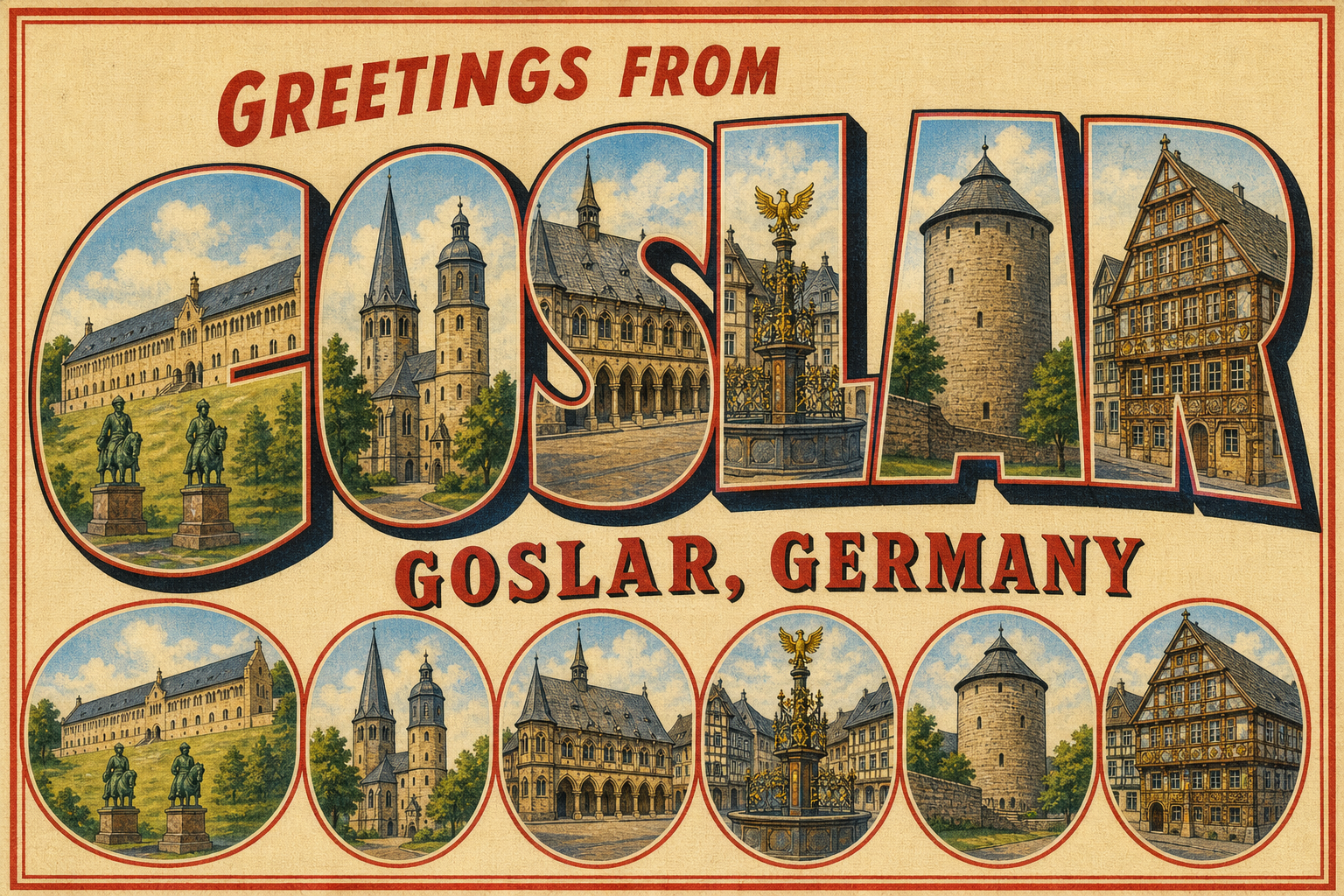
Most people pin Goslar on a half-day UNESCO loop. Marktplatz clock, Kaiserpfalz photo, maybe a mine ticket if the German tour lines up. That works if silver history is the whole errand. It skips the older water story still running through the Altstadt: the Gose and its mill race, the Abzucht, slate fronts that never turned into a theme park, and a mountain that once paid for every carved beam.
I start when An der Abzucht is still wet and quiet. Walk the Gose past mill wheels and half-timber backs, climb toward Marktkirche bells and Schuhhof coffee, then give the rest of the day to Kaiserpfalz stone and a Rammelsberg afternoon. River first, ore second. Leave the tourist train for later if you can.
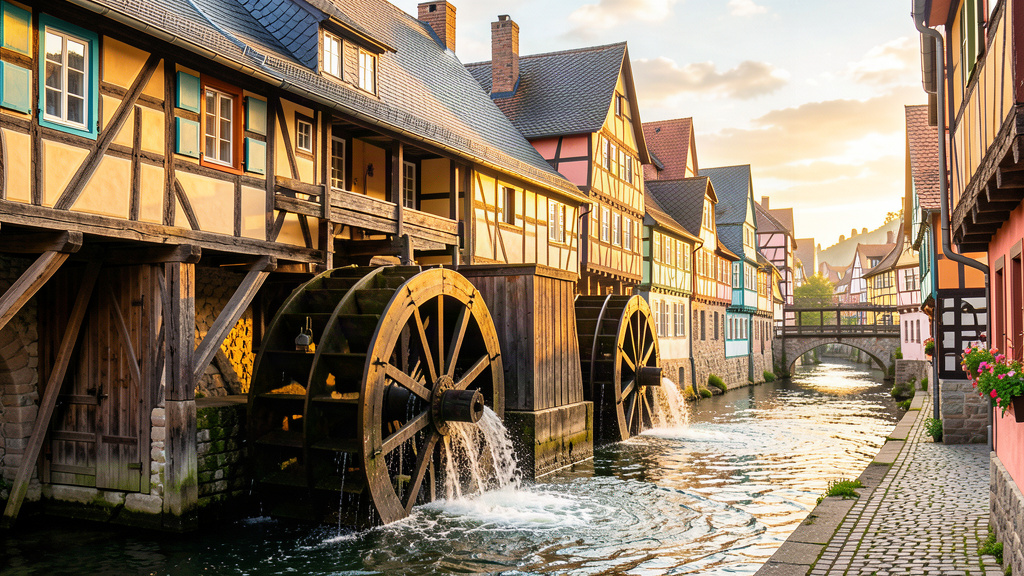
An der Abzucht, Gose water, and slate that still works
Goslar sits on the northwestern edge of the Harz in Lower Saxony, about ninety minutes by train from Hannover when the connections behave. The town grew on the Gose creek — the name is older than the brochures — and got rich because Rammelsberg poured silver, lead, and copper for more than a thousand years. UNESCO folded the Altstadt and the mine together in 1992. On foot it feels simpler: more than fifteen hundred timber houses, a compact core you can cross in fifteen minutes if you rush, and a river lane that pays off when you slow down.
An der Abzucht is the lane I come back to first. Start near the Goslar Museum edge and follow either bank. Half-timber cottages lean over the water. Slate fronts go dark after rain. A mill wheel still turns where the race has room. The street is short — ten or fifteen unhurried minutes if you stop for reflections — but it resets the town for me. Knochenhauerstraße and the side alleys a few steps north keep the same grain without the river noise. You do not need a checklist. Stand still long enough and water under beams shares the narrow air with a delivery bike.
Schuhhof, a few minutes toward the market, is the oldest square grain in town. Coffee, ordinary chairs, less postcard pressure than the main Markt. Marktkirche St. Cosmas and Damian lifts twin towers over the roofs. Climb if the tower hours are open. If not, treat the bells as your clock when you loop back from the river. The Kaiserworth guild house still shows those comic dukaten figures on its façade, and the golden eagle fountain holds the square’s center when coaches pause. Take one slow circuit, then leave before the square owns the whole morning.
Siemenshaus sits on the corner of Schreiberstraße and Bergstraße west of the market — a late-seventeenth-century timber pile tied to the family that later became industrial legend. Group tours only when they run. The door and inscription are worth the detour even if you only stand outside. The Altstadt rewards that kind of side glance more than another Markt selfie.
Kaiserpfalz stone, Rammelsberg ore, and the Harz edge
South of the timber core the Kaiserpfalz rises on its terrace, the imperial palace complex that once hosted Ottonian and Salian courts when Goslar mattered to the empire. The Romanesque bulk reads better in morning or late light than at noon coach hour. Walk the open approaches before you buy interior tickets. Pick one room sequence instead of racing every wing. From the terrace the Altstadt roofs make clear why emperors watched this valley: silver mountain behind, trade routes below, forest starting almost at the old wall line.
Rammelsberg is the other half of the World Heritage stamp. The mine worked into the late 1980s — one of the longest continuous extraction stories in Europe — and the museum complex sits a short hop south on the World Heritage 803 bus (Brusttuch, Kaiserpfalz, Bergbaumuseum). Underground tours skew German-language, so check the day before you hang a whole arc on a closed shaft. Even without a helmet hour, the surface site tells the wealth story the carved façades only decorate. Ore paid for the goats riding backwards on the beams. I try to remember that when the Altstadt starts to feel only pretty.
Hahnenklee’s stave church is a clean half-day if you want different timber. Oker paths start near the southern edge. Both are optional. The first day belongs to Abzucht water and one honest contact with the mountain.
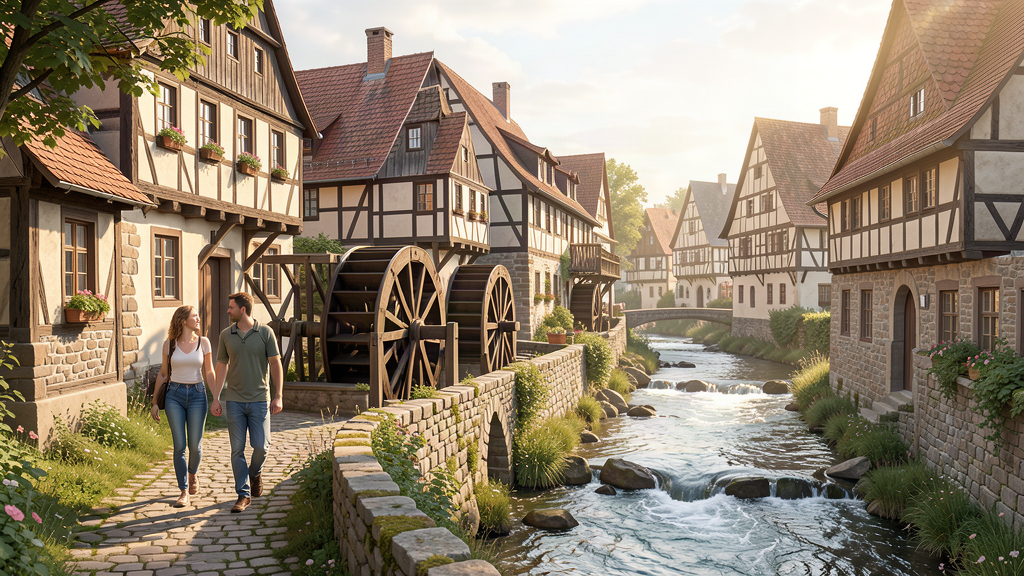
How Goslar moves, and a clean day arc
Hauptbahnhof sits a short walk from the Altstadt. Cross toward the timber and you are already in it. Regional trains link Hannover, Braunschweig, and the Harz towns; buses cover Rammelsberg. Inside the core, feet beat cars. Confirm museum Mondays, Kaiserpfalz hours, mine tour languages, and kitchen rest days before you invent a perfect day onto locked doors. Two nights beat a single UNESCO sprint between regional connections.
If I had two nights: early coffee on Schuhhof before coaches fill the Markt, An der Abzucht while the mill race is still loud, Marktkirche and a slow timber loop, lunch off the square, afternoon for Kaiserpfalz or a timed Rammelsberg visit, dinner toward Marktkirchhof or the Zwinger edge. Sleep close enough that dawn Gose light is optional. Summer fills the lanes. Autumn clears the palace terrace. Winter makes the interiors feel earned after Harz wind.
Day-trip gravity pulls toward Quedlinburg, Wernigerode, or a longer Harz hike. Hold at least one full day in Goslar proper. Mill race to market to ore beats another checklist stamp from the station.
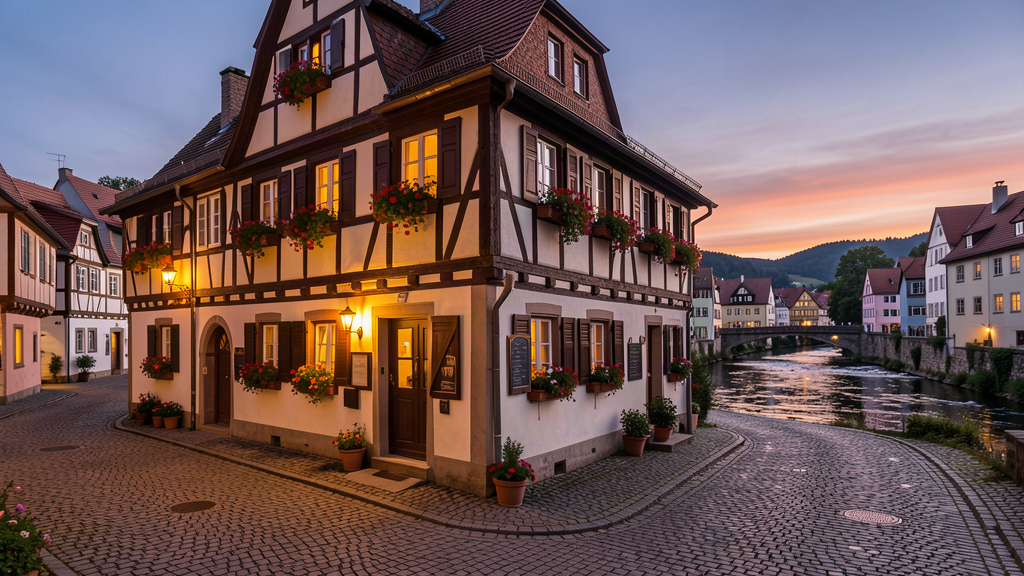
Places to Stay
Altstadthotel Zur Börse (value, Bergstraße timber edge) Bergstraße 53, 38640 Goslar Small Altstadt hotel in walking reach of the Gose lanes and the western approach to the market — compact rooms, practical breakfast rhythm, better rates than the guild-house frontage on the square. Book when you want slate and timber mornings without paying for a Marktplatz window. Rooms are limited; ask about quiet sides if street noise bothers you, and confirm late check-in on regional train nights.
Romantik Hotel Alte Münze (mid, historic house near the market spine) Münzstraße 10–11, 38640 Goslar Split across historic fabric near the old mint lanes — antique corners in the older wing, calmer modern rooms in the newer, courtyard pause when weather allows. Choose it when you want character and a proper breakfast room a short walk from Marktkirche without full square prices. Parking is tight in the core; feet cover Abzucht, Schuhhof, and Kaiserpfalz easily.
Hotel Kaiserworth (upper, guild house on the Markt) Markt 3, 38640 Goslar The big half-timber statement on the market — carved façade, central rooms, restaurant and cellar bar downstairs, private parking when you can snag it. Pick it when the trip is a short Harz base and you want the square under your window after ore dust and palace stone. Rates climb with weekends and holiday markets; book a quieter rear room if coach noise at the fountain will bother you at night.
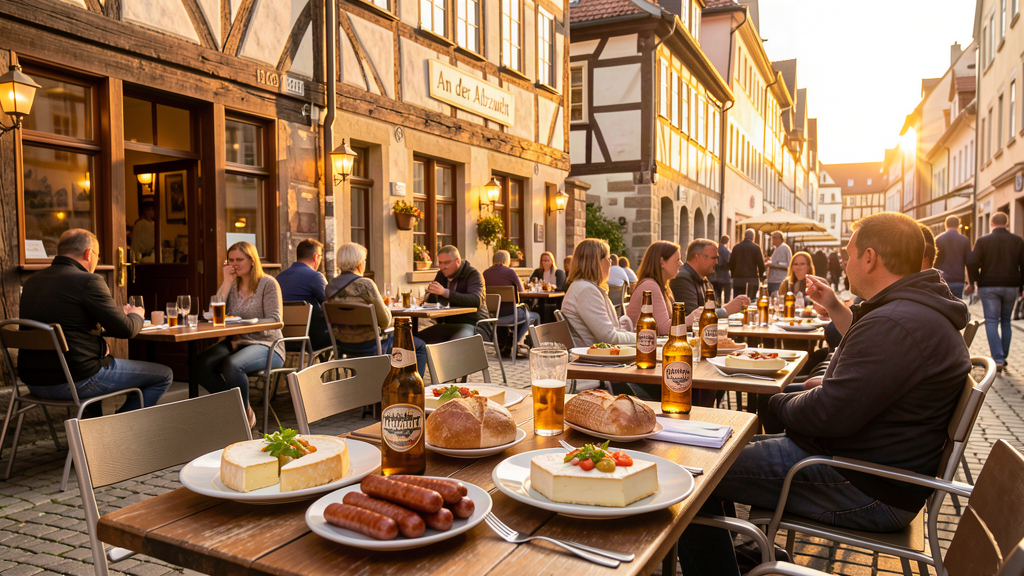
Restaurants and food
Die Butterhanne (value-traditional, Marktkirchhof wirtshaus) Marktkirchhof 3, 38640 Goslar Historic rooms a few steps off the main square — Harz plates, beer without ceremony, the kind of lunch that fits after Abzucht walking when you still want timber overhead. Good for schnitzel-and-local evenings without a tasting-menu mood. Weekends fill; walk-ins work better early or call ahead if you hate waiting under the church towers.
Restaurant Alte Münze (mid, hotel kitchen on Marktstraße) Marktstraße 1, 38640 Goslar Seasonal German cooking tied to the Romantik house — lunch windows, evening service, calf schnitzel and careful starters when you want a dressed table after Kaiserpfalz. Come when the day mixed mine history with river lanes and you need a sit-down that still feels in town. Confirm rest days and reserve for Friday dinner in high season.
Restaurant im Zwinger (upper-casual, tower house kitchen) Thomasstraße 2, 38640 Goslar Rooms inside the old Zwinger fortification fabric — regional game and classic German plates, stone atmosphere, a slightly quieter edge than the Markt tourist tables. Useful when you want a slower dinner after Rammelsberg and still walk home through timber streets. Reserve in peak months; midday can work after a palace morning if evening slots are gone.
Regional food stays honest here. Bakery rolls for a walking lunch on An der Abzucht. Coffee on Schuhhof while the oldest square wakes. A simple bench by the mill race with whatever you carried from Breite Straße. Market ice cream and coach-menu schnitzel can wait until you have watched Gose water move under slate once in real morning light. Let the mill race set the slower middle. Sit long enough to feel Harz damp after imperial stone. Goslar works better as river lane to bells to ore than as another half-day UNESCO stamp from Hannover.
