
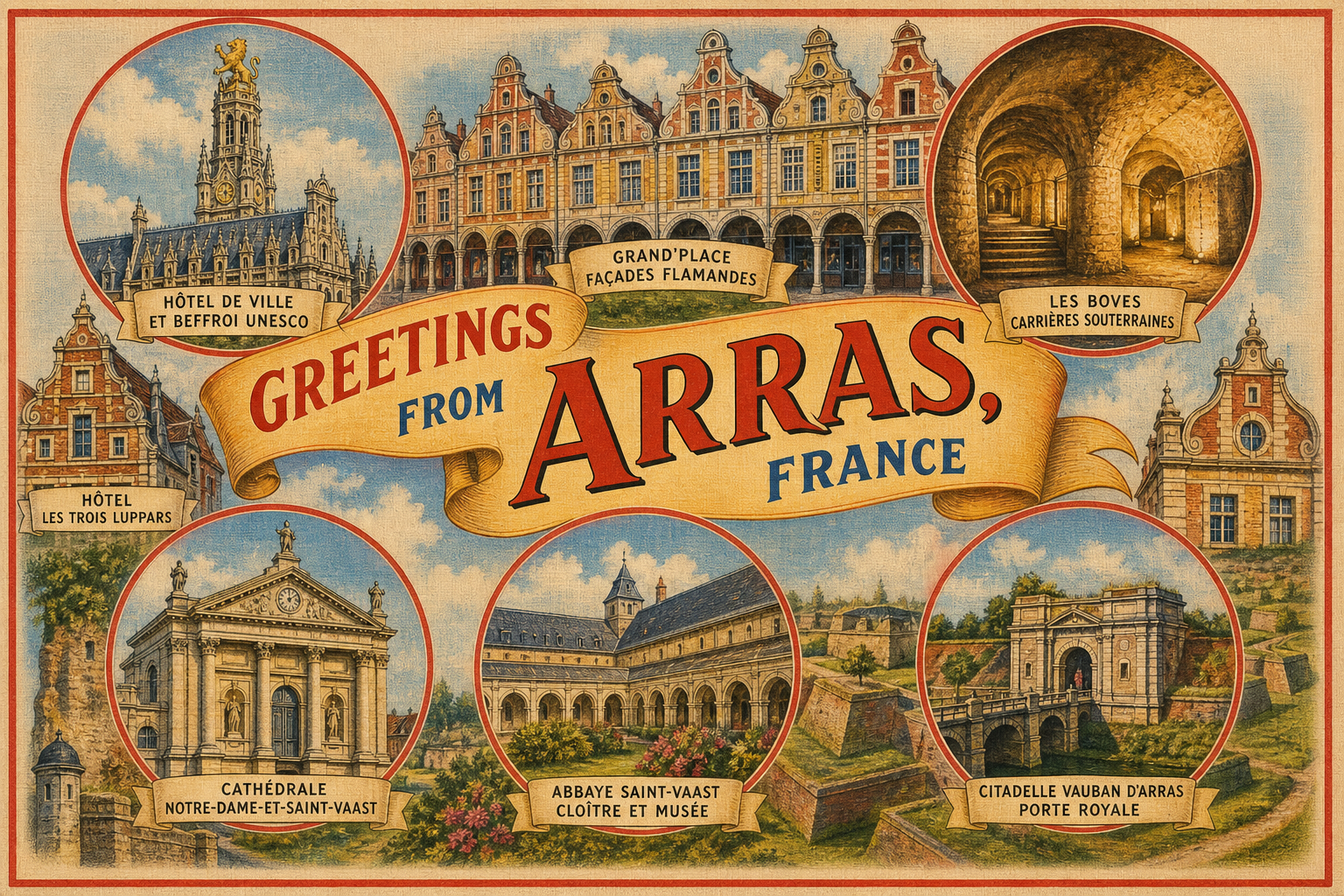
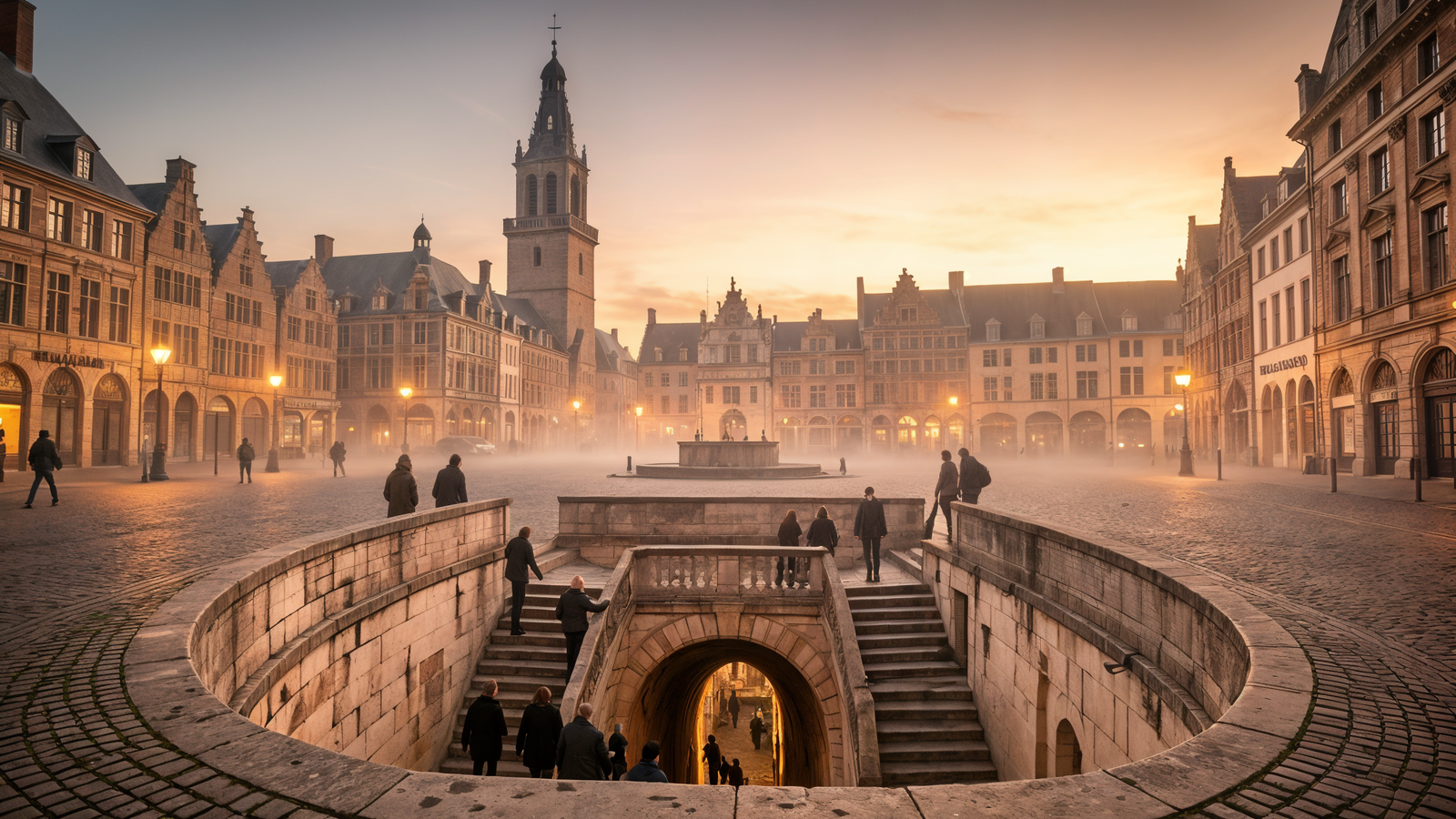
Most people first meet Arras from above: two linked squares of Flemish Baroque façades, a belfry needle, cobbles that look good in almost any light. Fair enough. The squares are why the train stops here. What I keep coming back for sits under the same stones — a chalk maze about twelve meters down, cool and a little damp, where the town stored wine, hid from shells, and still lets you walk through the older work.
Arras is a prefecture in the Pas-de-Calais, not a secret village. That helps. People shop, push strollers across Place des Héros, and argue over parking under gables rebuilt after 1918 to look as if they had always been there. Do the underground hour first. When you come back up, the squares feel heavier for it.
The stair under the town hall
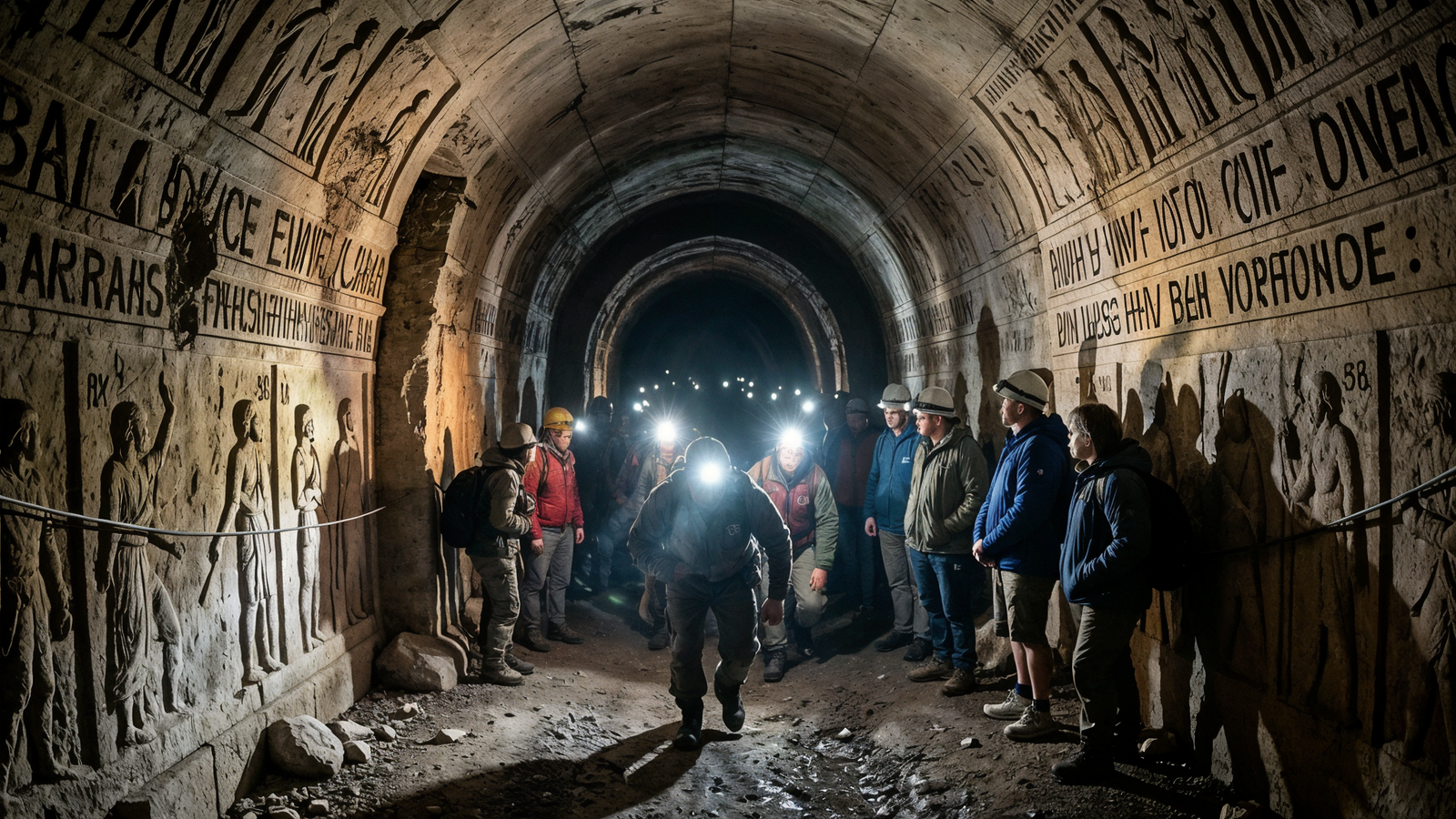
The Boves are old chalk quarries and cellars stitched into galleries under the centre. Builders cut the stone for churches and civic walls. Merchants stacked barrels. In the wars the spaces became shelter. A guided visit usually starts from the Hôtel de Ville on Place des Héros. You buy a ticket, drop a layer if you run warm, and follow a guide into air that does not care what the square is doing overhead.
The first thing you notice is the temperature. Summer heat dies on the stairs. Winter wind dies too. What is left is steady cool, soft yellow-white walls, and a low sense of weight. Passages open into chambers, then narrow again. Some rooms still feel like storage. Others carry the story of civilians and soldiers who waited out bombardments while the roofs above them failed.
I like the Boves mid-morning on a weekday, when the group is small and nobody is rushing a coach connection. You hear water drip. You hear the guide’s French or English bounce off chalk. You stop thinking about the perfect gable shot and start noticing tool marks in the stone. When you climb out, Place des Héros looks the same and does not. The café tables sit on a lid.
If you only have one paid visit in Arras, make it this one before the panoramic belfry. Height is easy. Depth takes a minute.
Two squares, one rebuilt face
Above ground, Arras runs on a double stage: Grand’Place and Place des Héros, joined by short streets of brick and stone arcades. Flemish Baroque gables, stepped and curved, ground-floor vaults, a rhythm of windows that looks continuous until you pick one house and stay with it. A lot of what you see was put back after the First World War flattened the centre. The rebuild was deliberate and proud. The town chose familiar memory over a blank modern street.
Walk both squares slowly. Not as a circuit to clear — more like a room you keep walking back into. Early, delivery vans still nose under the arches. Midday, the terraces fill. Evening, the façades take warm light and the belfry becomes a dark cutout. Locals cross on errands. Visitors stop for photos. The space belongs a little to both.
Climb the belfry when your legs want height after the underground. The view is practical more than romantic: roofs, the cathedral mass, the plain beyond, the two places laid flat. I go up after the Boves, not before. Cellar first, then the map.
Between the squares, the side streets carry the quieter Arras: bakeries, small shops, residential doors that are not performing. Rue de la Taillerie and the lanes toward the cathedral are good for that half hour when you are not collecting monuments.
Citadel edge and the longer underground
West of the centre, Vauban’s citadel still holds a green, ordered military logic — ramparts, gates, long perspectives. It is a different kind of history from the Boves: planned defence instead of improvised cellar life. Walk the edges when you want air and trees after stone. The site has been reused for centuries. Treat it as a park with a past, not a theme park.
Southeast of the centre, the Carrière Wellington — Wellington Quarry — continues the underground story at wartime scale. New Zealand tunnellers linked medieval chalk workings into a network that hid thousands of men before the 1917 Battle of Arras. The visit is darker than the town-hall Boves: graffiti, objects, the seriousness of a planned assault. Go if the morning under Place des Héros left you wanting the military chapter. Skip it if one underground hour is enough. The centre can carry a short stay on its own.
Plates under the gables
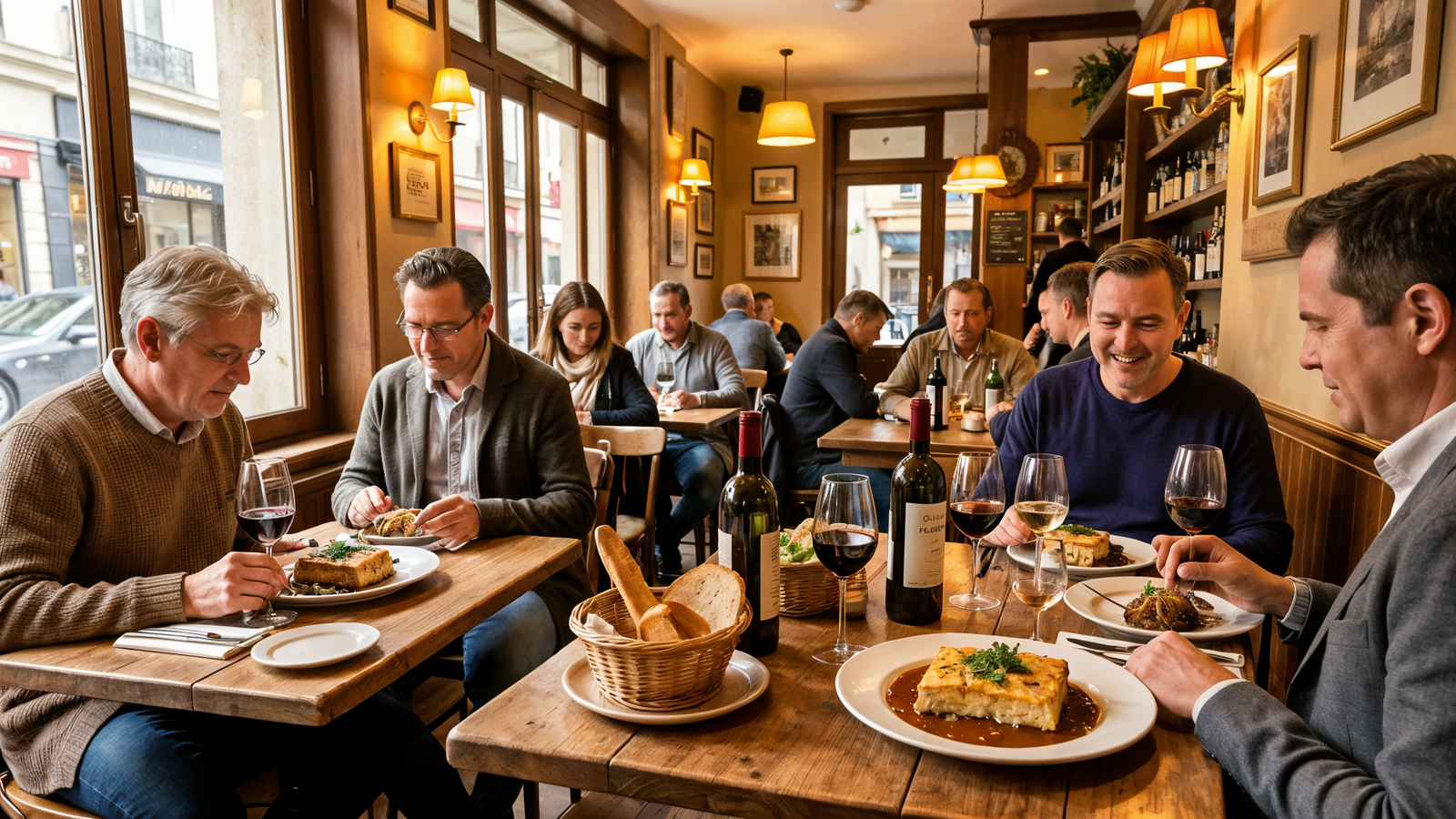
Arras eats northern: butter, cream, beer nearby, meat and seasonal vegetables, the occasional waterzooi echo, proper bread. Menus on the squares can lean tourist-facing at peak hours. A little patience still finds rooms the city actually uses.
Le Petit Rat Porteur 11 rue de la Taillerie, 62000 Arras
A short walk off the main stage, traditional cooking with a regional lean and a room that feels more neighbourhood than postcard. Good after the Boves, when you want warmth and a plate that does not need explaining. Midday is easier than Saturday night without a booking.
La Part des Anges 9 Place des Héros, 62000 Arras
Right on the square you just climbed back into. French cooking, terrace when the weather allows, a clear view of the theatre you have been walking. I use it when the underground visit ends near lunch and I do not want to lose the thread of the place. Reserve if the square is busy. The setting does as much work as the sauce.
La Faisanderie 45 Grand’Place, 62000 Arras
In a seventeenth-century house on the larger square, a more deliberate evening. Game and classic French technique when the menu runs that way, a dining room that matches the rebuilt grandeur outside without shouting. Save it for the night you stay over. It costs more. After a day of chalk dust and cobbles, that can be the right close.
Between meals, stand at a bakery counter and eat something with butter still obvious in it. Arras does not need a food quest. One honest plate and time on foot will do.
Getting in and moving around
Arras sits on the TGV and regional rail map between Lille and Paris, easy enough that people under-schedule it as a two-hour stop. The station is a short walk from the historic centre. Once you are at Grand’Place, walk. The Boves, the two squares, the belfry, and the cathedral quarter form a compact triangle. Buses help for the citadel or Wellington. Save the car for the wider Artois countryside.
Half a day: Boves, both squares, belfry or a long café sit, one solid lunch. A night: add the citadel edge or Wellington, a slower dinner on Grand’Place, and a morning return when the arcades are mostly for people buying bread.
Places to stay
Hôtel Moderne 37 boulevard Carnot, 62000 Arras
Opposite the station axis, practical Art Deco bones, a clean base if you arrive by train with a rolling bag and want the centre about ten minutes on foot. No charm theatre required. Drop the luggage, walk straight toward the squares, come back when your feet are done.
Hôtel de l’Univers 3-5 place de la Croix Rouge, 62000 Arras
A midrange, central address with more weight and service, still walkable to Grand’Place and the stair down to the Boves. Choose it when you want a proper hotel lobby and a quieter square than the main tourist apron.
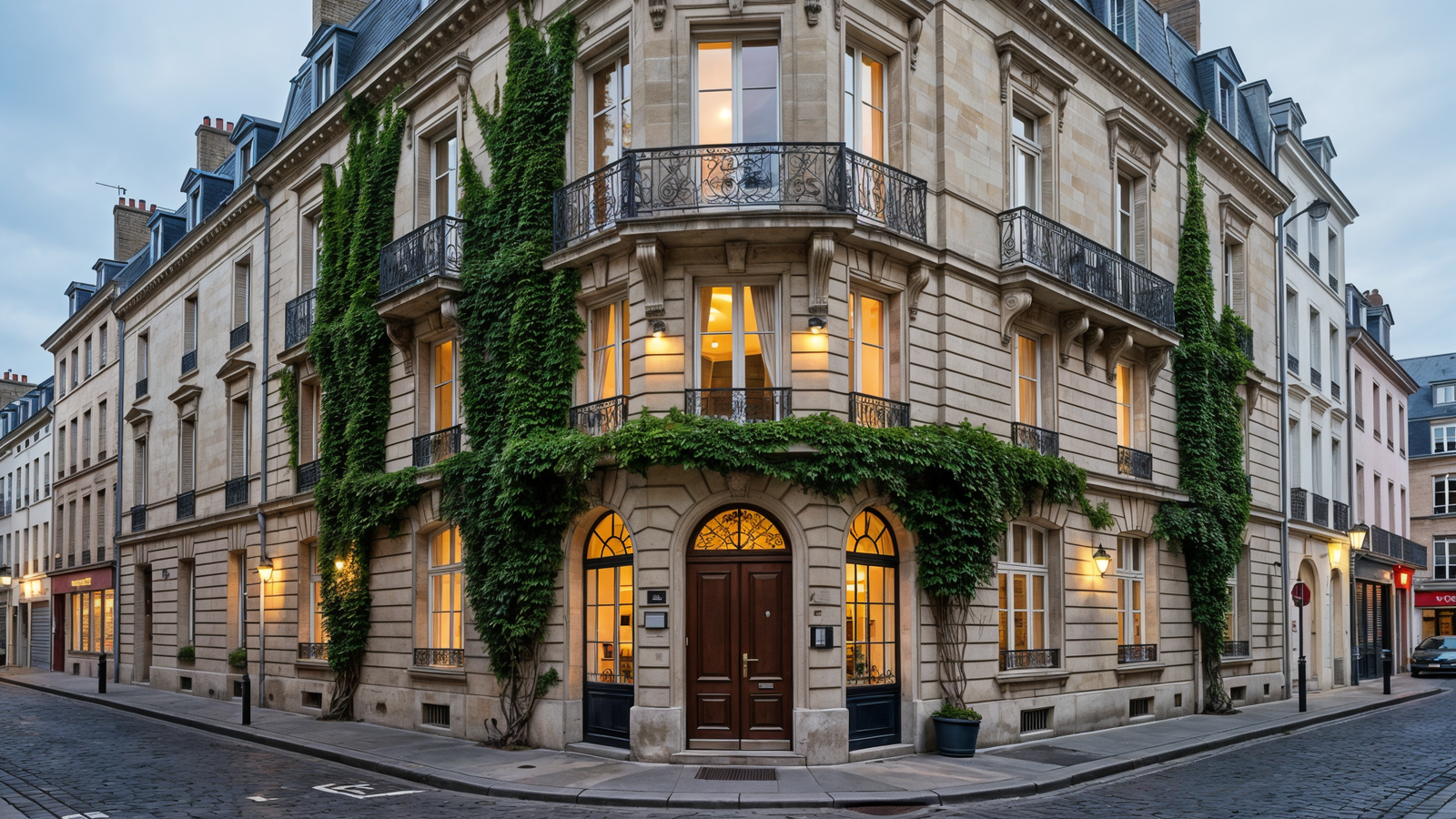
L’Hôtel Particulier 8 rue du Péage, 62000 Arras
A small house stay on a calm street near the citadel and lower-town fabric. Few rooms, more private-residence feel than transit hotel. Book ahead. You pay for quiet and character. Morning coffee here, then a walk into the rebuilt centre, fits Arras better than a chain out on the ring road.
If those are full, stay inside walking distance of Place des Héros before you take a business-park rate by the motorway. Waking up able to reach the Boves on foot is worth more than a bigger room farther out.
Why the depth is enough
Arras will keep offering the easy postcard: gables, belfry, a beer on the square. Take the photo. Then go down the stair and stay long enough for your eyes to adjust. The town makes more sense once you have felt the chalk under it — storage, shelter, quarry, museum — and climbed back into a Place des Héros that suddenly has a basement.
Walk the two squares without headphones. Eat within a few streets of the town hall. Sleep close enough that you can pass the arcades again before the day thickens. That is Arras when you stop treating it as a pretty stop between Lille and the cemeteries, and let the underground set the pace for everything above.
