
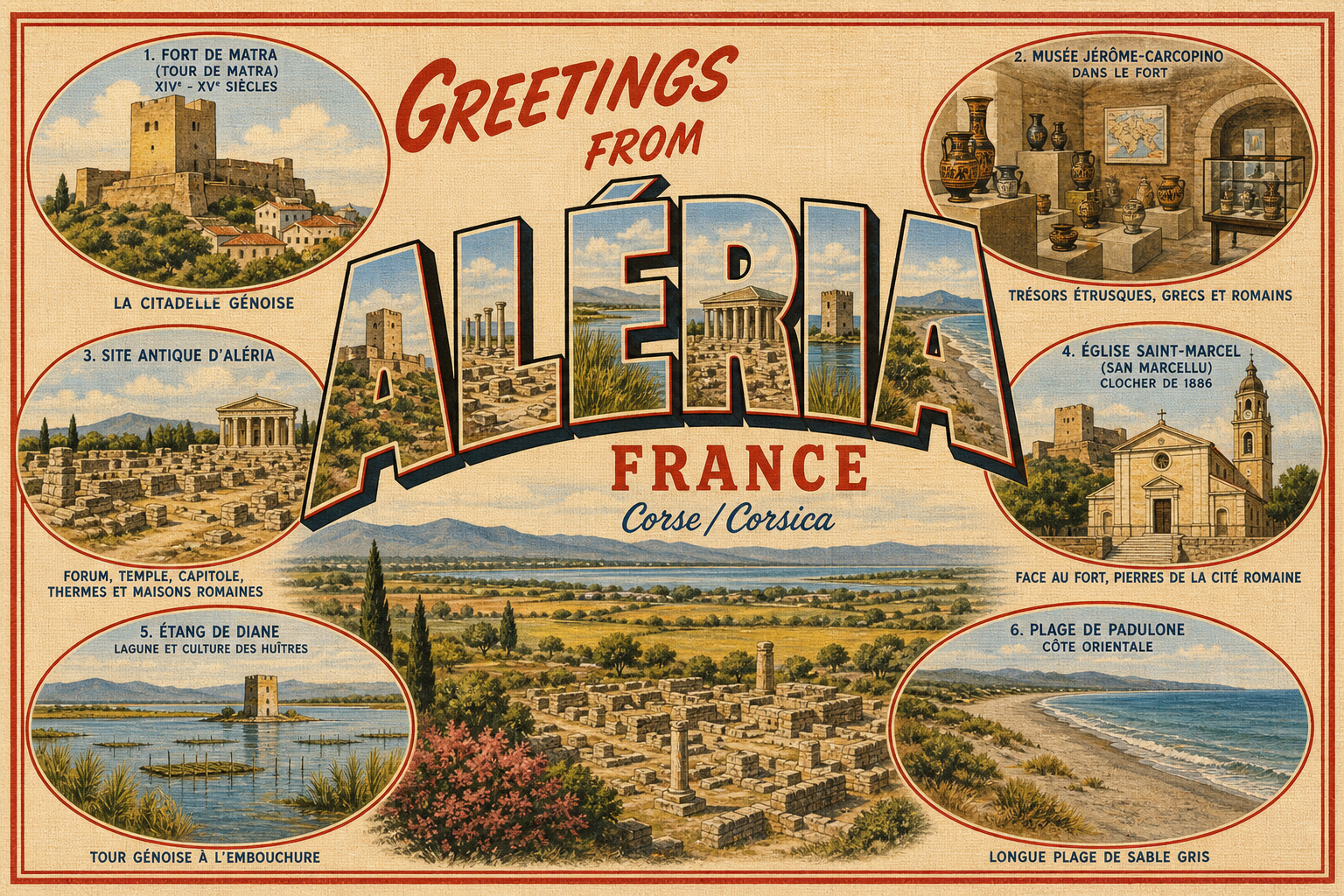
Most people race the RT10 between Bastia and Porto-Vecchio with the windows up and the radio on. Aléria sits right there on the eastern plain, easy to dismiss as a stop for gas and groceries. That would be a miss. What stays with me is not a cliff-edge citadel. It is a long, shallow lagoon where the wind smells faintly of salt and shell, and where people still eat oysters the Romans once shipped toward Ostia.
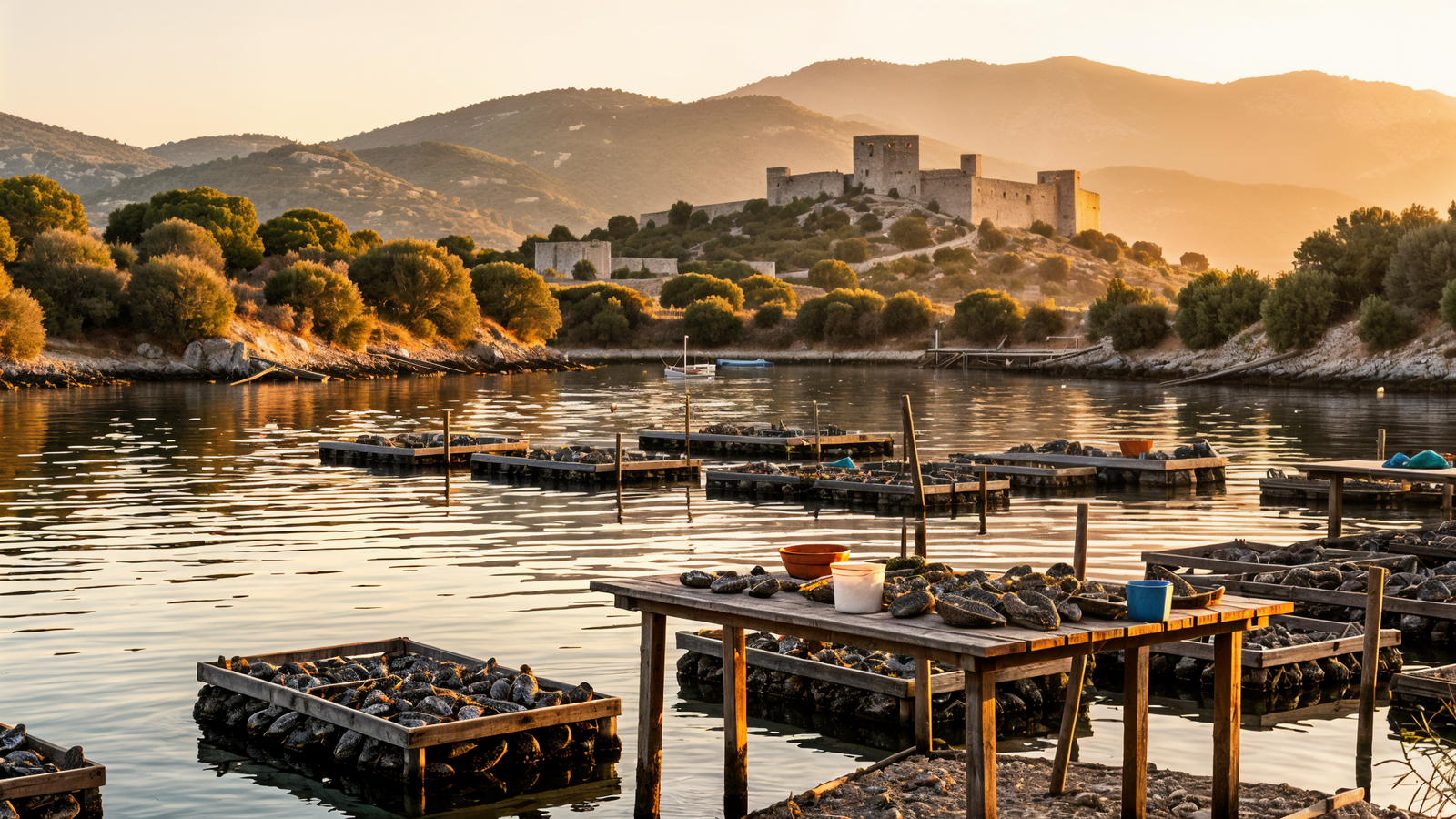
The Étang de Diane (sometimes written Diana) lies just north of town, cut off from the Tyrrhenian by dunes and scrub. On a still morning the surface looks almost solid. Then a breeze arrives, the reeds lean, and you notice the dark lines of oyster parks. Aléria is quieter than the west-coast resorts. You get a Roman capital, a Genoese fort, lagoon aquaculture, long beaches, and vineyards that run almost to the water.
A capital that never quite left
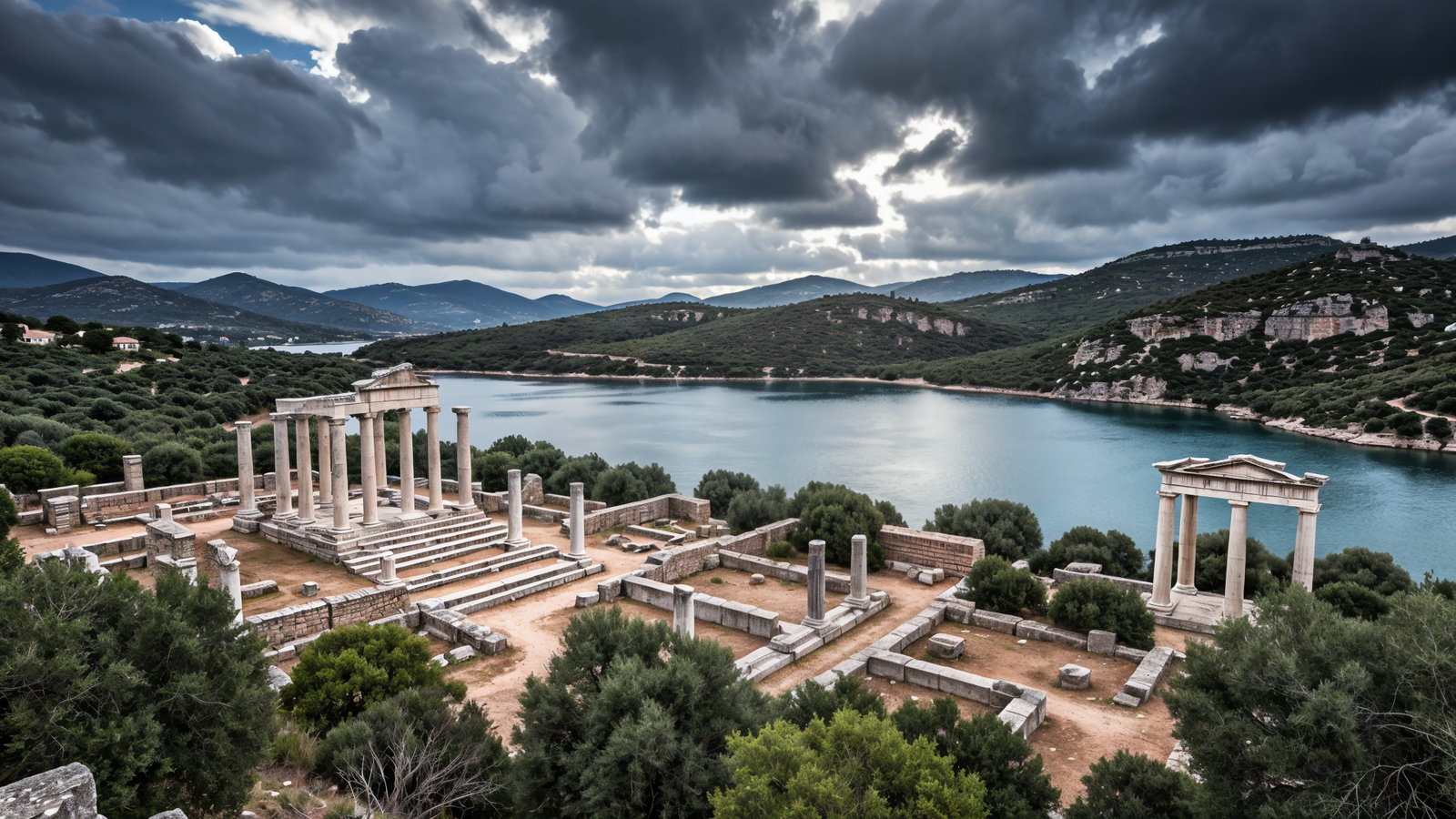
Before it was a French commune on the Costa Serena, this was Alalia, then Aleria, the administrative heart of Roman Corsica. The archaeological site sits on a low rise near the modern village, not far from the Tavignano as the river finishes its run from the mountains to the sea. What remains is not a reconstructed theme park. You walk gravel paths past foundations, fragments of baths, villa walls, and the outline of a forum that asks you to fill in the rest yourself.
I like ruins that refuse to perform. Midday heat flattens the plain. Late afternoon turns the stones the color of old bread crust. Bring water. Wear a hat. Give yourself time to stand still and listen. Traffic is distant enough that cicadas often win.
A short walk uphill puts you at Fort Matra, the 16th-century Genoese fort that now houses the Musée départemental d’archéologie Jérôme Carcopino (Hameau du Fort / Fort de Matra, 20270 Aléria). The museum pairs well with the open-air site: Etruscan and Greek ceramics, Roman glass, weapons, jewelry. Rooms are compact. Labels are clear enough if your French is rusty. I usually do the site first, then the museum, then coffee in the village before deciding whether the afternoon belongs to the beach or the lagoon.
If you have one more stop, look for the Tour de Diane near the étang. Less about climbing (access varies) and more about orientation: lagoon on one side, plain on the other, mountains a blue smudge inland when the haze lifts.
Lunch where the lagoon works
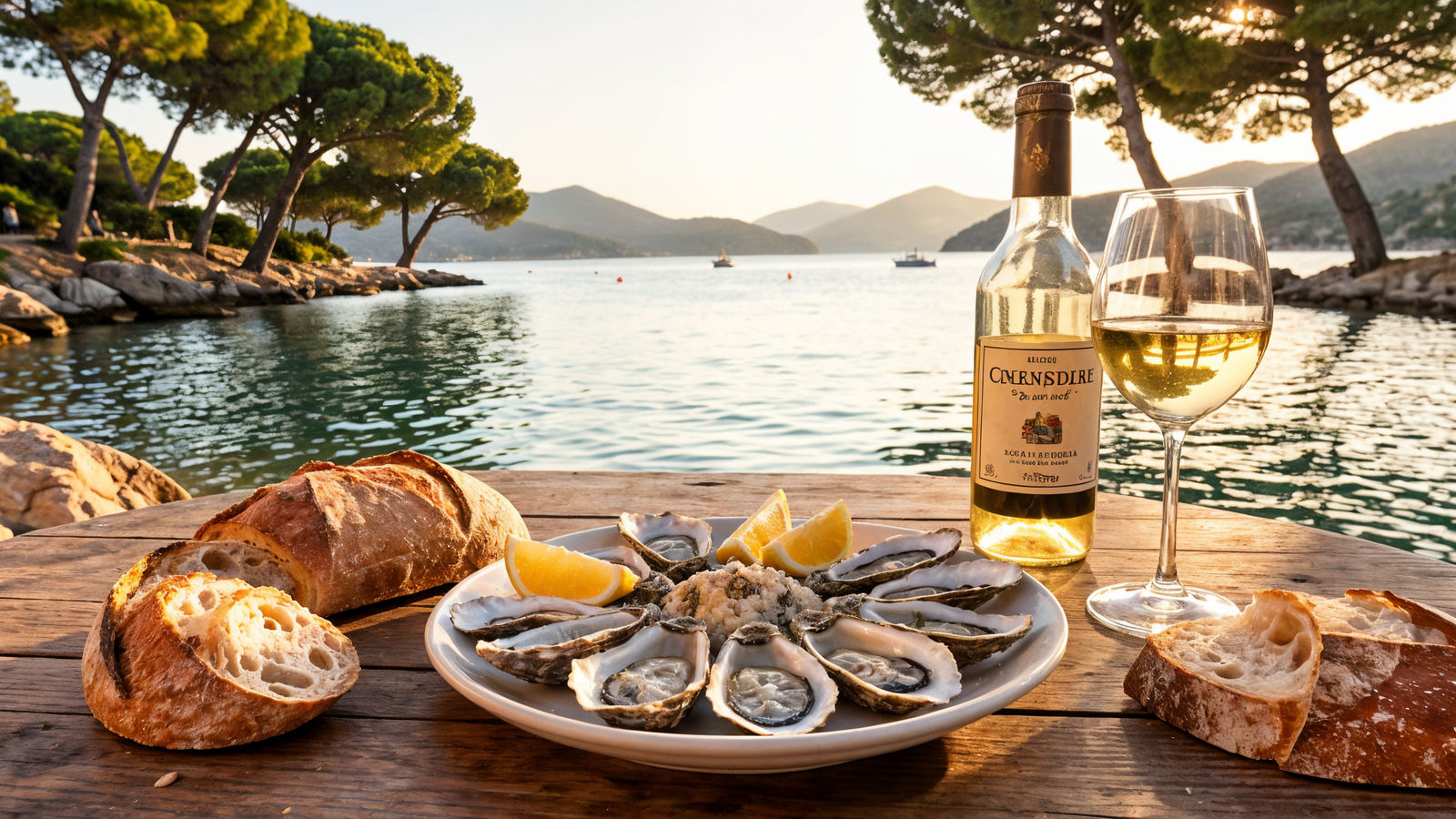
Aquaculture here goes back a long way. Roman Aleria sent shellfish toward the mainland, and old shell beds still show up in the ground if you know what to look for. Today the Étang de Diane remains a working lagoon. Producers sell oysters and mussels from simple points of sale, and in season you can eat them with almost nothing between the shell and your hand.
Etang de Diana (Étang de Diane, BP1, 20270 Aléria) is the name you will see on maps and bottles: Nustrale di Diana oysters, mussels, fish when the day allows. Hours shift with season and weather; spring through early autumn is the reliable window. I like arriving slightly hungry, ordering a plate that looks too generous, and sitting where you can watch the water. Lemon if you want it. Bread if they have it. A glass of something cold and local.
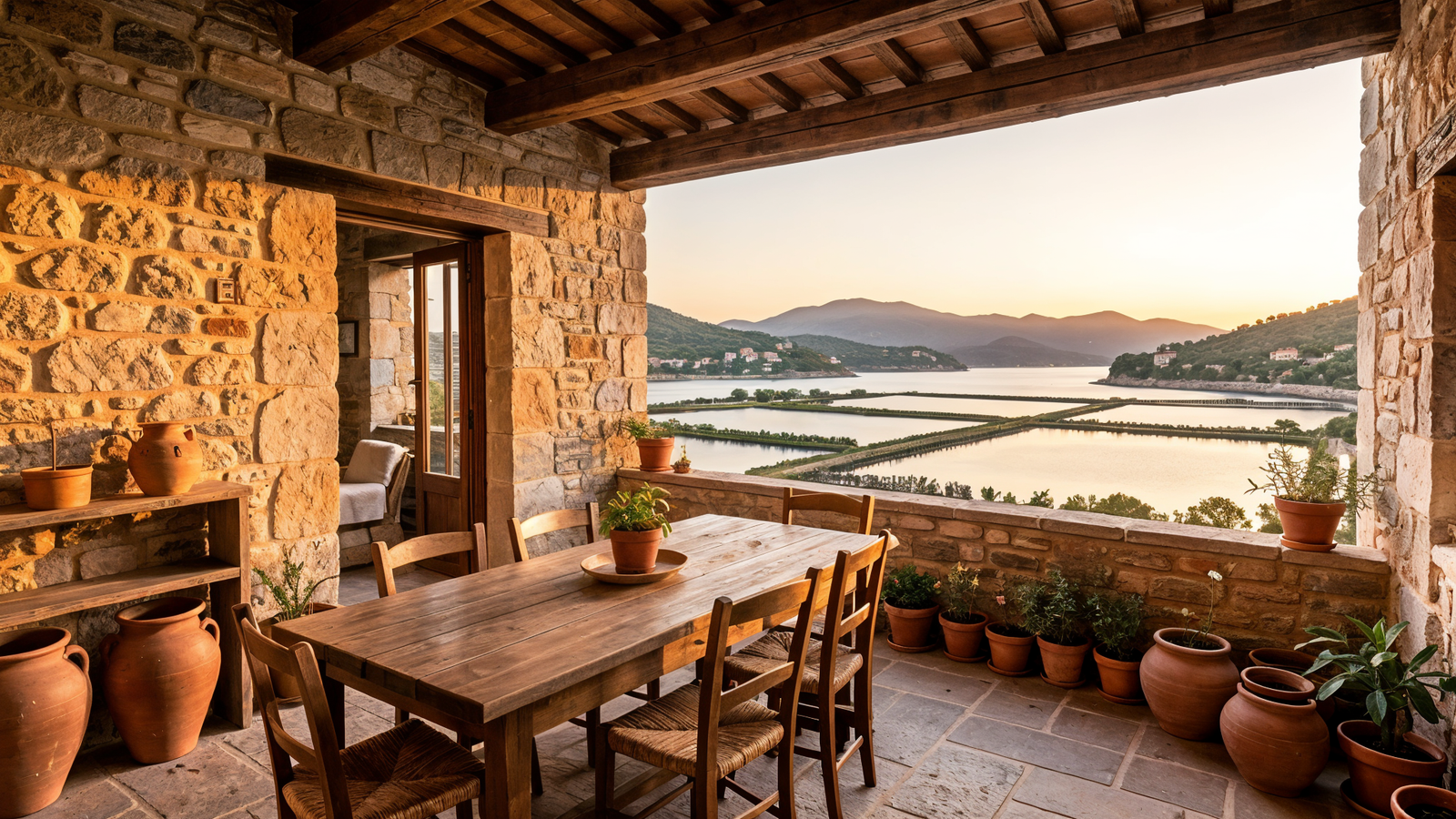
For a longer table with vines in the foreground, drive a few minutes to Domaine Terra Vecchia and its restaurant Veni è Posa (Domaine Terra Vecchia, 20270 Aléria). Seasonal opening, roughly May into September. The terrace looks out over the vines toward the étang. The cooking stays Corsican and close to what the land and lagoon are producing, and the wine list leans hard toward what grows a few rows away. Book if you can.
For a meal that feels more village than domaine, U Spurtinu (425 Avenue Saint Alexandre Sauli, 20270 Aléria) sits on the main axis through town. Closed Mondays; open lunch and dinner the rest of the week. The room is warm rather than formal. Expect Corsican comfort: charcuterie that tastes of someone’s actual cellar, pasta when you need ballast, fish when the coast has been kind.
Near the beach strip, L’Écurie at Domaine de Padulone (Domaine de Padulone, 20270 Aléria) pulls families after a swim and people who want a terrace after a long drive. Opening generally tracks the tourist season (late March into October; confirm before you count on it). Fresh product, estate produce, honest portions.
Beaches, river mouth, and the long east coast
Aléria’s shoreline is not the drama of Bonifacio’s cliffs. It is longer, flatter, and often emptier once you walk a few hundred meters from the nearest parking. Padulone and the stretches toward Tallone give you pale sand, shallow entry, and east-coast light that turns milky by late afternoon. In July you will share the water. In May or late September you may have long intervals where the only sound is wind in the needles and a distant scooter.
The Tavignano reaches the sea near here after cutting down from Corte’s high country. The river mouth and the plain feel more agricultural than resort-like: orchards, market gardens, fields doing actual work. Inland, the RT50 climbs toward Corte if you want a mountain day without changing hotels. Bastia is roughly an hour north; Porto-Vecchio farther south. Aléria works as a base because the rest of the island stays within reach without making this stop the whole trip.
The eastern plain also grows serious wine. Domaine Terra Vecchia is the obvious visit if you are already eating at Veni è Posa, but you will pass other cellars between Aléria and Linguizzetta. I buy a bottle I like, put it in the shade, and open it when the day cools.
Places to stay
Aléria’s lodging is practical. You are choosing location, pool or no pool, and how close you want to be to the beach road versus the village spine.
Hôtel Les Orangers (95 Route de la Mer / Route du Roi Théodore, 20270 Aléria) is the budget-friendlier pick, near the Tavignano’s approach to the sea and a few minutes from swimming. Rooms are simple, the welcome is straightforward, and the price usually leaves money for oysters and museum tickets.
Hôtel L’Empereur (320 Avenue Saint Alexandre Sauli, 20270 Aléria) sits more in the middle of the village action along the old RN198 / RT10 axis. Mid-range in feel: comfortable rooms (some with balconies), a pool when you need to rinse off the day’s heat, bar and restaurant on site. I like it when I want to walk to dinner at U Spurtinu without negotiating beach-road parking after dark.
Hôtel L’Atrachjata (100 Avenue Saint Alexandre Sauli, 20270 Aléria) is the fuller-service stay of the three: more rooms, a proper hotel restaurant, and a location that still keeps Bastia, Corte, and the south within day-trip range. Spend here if you want air-conditioning you can trust in August and a dinner option downstairs when you are too sandy to be ambitious.
Book early for July and early August. Shoulder season is kinder on rates and nerves. Many places lean seasonal; in winter, confirm openings before you lock a ferry.
Getting there and getting around
A car is the honest answer. Buses are infrequent, and the lagoon, beaches, and archaeological site do not form a neat walking loop from a single stop. Fly into Bastia-Poretta when you can; the drive south is simpler than threading the entire island. Porto-Vecchio and Ajaccio airports work if the rest of your trip is already south or west.
Park once near Fort Matra for the museum and ruins, again near the étang for oysters, and accept that beach parking will be a mild sport in high summer. Early morning ruins and late-day swimming dodge both coach groups and the hardest light.
A slower east-coast day
If I had only one full day in Aléria, I would start at the archaeological site while the stones are still cool, cross to Fort Matra and the Carcopino museum, then drive to the Étang de Diane for oysters before the lunch seating turns over. Afternoon would be Padulone or a quieter stretch of sand with a book that can survive a little salt. Evening: either Veni è Posa among the vines if the season is right, or U Spurtinu back in town if I want noise and a walkable finish.
Aléria will not hand you one famous skyline. What it does have is a lagoon that still works, Roman stone under your shoes, and east-coast nights when the wind drops and cutlery carries from a terrace you cannot quite see. I come back for the oysters and the quiet between the RT10 traffic. Leave the highway for people who are only passing through.
