
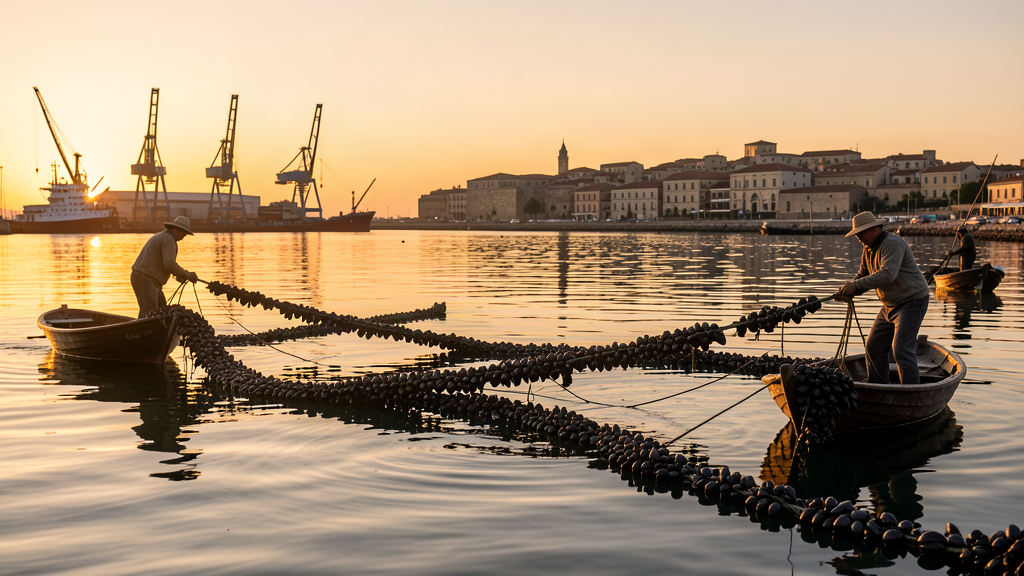
Taranto does not try to charm you at first glance. Steel works sit on the skyline. Navy hulls crowd the Mar Grande. Buses rattle across the bridges. Then you look the other way, toward the lagoon people here call the Mar Piccolo, and the city starts making sense.
Out on that quieter water, black mussel ropes hang in long rows. Boats cut between them. Crates of cozze come ashore still wet. Taranto has farmed shellfish in these basins for a very long time, and the habit has not turned into a costume. It is still work. If you come for the castle photos first, you will miss why the place tastes the way it does.
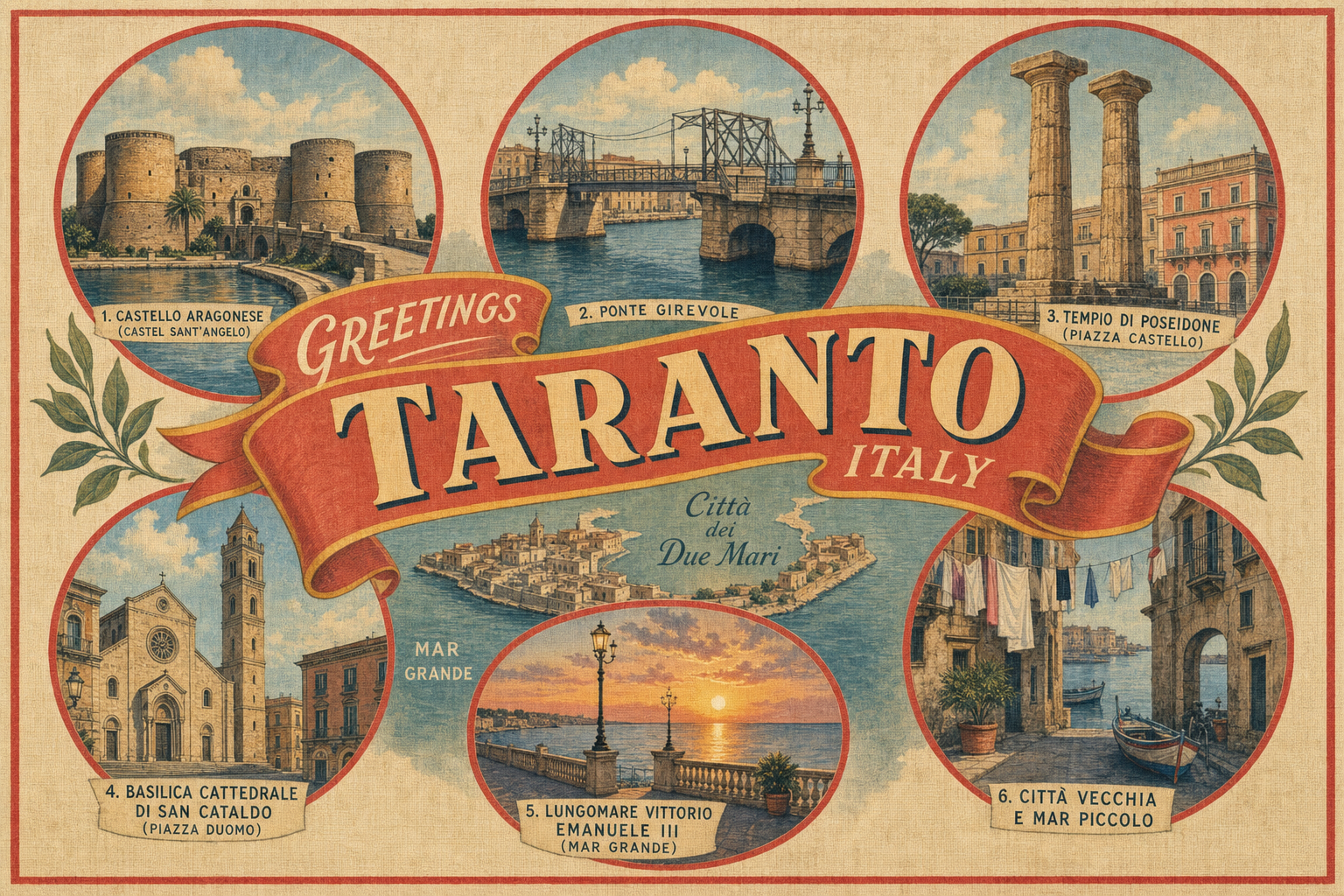
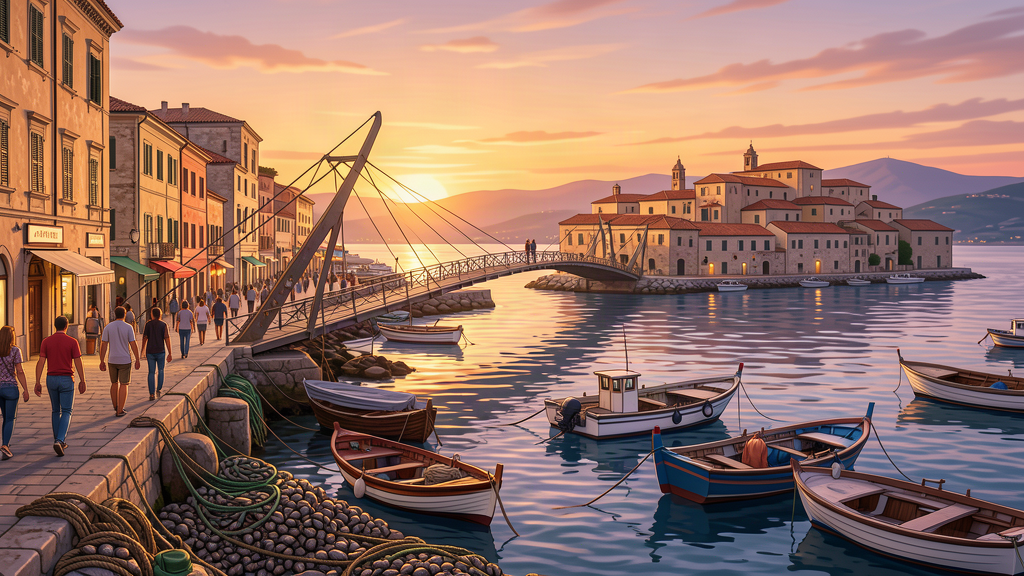
I like arriving on foot from the newer Borgo, where shops and ordinary apartment blocks face the water, then crossing toward the old island. The geography is odd and useful. Taranto sits between two seas: the open Mar Grande on the Ionian side and the almost landlocked Mar Piccolo inland. The historic center is a long island tied to the mainland by a stone bridge and the Ponte Girevole, the swing bridge that opens for ships. When the bridge turns, traffic stops and everyone watches the gap. It is one of the few free shows in town that still feels local.
Island lanes and a working castle
The Città Vecchia is not polished. Some facades are restored; others wait. Laundry still dries over narrow lanes. Kids kick a ball against a church wall. You smell frying oil, then salt, then a sudden clean breeze when a street opens to the water.
Walk without a checklist. The Duomo di San Cataldo has a quiet courtyard and a crypt that feels older than the square above it. Nearby, the Aragonese castle sits hard against the channel. You can tour parts of it on certain days; even from outside, the bulk of the walls tells you this was a military city long before it was a weekend stop. From the ramparts side, the Mar Grande looks wide and almost empty. Turn around and the Mar Piccolo feels closer, more domestic, lined with small docks and the dark lines of mussel parks.
A short walk brings you to the two freestanding Doric columns that mark what remains of an ancient temple to Poseidon. They stand a little awkwardly among modern traffic and parked scooters. I like them that way. Taranto was a major Greek city, Taras, and the archaeology here is not a side trip. Give it an afternoon and the old city stops feeling like decoration.
Gold under glass at MARTA
The National Archaeological Museum of Taranto, MARTA, is in the Borgo rather than on the island, and it is worth rearranging a morning for. The gold jewelry from Magna Graecia is what most people come for. Thin wreaths, earrings, and ornaments sit under glass with a craft precision that still catches me. There are painted vases, sculpture fragments, and room after room that make “Greek south Italy” feel like something you can point at.
I usually go early, before school groups fill the halls, then walk back toward the water with a coffee. You do not need to love every label. Slow is enough. Taranto works better at that pace than as a rushed drive-by between Ostuni and the beaches.
If you want greener air after the galleries, the Giardini Peripato sit near the Mar Piccolo edge of the newer town. Not a big destination park. Shade, paths, and a reminder that people live ordinary lives here between shipyards and shellfish beds.
Eating the lagoon
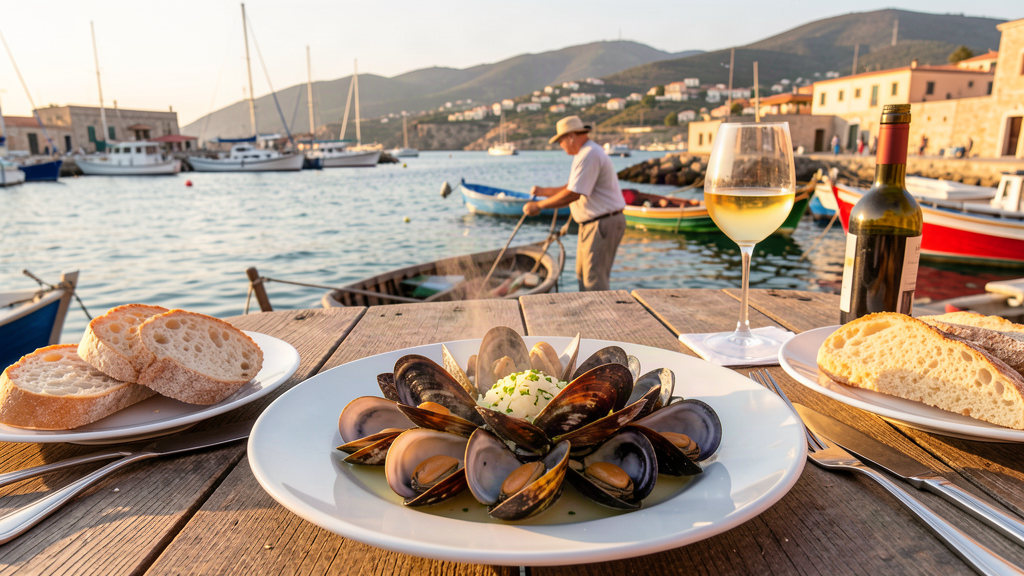
Food in Taranto circles back to the water. Cozze tarantine show up raw with a squeeze of lemon, gratinate under breadcrumbs, or folded into tiella with rice and potatoes. Octopus, anchovies, and small fried fish appear without much ceremony. Portions tend to be generous. Menus stay short and stick close to what came in that morning.
Gente di Mare Trattoria, Via Giuseppe Garibaldi 254, 74123 Taranto TA, is a solid place to start if you want mussels without a show. Locals pack it for lunch. Order the cozze however they are running that day and something simple beside them. The room is busy, the service practical, and the bill usually kinder than the quality suggests.
In Rada Restaurant, Via Giuseppe Garibaldi 148, 74123 Taranto TA, sits closer to the old-town views and the Mar Piccolo edge of the island. A step up in polish, still focused on seafood. Impepata di cozze, a mixed fry, or a seafood risotto make sense here if you want a longer dinner and a table you planned for.
Trattoria del Pescatore, Piazza Fontana 47, 74123 Taranto TA, keeps things closer to the working harbor mood: fish, mussels, and secondi that change with the boats. Go when you want a plate more than a scene. Taranto eats early by big-city standards on weeknights and later on Sundays. If a room is full of families at 1:30 p.m., sit down.
Drink what is open and cold. A local white or a simple rosato works with shellfish better than anything precious. Save room for a walk afterward. The air off the water does more for me than another digestivo.
Places to stay
Taranto’s lodging mix is practical more than glossy. Stay on or near the island if you want to walk everywhere at night. Stay on the lungomare if you want a bigger hotel and a wider sea view.
Budget: Hotel Pisani, Via Camillo Benso Conte di Cavour 43, 74123 Taranto TA. A straightforward two-star base a short walk from MARTA and the bridges. Rooms are simple, the location is useful, and you spend your money on dinners instead of design. Fine for a night or two when you are moving through Puglia by train or car.
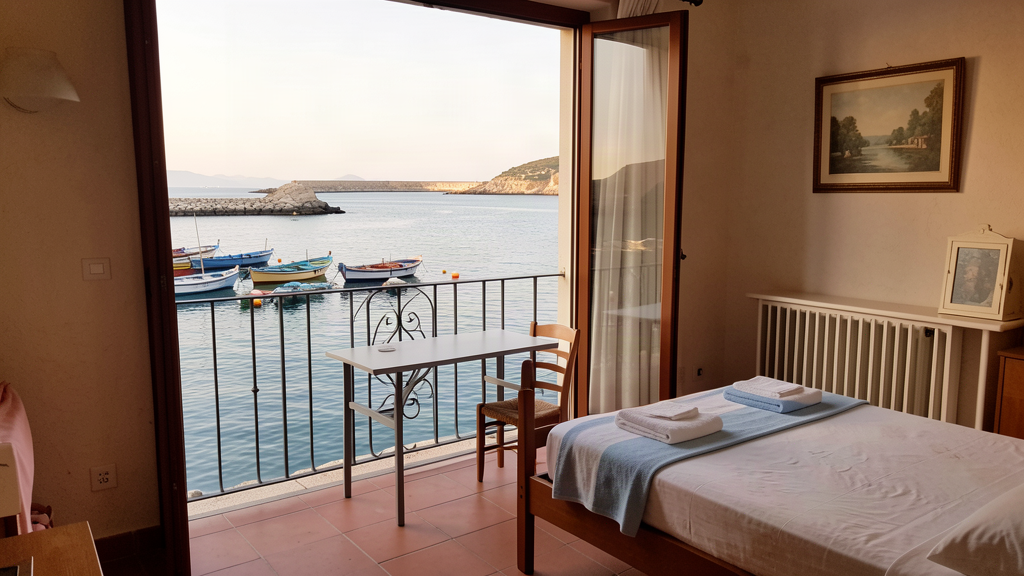
Midrange: B&B Le Finestre sul Mare, Via Arco Paisiello 12, 74123 Taranto TA. This one sits inside the Città Vecchia in a historic building with windows toward the Mar Grande and the ringhiera waterfront. You wake up already inside the old town’s fabric, which matters in a city where the island is the reason you came. Rooms are limited, so book ahead in high season.
Splurge: Hotel Delfino, Viale Virgilio 66, 74121 Taranto TA. A larger four-star on the seafront with proper hotel services, sea-facing rooms, and an easier arrival if you have a car or luggage. You trade alley atmosphere for space and a long view over the Mar Grande. Useful if Taranto is a longer stop or you want a quieter night after walking the island all day.
Getting around without fuss
Taranto’s train station sits on the mainland side of the newer town. From there, buses and taxis cover the gap to the bridges, or you can walk if your bag is light and the heat is not punishing. Driving into the Città Vecchia is more trouble than it is worth. Park on the Borgo side and cross on foot.
The Ponte Girevole is both landmark and bottleneck. Check locally if a ship passage is scheduled; when the bridge opens, plans pause. Ferries and boats for the small islands in the Mar Grande run on limited schedules. For most visitors, the real boat time is watching mussel skiffs on the Mar Piccolo rather than booking a cruise.
Day trips are easy if you have a car: the Ionian beaches south of town, the inland white towns, or a loop toward Matera if you are heading northwest. I would still give Taranto a full night. The city changes after offices close. The island quiets. The water picks up the last light. You hear dishes from open windows and the occasional scooter, not tour guides.
A slower way through the day
Morning: coffee in the Borgo, MARTA while your head is clear, then walk to the island across whatever bridge is open. Midday: seafood lunch and a pause in the shade near the castle or the columns. Late afternoon: back streets of the Città Vecchia, a look at the Duomo, and time on the waterfront rail where people lean and talk. Evening: another short walk when the air cools, then dinner where the mussels are honest.
Taranto will not compete with Lecce for baroque polish or with the trulli towns for postcard neatness. What it has is plainer and better for a night: two seas still in use, Greek stones you can walk up to, and a plate of cozze that tastes like the lagoon you just walked beside. Stay long enough for the industrial first impression to fade. The mussel ropes are still out there in the still water, dark lines on the Mar Piccolo, doing the same work they did yesterday.
