
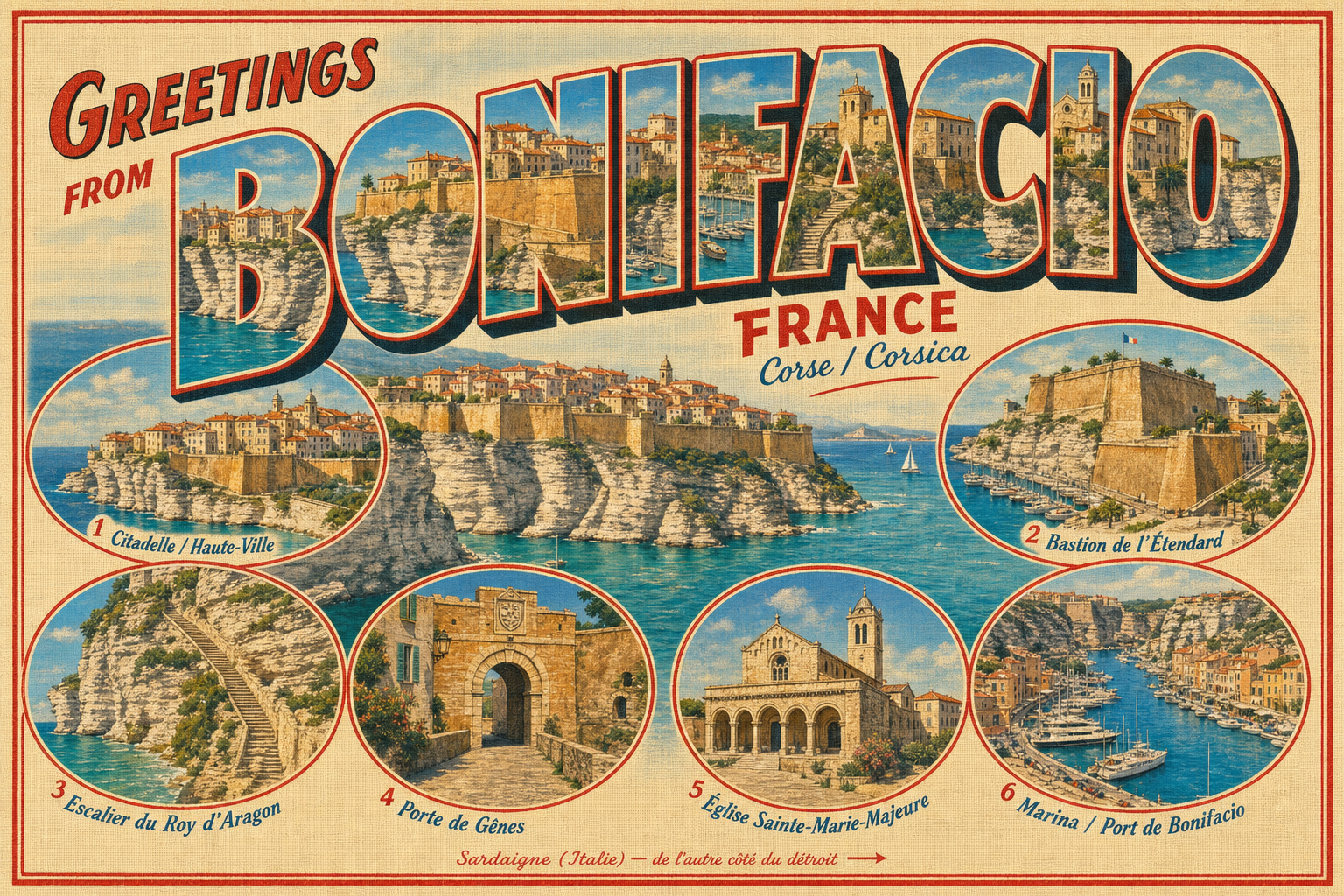
Most people meet Bonifacio from the water: a white town jammed onto a limestone blade, houses leaning over empty air, Sardinia a blue smear on a clear day. That cliff silhouette is why ferries slow and phones come out. The version I keep starts lower and harder on the legs. A steep cut of steps through the rock, sea air from the bottom, and the long harbor goulet folding the Mediterranean into a protected ditch under the walls.
Bonifacio sits at Corsica’s southern tip, the oldest town on the island by the usual telling. Haute ville on the plateau, port along the inlet below. Tour boats circle the caves. Day-trippers fill the quai at noon. You can still treat it as a working cliff town if you time the stairs, the marine cemetery wind, and one slow evening when the limestone stops throwing heat.
Why the stairs still matter
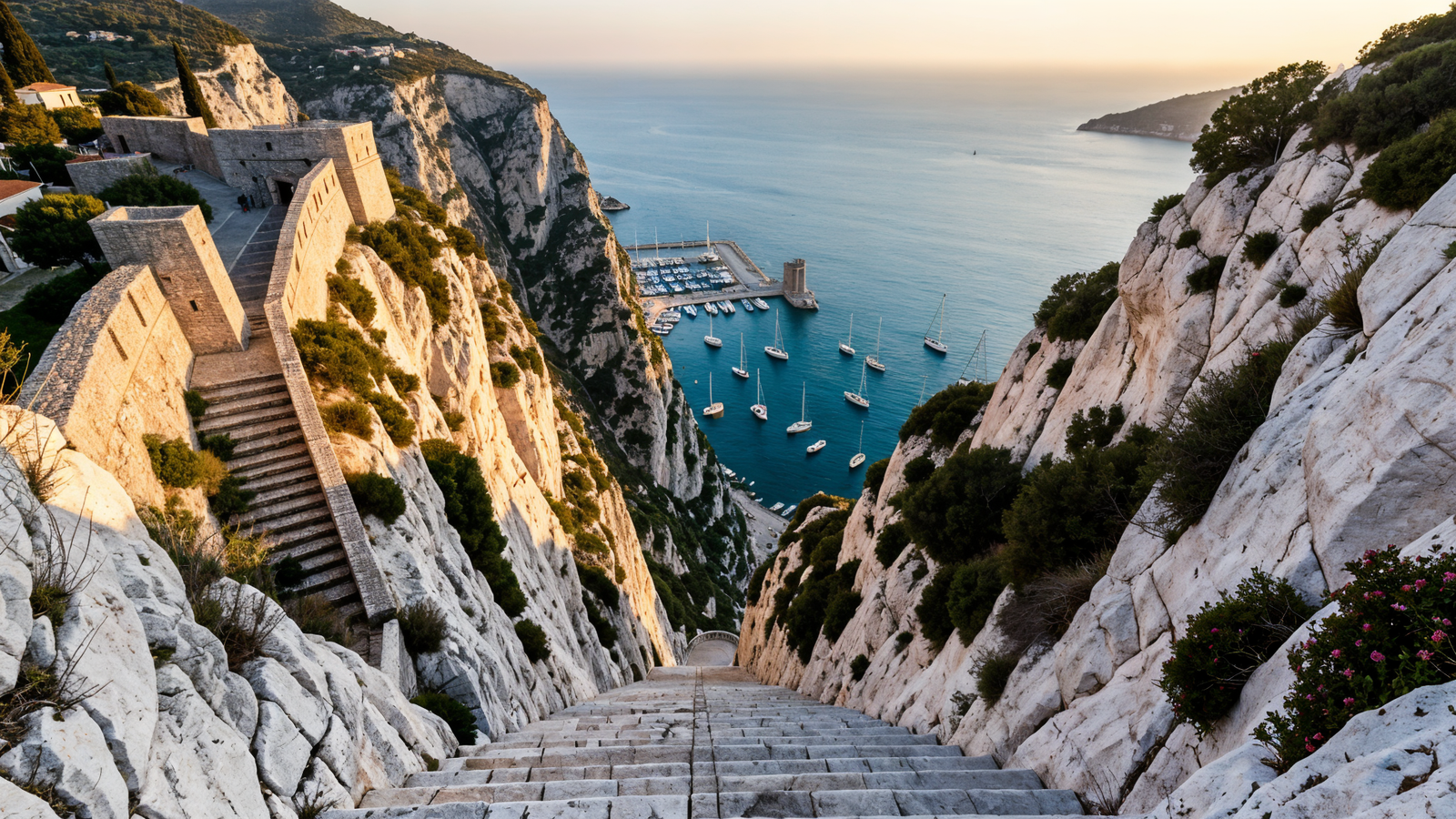
The Escalier du Roi d’Aragon is the legend everyone repeats: nearly two hundred steps carved into the cliff face, supposedly cut in a single night by Aragonese soldiers. More likely a long defensive and water-access path worn into soft white stone. Pay the small entry, grip the rail, and go down while your knees still have patience. The steps are uneven. The drop is real. At the bottom the sea is close enough to smell without a boat ticket, and the underside of the town hangs over you like a second skyline.
I like the stairs mid-morning or late afternoon, not hard noon when the limestone radiates and the top turns into a photo queue. Climb back up slower than you went down. That return is half the point: lungs, thighs, quieter upper lanes after the cliff wind. A boat shot of the façade is fine once. It will not tell you how the town was built to control height and water at once.
The stairs are not a full day. Pair them with a haute-ville walk the same morning and let the rock under your shoes set the pace before the harbor menus start calling.
Haute ville lanes, bastions, and the sailors’ cemetery
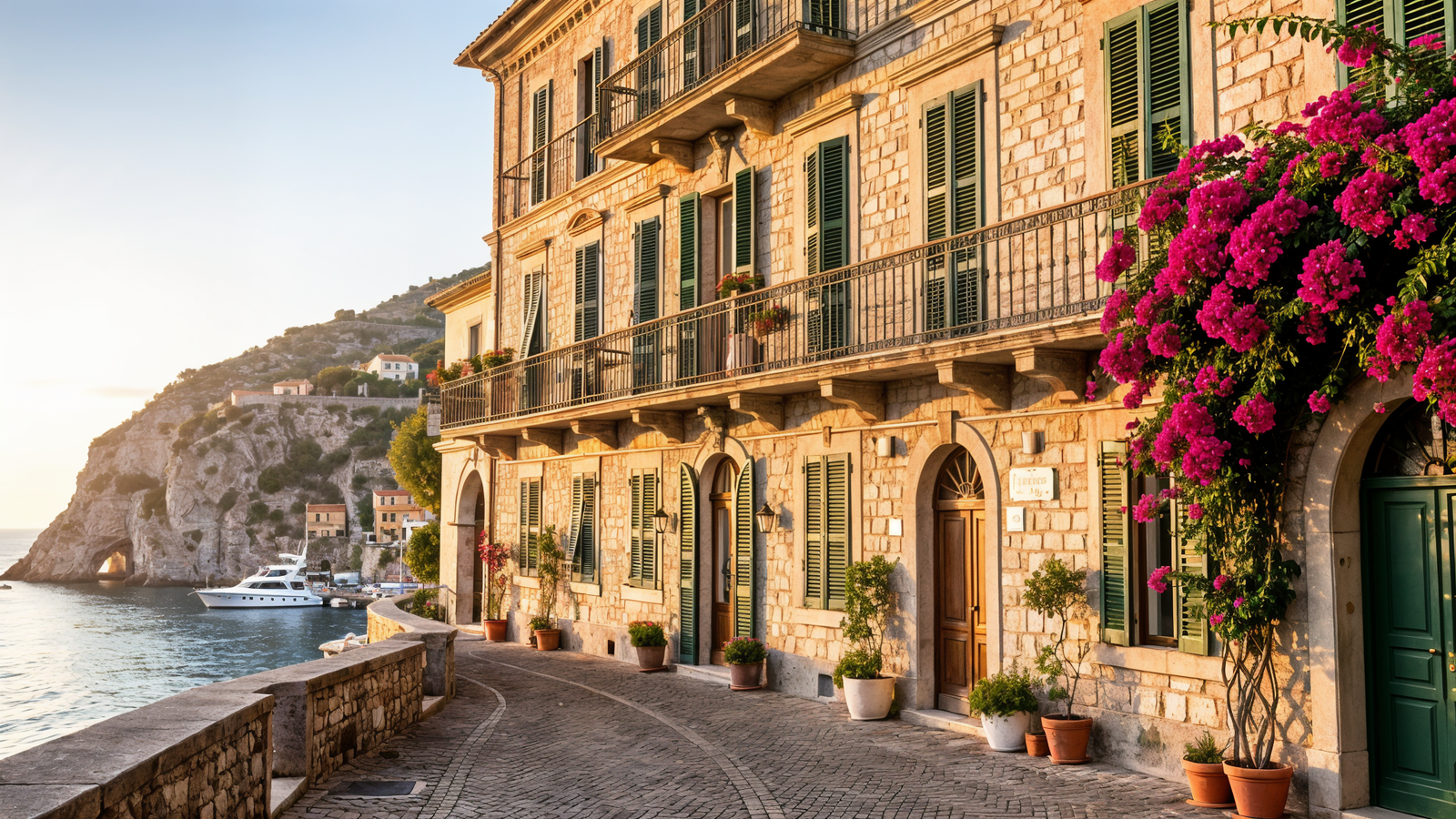
Up top, Bonifacio is a tight medieval plan on a peninsula of stone. Narrow streets, hanging laundry, churches cooler than the quai. Place du Marché and the lanes around Sainte-Marie-Majeure still feel like a small town doing ordinary business between visitor waves. Bastion de l’Étendard and the wall walks give the overlook people come for: harbor below, open sea beyond. More lookout than beach resort.
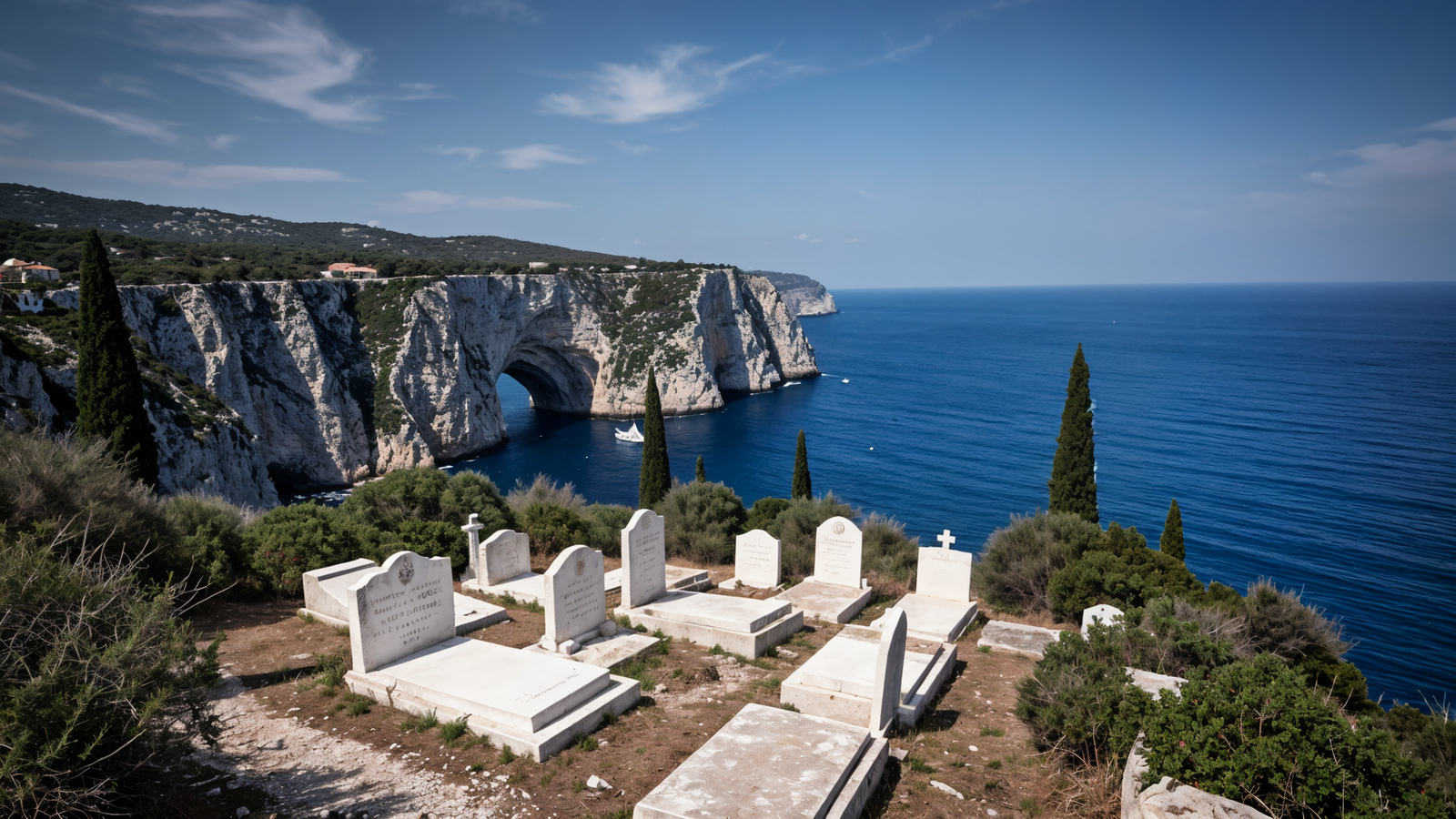
Keep walking toward the marine cemetery on the Bosco plateau when you want quieter ground. White tombs, wind, open sky, the cliff edge close. Speak softly. Leave no trash. From here Bonifacio reads as a place that buried its dead facing the strait.
I do one citadel loop in softer light and one cemetery pass when the day thins. Height, then wind. Spend the whole day bouncing between boat tickets and gelato and the upper town shrinks to a photo corridor.
Harbor goulet, boats, and when to leave the cliff
The port sits in a long natural inlet, the goulet, with the haute ville stacked above like a lid. Morning is for coffee and work boats. Midday in July can feel like a floating gift shop. Early evening gives the place back to people who live here and visitors who stayed put instead of racing to the next cove.
Boat trips to the sea caves and toward the Lavezzi islands earn their keep when the sea is calm. Book a smaller boat if you can; the big multi-stop circuits pack tight in high season. You do not need every grotto. One circuit that shows the limestone undercut and the white face of the town from below is enough for most first visits.
If you want sand without a full south-coast production, try nearer pocket beaches and the edges of the Bouches de Bonifacio nature reserve. Heat, limited shade, respect for protected zones. Water is the outing. The stairs and the plateau are still the ground the place grew from.
Plates between the quai and the upper lanes
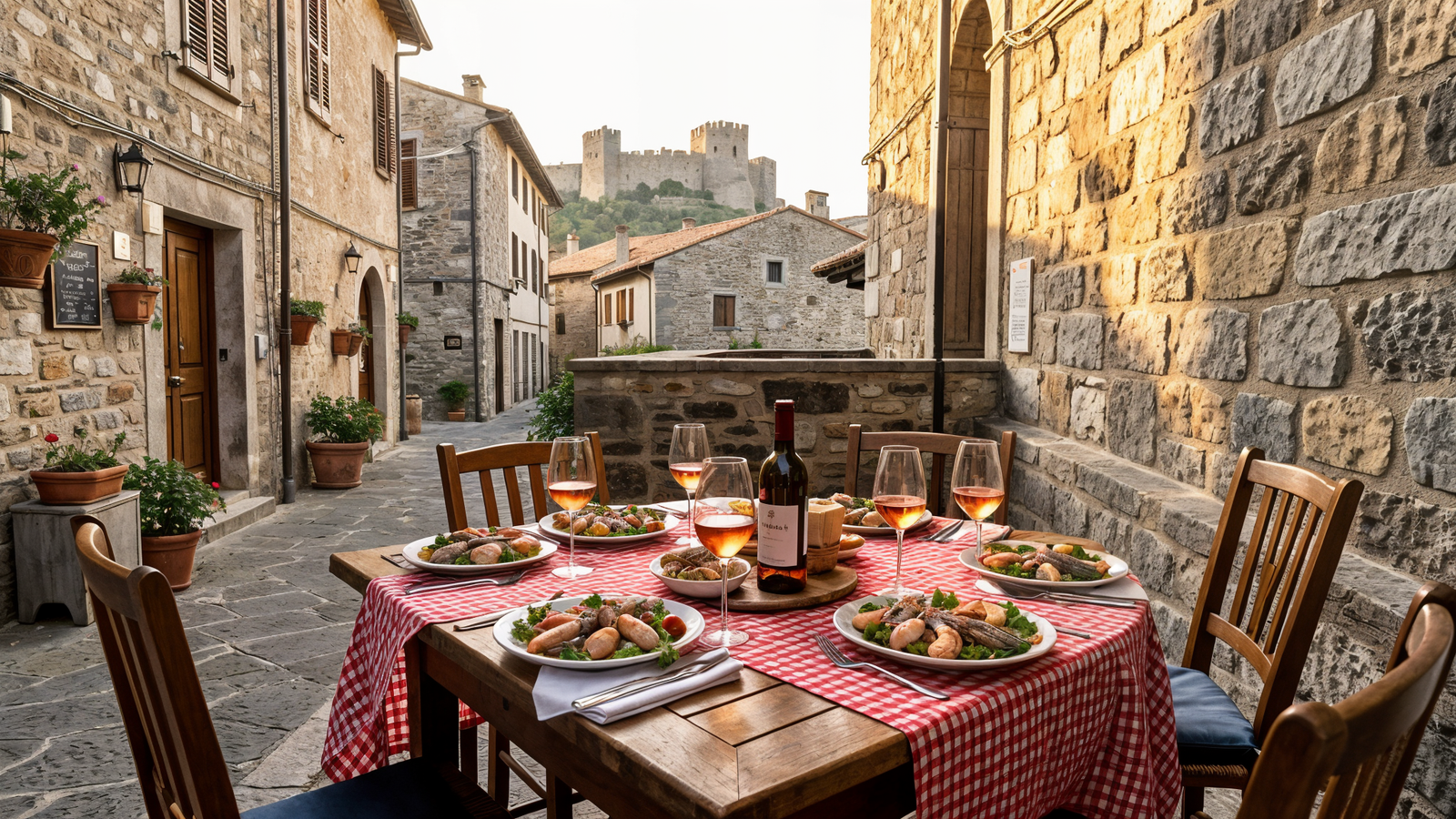
The harbor strip tips into interchangeable seafood boards if you sit at the first empty table with a view. Walk the quai once for the air. Then choose with a little stubbornness: a citadel lane for quieter Corsican cooking, a deliberate harbor address when you want boat noise with the fish, or a second look at menus before the loudest terrace.
Cantina Doria 27 Rue Doria, 20169 Bonifacio, France
A simple haute-ville room on a side street where wooden tables and Corsican plates still feel closer to a local cantina than a showpiece. Good first dinner when you have cliff dust on your shoes and want charcuterie, cheese, and something honest rather than a marina performance. Book in high season; the room is not endless.
Kissing Pigs 15 Quai Banda del Ferro, 20169 Bonifacio, France
Harbor-side Corsican cooking with stone walls and a compact terrace when you want the port in view without the first laminated multilingual card you see. Eggplant dishes, pasta with shellfish when the boats have been kind, local wine by the pitcher if that suits the night. Come hungry and a little patient. Summer tables turn over fast.
Le Grain de Sable Avenue Sylvere Bohn, 20169 Bonifacio, France
A useful address slightly off the tightest tourist hinge when you want a calmer Mediterranean table after stone and stairs. Confirm hours and reservations; shoulder-season evenings can shrink. Pair it with a slower walk rather than another full boat circuit the same night.
Between meals, ordinary bakeries and small counters keep you in daily Bonifacio. Fiadone if you find it, tomato and bread for the cemetery walk, something cold before the climb back up. The resort face is real. It is not the whole kitchen.
Places to stay
Staying in or hard by the old town turns stair mornings and cemetery wind into habits instead of one rushed circuit. Ask about noise, parking, and whether you want citadel stone underfoot or harbor water outside the window. Beach hotels farther out need a car every time you want dusk in the haute ville.
Hôtel Colomba — lighter bill, Pisan-quarter bones 4 Rue Simon Varsi, 20169 Bonifacio, France
A small historic house in the upper town, close enough to walk the lanes before the day-trip rush. Choose it when you want to sleep inside Bonifacio’s stone fabric and are fine with simpler rooms over spa theatrics. Stairs and narrow streets are part of the deal. Pack shoes that forgive cobbles.
Hôtel Centre Nautique — midrange to upper mid, port life under the walls Quai Nord, Port de plaisance, 20169 Bonifacio, France
Sits on the harbor edge with the bastion and the haute ville in the same frame. Useful when boat mornings and evening quai walks are the point of the stay and you still want an easy climb or shuttle up to the citadel. Request a room orientation if the view matters. Summer nights on the port run late.
Hôtel Genovese — higher comfort, citadel garden and pool Quartier de la Citadelle, Place de l’Europe, 20169 Bonifacio, France
A quieter garden address in the upper town with pool and spa when you want the cliff city as a daily companion and are ready to spend for calm after limestone heat. Book two or three nights so the stairs, the cemetery, and one boat morning can settle without rushing. Better as a base than a single drop-in between airport transfers.
One night covers the silhouette: stairs, rampart light, dinner with salt air. Two nights let you add a real boat morning and a second cemetery pass without turning the citadel into a checklist between ferries.
Practical notes
Bonifacio splits cleanly into lower port life and the steep haute ville. Comfortable shoes beat fashion on the Aragon stairs and the cemetery paths. Figari–Sud Corse airport is the usual air door for the far south; the drive is short enough for a terrace the same day if flights behave. Porto-Vecchio is the larger neighbor up the coast if you are linking beach days with the cliff town.
French is the working language; Corsican shows up on signs and in pride. Italian floats through the port in summer. Cards are widely taken; small counters may still like cash. July and August stack holidays, boat queues, and parking contests. May–June and September–October keep the light and thin the crush. Winter is quieter; some kitchens and boat runs shrink hours. The stairs close on a seasonal schedule, so check before you plan the morning around them. Cliff edges are real edges. Wind on the plateau can surprise you even on warm days.
Bonifacio will keep offering the white-town-on-a-blade postcard. Take that view once from the water. The days I come back for start in the rock: uneven steps cut toward the sea, a slow loop past the sailors’ tombs when the strait opens wide, then an evening walk along the goulet when the boats rock and the limestone town above still feels like it holds its height.
