
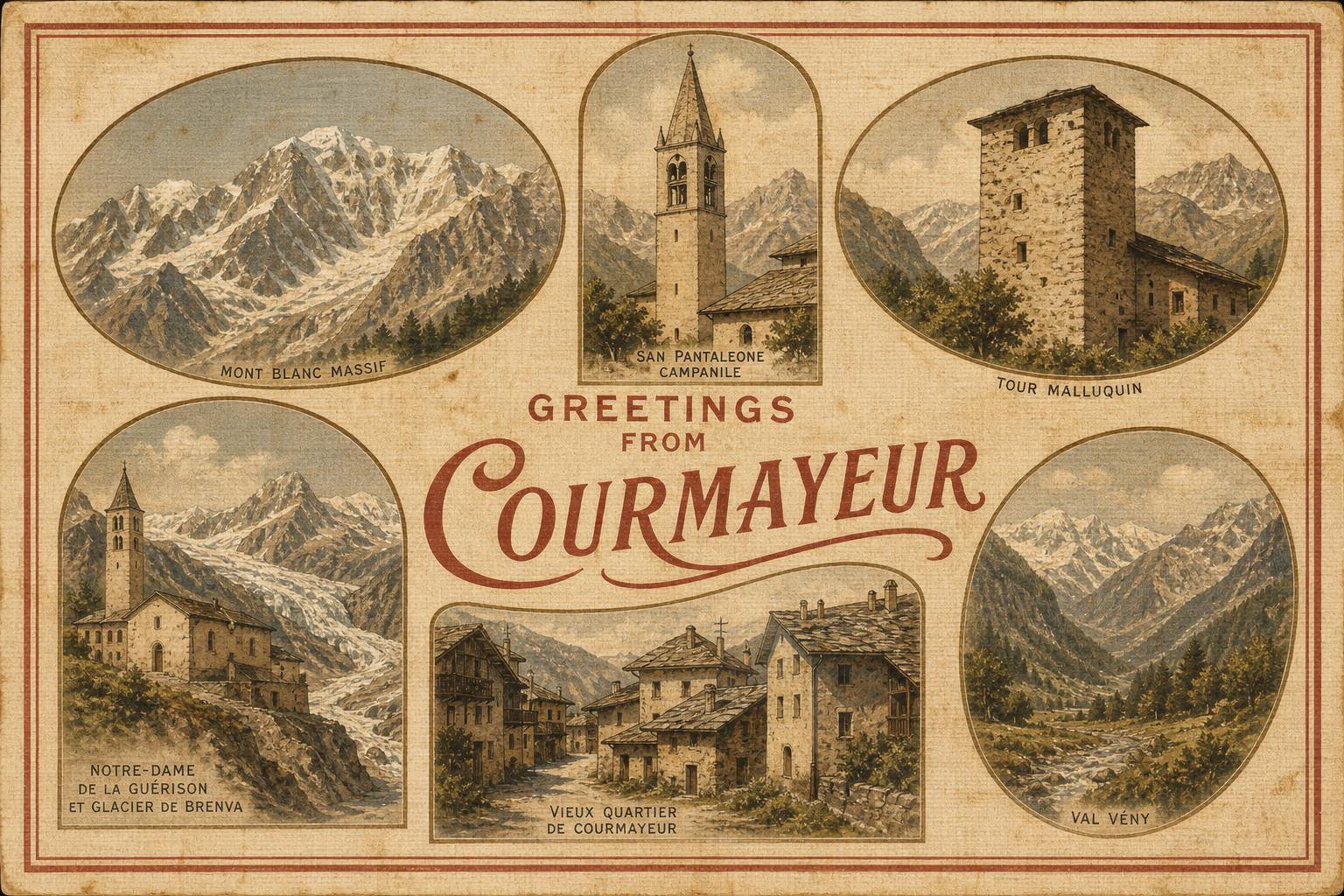
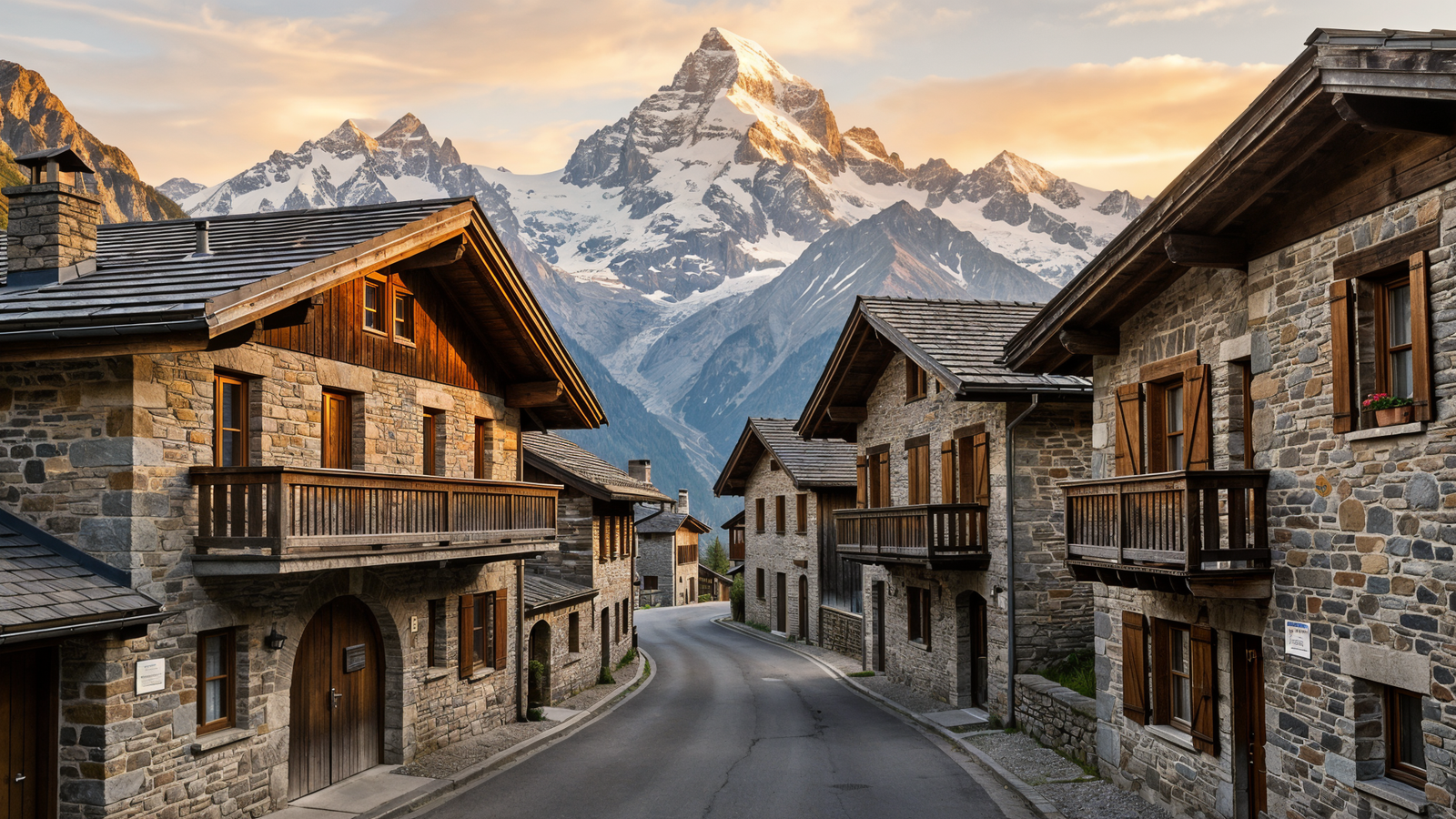
You feel Courmayeur first in the air. Cold even in June if a cloud sits on Monte Bianco. Stone underfoot. A shop door that opens onto cheese and climbing rope, not only postcards. The village sits high in Valle d’Aosta where the Dora Baltea still runs like a mountain stream, and the road climbs toward France through the Mont Blanc tunnel. Ski posters own the winter story. Fair enough. The quieter move is a short walk north to Entrèves, the old stone hamlet under the massif, where Val Ferret and Val Veny split and the mountain stops being a logo.
Via Roma does the evening work: pedestrians, windows, people who came for snow or a long lunch and stayed for the light on the peaks. Stick only to the pedestrian spine and the cable car, though, and you miss where the place grew from — farmhouses, a chapel, and the sense that someone still lives here when the rental cars leave.
Entrèves when the buses thin
Entrèves (you will also see Entreves on signs) sits a few minutes up from Courmayeur’s center, close enough that a determined walker treats it as a neighborhood. Stone houses cluster tightly. Balconies hold wood stacked for weather that means it. The massif fills the sky in a way the main street cannot quite manage. Monte Bianco is less a backdrop here than a neighbor that ignores your itinerary.
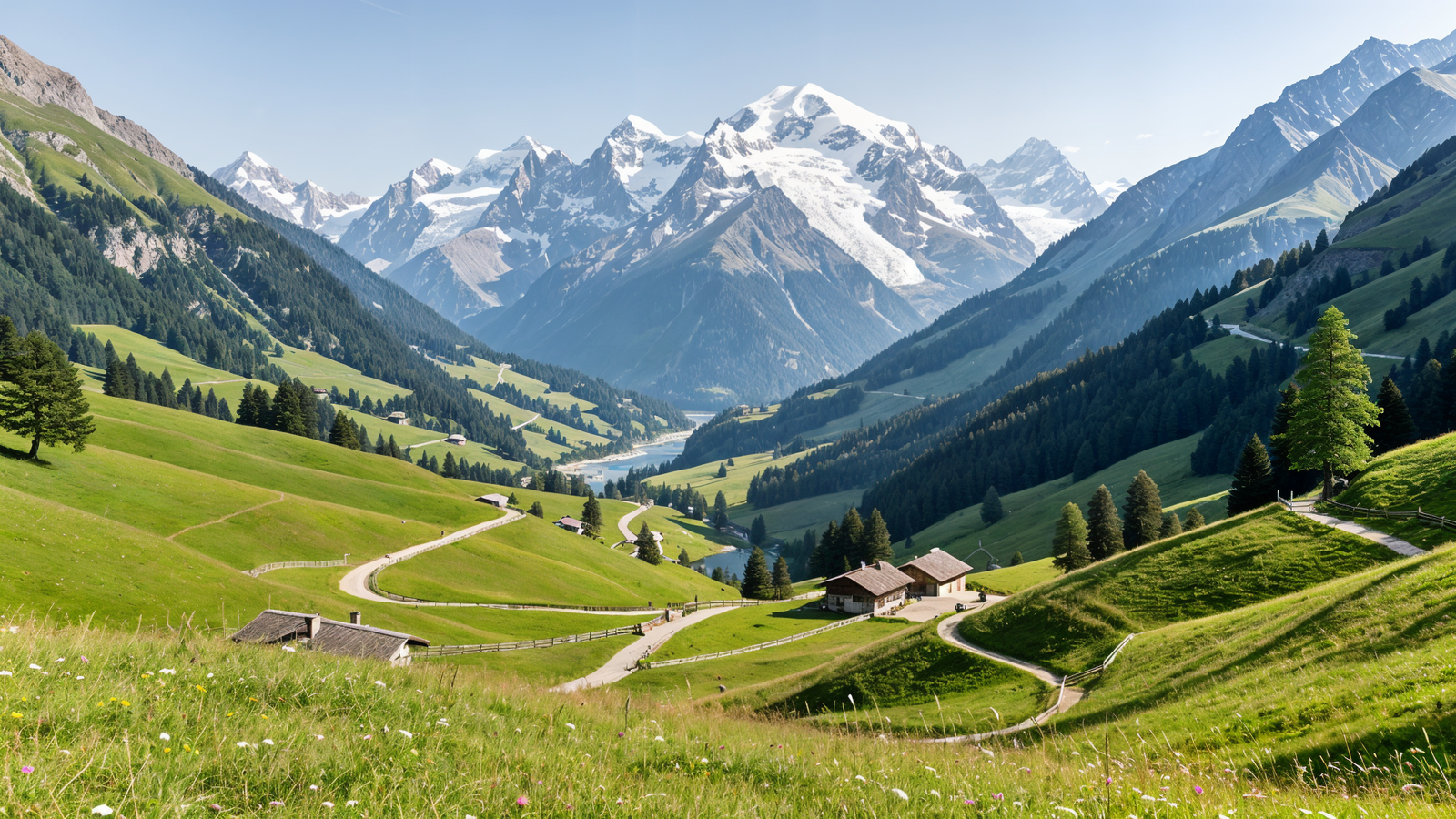
From Entrèves the two great side valleys open. Val Ferret runs northeast along the Italian flank — meadows, farm buildings, trails toward high passes when snow allows. Val Veny heads under glaciers and the long white wall that draws hikers who want dirt more than shopping. You do not need to summit anything. Standing at the fork on a clear morning is enough to remember why people built a town this high.
La Palud, just above, is where older cable systems and the Skyway Monte Bianco conversation begin. Even if you skip the high ride, go early or late. Midday in peak weeks is a queue with better scenery than most queues.
What I like about starting in Entrèves is the scale. Courmayeur center can feel polished. Entrèves still feels like a working Alpine hamlet that learned hospitality without sanding off every rough edge. Sit on a low wall. Let a delivery van pass. Watch cloud peel off the aiguilles. That stretch is the trip as much as the dinner reservation.
Via Roma and the village that walks
Back in Courmayeur proper, Via Roma is the pedestrian heart — not a museum lane, a street people use between errands and aperitivo. Shops lean mountain: technical layers next to fontina, boots next to chocolate. In winter, the energy is après and display. In shoulder seasons the same stones feel more local. Morning is kinder than 7 p.m. if you want to hear your own footsteps.
The Dora Baltea reminds you this is still a river town as much as a resort brand. Cross toward Dolonne or wander the edges away from the densest windows when you want air. Ordinary municipal life sits next to the glossy hotel names; both are real.
Plan Chécrouit is the plateau above town where the main ski area gathers — restaurants, rental chatter, a cable connection that in winter sometimes runs late enough that the mountain becomes an evening out. In summer the same lifts shift toward hikers who just want height. Check seasonal hours. Alpine infrastructure does not run on city logic.
If heat or sore knees show up, Pré-Saint-Didier’s thermal baths sit a short drive down-valley — useful when the forecast turns, or you have walked farther than pride admits.
Cheese, polenta, and tables worth the walk
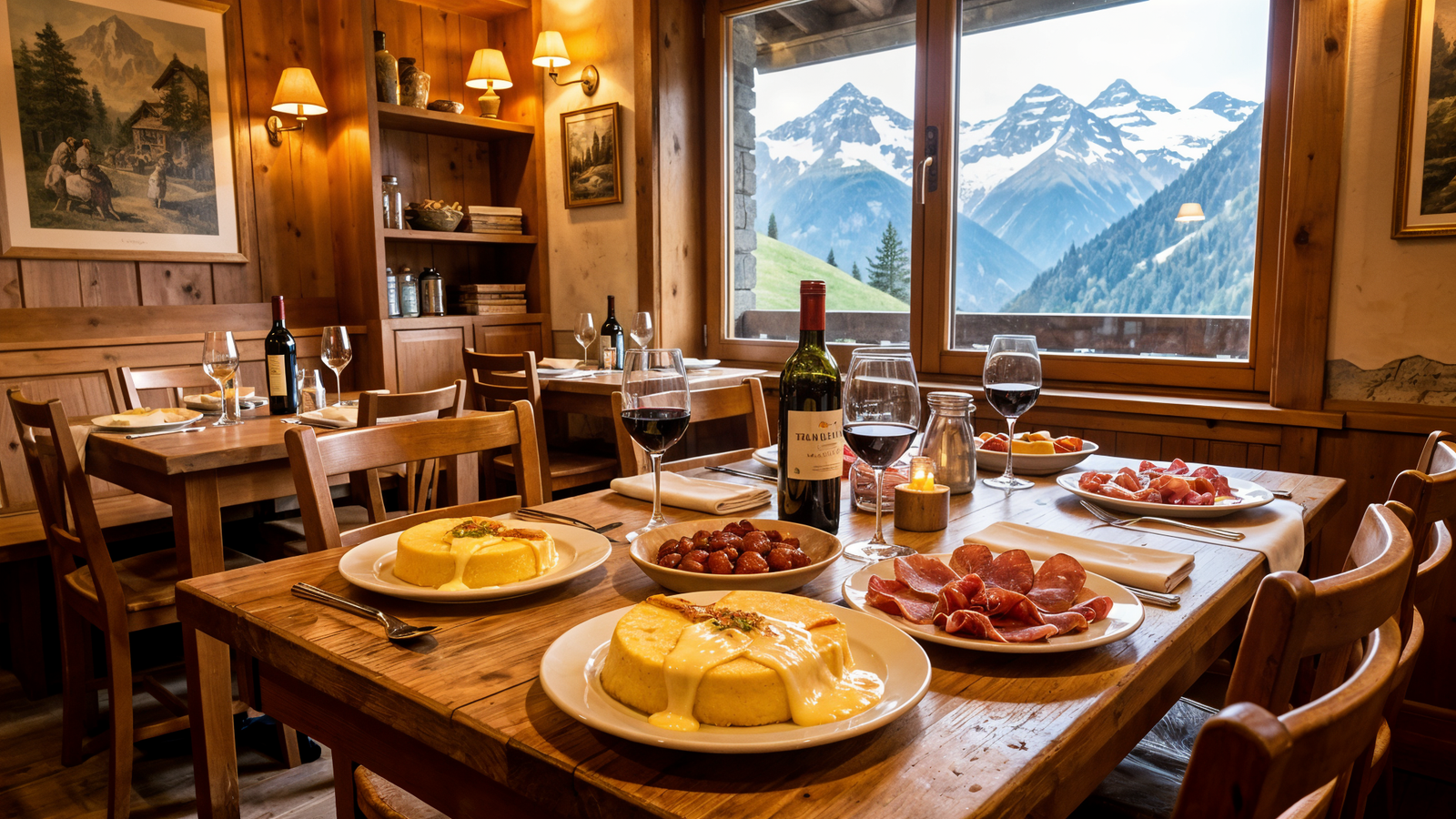
Valdostana cooking assumes weather: melted fontina, polenta that is not a side joke, mocetta and other cured meats, soups that forgive a cold walk. Local wines (blanc de Morgex et de la Salle, fumin, petite arvine when you find them) taste better here than in a suitcase. Order the valley dishes, not a generic Italian greatest-hits list.
Le Vieux Pommier — Piazzale Monte Bianco 25, 11013 Courmayeur AO. A long-running village table near the center, still tied to Courmayeur rather than a seasonal pop-up. Good for lunch or early dinner when you want regional plates without a tasting-menu fight. Book when the town is full; walk-ins work better midweek in quieter months.
La Maison de Filippo — Via Passerin d’Entrèves 7, 11013 Courmayeur AO (Entrèves). In the hamlet, rustic rooms and a kitchen that has fed mountain appetites for decades. This is the dinner that matches the stone lanes outside. Come hungry and leave the tunnel traffic behind. Easy evening hop from the center if you are not already sleeping in Entrèves.
Cadran Solaire — Via Roma 122, 11013 Courmayeur AO. On the main pedestrian spine, wood and stone, terrace when weather allows, a more dressed evening that still feels like the mountain. Save it for the night you want Via Roma energy and a reserved table. Check hours; resort towns keep their own calendar.
Between meals, a wedge of cheese and a short sit with the peaks in view beats forcing another attraction if your legs are done.
Places to Stay
Hotel Bouton d’Or — Strada Statale 26 n. 10, 11013 Courmayeur AO. Family-run three-star in the center orbit — usually the gentler rate of these three, and you can walk to Via Roma and dinner without a car each time. Rooms are limited in peak ski weeks; book early. Best if location and a human front desk matter more than a sprawling spa wing.
Hotel Croux — Via Croux 8, 11013 Courmayeur AO. Mid-range in town, close enough to the pedestrian core that you still live on foot, with the comfort buffer people want after a cold day on the hill or a long Val Ferret walk. Ask what the room faces; center blocks vary for noise and light. Useful if you split time between village evenings and valley drives.
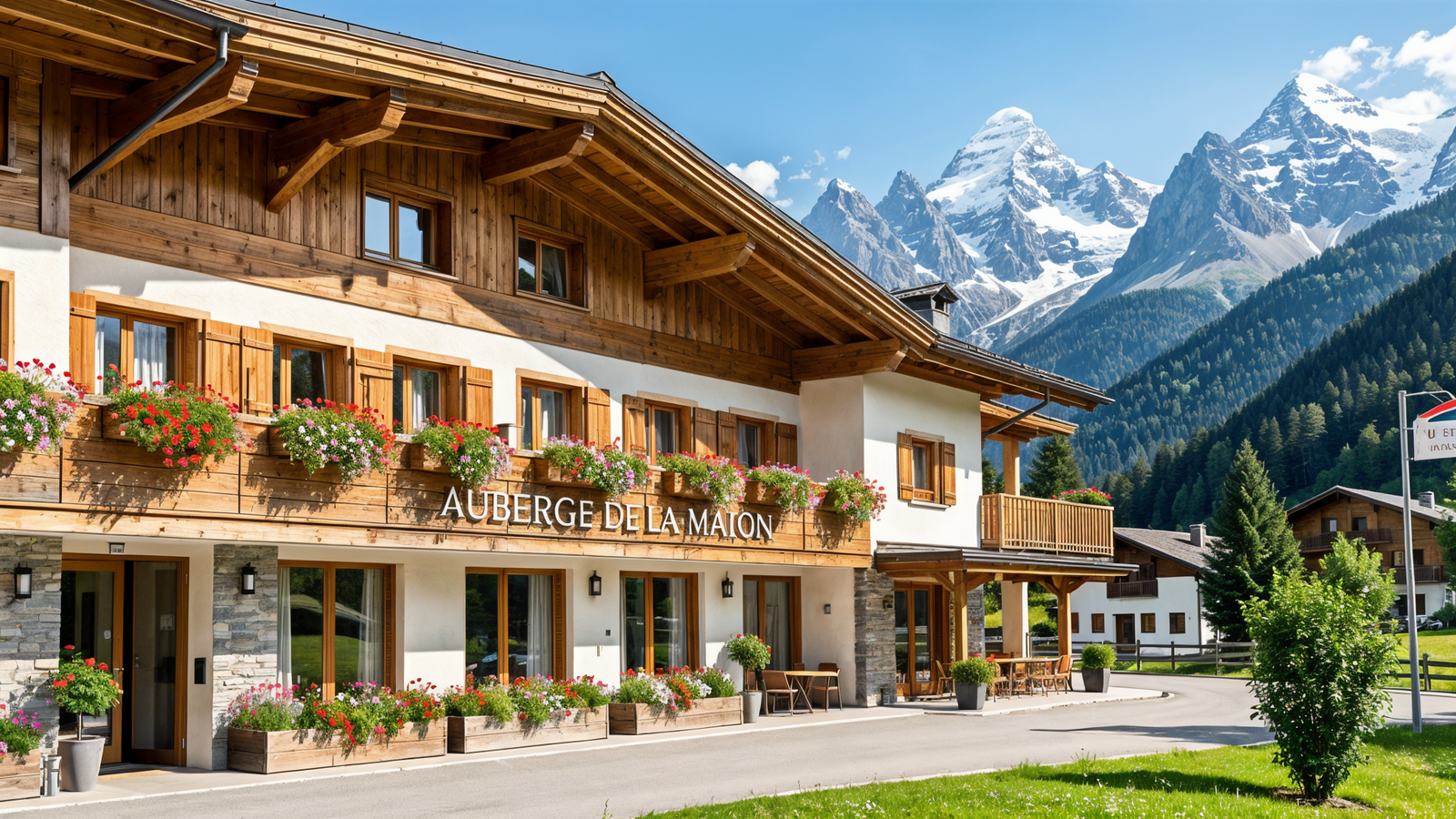
Auberge de la Maison — Via Passerin d’Entrèves 16/A, 11013 Courmayeur AO. In Entrèves under the massif, the stay that fits the hamlet: design-conscious mountain house, wellness when weather traps you, and a restaurant worth dressing for. You will want a car or short taxi for some center errands, but mornings open straight toward Val Ferret and Val Veny. Choose this when lodging is part of why you came, not only a bed between cable-car rides.
Getting there without turning it into a project
Courmayeur sits at the top of the A5 corridor from Aosta and Turin, hard against the Mont Blanc tunnel. Turin airport is a common gateway; Geneva works if you combine French and Italian sides and accept tunnel or high-pass logic by season. Trains reach Aosta more easily than Courmayeur; from Aosta a bus or rental finishes the climb. Drive if you want Val Ferret trailheads, thermal baths down-valley, or flexibility when lifts thin.
Inside the commune, walk the center. Use a local bus or short taxi for Entrèves and La Palud if luggage or ice makes the road unfriendly. Winter means real cold and parking patience. Summer afternoons run warmer than the snow photos suggest; start hikes early. Tunnel traffic and ski weekends change the approach road — build slack, not tight connections.
A day that actually fits
Coffee near Via Roma while the street is half awake, then walk or ride up to Entrèves before the midmorning rush. Stand at the valley split. If legs and weather agree, take a modest stretch into Val Ferret — not a hero loop, just enough meadow to smell grass instead of shop perfume. Back for a simple lunch in the hamlet or at Le Vieux Pommier in town.
Afternoon: Skyway or a lift toward Plan Chécrouit if you want height, or a slow return along Courmayeur’s lanes with no agenda beyond cheese and a window. Aperitivo on Via Roma. Dinner at Maison de Filippo if you booked the hamlet, or Cadran Solaire if you want the center. Sleep. The massif looks different at first light than in postcard noon.
If you have a second day, flip the order: thermal water at Pré-Saint-Didier, a longer Val Veny walk, or a lazy village morning with nothing scheduled. Come back to Entrèves at dusk. The stone holds the cold. The mountain keeps its own weather.
Courmayeur is not only a ski brand with good shoes. It is a high valley town with a pedestrian spine that still works as a street, side valleys that open like chapters, and a hamlet — Entrèves — where Monte Bianco feels close enough to change how you eat and sleep. Walk the cobbles under the massif, order something melted and good, and let the cold air do the rest. Reason enough to stay above Aosta a night or two, not only pass through toward the tunnel.
