
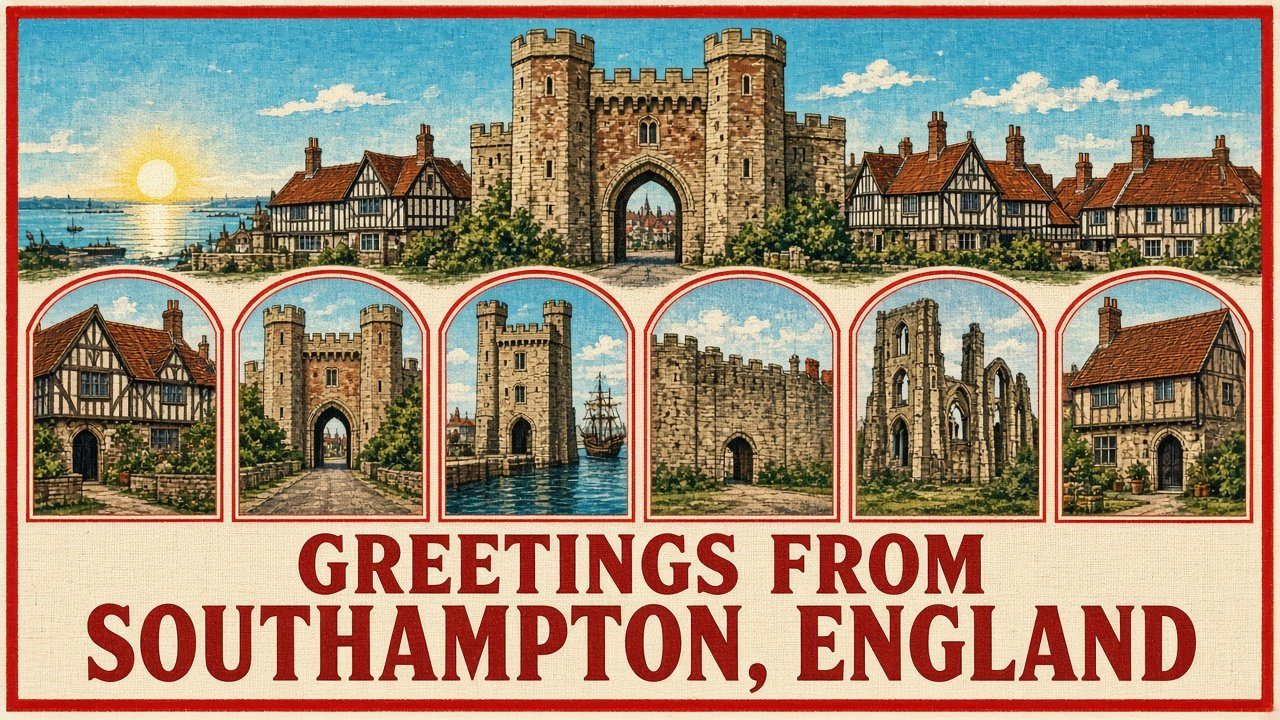
Most people treat Southampton as a cruise corridor: station, shopping mall, gangway. Fair enough if your bag is already tagged for the ship. What gets skipped sits a ten-minute walk south of the Bargate — a pinch of lane called Winkle Street, a French church with a pilgrim’s name, and a corner gate that once dumped you onto salt marsh before the ferries arrived.
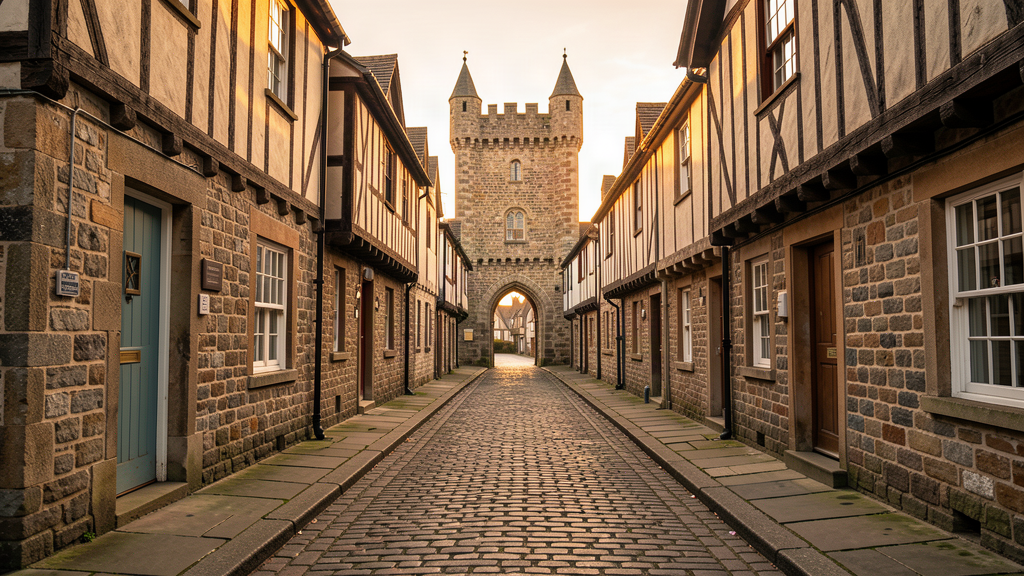
Give the Old Town that first hour before WestQuay opens its doors. Start when the quay is mostly dog walkers and Red Funnel staff. Leave the Titanic exhibits for after lunch. The wall will still be there.
Down Winkle Street to the gate
Southampton sells itself as gateway city and Mayflower port, and both claims hold up. Under that is a walled south quarter that bombs, docks, and planners never fully erased. The Old Town still runs from the Bargate down High Street toward Town Quay, with Bugle Street on the west and God’s House Gate on the southeast corner.
Winkle Street is the detail most maps swallow. It is a short, narrow cut near the southeastern walls — the kind of lane you miss if you stay on the High Street spine. Follow it and you meet St Julien’s, chapel of the old God’s House hospital for travellers and pilgrims. Locals still call it the French church: Elizabeth I granted it to Protestant refugees from France and the Low Countries in the 1560s, and a French service still happens once a year. The stone is plain. The story is not.
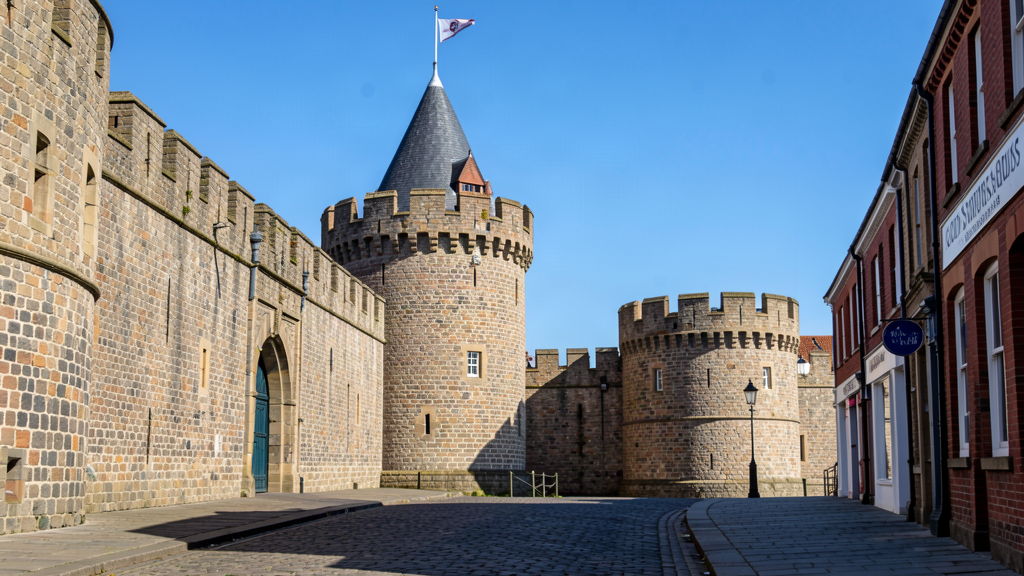
At the end of the run sits God’s House Gate (Saltmarsh Gate in older notes). Thirteenth-century core, fourteenth-century work above, double portcullis grooves if you look closely. Through it you leave the walled town. Immediately outside rises God’s House Tower — Town Quay Road, SO14 2NY — built in the fifteenth century to carry cannon over the marsh toward the old Itchen ferry. Jane Austen almost certainly walked this gate. You can still do the same without a ticket for the arch itself.
The tower is now an arts and heritage venue, free to drop into Thursday through Sunday for exhibitions and a small café. Climb if you buy a tower pass for the roof over Queen’s Park and the water. Otherwise stand at the base: wall, marsh edge, quay road. That stack of stone and road is why you came this far south.
Along the wall to Town Quay
From the tower, Town Quay Road and the Western Esplanade stitch you onto the medieval wall walk. Sections let you walk on and through the stone while the modern waterfront sits a few metres away — ferries, dual carriageway, the ghost of Royal Pier. Do not expect a continuous museum circuit. Expect broken lengths, arches, and sudden drops back to pavement.
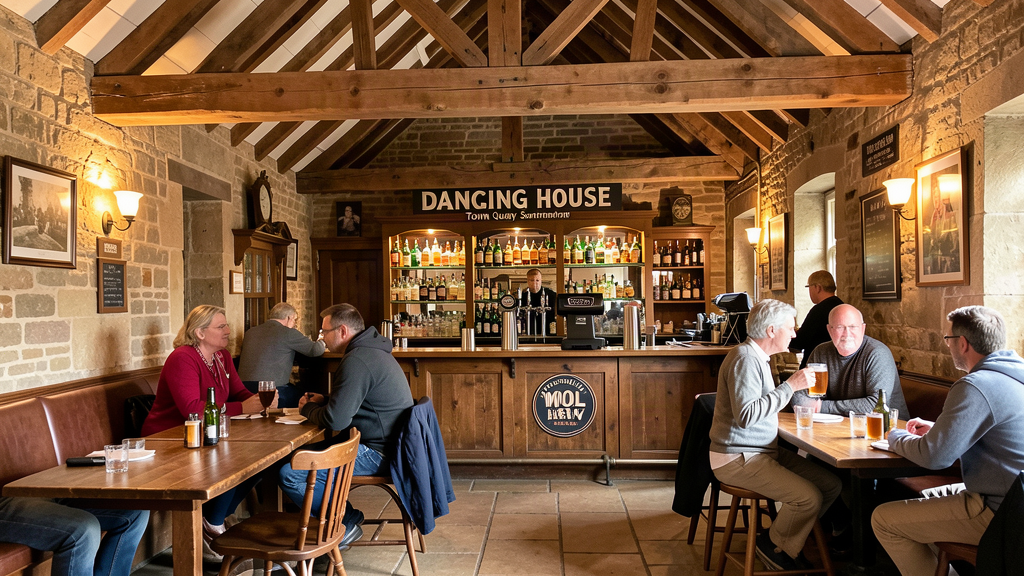
Push west for the Wool House on Town Quay, a fourteenth-century warehouse that now holds Dancing Man Brewery. The building outlasted the trade it was built for. A pint here works if you treat the stone as the reason you stopped, not the beer list. Further along, the Westgate still marks the old exit where Henry V’s Agincourt army boarded. An hour of wall and quay is enough. Queen’s Park sits green against the tower if you need a bench.
Bugle Street and the western wall
When the southeast corner has had its hour, reverse into the Old Town via Bugle Street. Tudor House and Garden anchors the west side (Bugle Street, SO14 2AD): timber, undercrofts, a garden that makes the Blitz feel briefly distant. You do not have to empty the museum on a short visit. Standing outside and walking the street often does more.
Bugle Street runs south toward Westgate Hall and the Westgate. St Joseph’s (1845) sits on one side; Dutch-gabled and Georgian houses hold the other. The Duke of Wellington at 36 Bugle Street occupies a building with twelfth-century roots — a pub that feels like furniture in the wall rather than a theme overlay. Upper Bugle Street pulls you back toward the castle site and undercroft fragments. The postwar rebuild wiped most of the castle; the street grain remains.
Keep the loop tight: Winkle and God’s House, Bugle and Westgate, Town Quay for water. That triangle is Southampton without the cruise brochure.
Oxford Street without the full maritime pitch
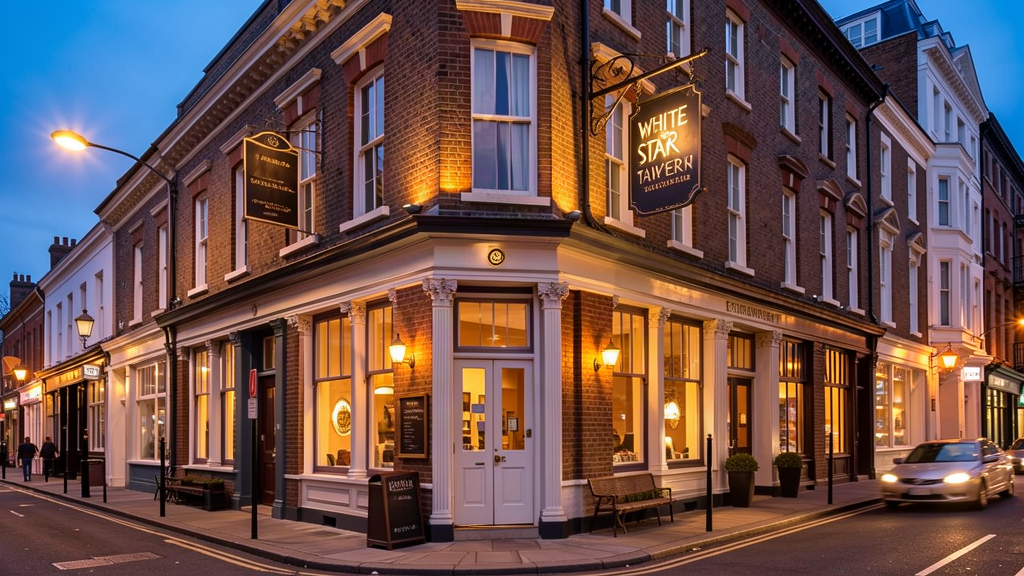
East of the Old Town spine, Oxford Street is the independent dining run — Grade II Victorian frontages, pavement tables, a strip that still feels like a street rather than a food hall. White Star Line ghosts hang over the name and over The Grapes, where Titanic crew drank before sailing. Use Oxford Street as evening gravity after the walls, not as a substitute for them.
Ocean Village sits further east: marina berths, chains, the Harbour Hotel block. Fine for a waterfront drink. It is not the Old Town. If your day is short, spend daylight on Winkle and Bugle; spend dark on Oxford Street.
SeaCity Museum and the Mayflower story will pull every first visit, and they earn a slot if that is why you came. Do not let them erase the gate and the French church. Same for a long WestQuay loop on a tight day: efficient shopping, heavy on hours you will not get back at the wall.
What holds up is ordinary defensive stuff: a squeeze of lane, a refugee chapel, a corner tower built for guns over marsh, a wool house still in use, Bugle Street timber that survived the bombs. That is Southampton when the ships are someone else’s itinerary.
Places to Stay
Premier Inn Southampton West Quay — Harbour Parade, Southampton SO15 1BA Lower-bracket chain rooms on the west waterfront: simple, predictable, short walk toward Town Quay and a longer one into the Old Town walls. Useful when the budget is tight and you still want God’s House Gate without a taxi.
White Star Tavern — 28 Oxford Street, Southampton SO14 3DJ Mid-bracket pub-with-rooms on the independent dining street: Fuller’s house, pavement tables, walkable to the Old Town and the cruise approaches. Book when you want dinner downstairs and the walls ten minutes on foot in the morning.
Ennio’s Boutique Rooms — Town Quay Road, Southampton SO14 2AR Higher-bracket stay in a Grade II warehouse on the quay, above the ristorante and opposite the Red Funnel terminal. Ten rooms, quiet at night, water and wall outside the door. Good when Winkle Street should be measured in minutes, not bus hops.
Where to Eat
Dancing Man Brewery — The Wool House, Town Quay, Southampton SO14 2AR Microbrewery and kitchen inside the 1330s wool warehouse: own beer, solid plates, stone that still reads as cargo fabric. Natural stop after the wall walk, or a late pint when the gate morning is done.
Duke of Wellington — 36 Bugle Street, Southampton SO14 2AH Old Town pub in deep medieval fabric five minutes from Tudor House: ordinary rooms, real drinks, neighbourhood trade mixed with wall walkers. Go for a plate and a pint without the Oxford Street polish.
Oxford Brasserie — 33–34 Oxford Street, Southampton SO14 3DS Independent brasserie on the Victorian strip: small plates and proper mains, pavement seating when the weather holds. Better for an evening table after Bugle Street than a rushed lunch between gates.
For cheaper fuel, grab a sandwich near High Street or Queen’s Park and eat on a wall bench if the weather holds. Save the longer meal for evening; save last light for the gate or the Wool House.
Getting around and leaving room
Southampton Central sits northwest of the centre; God’s House Tower and Town Quay sit south. Budget twenty to twenty-five minutes on foot down High Street, or Quay Connect / local buses if bags are heavy. Once you are in the Old Town, Winkle Street, Bugle Street, Town Quay, and Oxford Street fit a single walking day if you skip emptying every museum.
You will not need a car for this loop. The docks punish patience on turnaround days; train in, or park once on the edge (Gloucester Square and Mayflower Park sit close to the tower). Red Funnel sails to the Isle of Wight from Town Quay if you want water without a cruise booking.
The mall, the museums, and the ship will pull every first visit. Give them a slot. Do not let them replace Winkle Street and the gate. Early at the tower beats a midday queue for another Mayflower shot. Carry a layer; the quay runs windier than WestQuay’s glass.
Walk until Winkle Street pinches toward St Julien and the gate still opens where the salt marsh used to sit. Eat on Bugle Street or Oxford Street. Keep ticketed interiors for after the wall. God’s House Gate still drops you onto Town Quay Road for people who live with this water. That morning is the part worth protecting.
