
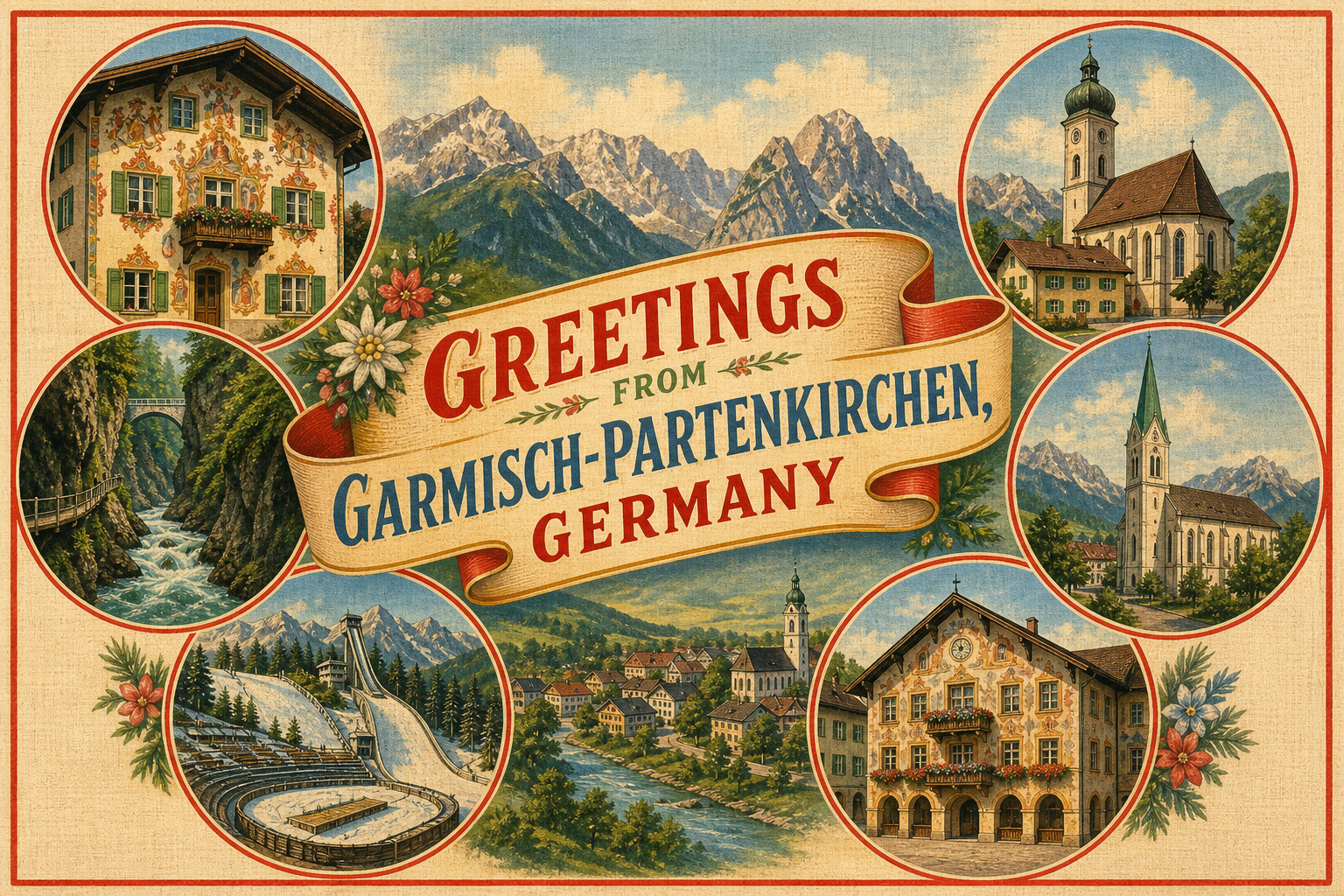
Most visitors treat Garmisch-Partenkirchen as a base camp with a ticket booth. They ride the Zugspitzbahn, photograph the Olympic ski jump from the bus, and leave before they notice that this place is still two towns sharing one postcode. I stay for Partenkirchen’s Ludwigstraße. House saints, trade symbols, and painted windows lean out over a street that once followed the Roman road from the Brenner toward Augsburg, and the Partnach still draws a wet line between the old market cores before it slips into the Loisach.
Garmisch-Partenkirchen sits in a wide bowl of the Werdenfelser Land, about eighty kilometers southwest of München, with the Wetterstein wall to the south and the Ammergau and Ester ranges holding the flanks. Winter sports made the modern brand. After the day coaches thin, the twin centers go back to people carrying bakery bags past frescoed gables, kids on scooters under church towers, and shopkeepers locking up without putting on a show.
Ludwigstraße, rebuilt and repainted
I start on Ludwigstraße in Partenkirchen, not at the cable-car valley station. The street is narrow and slightly crooked, a market corridor rebuilt after fires in 1811 and 1865 wiped most of the older timber fabric. Only a few survivors — the Alte Haus at Ludwigstraße 8, the Wackerlehaus at 47 — still carry pre-fire bones. What you walk through now is largely a nineteenth-century rebuild that the early twentieth century dressed up again: Heimatstil erkers, iron signs, and the wall painting locals call Lüftlmalerei.
The name comes from work done high on scaffolds, “in the air,” and the façades here do the talking. Saints protect doorways. Coopers, bakers, and innkeepers get their tools and scenes. Heinrich Bickel’s work from the 1920s and 1930s still shows on several fronts, including the painted surface at Ludwigstraße 24, where Gasthof Fraundorfer sits under layers of color that read like a trade ledger as much as decoration. Tour groups pause for selfies and move on. I slow down and treat the street as a picture book of who lived here after the ashes cooled.
The ensemble runs from Rathausplatz out past the freestanding Sebastianskapelle, then kinks southeast toward Mittenwalder Straße. Upper and lower market stretches feel different underfoot: more equal farmhouse fronts near the chapel, denser inns and shops where the gables tighten. Pfarrkirche Maria Himmelfahrt rises on its terrace as the neogothic spine after 1865. Slip a side lane when the main strip fills; the back yards and laundry lines are the better reminder that this is still a working street, not a set built for cameras.
Two markets, one river line
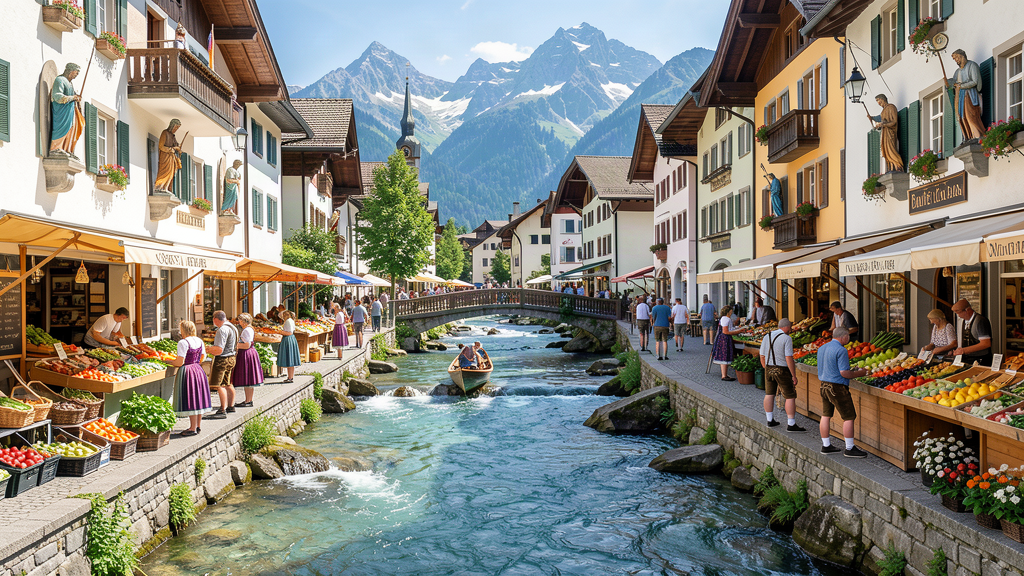
Garmisch and Partenkirchen were separate markets for centuries. The Partnach is the old divider — Partenkirchen on the east bank, Garmisch on the west — and even after the 1935 merger forced for the Winter Olympics, the mental map holds. You feel it in the street grain: Ludwigstraße’s painted corridor on one side, Garmisch’s longer pedestrian run and Kurpark rhythms on the other. Cross on foot a few times in a day and the hyphen starts to feel less like a joke.
North of the built-up edge the Partnach meets the Loisach, the larger river that comes out of Tirol and carries the valley’s main drainage. The confluence is not a plaza with a gift shop. It is water color change, bank willows, and a place locals use for a short walk when the gorge parking lots are full. South of town the Partnach has already done its dramatic work in the Partnachklamm — a 720-meter cut up to eighty meters deep, rock walls wet with spray, a path that forces you single-file past the noise. Buy the ticket, go early or late, and treat the gorge as one stop, not the whole reason you came. Above the entrance, paths peel toward Graseck, the Partnachalm, and the longer Reintal line that Josef Naus used on the first recorded Zugspitze climb in 1820. You can walk gorge, meadow, and a simple alpine lunch without boarding a summit cabin.
When I want quieter green inside the market itself, I use the Kurpark and the Loisach bank paths on the Garmisch side, or the short climbs toward Wank when the cloud deck lifts. Riessersee and Pflegersee take a little more time and reward a slow circuit more than a rushed photo stop. You do not have to skip the mountains. Just remember the town still has a ground floor worth walking.
Places to Stay
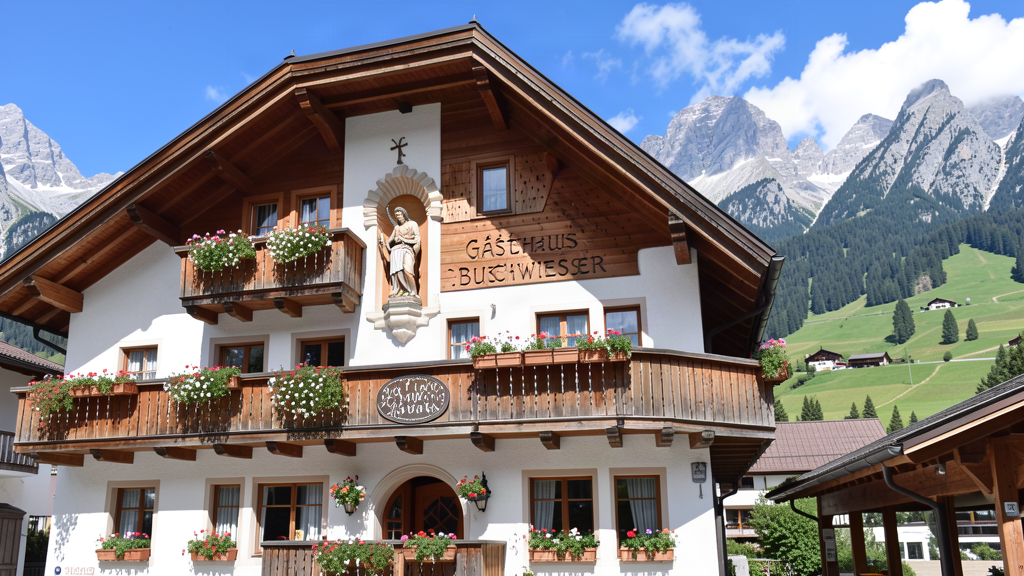
Gästehaus Buchwieser — Olympiastraße 17, 82467 Garmisch-Partenkirchen
A plain, central guesthouse a short walk from the pedestrian zone, the ice stadium, and both the main station and the Zugspitzbahnhof. Rooms and small apartments are traditional and priced for people who want a bed and a kitchenette more than a spa menu. Kurtaxe is extra, as everywhere here. Choose it when you plan to walk most days and care more about location than glossy rooms.
Hotel Aschenbrenner — Loisachstraße 46, 82467 Garmisch-Partenkirchen
A privately run boutique house on the Loisach side of Garmisch, mid-range rooms with a calmer interior tone than the painted tourist strips. You are still walking distance to the center and the river paths, without sleeping over a beer hall. Useful when you want a quieter night and still want to walk everywhere.
Werdenfelserei — Alleestraße 28, 82467 Garmisch-Partenkirchen
Bavaria’s first solid-wood hotel, family-run, with studios and suites that lean into design and a rooftop spa locals talk about for the view more than the brochure. Stay here when the budget allows and you want the overnight itself to feel like part of the trip — wood, light, and a short walk into the Kurpark rather than a ring-road box.
Where to Eat
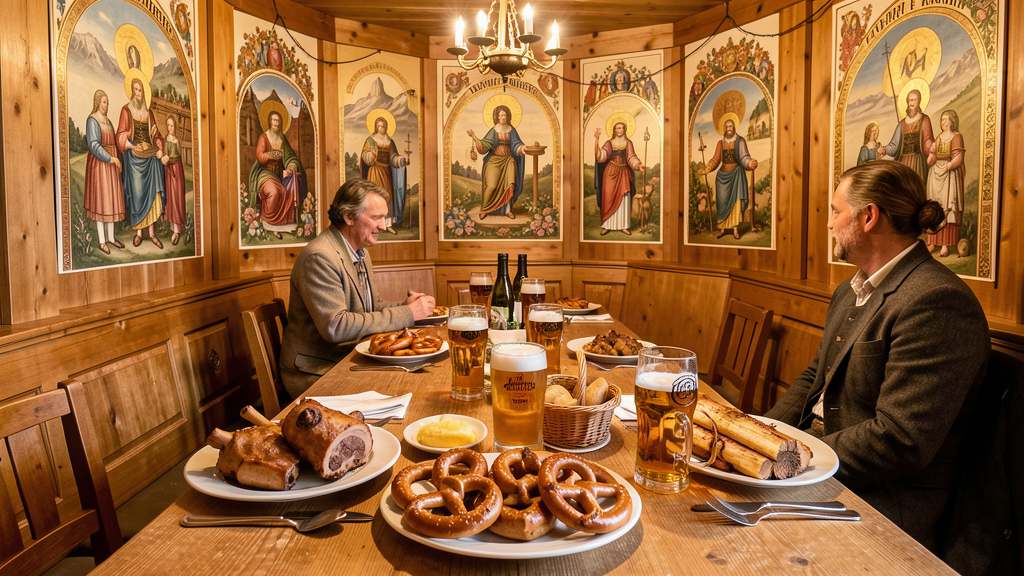
Gasthof Fraundorfer — Ludwigstraße 24, 82467 Garmisch-Partenkirchen
More than a century of the same family on Partenkirchen’s main painted street, next to Maria Himmelfahrt. Bavarian plates done straight — pork, dumplings, the usual honest weight — in rooms that still feel like a gasthof, not a costume. Music nights draw visitors; go earlier for a quieter table and look at Bickel’s façade work on the way in.
Gasthaus zur Schranne — Griesstraße 4, 82467 Garmisch-Partenkirchen
Opposite St. Martin at the end of the Garmisch pedestrian stretch, a walmdach house with iron wheel lamps and painted wood ceilings. Alpine-Bavarian cooking with a bias toward seasonal and regional product. Locals shorten the name to “die Schranne” and use it for ordinary evenings; so can you when Ludwigstraße feels crowded with staged tables.
Restaurant Husar — Fürstenstraße 25, 82467 Garmisch-Partenkirchen
A smaller, sharper table on Fürstenstraße — open Tuesday through Saturday from 18:00, reservations by phone only. Modern cooking in a town that defaults to schnitzel, useful when you want one night away from the beer-hall noise. Book ahead in high season; rest days matter.
For daytime fuel, bakeries on both sides of the Partnach still beat hotel breakfast markups. A market bag and a Loisach bench work when the weather holds. Check weekly rest days before you build a whole evening around any one door.
Getting there, and how long to stay
Garmisch-Partenkirchen sits on the rail line from München — regional and a few longer trains, station walkable to both centers if your bag is light. Drivers arrive on the B2 from the A95 near Eschenlohe, or the B23 through the Loisach valley toward Tirol; park outside the tight cores and walk. Local buses stitch the Olympic stadium, Partnachklamm approach, and the cable-car bases. Many stays include a guest card with local transport perks; ask at check-in rather than guessing.
One full day covers a slow Ludwigstraße walk, a Partnach crossing into Garmisch’s center and Kurpark, and either an early gorge walk or a lake loop before blue hour on the river. Two nights are better: one morning for fresco light before coach groups, one late meal on the side of town you slept away from. Three days add Wank or a Graseck meadow lunch, a longer Reintal stretch, or a rest day that does not apologize for sitting under a painted gable with coffee.
I leave Garmisch-Partenkirchen the way I try to enter it — not from the Zugspitze ticket hall, but from Ludwigstraße under trade saints and house Madonnas, Partnach water still somewhere in earshot and the Loisach waiting north of the last bridges. The summit will draw the next cabin. I keep the rebuilt façades and the twin-market map.
