
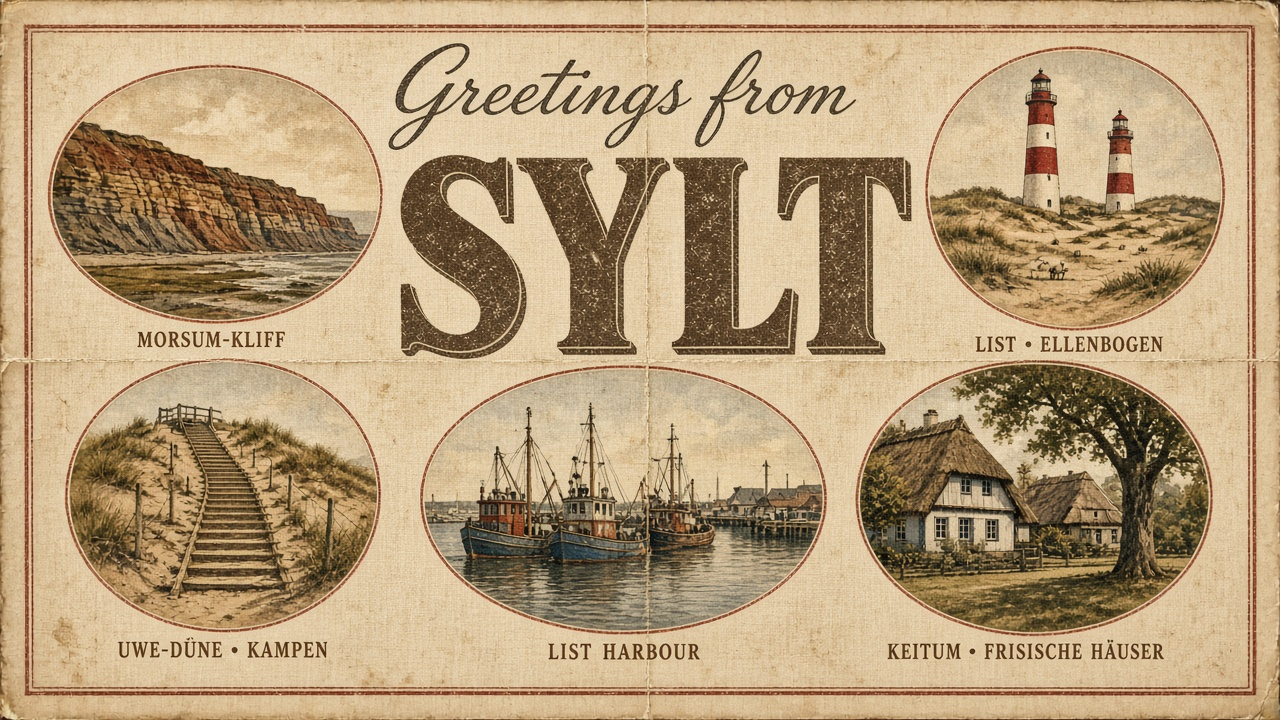
Sylt is a long, thin North Frisian island pinned to the Schleswig-Holstein mainland by the Hindenburgdamm. Westerland takes the train crowd and the shopping mile. Kampen keeps boutique prices and the red cliff. Farther out is quieter: thatched Keitum facing the Watt, Hörnum’s southern tip, and the private spit north of List where sheep own more of the sand than people do.
You come for wind, salt grass, and the twice-daily rewrite of the Wadden Sea, not for a single beach club. Stay long enough to walk when the tide drops and the east flats turn walkable. Weather and water set the pace here — Söl’ring place names, Strandkorb rows, dune paths that ask you to stay on the boards.
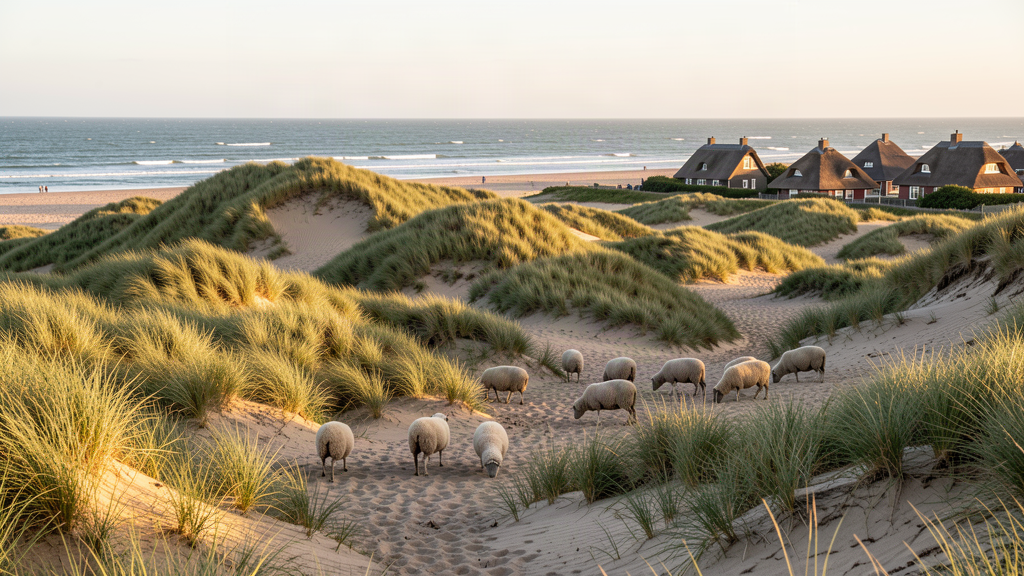
Ellenbogen, List Ost, and Germany’s northern edge
List sits at the island’s north end with a working harbor, ferry traffic toward Havneby on Rømø, and the usual fish stands. Beyond the village, the road continues onto the Ellenbogen, a hooked peninsula of open dune and beach. Cars pay a toll; walkers and cyclists go free. Swimming is off-limits in places because currents run hard where North Sea and Watt systems meet.
List Ost lighthouse — red and white on a rise of sand — is the mark most people photograph. Sheep graze between tufts of beach grass. The wind is constant. On a clear day you see more water than land, and the Danish coast sits as a low line rather than a postcard. Skip the town-square hunt. Take the long walk, sand in your shoes, and the slow sense that the island is running out under your feet.
Allow half a day if you bike from List and linger. High summer still fills the spit; shoulder seasons give you more sheep and less noise. Stick to marked routes. The dunes erode easily, and the island has spent decades fighting the sea for every meter of west beach.
Keitum thatch, the Watt, and Morsum’s iron bands
South and east of Westerland, Keitum is still the village people mean by “old Sylt”: red brick, reed roofs, garden hedges thick enough to stop the wind. The Altfriesisches Haus gives indoor context if you want it. Better to walk the lanes toward the Wattenmeer, where the UNESCO tidal flats open and close on the clock.
A guided Wattwanderung is worth the fee once. Without a guide you can step near the shore when tables allow, but the flats are not a casual shortcut — soft mud, channels, and fast-returning water punish guesswork. Check tide times the way you would a train schedule.
Farther east, Morsum Kliff is the geological oddity: red, white, and dark bands shoved up by ice-age pressure, now a nature reserve above the Watt. Morning light picks the iron tones. It is a short walk from parking, and it tells you more about this sandbar than any Westerland promenade plaque. Between Keitum and Braderup, Braderuper Heide blooms purple in late summer, with sheep again doing the landscape work. Heath and cliff on one east-side day beats another pure beach loop.
Rotes Kliff, Kampen dunes, and Hörnum Odde
North of Wenningstedt the west coast rises into Rotes Kliff — iron-stained clay that glows harder at sunset. Paths and wooden walkways run the dune top; drop to the beach for the cliff face from below. Uwe Düne near Kampen is only about fifty meters high, yet it is the high point of the island: grassland, sand, and views toward Langer Christian’s black-and-white tower.
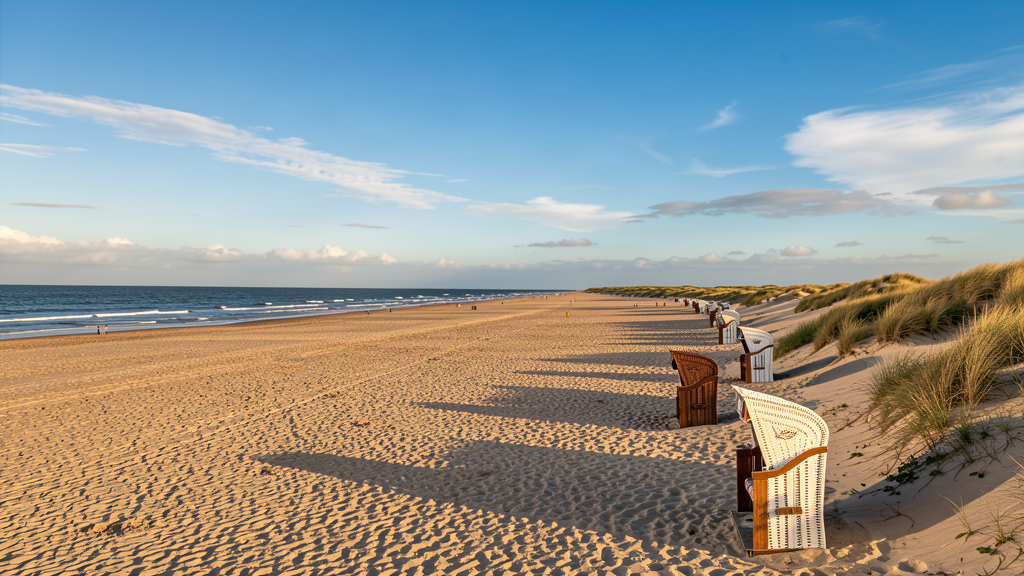
Kampen itself is polished — galleries, prices, famous beach names — and you can take a coffee there without making it the whole trip. The nature around it is the point. Stay on the boardwalks. The island is thin; every shortcut across fragile dune costs sand the next storm will take. The west beach runs for tens of kilometers of open sand and Strandkorb geometry. Pick a quieter stretch toward Rantum or away from Westerland’s densest strip if you want space.
At the south end, Hörnum keeps a harbor with boats toward Amrum, Föhr, and the Halligen, plus a red lighthouse. Hörnum Odde is the tapering tip: dunes, birds, and weather more exposed than the protected Watt side. Walk it when wind is manageable. Same island, different end — ferry horns instead of Ellenbogen sheep, open North Sea instead of mudflat glitter.
Places to Stay
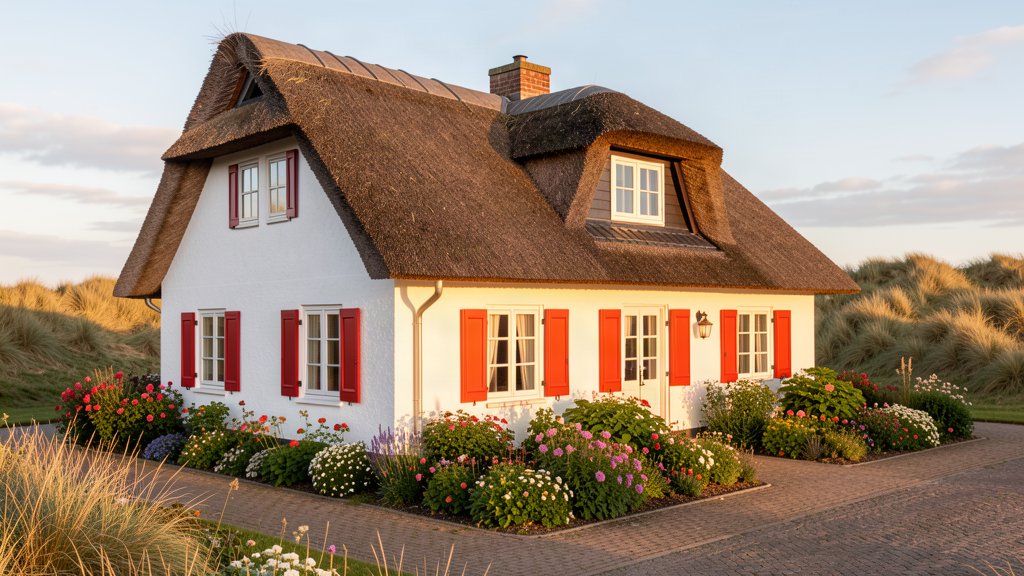
Sleep by village character as much as by star count. Westerland is easiest without a car; Tinnum and Keitum put you nearer meadows, Watt, and quieter nights.
Hotel Christiansen, Zur Eiche 32-34, 25980 Sylt-Tinnum, is the practical budget-to-mid house between Westerland and Keitum: family-run, free parking, breakfast on site, rooms that do the job without resort theatre. Use it for price control and bike access to the island’s middle.
Jaumann’s Südwind Sylt, Lorens-de-Hahn-Straße 55, 25980 Westerland, sits a short walk from the beach and center with small-hotel scale, country-style rooms, strong breakfast, and free parking when available. Solid middle option for Westerland logistics — station, shops, evening options — without a full spa complex.
Relais & Châteaux Landhaus Stricker, Boy-Nielsen-Straße 10, 25980 Sylt/Tinnum, is the splurge in the green middle: five-star house, spa and pool, serious dining under Holger Bodendorf’s roof. Book when the budget allows and you want the stay itself to be half the trip. Hotel Aarnhoog at Gaadt 13, 25980 Keitum is the boutique alternative if you prefer thatched-village quiet and a smaller room count.
Restaurants / Food
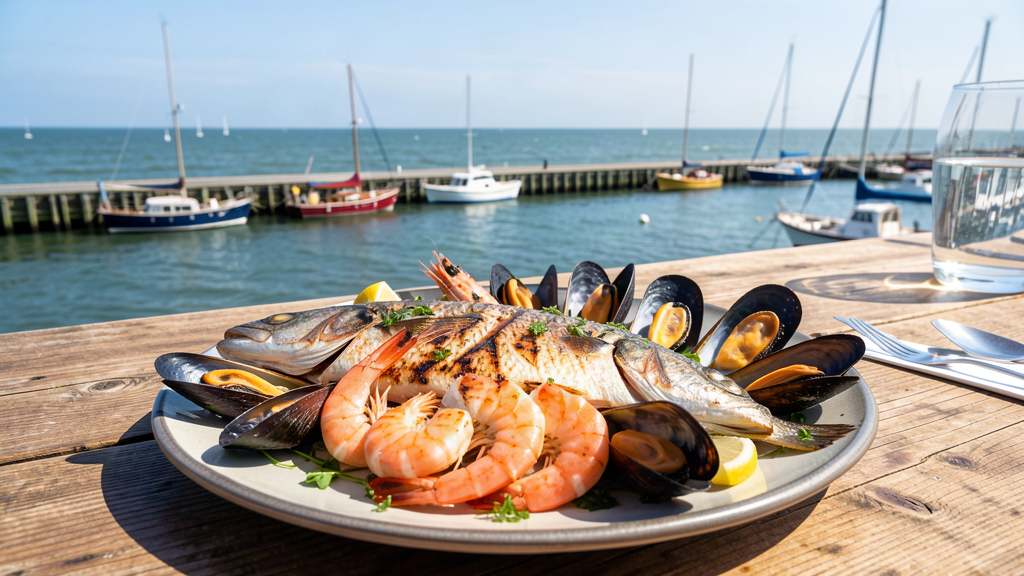
Sylt eats fish first, then regional plates. Reserve dinner rooms; grab fish rolls when the harbor counter is busy.
Fisch Blum Tinnum, Mittelweg 7, 25980 Tinnum/Sylt, is the working island fish counter and bistro: smoked eel at the door, salads and fried fish done the same day, fair prices by Sylt standards. Come for a simple plate or takeaway. Other Blum counters sit in Westerland and Wenningstedt.
Alte Friesenstube, Gaadt 4, 25980 Westerland/Sylt, dates a house history back to 1648 and still runs as a proper evening restaurant — North Frisian and regional cooking, garden tables when weather holds, Monday rest year-round and an extra Tuesday closed in colder months. Phone for a table from mid-afternoon; they mean it.
GOSCH – Nördlichste Fischbude / Alte Bootshalle, Hafenstraße 16, 25992 List/Sylt, is the harbour classic at the north end: Fischbrötchen, maritime noise, outdoor standing room when sun cooperates. Touristy, and still worth the stop because the harbor is the reason you’re there. Pair it with an Ellenbogen walk rather than treating List as a drive-through photo.
For a splurge night, BODENDORF’s at Landhaus Stricker (Boy-Nielsen-Straße 10, 25980 Tinnum) runs the Michelin-level menu in the hotel house — book ahead and plan a quiet morning after. A simple arc: Blum for lunch fuel, Ellenbogen or Morsum in good light, Friesenstube or Bodendorf at night, Gosch when you are already in List with salt on your jacket.
Getting around without fuss
Most visitors arrive by train over the Hindenburgdamm to Westerland, by Autozug with the car from Niebüll, or by short hop into Sylt Airport (GWT). The island is long and skinny — roughly forty kilometers nose to tip — so a bike or bus pass matters if you skip the car. Island buses link Westerland, Wenningstedt, Kampen, List, Keitum, Tinnum, Rantum, and Hörnum; check the current timetable rather than assuming late-night frequency.
Cyclists do well on flat paths, though west wind can turn an easy ride into work. E-bikes rent widely. Drivers pay for parking near popular beach heads; Tinnum and Keitum bases ease some of the Westerland crush. Kurkarte cards from your lodging often unlock bus use and beach rules. Tide tables matter as much as bus times if the Watt is on your list. Late spring through early autumn is the soft outdoor window; July and August need bookings far ahead.
Why linger
Sylt is easy to treat as Westerland plus one sunset. That misses the Ellenbogen when sheep move between List Ost and the open dune, the Watt shining east of Keitum after the water leaves, and Morsum’s striped cliff in morning light. Walk the spit without rushing the lighthouse shot. Stand long enough that the wind becomes ordinary.
Stay two or three nights if you can. Day-trippers get Friedrichstraße shopping and a single Strandkorb hour. The longer stay gets a harbor fish roll in List, a heath path in Braderup, a cliff edge at Kampen, and a thatched lane in Keitum after day-visitors roll back toward the dam. Watch the west beach again at evening when Rotes Kliff picks up color and the Strandkörbe empty. That is when Sylt stops reading like a celebrity-island headline and starts matching the Frisian coast on its own terms: a thin sandbar where sheep, tide, and wind still set the day more than any spa menu.
