
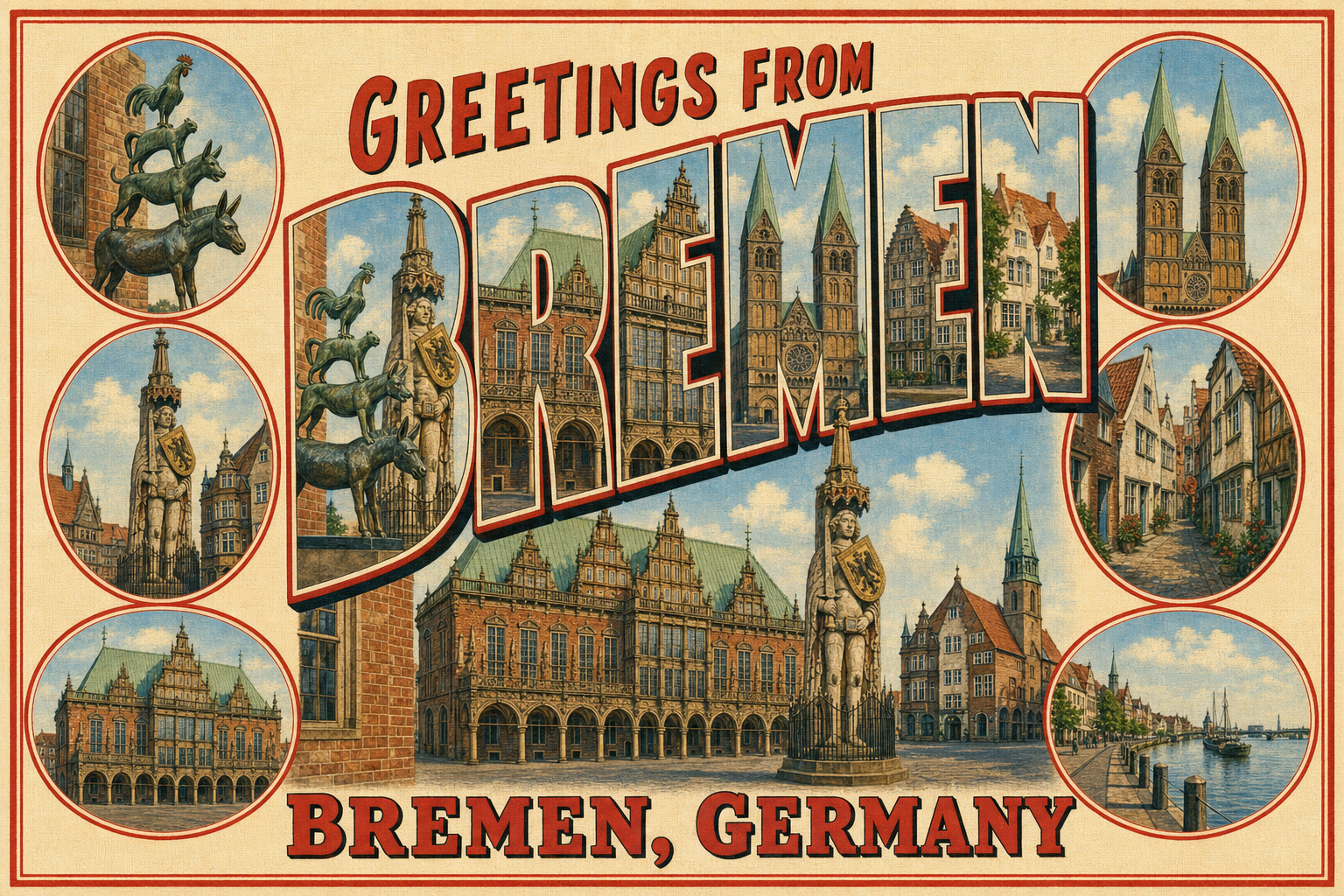
Bremen starts underfoot. Brick, and a river that still smells faintly of mud and coffee when the wind comes off the Weser. Most people aim for the Marktplatz first — Roland, the Rathaus, the bronze musicians stacked on each other’s backs — and that is fine for twenty minutes. The city I come back for sits a few lanes away, where a short brick canyon called Böttcherstraße runs between Markt and river, and where the Schnoor still feels lived-in even with visitors in it.
I like arriving on a weekday morning, before the carillon starts and before tour groups pick their alleys. Early feet help here.
Böttcherstraße before noon
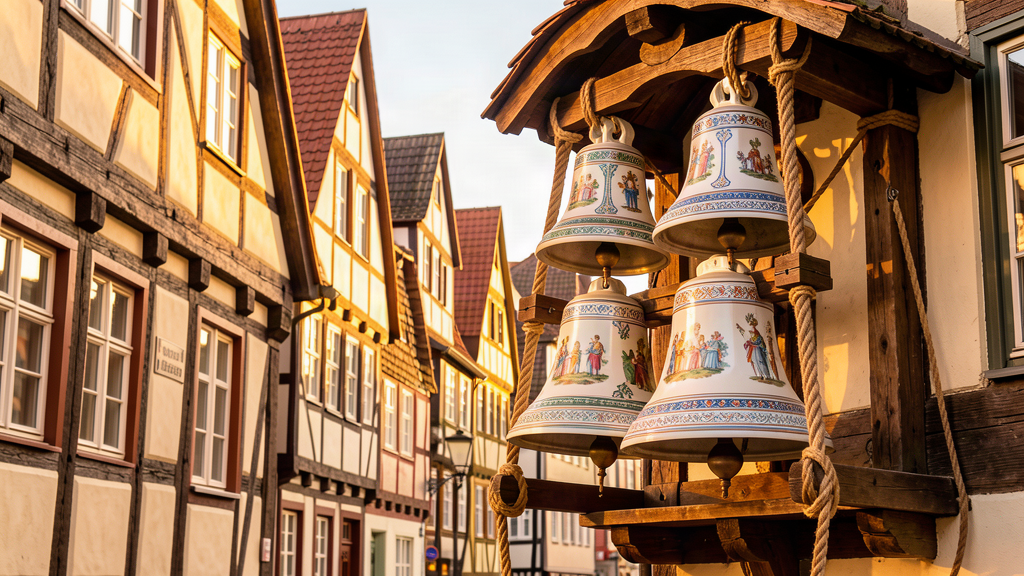
Böttcherstraße is only about a hundred meters long, which is part of why it works. Coffee merchant Ludwig Roselius rebuilt it in the 1920s as a private Gesamtkunstwerk: red brick, Expressionist curves, gables that look half fairy tale and half industrial pride. At No. 4, the Haus des Glockenspiels holds thirty Meissen porcelain bells. In the colder months they ring at noon, three, and six; the rest of the year they run hourly from noon to six while wooden panels of explorers and aviators rotate in the tower.
Stand there a few minutes early. The lane is narrow enough that footsteps bounce. Someone unlocks a gallery. A delivery cart squeezes past a café table that should not be out yet. When the bells finally go, the sound is thinner and brighter than church metal — china outdoors — and conversation drops for a few seconds without anyone deciding it should.
The Paula Modersohn-Becker Museum sits in this same brick stretch at Böttcherstraße 6–10. It was the first museum dedicated to a woman painter, and Bernhard Hoetger’s building matters as much as the canvases. Thick walls, odd stairs, light that feels deliberate. Her Worpswede years and Paris experiments hang close together; you leave with faces and still lifes stuck in your head. Next door, the Ludwig Roselius Museum keeps older Bremen furniture and painting in a house that still reads as a merchant’s home.
I treat Böttcherstraße as a hinge: Markt on one end, Weser air on the other, and enough craft and quiet to slow you down before the older maze begins.
Schnoor, Katzengang, and the width of a shoulder
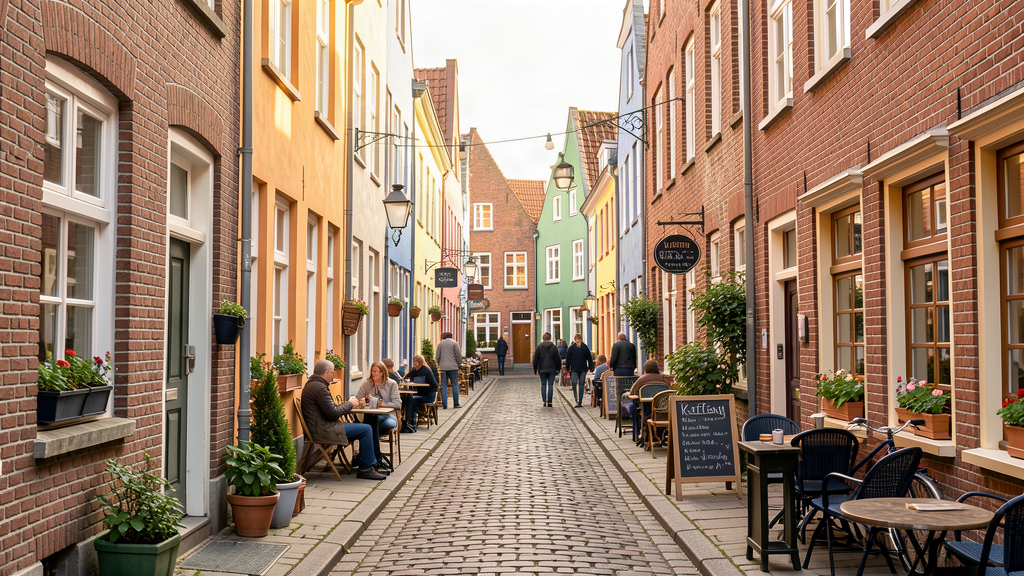
From Domsheide or Marterburg you slip into the Schnoor, Bremen’s oldest surviving quarter. The name comes from Low German for string or rope — this was where cord makers and fishermen lived between the Weser and the old Balge harbor channel. Houses sit tight as beads. Alleys run at odd angles. Katzengang is barely a shoulder wide; you turn sideways for a pram and laugh when two strangers negotiate the same stone.
Most of the timber and brick you see now dates from the 15th to 18th centuries. The quarter stayed poor long enough that cars never redesigned it; later restoration kept the scale. St. Johann, the old Franciscan church locals still call the little Vatican of the Schnoor, anchors one edge. The Bridgettine convent is small and easy to miss if you only follow the main souvenir flow.
Go when shops are just opening, or late when day-trippers thin. Hand-lettered windows, a candy workshop on Marterburg where sugar still gets pulled in public, tea rooms that smell like bergamot and butter. Try a Bremer Babbeler — a hard peppermint stick — or a slice of Klaben if the season is right. Labskaus and Knipp show up on boards without apology.
I walk the side spurs first: Hinter der Holzpforte, Wüstestätte, the little courts where laundry still appears on quiet Tuesdays. The main Schnoor street will find you whether you plan it or not. The side ones still feel like places people sleep.
River, Schlachte, and the living Viertel
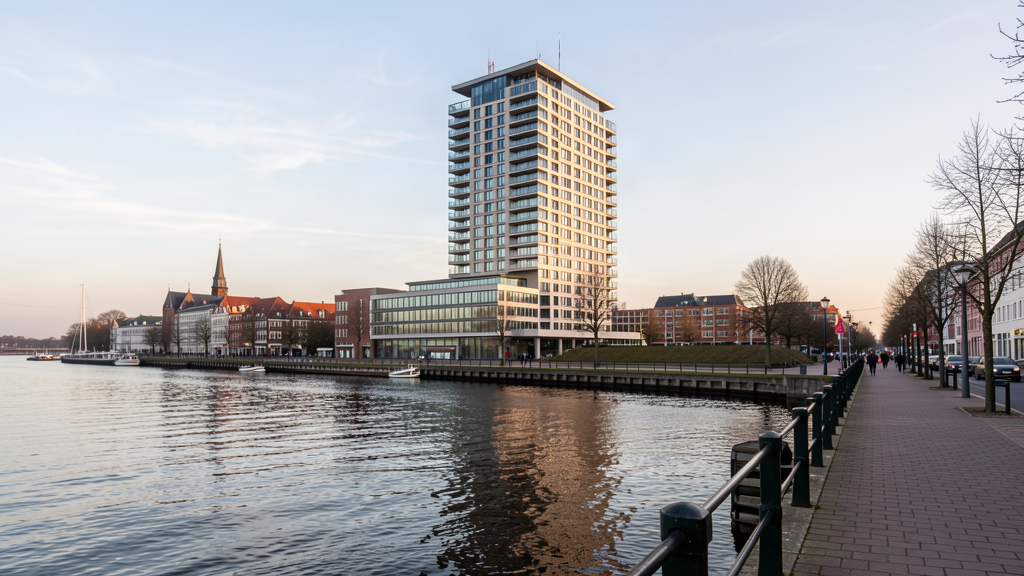
Drop to the Weser and the tone shifts. The Schlachte promenade runs along the old harbor edge — beer gardens, moored ships, long light in summer. It can be loud at night. In the late afternoon it is mostly water slap and bicycle bells. Follow the bank toward Überseestadt for the newer harbor story: converted warehouses, coffee still in the air in places, a sense that Bremen never fully stopped being a port even when the biggest ships went elsewhere.
East of the old core, Ostertor and Steintor melt into what Bremeners simply call das Viertel. Bookshops, bars, late kitchens, people who stayed after university and built actual lives. Sielwall is a useful seam. Street art and thrift sit next to serious coffee. After a morning of heritage brick, the lack of polish is a relief.
If you have a spare half day, the Bürgerpark north of the Hauptbahnhof is the city’s big green — meadows, water, paths that absorb joggers and grandparents equally. Ordinary on purpose: residents first, day tickets second.
Places to Stay
B&B HOTEL Bremen-Altstadt (budget-friendly) Faulenstraße 45, 28195 Bremen Simple modern rooms a short walk from the old town without the old-town markup. Faulenstraße sits on the western edge of the center, so morning walks to Schlachte or Böttcherstraße stay on foot. Fine base when the trip is about lanes and plates, not spa robes.
Turmhotel Weserblick Bremen (mid-range, river side) Osterdeich 53, 28203 Bremen An 1880 villa-hotel on the Weser between the Kulturmeile and the path toward Weserstadion. Tower rooms look over the water; the building carries more story than a chain block. Tram stop Sielwall is a few minutes’ walk, which means the Viertel and the Altstadt are both easy. Book a river-facing room if you can — barge lights at night beat another courtyard view.
John & Will Silo Hotel by Guldsmeden (upscale, Weser industrial) Auf der Muggenburg 50, 28217 Bremen A silo reinvented on Überseeinsel with round and half-round rooms, Weser outlooks, and that Guldsmeden mix of Nordic calm and warmer detail. Slightly off the postcard grid: evenings feel quieter, mornings start with water and brick instead of tour buses. Worth the splurge if design and a slower harbor edge matter more than sleeping above a gift shop.
Shoulder-season weekdays keep rates saner. Plain Tuesday nights often beat polished weekend packages.
Restaurants and food
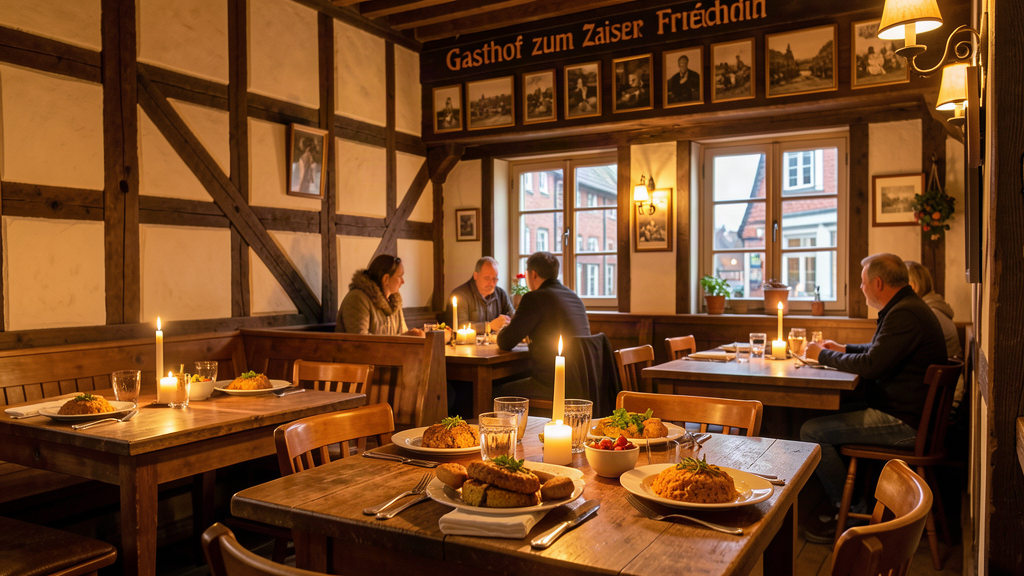
Gasthof zum Kaiser Friedrich Schnoor 23, 28195 Bremen Often called Bremen’s oldest inn in continuous spirit, in a house from around 1630. North German plates — Kohl und Pinkel in season, solid midday menus, rooms that still feel like a Gasthof. Reserve for an evening table in the Schnoor; walk-ins work better at lunch.
Bremer Ratskeller Am Markt 11, 28195 Bremen Under the UNESCO-listed Rathaus, a cellar of vaults and one of Germany’s great historic wine lists, heavy on German bottles. Touristy by geography, still worth one meal if you treat it as architecture you can sit inside. Order simply, look up at the arches, and take the civic basement for what it is: a place that has poured for centuries.
Markthalle Acht Domshof 8–12, 28195 Bremen A modern food hall of small kitchens and regional stalls on Domshof. Useful when you want variety without a long reservation dance: fish rolls, bowls, local cheese, something sweet for the walk back. Early evening midweek is kinder than Saturday noon.
For a brewery table, Schüttinger Gasthausbrauerei at Hinter dem Schütting 12–13 pours house beer at long wood tables near the Markt. For coffee and cake after the bells, drift the Schnoor side streets until a window seat looks occupied by someone reading. Bremen’s sweet side is real: Kluten, Klaben, Babbeler. Take something hard and minty for the train.
Getting there and around
Bremen Hauptbahnhof sits north of the center; trams and a fifteen-to-twenty-minute walk reach Markt and Schnoor, or hop a tram toward Domsheide. ICE and regional trains link Hamburg, Hannover, and the rest of the north cleanly. The airport is close enough that a short tram or taxi finishes most arrivals without drama.
In the core you walk. Cobbles in the Schnoor punish bad shoes. For the Viertel, Osterdeich, and Überseestadt, trams and bikes cover the longer stretches. A day ticket on BSAG/VBN is enough if you bounce between Bürgerpark, river, and old town.
I leave Bremen the way I enter it, on foot past brick that holds both Roselius’s cultural theater and the older rope-makers’ lanes. The porcelain bells are a good excuse to look up. The alleys are why I stay another night.
