
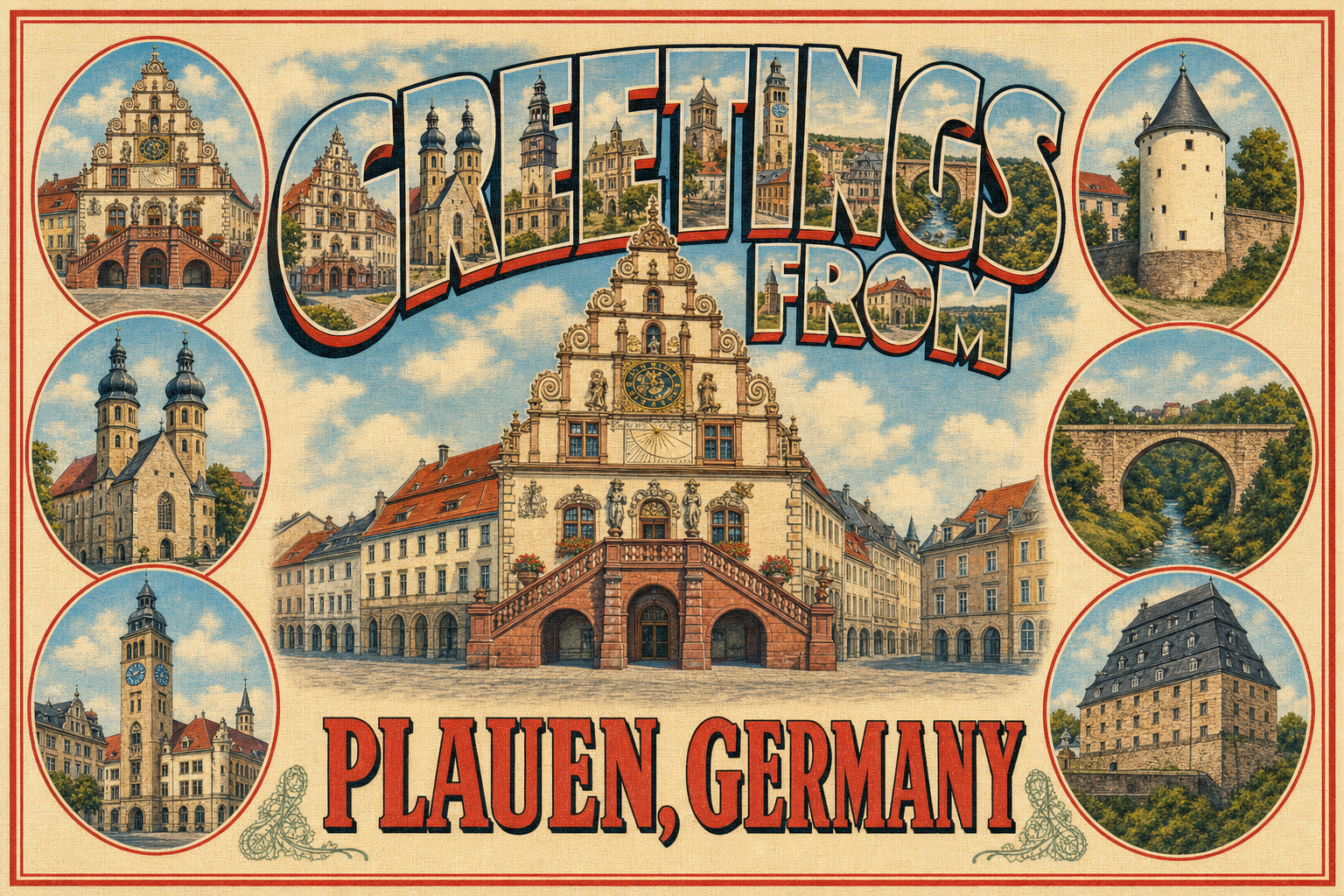
Most Sachsen itineraries stop at Dresden porcelain and Leipzig canals. Plauen sits farther southwest in the Vogtland — a lace town that still smells of machine oil if you show up when the hall is running. I start at the Schaustickerei on Obstgartenweg, a 1902 stickerei complex in Reusa where the old embroidery machines still work, and let that rhythm set the visit before I chase bridges or market stones.
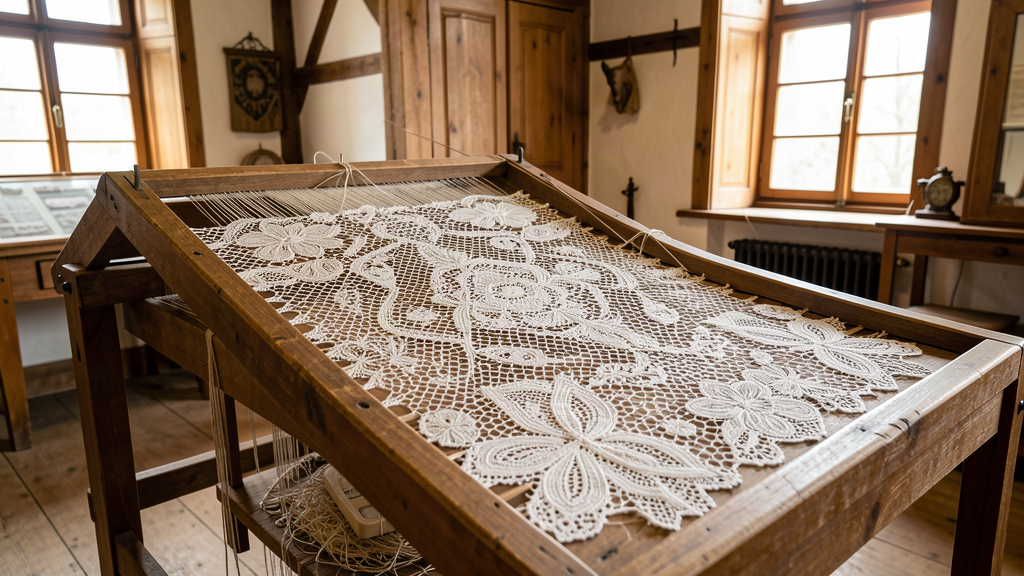
You hear it first. Needles punch tulle and batiste in patterns once sold as Dentelles de Sax, the craft that took a Grand Prix in Paris in 1900 and helped turn a Vogtland seat into a Großstadt by 1904. Stand in the manufactory hall once. Then walk the Altstadt and the Weiße Elster instead of racing every plaque.
Schaustickerei, Spitzenmuseum, and the lace thread
The Schaustickerei Plauener Spitze fills a villa-and-courtyard complex built 1897–1902 at Obstgartenweg 1, 08529 Plauen. Tram line 4 toward Reusa drops you close; drivers peel off A 72 at Plauen-Ost and follow signs past Elster Park. Production ended in 1996, but the buildings stayed largely intact, which is why the place sits on the Sächsische Kulturdenkmale list. Guides walk you from pattern drawing through pantograph transfer to the big stickmaschinen, including VOMAG-era gear from the town that once built embroidery iron for half of Europe.
You smell the oil. You hear the beat. On a mild day you can try a hand stitch in the garden. The shop sells scarves, collars, and small pieces with the Plauener Spitze seal. I go mid-morning on a weekday, when coach groups thin.
Back in the center, the Plauener Spitzenmuseum occupies rooms inside the Altes Rathaus on Altmarkt, 08523 Plauen. Smaller and denser than the factory floor: needle lace from 1880, batiste and Ätzspitze, bridal dresses, a 1910 pantograph stickmaschine, a 1932 multi-head automat. Pair it with a slow circuit of Altmarkt rather than a ten-minute photo stop. The lace story only lands if you see both the machine hall and the finished white work under the Rathaus vaults.
Fabrik der Fäden in the Weisbachsches Haus at Bleichstraße 1 is the broader textile timeline when you want industry beyond embroidery. Save it for a second morning if day one already filled with stickerei and bridges.
Alte Elsterbrücke, Weiße Elster, and the old river edge
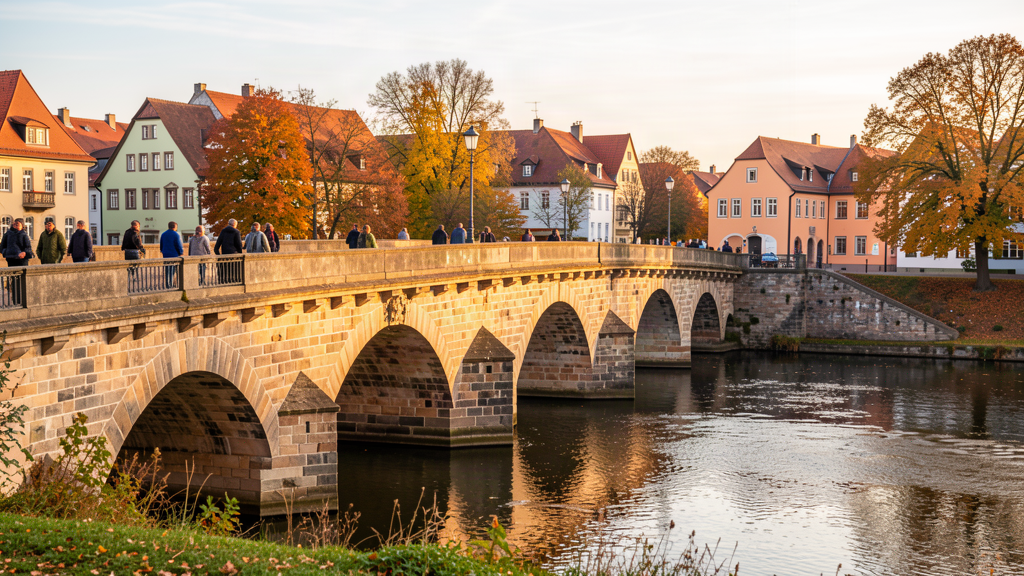
From the center, paths drop to the Alte Elsterbrücke — six segment arches over the Weiße Elster and the Mühlgraben, first named as a stone bridge in 1244. It is one of the older surviving stone spans in Central Europe and once sat on the fortification line where trade roads crossed. Today the Neue Elsterbrücke takes the traffic; the old deck stays for feet and bikes. A replica post mile column near the approach nods to Adam Friedrich Zürner’s Saxon survey work under August the Strong.
Walk the bridge once without treating every arch as content. Watch the Elster and the Werder between openings. This is working water, not a costume canal. Short bank loops give you the scale of a textile city that grew on river power long before the stickmaschinen arrived. Nonnenturm is a short climb if fortification stone is your thread; one tower glance is enough, then back up toward Altmarkt for lunch.
Friedensbrücke, Syratal, and civic stone
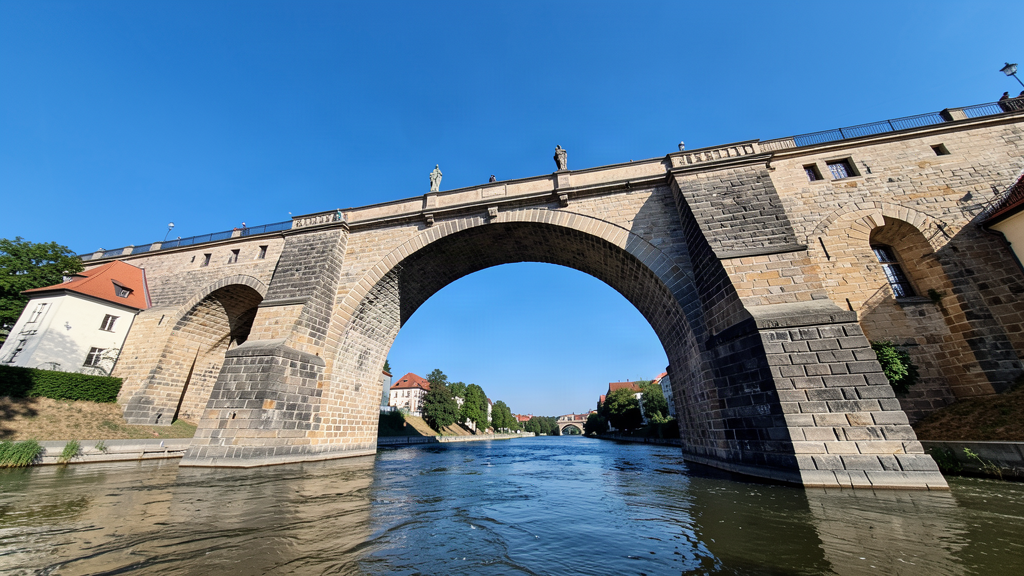
Northwest of the tightest Altstadt core, the Friedensbrücke (Syratalviadukt) throws a single 90-meter stone arch over the Syratal — among the widest masonry arches of its kind. Built 1903–1905 as König-Friedrich-August-Brücke from local Fruchtschiefer, it still carries the B 92, with sidewalks on both sides. Stand under the arch from Dobenaustraße once. Then cross on the sidewalk for the valley view rather than only photographing the crown from a car window.
The bridge is still traffic infrastructure. That is the point. Plauen’s lace boom paid for civic stone that still holds four lanes. Lutherkirche sits about five minutes’ walk if you want a quieter interior after the span. I fold Friedensbrücke into late afternoon light, then drift back toward Theaterplatz. Gründerzeit blocks around the Bahnhofsvorstadt remind you this was a machine town — one pass through that mixed fabric is enough honesty between lace halls and dinner.
How the town moves, and a clean day arc
Plauen Oberer Bahnhof and the regional lines tie the Vogtland into the Sachsen net; trams and buses cover Reusa, the Syratal approach, and the Altstadt rim. Inside the old town, feet win. Park once near your hotel lot or a marked garage and stop circling Altmarkt.
For two nights covering Schaustickerei, Spitzenmuseum, Alte Elsterbrücke, Altmarkt, and one Friedensbrücke block, you rarely need more than a single tram hop to Reusa. Winter shortens museum desks and kitchens together — confirm before locking lunch. Summer fills the stickerei garden and the Elster banks with local life.
A clean day once bags are down: Altmarkt and Spitzenmuseum early, Alte Elsterbrücke and a short river loop before light flattens, lunch in the center, tram or short drive to the Schaustickerei mid-afternoon while machines still run, late light under or on the Friedensbrücke. Second morning Fabrik der Fäden or Vogtlandmuseum if you want deeper regional rooms; a second lace-shop pass only if you are buying.
Confirm rest days. Stickerei tours, Rathaus museum hours, and kitchens do not share one calendar. Weekend dinners near Nobelstraße and Straßberger Straße want a reservation more often than weekday lunches. The Elster does not close.
Food is Vogtland and Saxon ballast: pork and dumplings, house beer, market-square cooking in old walls. I lock one dinner table and leave lunch flexible. Bakeries handle the gap between bridge walk and museum open. A day trip to the Göltzschtalbrücke or Bad Elster only if you already finished Plauen’s own thread.
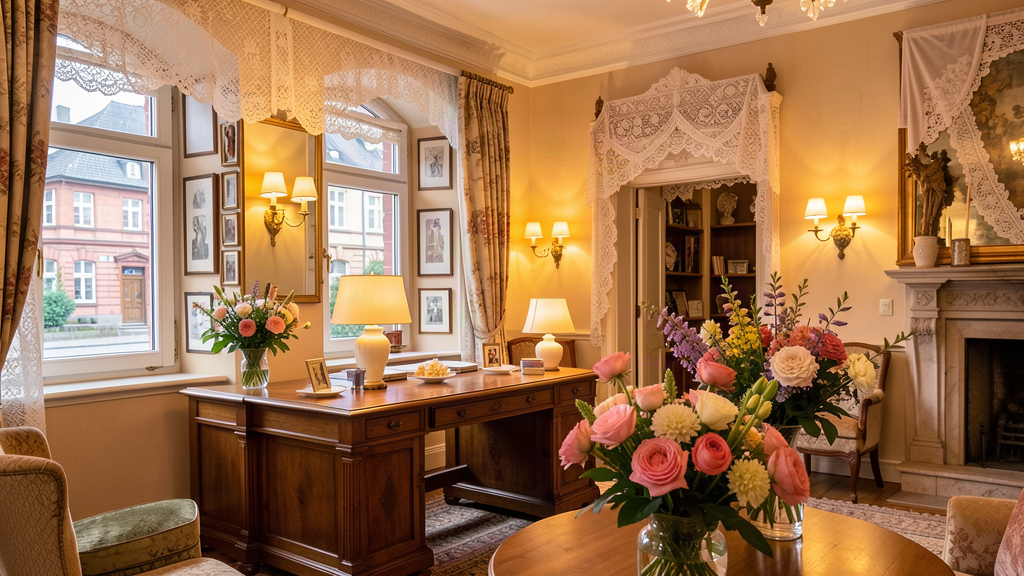
Places to Stay
Hotel am Klostermarkt (value, Altstadt walkability)
Klostermarkt 4, 08523 Plauen
Small family-run house on the old-town edge: bright wood interiors, breakfast, no restaurant of its own, short walks to Nonnenturm, Vogtlandmuseum, Altmarkt, and the lanes down toward the Elster. I use it when budget should go to stickerei tickets and dinner. Station is a manageable walk or short hop. Honest center base, not a design hotel.
Matsch — Hotel und Plauens älteste Gastwirtschaft (mid, Nobelstraße fabric)
Nobelstraße 1–5, 08523 Plauen
Rooms above what locals still call the town’s oldest Gastwirtschaft — Altstadt address, in-house kitchen, beer-garden energy when weather holds. You wake inside the walking plan: Spitzenmuseum minutes away, Alte Elsterbrücke a downhill loop, Theaterplatz close for an evening listing. My default when stone at night and a full plate downstairs should match. Use the marked garages and walk.
DORMERO Hotel Plauen (upper, Theaterstraße with full service)
Theaterstraße 7, 08523 Plauen
Larger house on Theaterplatz with finished rooms and more service space — easier after a full machine-and-bridge day. Walk into Altmarkt and the Elster strip; convenient if an evening performance or a car-based Vogtland loop is on the table. You pay for polish and parking ease rather than sleeping above the oldest Schankstube.
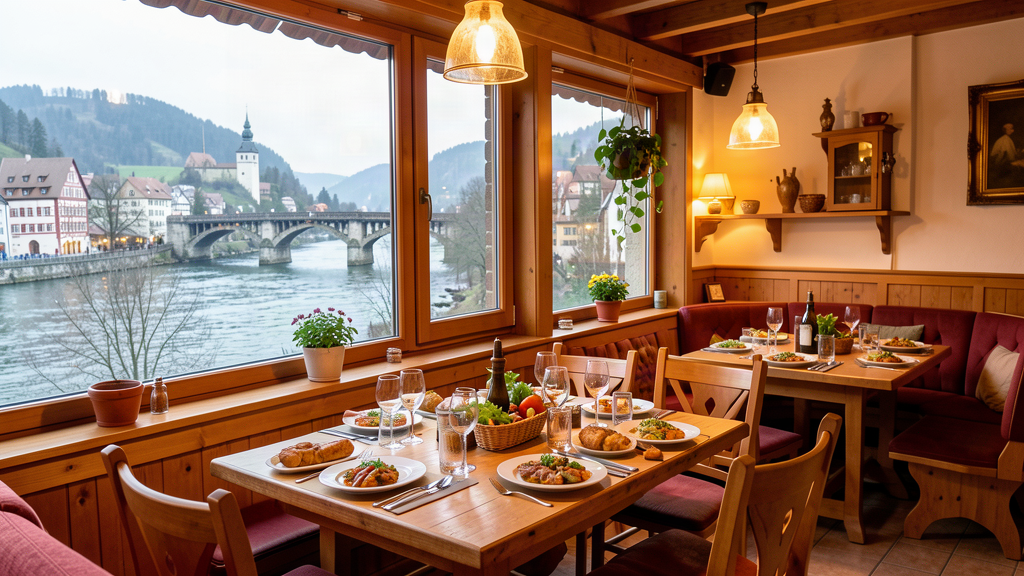
Restaurants and food
Matsch | Plauens älteste Gastwirtschaft (mid, Nobelstraße plates and garden)
Nobelstraße 1–5, 08523 Plauen
Regional and German plates, café hours into evening service, biergarten when the yard is open — the same house as the mid-range rooms above. My pick after an Elster loop when you want ballast without costume-menu theater. Groups know it on weekends; reserve or arrive early. Check last order.
Altes Handelshaus (mid-upper, Straßberger Straße and Hofgarten)
Straßberger Straße 17, 08527 Plauen
Gasthaus cooking in a restored trading house with courtyard seating when the weather holds — short walk from the historic core, parking at or near the house. I use it when dinner should sit inside older walls without hotel-restaurant formality. More polished than a pure Schankwirtschaft; still local. Call ahead Friday and Saturday. Pension rooms upstairs if you want the same address for the night.
Theatercafé at City Hotel Plauen (upper-casual, Neundorfer Straße)
Neundorfer Straße 23, 08523 Plauen
Hotel restaurant and café rooms a short walk from Theaterplatz — cleaner evening service after Friedensbrücke light or a theater listing, without locking into pure Gaststätte fare. Reserve on weekends. Not a quick bakery stop. Pair with a walk back if you are sleeping on Klostermarkt or Nobelstraße.
Bakeries and simpler Gaststätten near Altmarkt fill gaps when these three are closed or packed. A slice for the Elster bench is fine; buy one real Plauener Spitze piece at the Schaustickerei or museum shop if you buy anything at all.
Stand in the Schaustickerei long enough to feel the shuttle beat and the oil in the air. Walk the Alte Elsterbrücke once without treating every arch as content. Sit under the Altes Rathaus after the Spitzenmuseum, then give the Friedensbrücke a real look from the valley floor if stone engineering is part of why this town still feels built rather than staged. That is enough Plauen for two nights, and it beats another same-day sprint that only photographs a market square and a lace logo.
