
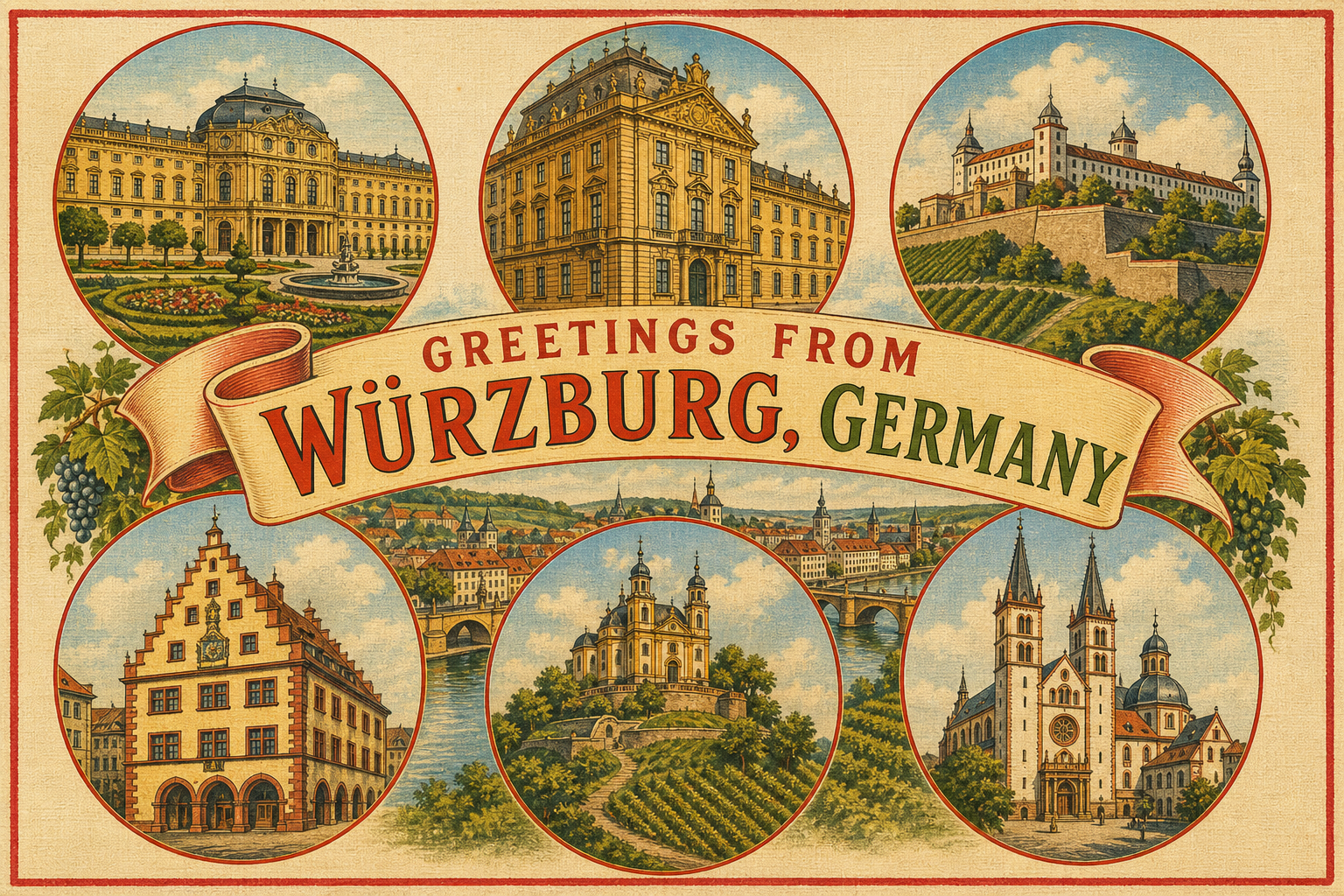
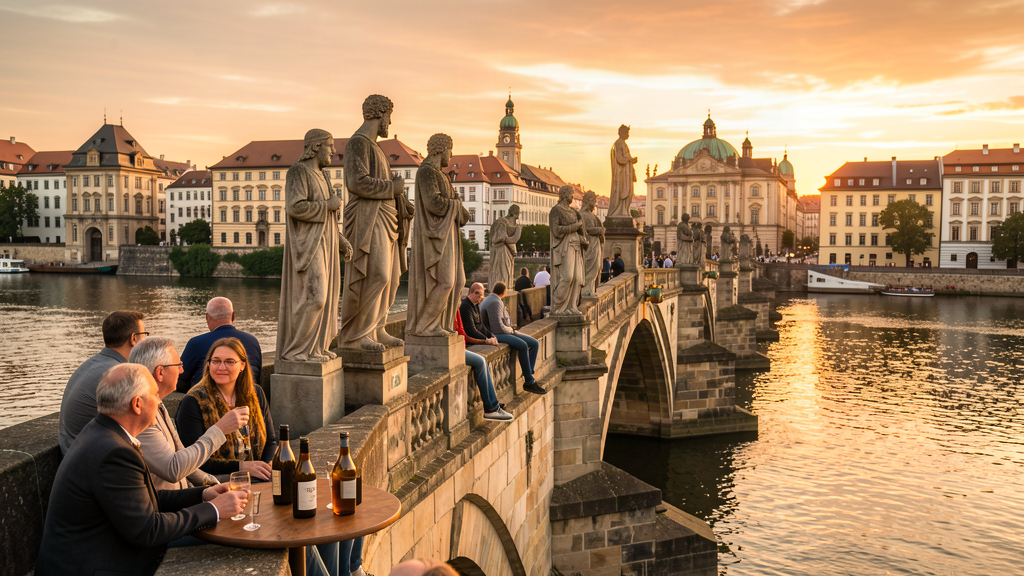
Tour groups hit the Residenz for the Tiepolo ceiling, climb toward Marienberg for the postcard, then hurry back to the coach park. Fine if you only have an afternoon. The Würzburg that holds me is narrower and wetter: a stone bridge over the Main where locals buy a small glass of Franconian wine and lean on the parapet under baroque saints, vines rising behind the fortress, barges sliding under the arches. Stand mid-span around seven on a mild evening and the city turns social without much effort. That is the hour I plan for.
Wine on the bridge, not the brochure
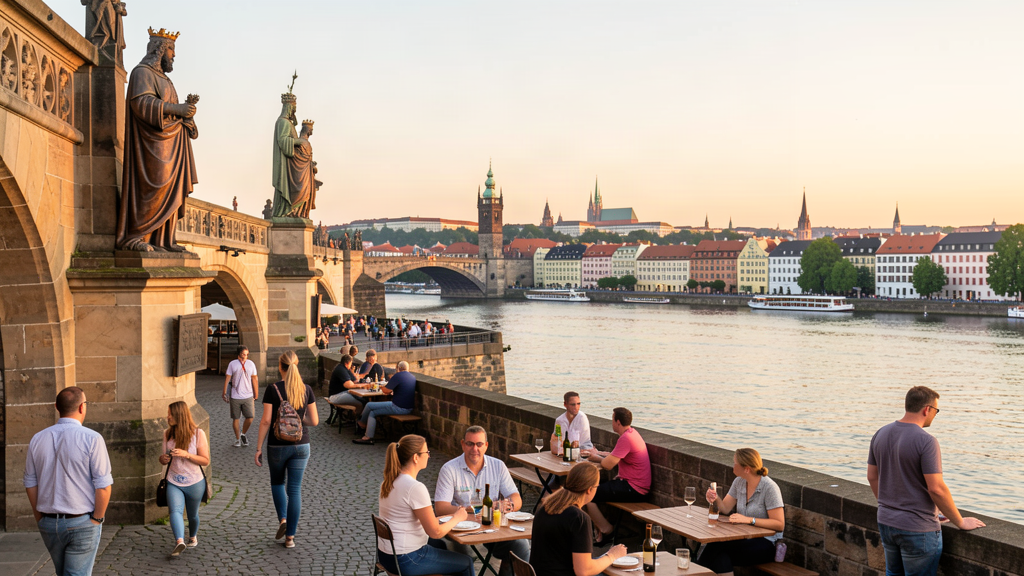
The Alte Mainbrücke is pedestrian now. Red sandstone, twelve saints and patrons with gilded crowns, a straight shot from the Altstadt toward the vineyard slope and Festung Marienberg. Construction ran from the late 1400s into the mid-1500s; the statues came later. You do not need the dates. You need a Schoppen.
Near the town end of the bridge, Gasthaus Alte Mainmühle keeps a small service for Brückenschoppen: wine to go, meant for the railing, not a white tablecloth. Silvaner is the local pour I reach for first. Müller-Thurgau shows up. Someone always has a dry Riesling if you ask. Glass in hand, walk out under St. Kilian and the rest of the golden company. Face the fortress if the light is good, or Dom and Neumünster if the sky is going pink. People talk soft. Nobody is rushing a tasting flight. This is Tuesday for students and office workers who finished early.
Come before the weekend crush if you can. Late spring and September after the first cool nights leave more space between groups. Finish the glass, hand it back if that is the house system, or keep walking to the far bank and climb later. The bridge works like a living room more than a monument. People hang out. That is the point.
Grüner Markt at Unterer Markt
Before the bridge evening, shop where Würzburg still buys vegetables. Unterer Markt, beside the red-and-white Marienkapelle and the fancy Falkenhaus façade, holds the Grüner Markt and the Spezialitätenmarkt. Market tradition here goes back a long way. The square’s baroque frame is eighteenth-century prince-bishop showmanship. The produce is weekly and practical.
Fixed glass pavilions and permanent stands work most weekdays. Mobile stalls thicken the square on Tuesday, Wednesday, and Friday (roughly 7:00–18:00) and Saturday (often until 16:00). Monday and Thursday lean quieter. During Weindorf, Christmas market, or big fair weeks, stalls shift toward Eichhornstraße or the Vierröhrenbrunnen area. If the square looks empty for no good reason, check a local notice before you write the market off.
What you find: regional asparagus in season, crooked carrots, earth still on potatoes, berries from Rimpar and the Sanderau side when weather cooperates, cheese, sausage, fish, bread, honey, spice mixes. Better grocery shopping than a supermarket aisle, with more conversation. Buy a warm roll and fruit. Bag something for a Mainkai bench. Skip the souvenir pretzel until you have walked the green market twice.
Marienkapelle’s open hall and the Falkenhaus gable pull cameras. Give them five minutes. Spend forty on tomatoes and talk.
Residenz once, then the river wall
The Würzburger Residenz is UNESCO for good reason: Balthasar Neumann’s staircase, Tiepolo’s vast ceiling, Hofgarten paths when the gates allow a quiet circuit. Go early, or book the timed slot if rules demand it. One focused visit is enough. The Hofkirche inside the complex is the quieter room if the frescoes start to blur together.
After that, drop the checklist. Walk west and downhill toward the Main rather than collecting every church tower. Dom St. Kilian and the Neumünster sit in the old core with Kilian’s story and heavy stone. Duck in if a door is open, then keep moving. The university keeps the Altstadt young. You will hear more bikes than horse carriages.
Along the river, Alter Kranen marks a working bend of the Mainkai: path under trees, barges, water smell after rain. Cross on the Alte Mainbrücke when you want height and wine. For a longer leg, the Würzburger Stein slopes rise above the north bank. Terraces, dry stone, shell-limestone that Franconian Silvaner likes. Weingut am Stein sits on Mittlerer Steinbergweg for a winery stop with a view back over towers and river. Book tastings when the calendar is tight; walk public paths when you only need air and rows.
Sanderstraße, south through the Peterer Viertel as Augustinerstraße continues, is the student Kneipenmeile: bars, small shops, evening noise. Useful after nine if you want to talk louder than a bridge parapet. Lived-in, not Romantic Road pretty. Fine by me.
Places to stay
Sleep inside walking range of Unterer Markt and the bridge. The Hauptbahnhof sits north of the core. Ten to fifteen minutes on foot covers most of what follows, or a short tram hop if bags are heavy.
Babelfish Hostel (value / opposite the station) Haugerring 2, 97070 Würzburg. Private rooms and dorms right across from the Hauptbahnhof, guest kitchen, straightforward breakfast, free Wi-Fi. Use it when the trip is about market mornings and bridge evenings, not the thread count. Easy late arrival after an ICE. Altstadt and Main are a clear walk once you drop the pack.
City Partner Hotel Strauss (mid-range / Juliuspromenade) Juliuspromenade 5, 97070 Würzburg. Family-run three-star on the promenade that runs from the station side toward the river and Alter Kranen. Marktplatz, Alte Mainbrücke, and the Residenz stay walkable. Practical base when you want a proper hotel bed without Residenz-side rates. Tram stop nearby if knees complain.
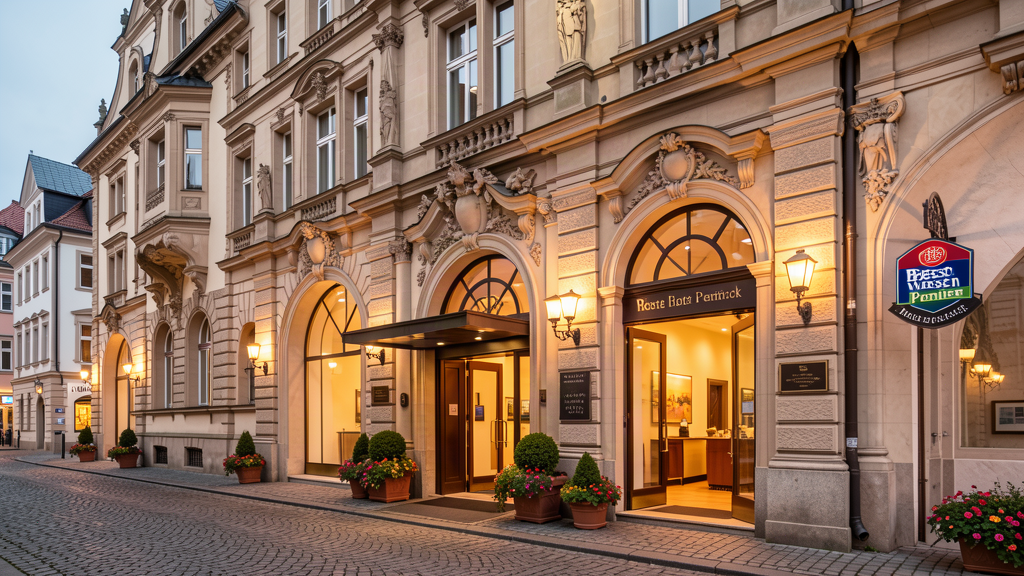
Best Western Premier Hotel Rebstock (splurge / Altstadt) Neubaustraße 7, 97070 Würzburg. Four star house in a historic town-center building, short stroll to Dom, market square, and the bridge. Spend here when short distances and quieter nights matter more than saving for another Schoppen round. Good landing spot after vineyard walks when you do not want a map hike back to the station belt.
Hotel Franziskaner at Franziskanerplatz 2 is a solid Altstadt alternative if Rebstock or Strauss is full. Still central, still on foot to the Main.
Where to eat
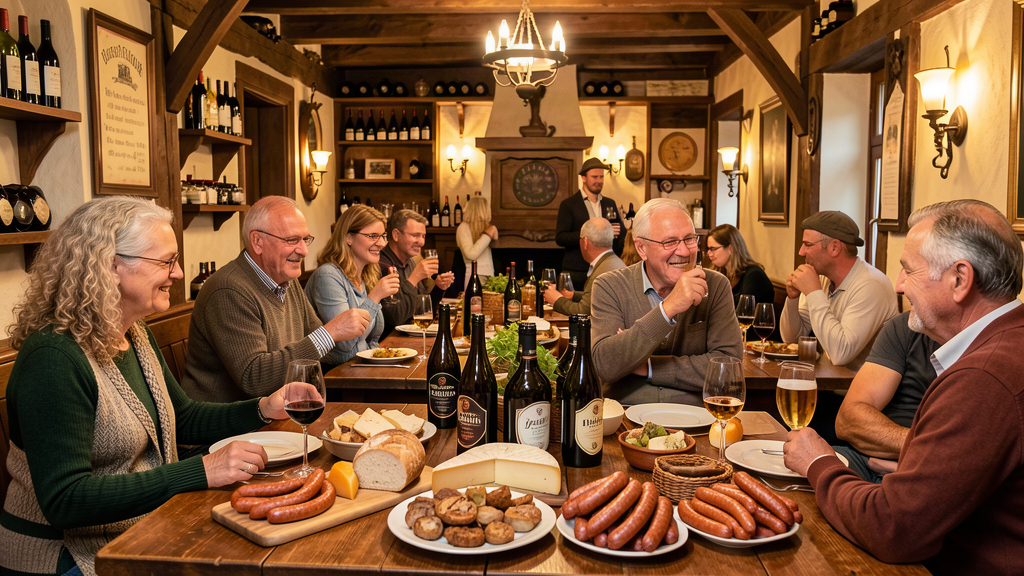
Market first on a true market morning. Then sit where Franconian kitchens already pour their own estates’ wine.
Bürgerspital Weinstuben Theaterstraße 19, 97070 Würzburg Second-generation family Weinstube tied to the historic Bürgerspital estate. Franconian plates (Blaue Zipfel, Schäufele, seasonal fish and steaks) and a deep list of house wines in rooms that run from a woodsy Stube to the courtyard when weather allows. Central without feeling like a coach-menu trap. Reserve on weekends. The courtyard fills first in summer.
Weinstuben Juliusspital Juliuspromenade 19 (corner Barbarossaplatz), 97070 Würzburg. Inside the Juliusspital complex: another of Franconia’s big charitable wine estates, restaurant and terrace in the courtyard green. Game and fish when the card runs that way, solid classics, estate pours by the glass. Quiet enough after a noisy Sanderstraße night. Walkable from Hotel Strauss in a few minutes.
Gasthaus Alte Mainmühle Mainkai 1, 97070 Würzburg Right on the bridge approach. Terrace over the Main, fortress in the frame, Franconian cooking with seasonal cards and local bottles. Touristy by geography, still the right table when you want to watch the bridge crowd form and dissolve. Grab the Brückenschoppen energy even if you sit down for a full plate later.
Morning pattern that works: coffee near the station or Dom, Grüner Markt loop with bread and fruit, Residenz or a slow Altstadt drift, late afternoon on the Stein paths or Mainkai, then Schoppen on the saints’ bridge before dinner. Hotel breakfast can wait for rain.
Getting around without fuss
Würzburg is compact once you accept the climb to Marienberg and the Stein. Flat river paths are easy. Fortress and vineyard slopes are not. Comfortable shoes beat clever outfits. Trams and buses stitch Hauptbahnhof, Juliuspromenade, and outer districts. A day ticket beats hunting Altstadt parking garages.
ICE and regional trains put Würzburg on the Frankfurt–Nürnberg–München spine. Frankfurt Airport is the usual long-haul gateway; Nürnberg works for some connections. Romantic Road marketing starts here and points south. Ignore the branded trail, and you still have the bridge, the market, and the wine. River cruise passengers thicken midday. Evenings thin out again.
Bikes suit the Main corridor and gentler vineyard roads. For the classic fortress view without a full hike, the bridge does half the work. Save the Marienberg museum block for a clear morning when legs agree.
Give the Residenz its ceiling and the Marienkapelle its square. Climb the fortress if the sky is clean. Then spend the real time where Würzburg actually gathers: asparagus and rye at Unterer Markt before noon, a glass under the gilded saints on the Alte Mainbrücke when the light drops, Silvaner from slopes you can see from the railing. River stone under your shoes, market crates stacked for the next stall, a Schoppen against the parapet while the Main keeps moving.
