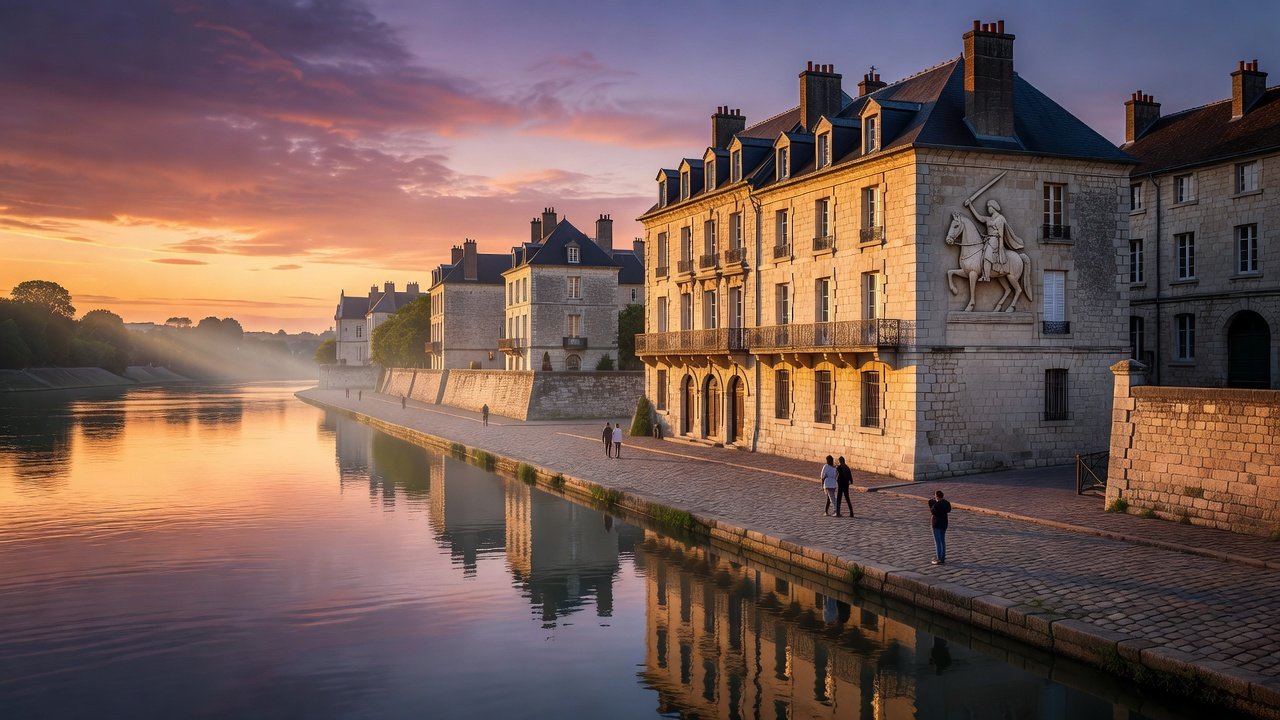
The light on the Loire changes everything in Orléans. Late in the day, when the tour buses have pulled away from the cathedral square and the shadows lengthen across the wide river, the quays come alive in a quieter way. I found myself returning again and again to the right bank promenade, where the old port once bustled and now the water reflects the soft colors of evening. This stretch between the bridges, especially around Quai du Châtelet, feels like the real heartbeat of the city — not the postcard version, but the one locals use for evening walks, picnics, and simply watching the river flow.
The remains of the historic port are still visible in the stonework and the gentle curve of the banks. Benches line the path, and on warmer evenings people linger with a bottle of local wine or just sit with the breeze coming off the water. It is not dramatic like some Loire châteaux views, but it has that lived-in quality that makes you want to slow down. From here you can see both the modern bridges and the older ones, and if you time it right, the sunset turns the surface of the river into liquid gold before fading to silver.
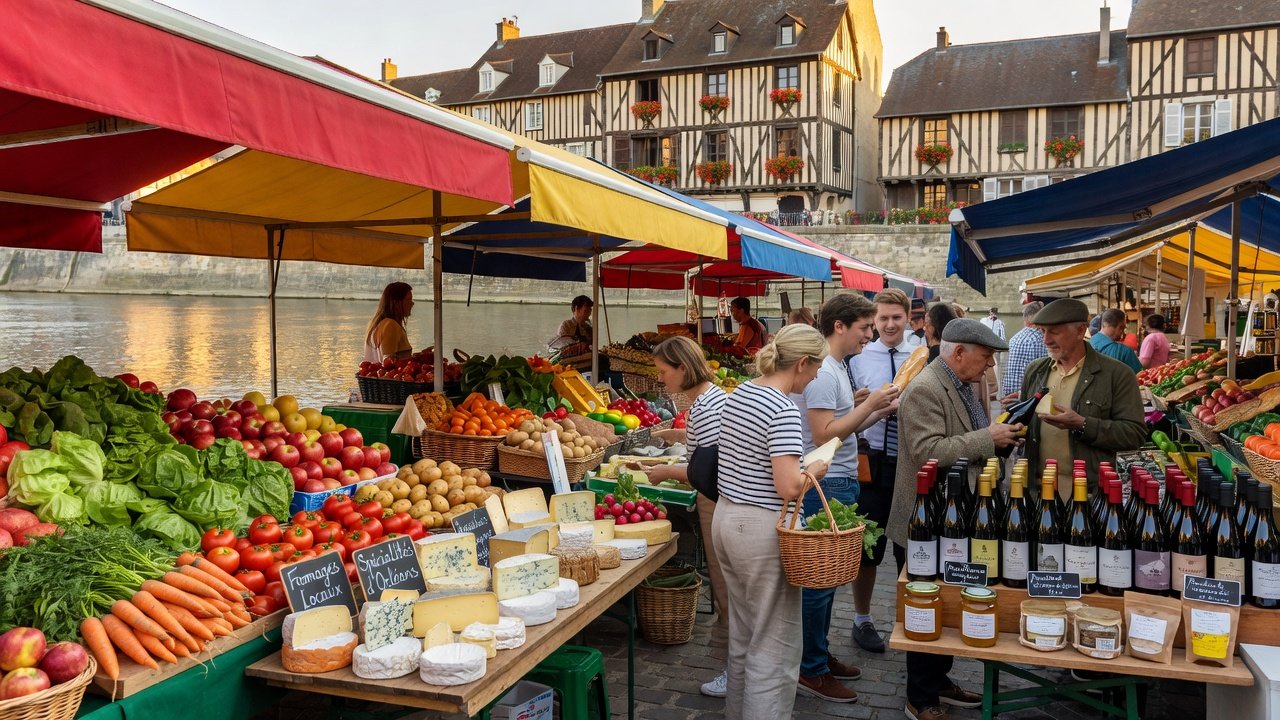
One Friday I stayed until the markets began to set up. On Place du Martroi and along Rue Royale the stalls appeared almost magically — vintage books in the afternoon giving way to a proper food and farmer’s market by late afternoon. The evening marché is a proper neighborhood affair. Vendors call out their specials, families shop for the weekend, and the smell of fresh bread, cheese, and roasting chickens mixes with the river air that drifts over from the quays just a few streets away. It felt nothing like a tourist spectacle. People here know their regular sellers, chat about the week, and carry string bags heavy with produce back toward the half-timbered lanes of the old town.
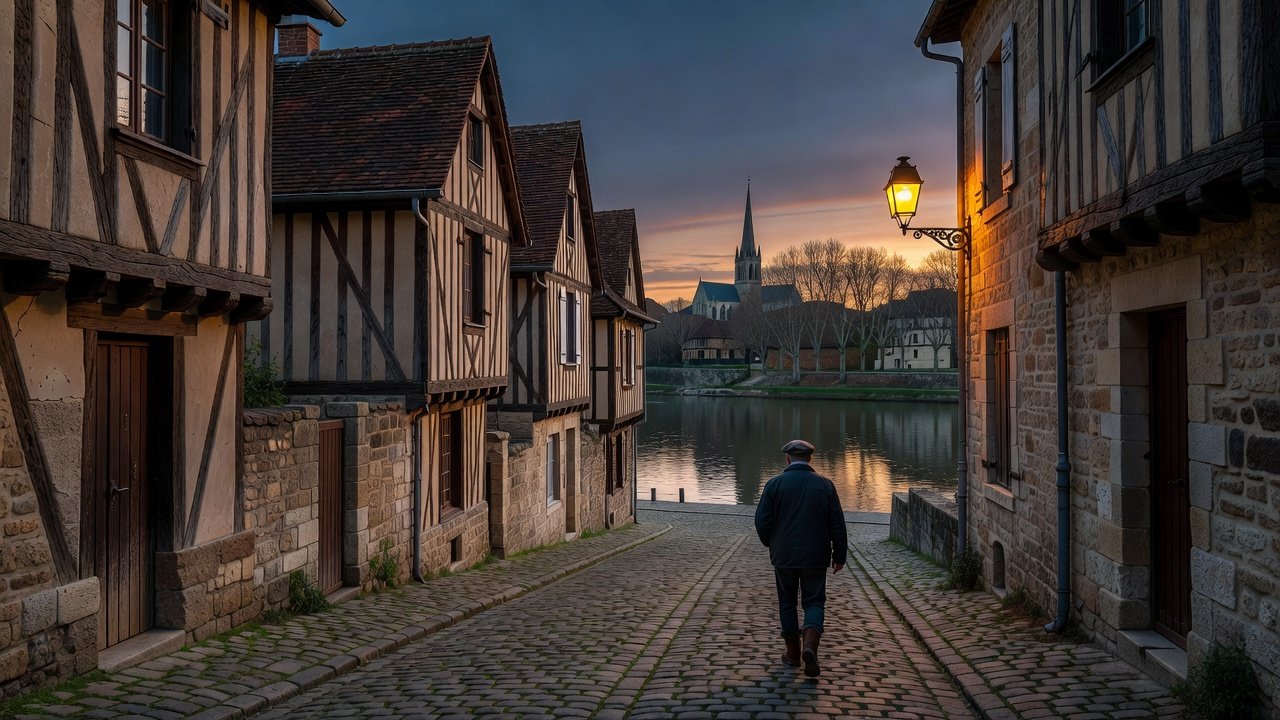
Those lanes are worth wandering once the market closes. Behind the main pedestrian streets you still find pockets of timber-framed houses, narrow courtyards, and small squares that never make the guidebooks. The architecture tells its own story — some buildings lean gently with age, their wooden beams dark against pale plaster. I spent one afternoon simply following whichever small street looked interesting, ending up near the river again as the light softened. There is a particular corner where a café spills onto the sidewalk and the view opens suddenly onto the water. No fanfare, just the ordinary beauty of a city that has learned to live with its river rather than pose beside it.
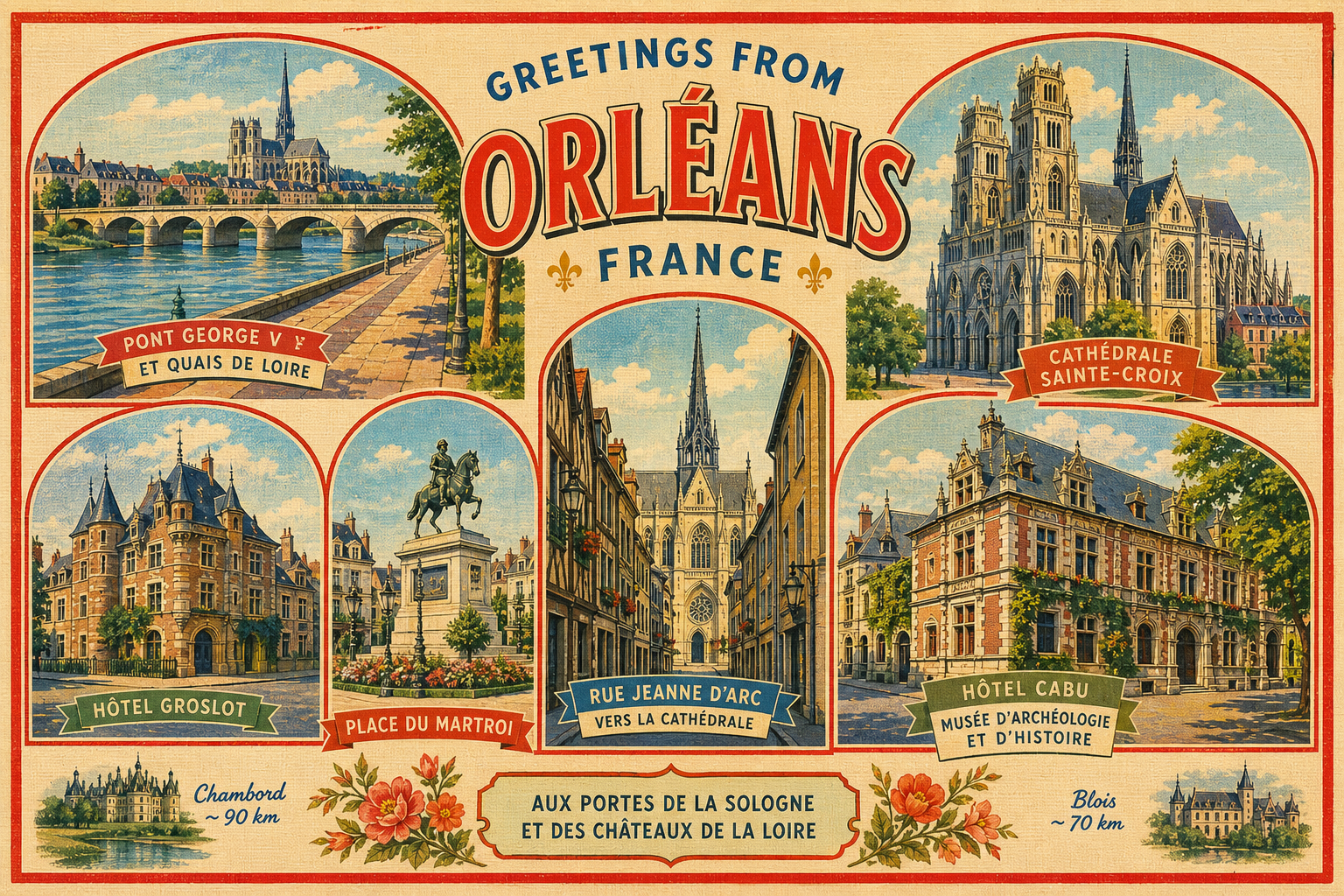
Joan of Arc is everywhere in Orléans, of course, but the quieter sites reward a slower visit. Beyond the grand cathedral, there are smaller memorials and the occasional plaque marking the path she took through the streets. One modest house associated with her story sits in a residential area that feels far removed from the tour groups. Standing there in the late afternoon, with only the sound of distant traffic and birds in the trees, I could almost imagine the city as it was centuries ago — smaller, more intimate, still shaped by the same river.
Practical matters matter when you want to linger like this. Orléans is easy to reach by train from Paris, just over an hour, and once here everything I wanted to explore was walkable from the center. The quays connect the different neighborhoods without effort, and the pedestrian old town makes it simple to move between market, river, and quiet streets.
Places to Stay
Finding the right base made the difference between rushing through and actually settling into the rhythm of the place. I stayed at three very different addresses across price points, each with its own character and location that suited the slow pace I was after.
For something special with river views, Empreinte Hotel & Spa at 80 Quai du Châtelet, 45000 Orléans sits right on the promenade. The building itself has history — parts date back centuries — but the rooms feel fresh and calm. Waking up to the Loire just outside the window changed how I experienced the city. The spa is a genuine bonus after a day of walking, and the location means you can step out for an evening stroll along the very quays that drew me in. It sits at the higher end but delivers that rare combination of comfort and genuine connection to the river.
Mid-range but full of charm, Hôtel de l’Abeille at 64 Rue d’Alsace Lorraine, 45000 Orléans occupies a handsome historic building in the pedestrian heart of the old town. The family has run it for generations, and it shows in the personal touches — a lovely garden courtyard on the upper level, a small library, and rooms that feel like they belong to the neighborhood rather than a chain. It is quiet at night yet steps from Rue Royale and the markets. The solarium and garden make it feel like a private retreat even in the middle of the city.
On a tighter budget, the ibis budget Orléans Sud CO’Met at 18 bis rue des Montées, 45100 Orléans offers clean, functional rooms without pretense. It sits a short tram or bus ride from the center, which actually worked in my favor — it forced me to use the local transport and see how the city spreads out beyond the tourist core. The rooms are compact but comfortable, and the price leaves more room in the budget for good meals and market treats. For travelers who want to spend their money on experiences rather than the bed, it is a solid, no-nonsense choice.
Where to Eat
The markets made picnics easy, but when I wanted to sit down there were several addresses that felt rooted in the community rather than aimed at visitors.
Le P’tit Gavroche at 145 rue de Bourgogne, 45000 Orléans serves straightforward traditional French cooking in a neighborhood setting. The menu changes with the seasons and the market stalls. On one visit I had a simple but perfectly executed dish of local pork and vegetables that tasted like it had come straight from the Friday market. The atmosphere is relaxed, the portions generous, and the crowd a mix of locals and a few in-the-know travelers. It is the kind of place where the server remembers you on the second visit.
For something lighter and equally local, the crêperies around the old town deliver fresh, savory and sweet options using regional ingredients. One evening I stopped at Crêperie Bretonne Orléans for a galette filled with local cheese and ham followed by a dessert crêpe. The batter was crisp, the fillings generous, and the price gentle. It sits in the pedestrian zone, making it convenient after wandering the quays or the market.
Petite Saison offered another neighborhood favorite with Italian-French influences and a focus on fresh, seasonal plates. The atmosphere was lively without being loud, and the staff seemed genuinely pleased to explain the day’s specials. It felt like the sort of spot residents recommend to friends rather than one that courts the guidebook crowd.
Orléans rewards the visitor who gives it time — time for the light to change on the river, for the market to finish its day, for the quieter streets to reveal themselves. The Loire is always there, wide and steady, and the city has learned to move with it rather than against it. If you find yourself on the right bank as the sun drops, stay a little longer. The best parts of Orléans show themselves most clearly then.