
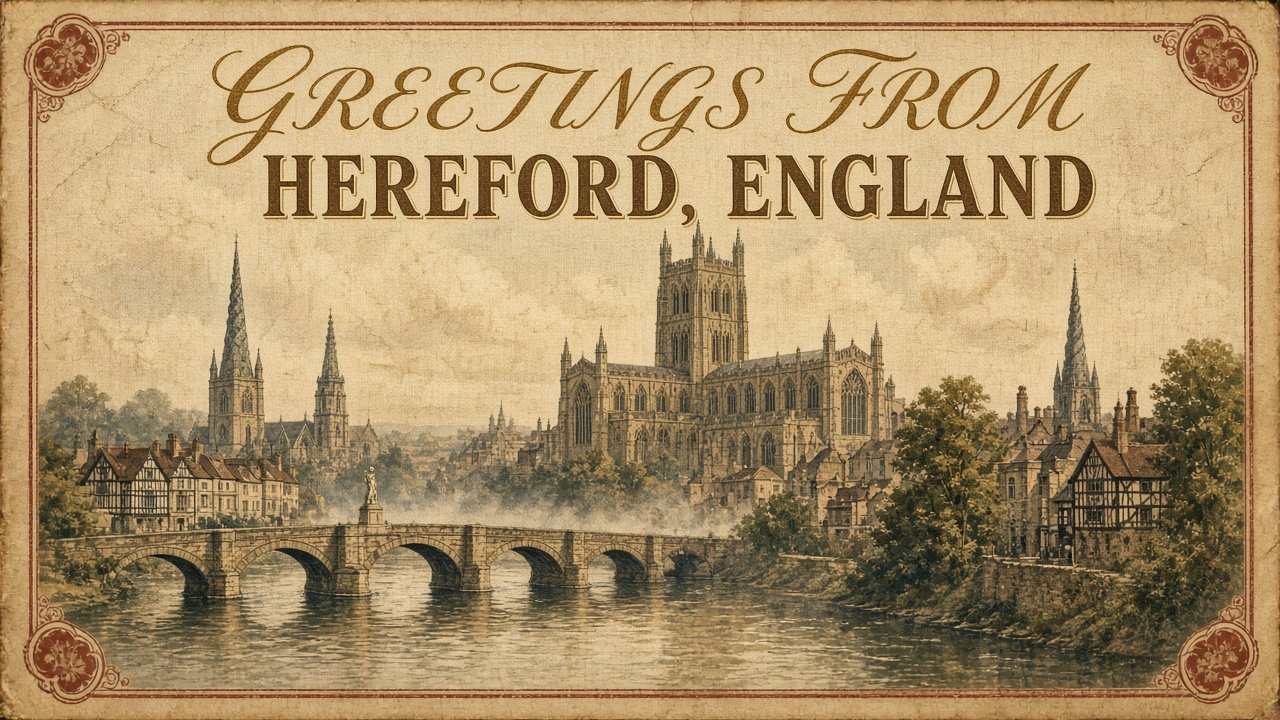
Hereford is cathedral, cider, and a cattle breed if you take the brochure at face value — true enough, and the Mappa Mundi still pulls coaches into the close. On the ground I notice the eastern hinge first: Castle Green above the River Wye, Castle Pool as the last scrap of defensive water, and the iron footbridge that drops you onto Bishop’s Meadow. From the pool the shopping streets stop feeling like a single loop. You get still water, tree edge, cathedral towers off to the west, and a green that reads more like a local park than a castle stop.
I give the first clear stretch to Castle Green and the pool. Cathedral ticket can wait until I actually want the chained books and the map. Moat remnant, iron cables, and meadow grass beat gift-shop glass on Broad Street.
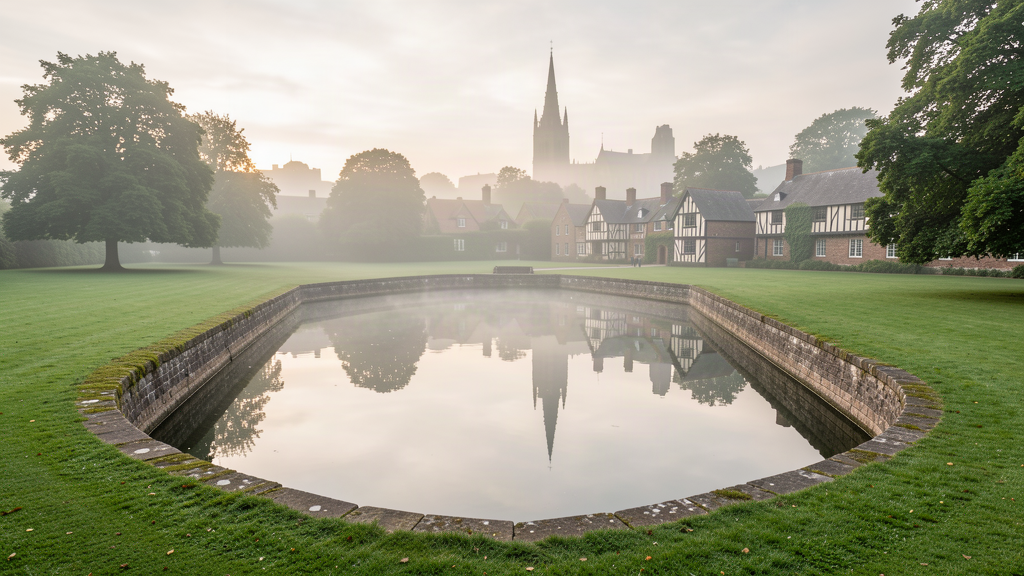
Castle Green and Castle Pool
Castle Green sits where Hereford’s castle once did the serious work — bailey, ditch, river approach. The stone has mostly gone. What remains is a raised park, paths that skirt the edge, and Castle Pool as the last open water from the defensive system. It is not a reconstructed moat with boards shouting dates — just a dark pool under trees, ducks treating it as ordinary infrastructure, people cutting through toward the footbridge.
I walk it mid-morning when dog walkers have the place and light still reaches the water. Soft shoes are fine. Grass and gravel are ordinary park surfaces.
East of the green, quieter streets pull away from High Town. West, the cathedral close and the commercial core tighten. The pool is the hinge between those moods. I loop it more than once rather than treating it as a single tick before the Mappa Mundi queue.
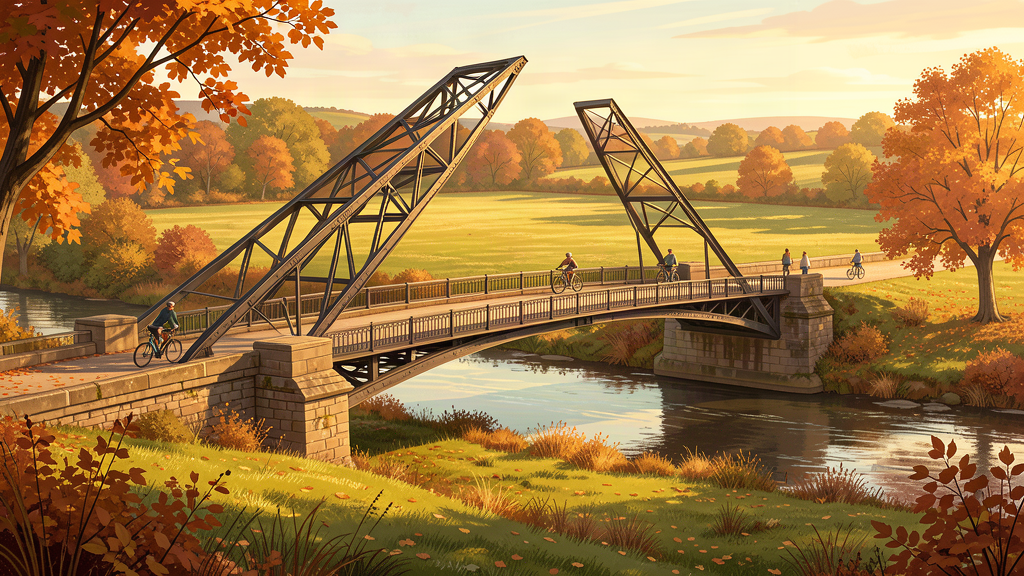
Victoria Bridge and Bishop’s Meadow
Victoria Bridge is the wrought-iron suspension footbridge from the Castle Green bank to Bishop’s Meadow on the far side of the Wye. Public subscription and jubilee memory hang on the story; what you notice first is simpler: cables, deck, river noise, and a clean exit onto open grass. A crossing has mattered here longer than the iron. The Wye is Hereford’s southern edge, and the meadows have always taken flood and footfall.
On the south bank, Bishop’s Meadow opens almost immediately — flat ground, trees, space for an impromptu sit, paths that keep the river close. Not park theatre with ticketed lawns. Soft landing after the green, leisure pool further on if you want it, river edge if you came for the walk.
From the meadow you can work west toward the older Wye Bridge and St Martin’s side, or reverse and climb back over Victoria for another pass at the pool. One loop that works for me: Castle Green and the pool first, Victoria south onto Bishop’s Meadow, west along the bank when the path allows, older road bridge back toward the centre, then cathedral and High Town for stone and timber. Shoulder-season weekdays beat summer Saturdays.
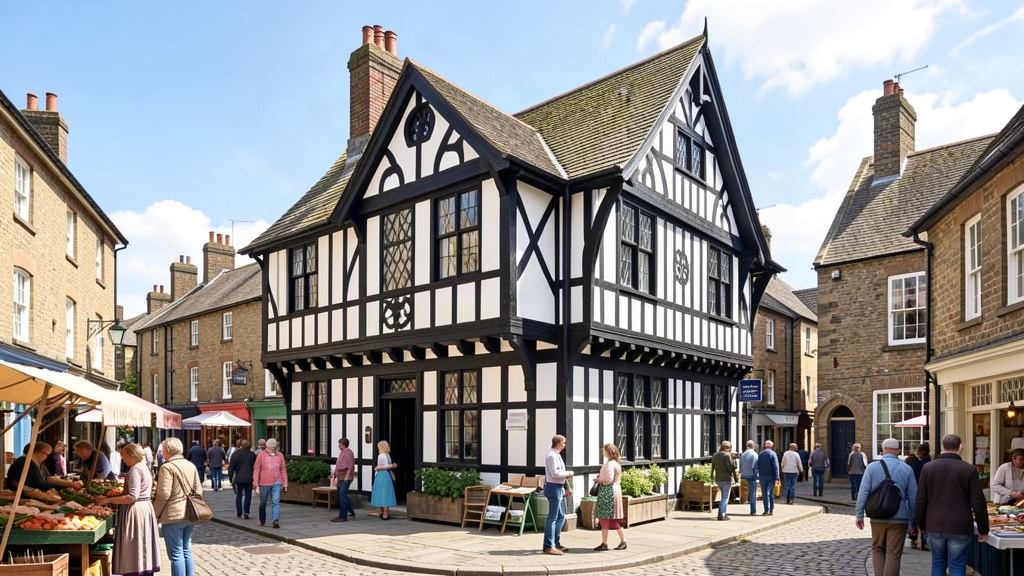
Cathedral close, High Town, and the timber house
Hereford Cathedral is why most people park — sandstone, long continuous worship, the Mappa Mundi and Chained Library as the serious draw. Pay in for the map and locked shelves. Walk the exterior close for free when you mainly want stone against sky. One interior circuit is enough if the day is about the river hinge.
High Town is the commercial open space north of the cathedral grain — paving, market memory, and the Black and White House Museum standing alone as a Jacobean timber frame where neighbors were cleared. Built in 1621, later shops and a bank, then a museum of domestic rooms. It looks slightly stranded and slightly stubborn. I walk past once without going in, once with a ticket if hours fit, and leave the house as a marker rather than a half-day.
Broad Street and the lanes around All Saints pull into denser shop fabric — independent counters, chains, the ordinary British high-street mix. Duck into All Saints if the door is open; the cafe inside does real lunch work. Eign Gate and the older market streets still feel like service routes off the main paving. Yards and passages are half the pleasure. Accept getting mildly turned around.
Cider country and the wider Wye Valley sit a short drive out if orchards and gorge walks are your reason for the trip. They earn a half-day. Keep the first full day inside Hereford: pool, footbridge, meadow, cathedral, High Town, one proper meal. The valley works better as a second movement.
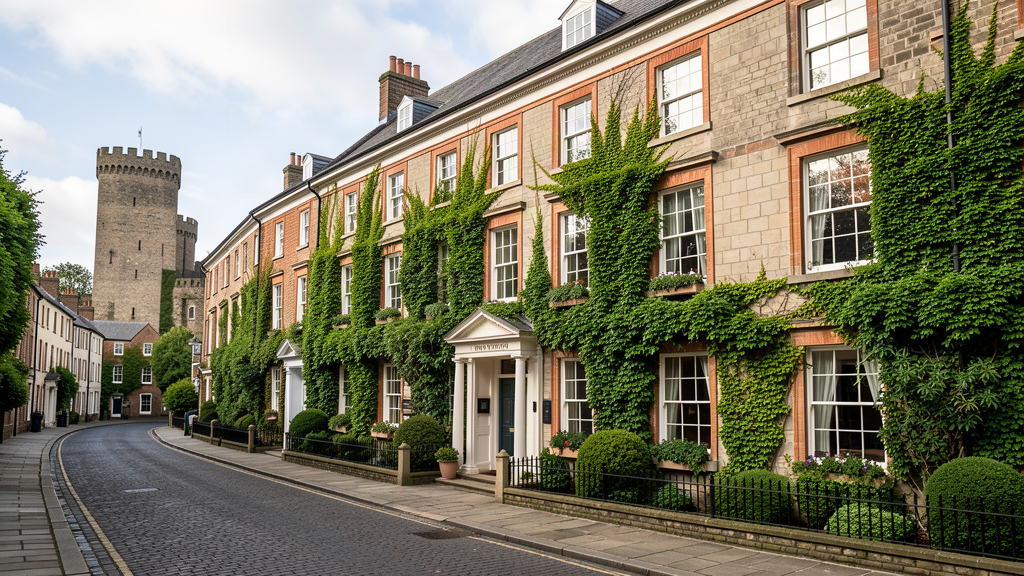
Places to Stay
The Merton Hotel — 28 Commercial Road, Hereford, Herefordshire HR1 2BD
Lower-to-mid city hotel on the commercial approach — practical rooms, short walk toward the center and Castle Green without a ring-road feel, useful when the train station side is your arrival edge. Use it when the budget is ordinary, and you still want to walk to the pool and the footbridge without moving the car each morning. Ask about parking; Commercial Road is busier than Castle Street.
The Green Dragon Hotel — 44-46 Broad Street, Hereford, Herefordshire HR4 9BG
Mid-range independent on Broad Street — refurbished rooms, bar and restaurant downstairs, easy reach of the cathedral, High Town, and the walk down toward the Wye. Handy when you want to wake inside the commercial core and hit Castle Green on foot. Book ahead for weekend peaks and county-show weeks.
Castle House Hotel — Castle Street, Hereford, Herefordshire HR1 2NW
Higher-spend Grade II house a few minutes from Castle Green — individually done rooms and suites, restaurant with a serious local-farming bent, short walk to the pool and Victoria Bridge without crossing the whole shopping grid first. Use it when the stay itself is part of the trip, and the green is the daily view rather than a destination after breakfast. Peak rates and dinner reservations need planning.
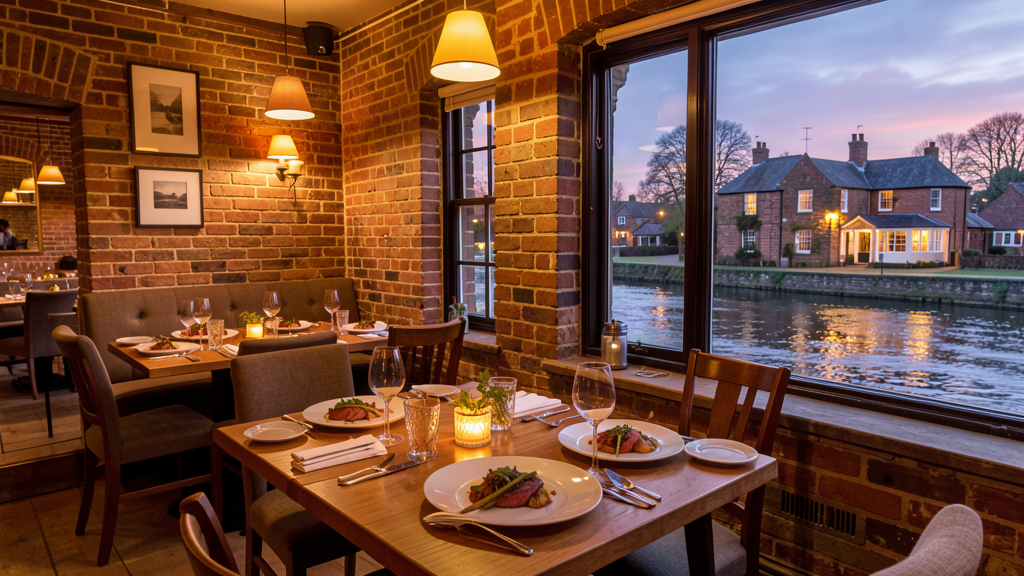
Where to Eat
Bill’s Kitchen at All Saints — All Saints Church, High Street, Hereford, Herefordshire HR4 9AA
Cafe inside the restored church on High Street — breakfast, lunch, cakes, vegetarian-leaning plates, tables under the old fabric rather than a high-street unit. This is the meal that matches a town morning: coffee before Castle Green, or a proper lunch after the cathedral without another queue. Mornings and weekday lunches are the sensible window; check Sunday hours.
Cotto — Wyebridge House, 23-24 Bridge Street, Hereford, Herefordshire HR4 9DG
Contemporary restaurant and cocktail bar near the river approach — plates that sit above a casual cafe without full tasting-menu ceremony, useful when you have done the meadow loop and want to stay on the water side of town. Book peak evenings. Arrive willing to walk from Broad Street rather than park on the doorstep.
Castle House Restaurant — Castle Street, Hereford, Herefordshire HR1 2NW
Higher-end dining attached to the hotel — Herefordshire produce, rooms that face the quieter Castle Street green, the night you dress the day up after pool paths and iron cables. Book ahead. If you are not staying in the house, treat it as a destination meal and walk back through the green when the light has gone.
For a simpler bite, bakery counters and cafes off High Town cover coffee and a bag for Bishop’s Meadow. Pub rooms do the ordinary evening plate when Cotto and Castle House are full. Hours flex with season. Castle Green after dark is a short walk from most core addresses.
Getting around and leaving room
Hereford sits on the Wye in the Marches, with the railway station on the north-east edge of the center, and the A49/A438 as the long road spines. Once here, Castle Green, Castle Pool, Victoria Bridge, Bishop’s Meadow, the cathedral close, High Town, Broad Street, and Bridge Street are a walking town. Cars help for the Wye Valley, cider farms, and village hops. They hinder if you chase every timber frontage by moving the vehicle each time.
Most people grab a cathedral ticket, a High Town photograph, and a cream tea the same afternoon. I’d stay longer. Give Castle Pool time to feel like a real hinge, not a leftover ditch, and let Victoria Bridge settle as a working footspan still doing path work. The moat remnant, meadow grass, iron cables, and the stranded black-and-white house are the stretch I keep coming back to — Marcher water, a Wye that still frames the green, ordinary Herefordshire weather on park paths.
