
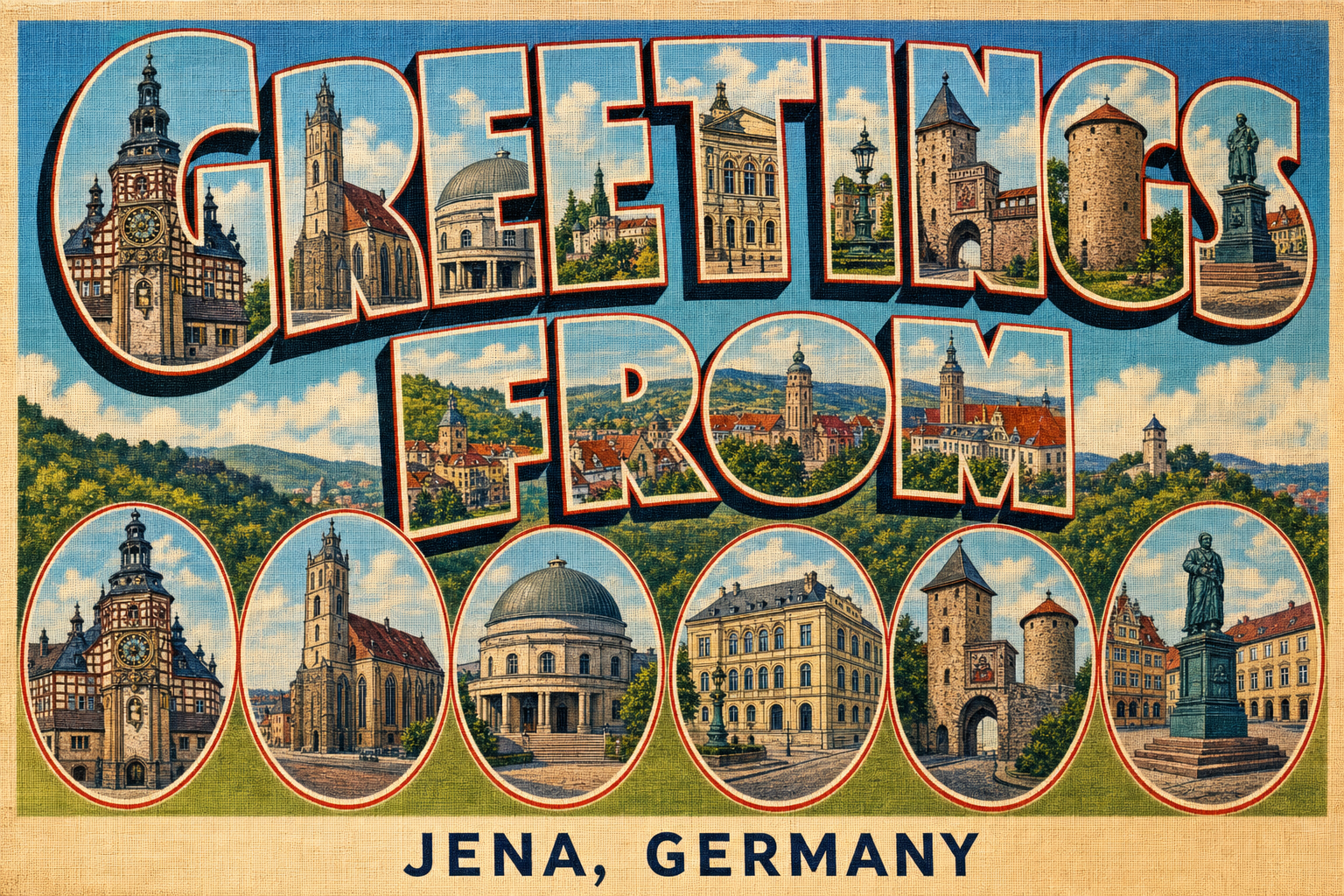
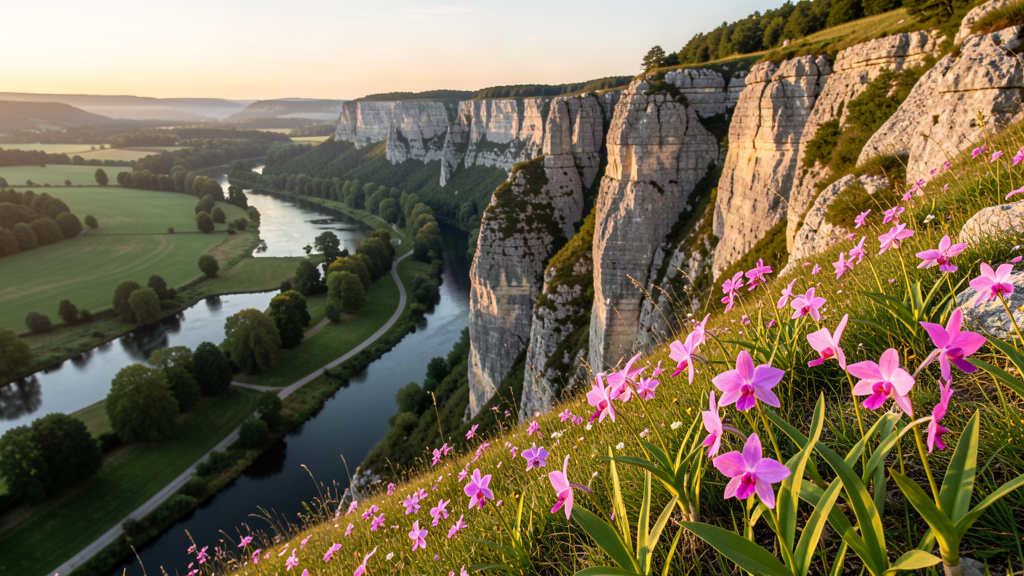
Jena sits in a tight Saale valley in Thüringen. Limestone hills rise close enough that wild orchids grow within a long walk of the Markt. The university and the Zeiss optics works built the skyline and the reputation. Better first days start on the river lawns, at the green market under the Rathaus clock, and on a Muschelkalk climb when the weather holds. Weimar and Erfurt get the classical and cathedral day-trips. Jena keeps a working-student rhythm that does not need either.
Stay at least two nights. One afternoon only gets you JenTower photos and a coffee on Wagnergasse. With more time you get morning fog on the Saale, an unhurried hour in the botanical garden, and dinner after the tram has carried the office crowd home.
Saale banks, Paradies, and the hills
The Saale runs straight through town — not a grand waterfront, more a working river with bridges, bike paths, and grass where students picnic when the sun sticks. Paradiespark opens the south-central bank into lawn and path; walkers, dogs, and the odd canoe put-in share the space without a ticket booth. Start near Jena Paradies station if you arrive by train, or drop from the centre and follow the water south until the city thins.
Cross for Wenigenjena’s older east-bank grain, or stay west and keep the centre close. In summer the grass along the bright shore is enough reason to bring bread, sit down, and watch light move on the limestone.
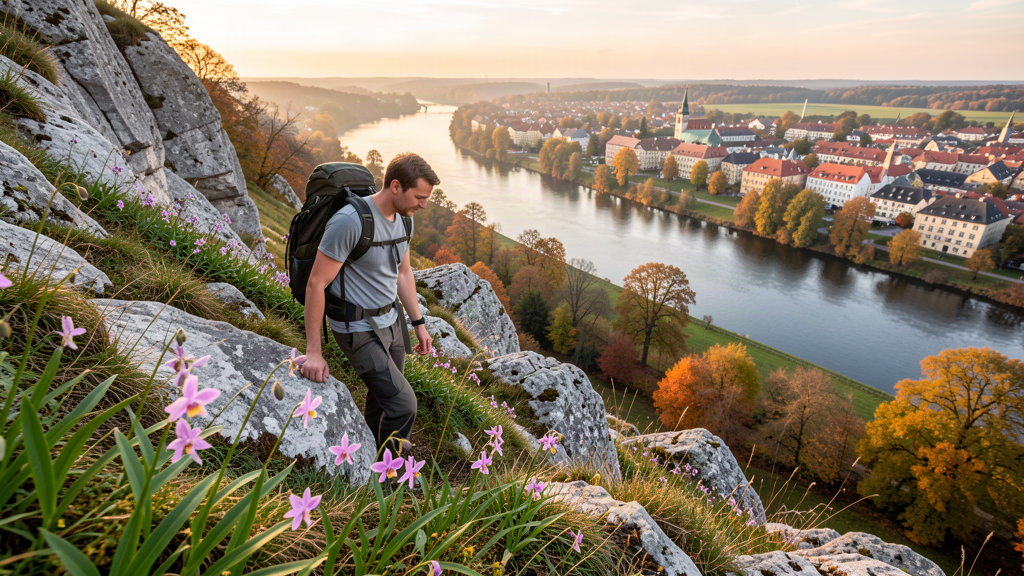
The hills matter as much as the river. Jena’s Muschelkalk slopes and mixed forest hold a surprising orchid flora for a city this size — NABU and local groups keep reserves and marked walks within tram reach. A steady climb, quiet limestone underfoot, and a view back to the cylindrical JenTower is enough. Lobeda’s old market core a few kilometres south still reads as a second town centre; Lobdeburg ruins sit above for a ruin with a valley view.
Botanischer Garten Jena, among Germany’s oldest, sits near the university axis and rewards a slow loop. Pair it with the river walk rather than stacking every museum the same morning.
Markt, Schnapphans, and the student lanes
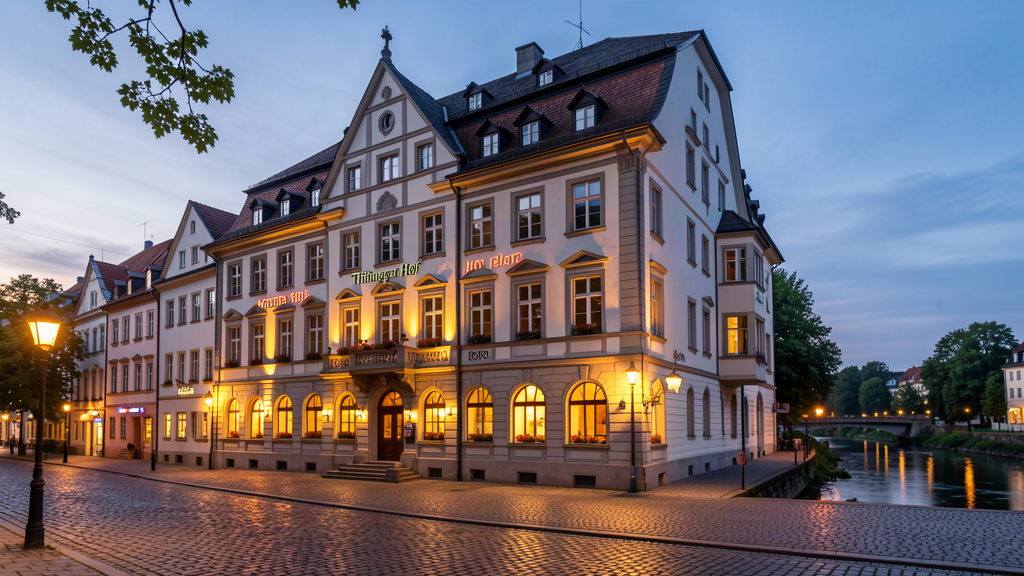
Marktplatz is the civic middle: Hanfried on his pedestal — Johann Friedrich, the university’s founder, nicknamed into friendliness — Gothic and Renaissance fronts, and the old Rathaus with its astronomical clock. On the hour, Schnapphans, the bird figure, snaps at a golden ball and never quite wins. Tourists time phones for it; locals barely look up. Stand for one cycle, then buy fruit or cheese from the green market when the stalls are up (often Tuesday through Saturday mornings — check the current days). The square is small enough that a full market still feels like a town market, not a festival set.
Eichplatz and the rebuilt modern centre sit a short walk west — glass, trams, the JenTower rising as the GDR-era cylinder that now anchors the skyline. Ride the lift if you want the valley map from above; skip it if the limestone walk already gave you height. You do not need every viewpoint. River, tower, and hills lock together once you have walked two of the three.
Wagnergasse runs as the short Kneipenmeile near the old Johannistor line — cafés and bars spilling tables when evenings warm, student noise that stays neighbourly. Jenergasse and the lanes toward Fürstengraben keep a slower café pace. The university still leaks into the streets: bikes on railings, cheap lunch traffic, book shelves in rooms that have hosted students for decades. Jena’s “City of Glass” label is Zeiss and Schott industrial history. On the ground it is a town that makes things and teaches, not a spa performing heritage for visitors.
Zeiss-Planetarium, the oldest working planetarium in continuous use since 1926, sits near the centre if a dark dome appeals after a river day. Kulturarena fills some summer evenings. Neither is required. The Markt, the Saale path, and one hill walk already make a full stay.
Places to Stay
Sleep by how close you want the Markt noise and whether the station edge or the pedestrian core matters more at night.
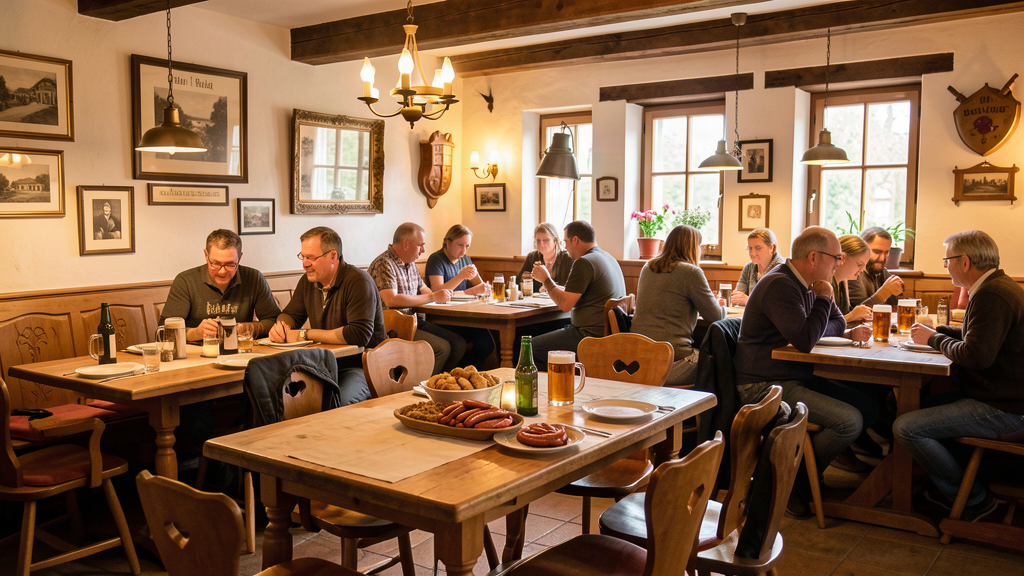
Hotel Thüringer Hof, Westbahnhofstraße 8, 07745 Jena, is the practical budget rung west of the centre: small house scale, simple rooms, walkable toward the old town without paying glass-tower rates. Useful when the money should go to dinners and a planetarium ticket rather than a design lobby. Trams and buses cover the gap if you do not want the full walk with bags.
Hotel Schwarzer Bär, Lutherplatz 2, 07743 Jena, sits on a central square opposite the historic university building — traditional hotel and restaurant, mid-range, easy foot access to Markt, Wagnergasse, and the river drop. Street noise is the trade-off; request a quieter room if you are light sleepers. Book here when you want the centre without the Dorint price.
Dorint Hotel Esplanade Jena, Carl-Zeiss-Platz 4, 07743 Jena, is the higher modern stay near the planetarium and the Zeiss axis — polished rooms, full service, and a base that suits a longer or work-tinged visit. Walk to the Markt in minutes; use it when comfort and location both need to clear a higher bar.
Restaurants / Food
Jena eats Thüringer plain sense — Klöße, roast meats, Bratwurst from market smoke — then café plates and Mediterranean lean on the lanes. Reserve weekend dinners on Wagnergasse; lunch is often walk-in if you beat the university break.
Gasthaus Zur Noll, Oberlauengasse 19, 07743 Jena, is the historic inn a lane below the Markt: vaulted rooms, Thüringer and broader German plates, garden seating when the weather holds. Hotel rooms upstairs if you want to fall into bed after dinner. Mid-range, reliable for a sit-down night that still feels local.
Café Stilbruch, Wagnergasse 1–3, 07743 Jena, covers the Kneipenmeile with German and European plates, two floors, and terrace tables when the Gasse fills. Good for a longer evening when you want the street energy without hunting a white-tablecloth room. Arrive early on warm Fridays or book.
Café Immergrün, Jenergasse 6, 07745 Jena, has been a student-and-family café since the early nineties — daily plates, books on the shelf, terrace life, the kind of room where lunch stretches. Use it for a casual midday or a low-key night when dumpling houses feel heavy. Phone ahead if you need a table in term time.
A simple arc: green-market fruit on the Markt after Schnapphans, Immergrün for a loose lunch, Zur Noll or Stilbruch when you want a proper evening plate. Thüringer Rostbratwurst from a stall still counts as a valid meal between the river and the hill.
Getting around without fuss
Jena Paradies is the handy long-distance stop on the Saale edge; Jena West and the tram/bus net cover the stretched valley if you base south in Lobeda. ICE and regional trains link Erfurt, Weimar, and Leipzig — Weimar for a classical day without moving hotels, Erfurt for the Gera and Krämerbrücke if you want a second Thüringen texture.
The core around Markt, Oberlauengasse, and Wagnergasse is compact. Cobbles and river gravel reward decent shoes. Cars are a nuisance in the centre; use a hotel garage or park-and-tram. Bikes fit the Saale corridor; trams stitch the longer north–south line.
Most long-haul travellers arrive via Frankfurt or Leipzig/Halle and the train. Shoulder seasons give the same limestone walks with more bench space. Winter is short on daylight; cafés and the planetarium carry those days.
Why linger
Jena is easy to treat as a university footnote between Weimar’s classical park and Erfurt’s bridge shops. That misses the Saale lawns under ordinary picnic traffic, Schnapphans missing the golden ball while the green market sells cheese, and limestone slopes where orchids still open within city reach.
Walk the river first, not the tower. Let Paradies and one Muschelkalk path set the pace before you buy another ticket. Eat on Oberlauengasse or Wagnergasse between shifts. Stay near Lutherplatz or the Zeiss axis so night walks cost nothing but time.
Two or three nights beat a single overloaded afternoon. A rushed day gets the JenTower and a coffee. Stay longer and you get morning mist on the Saale, an empty hill path above Lobeda, Wagnergasse without a checklist, and the Markt clock striking while the stalls pack up. Optics and philosophy stay on the plaques. The valley still runs on river, students, and limestone sharing the same map.
