
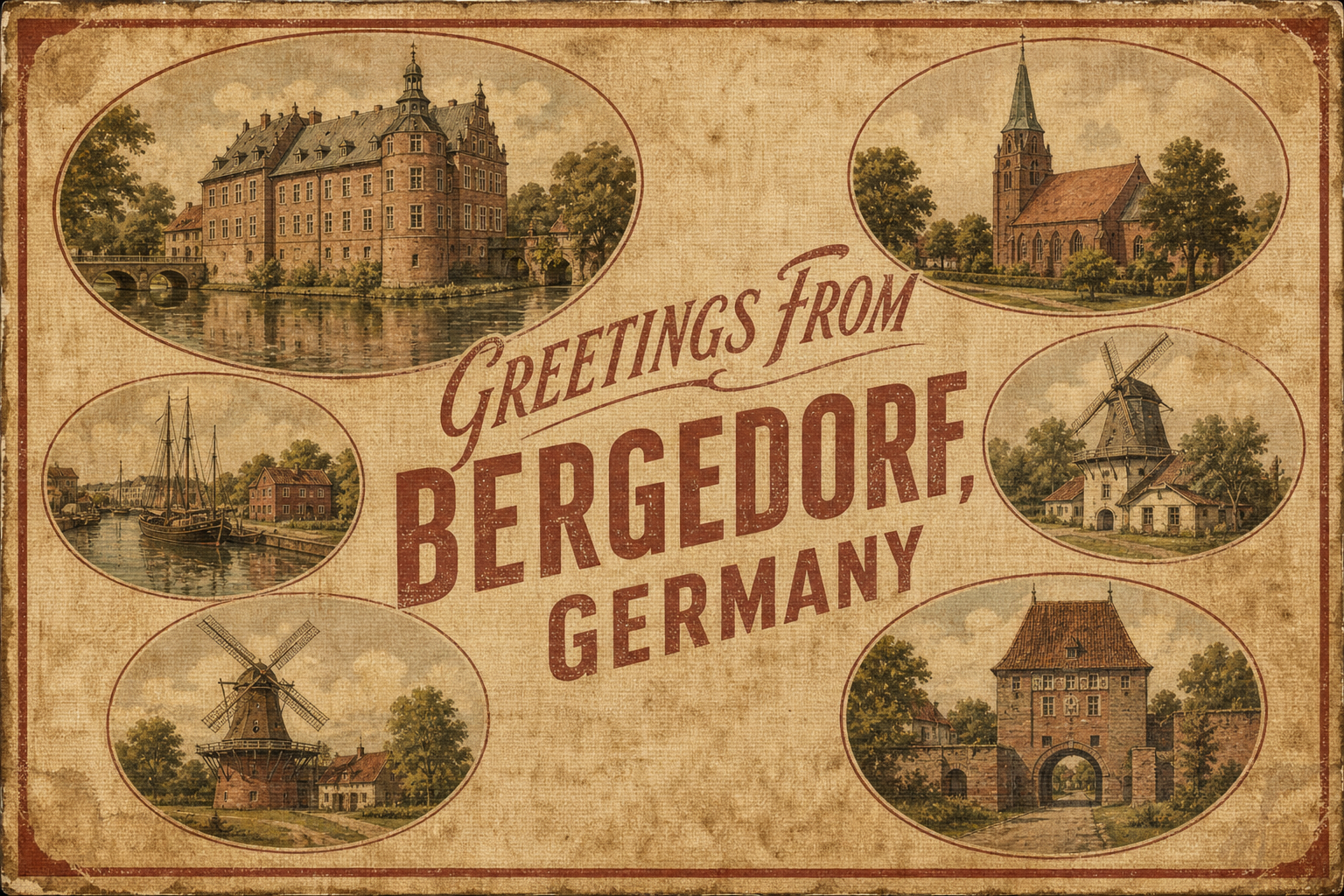
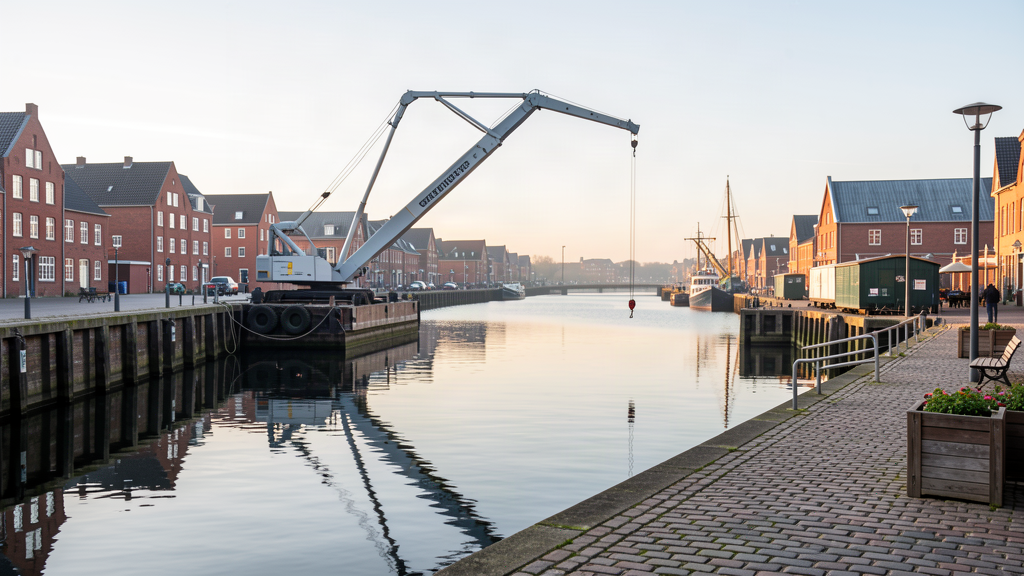
Most people who ride the S-Bahn southeast out of Hamburg Hauptbahnhof are heading somewhere else: a connection, a suburb stop, a car waiting past the platforms. I get off in Bergedorf when I want the city to shrink without leaving the city limits. Skip the castle postcard for a minute. The landmark that actually orients me is the five-tonne electric crane still planted above the Serrahn basin, a working-port leftover watching water that now holds café tables and boats instead of coal and machine parts.
Bergedorf sits at Hamburg’s southeastern edge, where the Bille thickens into mills, moats, and a short inland harbor that once tied Vierlande farms and local industry to the Elbe. Half-timber, village-church scale, a shopping street that feels more market town than metro. You can walk the core in an afternoon. I am less interested in mileage than in the water system that made the place.
Serrahn before the castle loop
I start at Bahnhofsplatz and walk southeast toward the harbor rather than beelining to Schloss Bergedorf. Serrahn is the small-port promenade: quay walls, cobbles, a basin that used to take freighters, and that renovated early-1900s crane still holding the skyline. Until the 1950s this edge was freight. Ironworks inputs came in; finished goods went out toward Hamburg’s big port. The crane was never a tourist add-on. It is still the clearest leftover of how the basin worked.
Serrahnstrasse runs as a calmed cobble lane along the water. A couple of older buildings keep the industrial memory honest while the rest of the quay has gone café. Sit outside if the weather holds. Order something simple. Watch day-trip boats, lunch loops, locals cutting through toward Sachsentor. The water is the same Bille system that once powered mills and filled castle moats.
Across the basin you can pick out the historic corn water mill line tied to the damming of the Bille centuries ago. Harbor and castle share that hydrology, one commercial and one administrative. Stay long enough that the crane stops feeling like a photo stop and starts feeling like part of the street.
Moat paths and Hamburg’s only full Schloss
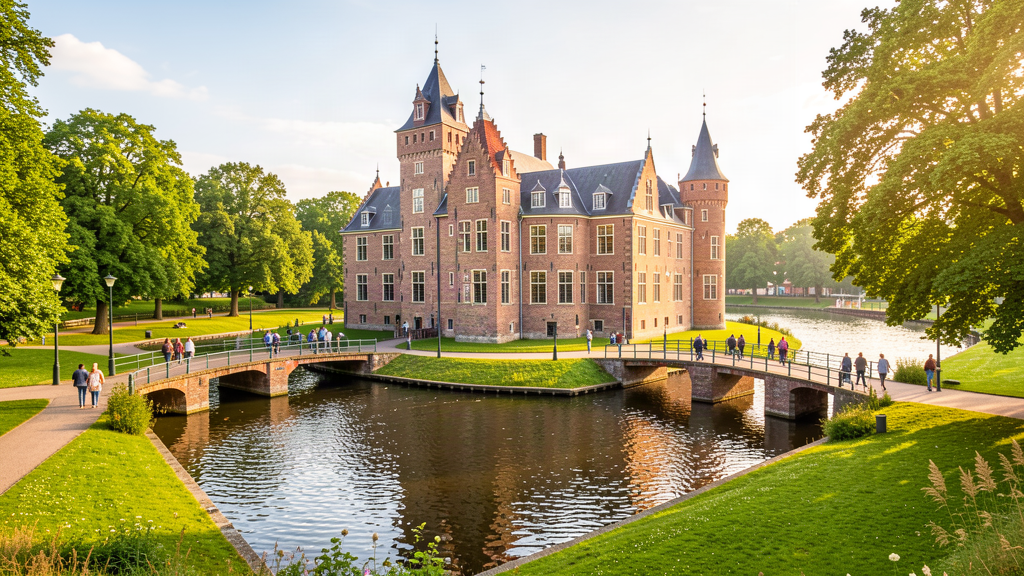
From Serrahn the walk toward Bergedorfer Schloss is short and green. A branch of the Bille wraps the grounds in an almost spiral moat, putting the brick ensemble on a small island of park. This is Hamburg’s only fully preserved castle. No king lived here. Dukes of Saxe-Lauenburg used it for a time; after 1420 Hamburg and Lübeck ran Bergedorf jointly as an administrative seat. Courtrooms and the Landherrenzimmer still read as office history more than fairy tale.
Cross the little bridges slowly. The Schlossgarten has been under monument protection since 1926: curved paths, old trees, a landscape locals use like a neighborhood park. On Tuesdays and Fridays farmer stalls line the garden edge. Regional produce, short conversations, no need to perform being a visitor. Buy fruit if you walk further into the Vierlande later, or just circuit twice and watch the brick mass change angle with each bridge.
Inside, the museum covers settlement, joint rule, and how marsh villages became a Hamburg borough. One permanent room and whatever temporary show is up is enough. The café wing, Schloss-Restaurant Café la note, sits in the building itself, courtyard when weather allows. Coffee here feels ordinary in a good way once you remember the place was always more desk than throne.
Sachsentor, church scale, and the old-town grid
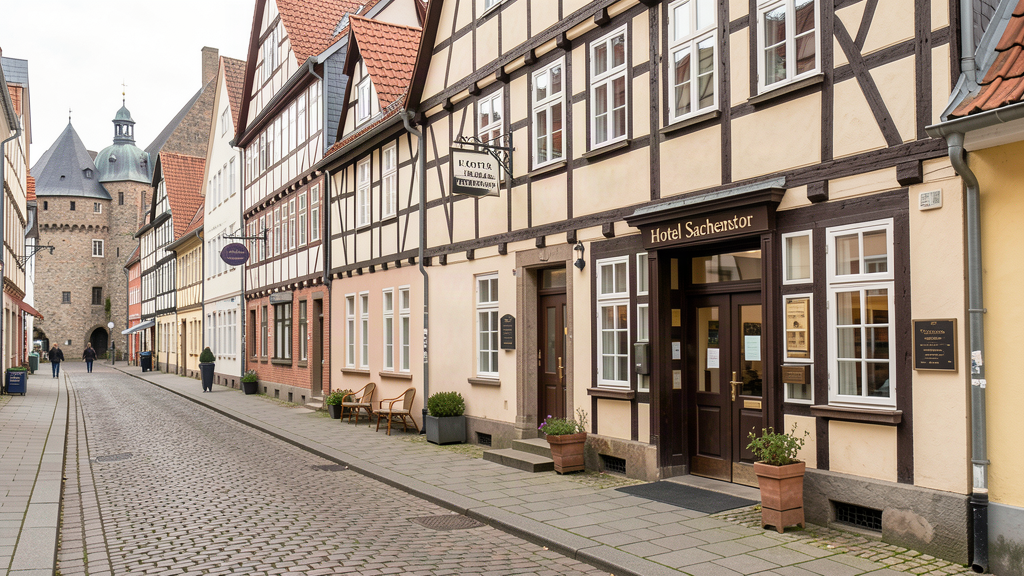
Leave the park toward the old town and you hit Sachsentor, Bergedorf’s main shopping spine. Low façades, independents mixed with chains, half-timber that still feels like a market street. St. Petri und Pauli keeps village-church proportions nearby. The center is compact: harbor, mill edge, castle park, pedestrian streets, S-Bahn. A loop you can hold without an app.
I drift Sachsentor without a shopping mission. Duck into a side street when a window is enough. The pace is slower than Sternschanze or the Innenstadt, and that is the point. If you came only for the castle photo, you miss Bergedorf still functioning as a town for people southeast of the Elbe bridges.
Water routes outward
Bergedorf’s longer story is the Vier- und Marschlande: diked farmland, farmhouses, village churches, bike paths along ditches and the Dove-Elbe. You do not need a full day-tour. Walk or ride a short stretch beyond the core and buildings drop into open land faster than most Hamburg districts allow. Schleusengraben, cut in the fifteenth century, once made the inland harbor viable. Passenger boats still use the water while freight memory sits in the crane and quay stone.
If you want water without a long cruise, the Serrahn basin is enough. Watch a boat turn. Follow the park lake path. The Bille will not give you an Alster postcard. It is working water that became leisure without wiping out the industrial chapter.
Getting here without a car
S-Bahn to Bergedorf is the clean approach from Hauptbahnhof. Roughly twenty minutes, then a short walk into the old town. Taxis feel optional. Buses fill the wider borough; for the core you walk. Bikes suit the Vierlande if you extend the day.
Skip driving into the center unless you need a hotel drop with parking. Cobble and damp park paths want decent shoes. Wind off the water cuts even on mild days. A simple arc works: morning S-Bahn, Serrahn crane and quay coffee, Schloss bridges and a museum hour, Sachsentor lunch, park second loop or short marsh edge, evening back at the basin when day-trip noise thins.
Places to Stay
Hotel Sachsentor (value, family-run center) Bergedorfer Schlossstraße 10, 21029 Hamburg Quiet side street steps from the pedestrian core, castle, and S-Bahn without a corporate lobby. Modest rooms, personal desk energy, easy walking base when the trip is harbor, moat, and market rather than spa nights. Sleep inside the old-town grid and keep rates practical.
Hotel KUHBERG Hamburg (mid, small house) Wiebekingweg 2a, 21029 Hamburg A handful of rooms a short walk from the Schloss. Guesthouse scale, not a tower. Private parking if you drove, city-edge calm, Serrahn and Sachsentor still on foot. Quieter nights and a human-sized property without leaving Bergedorf.
H4 Hotel Hamburg Bergedorf (upper-mid, full-service near the rails) Holzhude 2, 21029 Hamburg Larger four-star house a few minutes from S-Bahn Bergedorf and a short walk to the Schlossgarten. Full hotel restaurant and facilities when you want a complete stay and still wake in the borough. Solid default if one person needs desk space and the other wants castle paths before breakfast.
Confirm event nights around the Schloss. Concerts and seasonal markets change the park sound without turning the district loud by Hamburg standards.
Restaurants and food
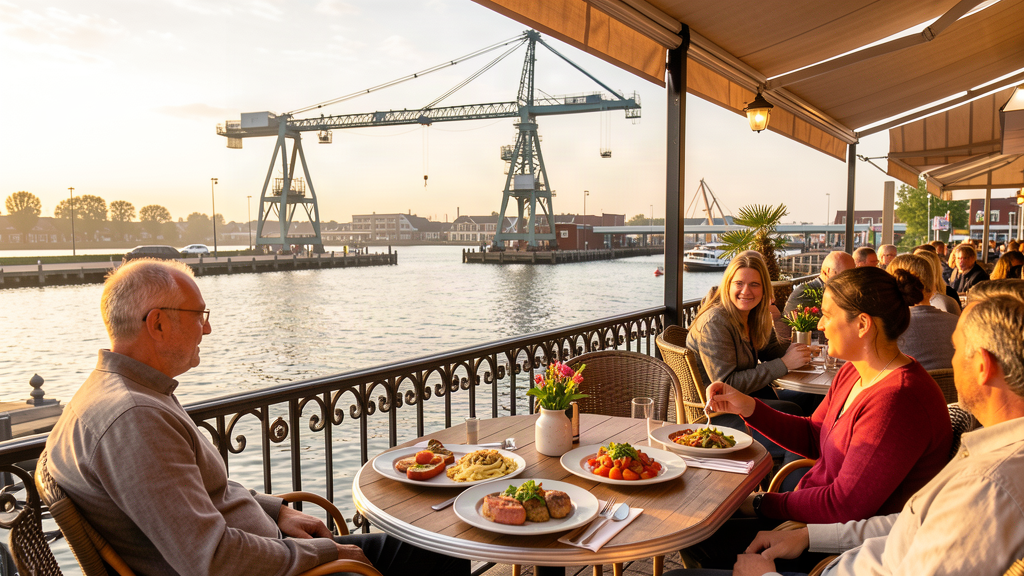
Bergers am Serrahn Serrahnstraße 2, 21029 Hamburg Mediterranean plates with a regional lean, right on the old harbor edge. Indoor and terrace seats face the basin and crane. Lunch after the quay walk, or dinner while the water holds last light. The view does most of the selling.
Schloss-Restaurant Café la note Bergedorfer Schlossstraße 4, 21029 Hamburg Café and light meals in a side wing of the Schloss. Breakfast, coffee, cake, a short savory list, courtyard in summer. Museum-threshold energy without museum formality. The right pause between moat loops while brick walls stay around you.
La Puglia Sachsentor, 21029 Hamburg Italian room on the main pedestrian street after the shopping drift. Pasta and straightforward comfort without reservation theater most weeknights. Harbor-and-park days end well here before the S-Bahn home.
On market days, buy fruit or cheese at the Schlossgarten stalls and picnic on a park bench. Bergedorf is built for that meal as much as for table service.
A day that ends under the crane
Bergedorf is easy to treat as a Miniatur Wunderland add-on. Better to take it as a small port town Hamburg grew around. Morning under the Serrahn crane, bridges over the Schloss moat, a farmer stall if the calendar lines up, coffee in the castle wing, Sachsentor without hurry, water again before you ride northwest. The five-tonne arm above the basin is still the landmark I trust. Not a king’s tower. Just a machine that once lifted Bergedorf’s living into boats, still watching the same water in a slower century.
