
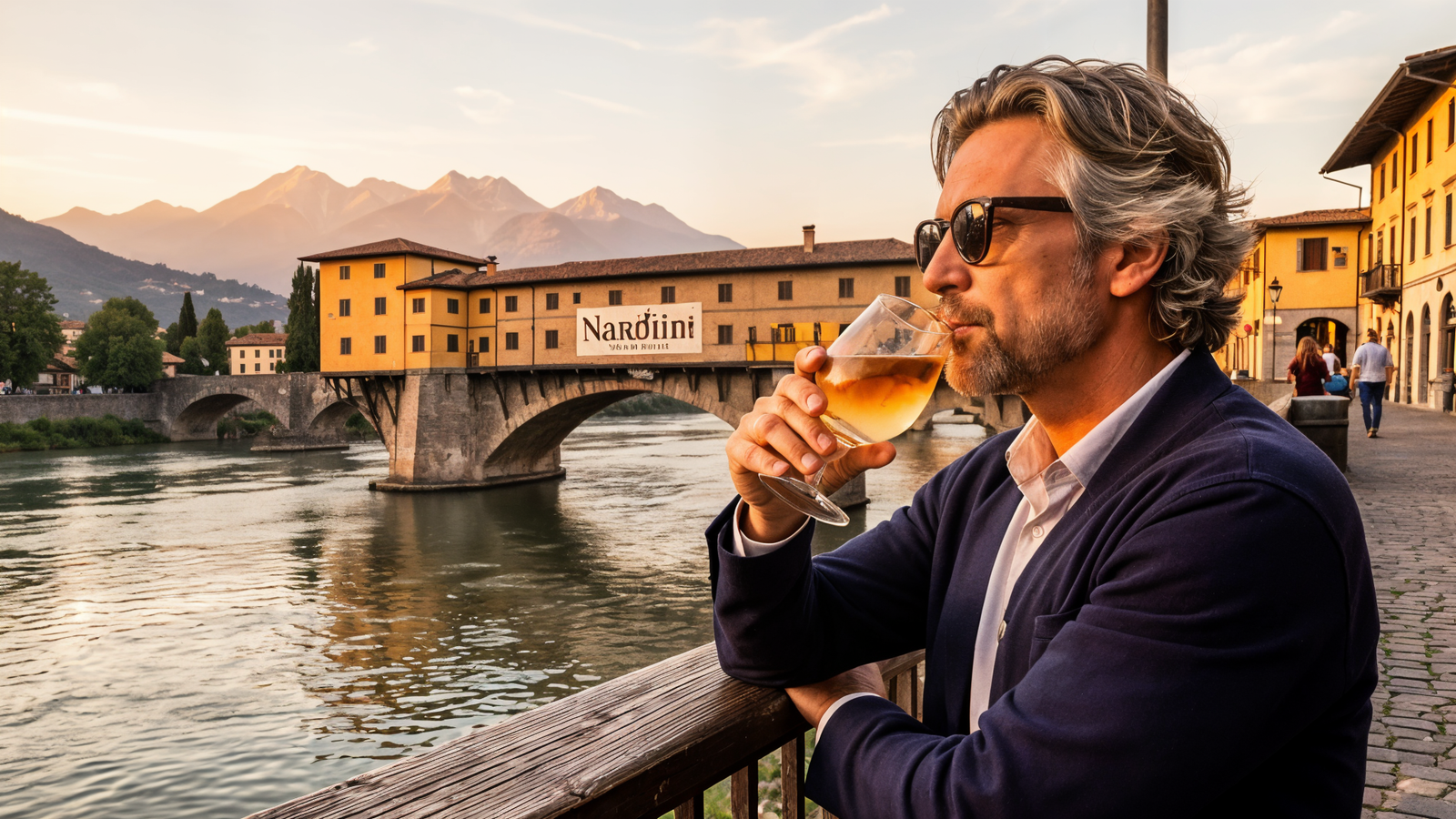
I did not come to Bassano del Grappa for a mountain weekend or a spare bed near Venice. I came for a wooden bridge that still carries real foot traffic across the Brenta, and for the small habit at its eastern end: a cold mezzo e mezzo at Grapperia Nardini, drunk standing where the deck meets the town. The drink is half Nardini’s Rebarbaro and half soda with lemon — a little bitter, a little citrus, cheap enough that people order a second. Under Monte Grappa, Bassano still runs like a town with errands.
If you only photograph the covered bridge, you leave with the postcard and not much else. Give it a night or two and the day fills in: market mornings on the squares, white asparagus tied with willow in spring, stockfish still sold for Friday’s baccalà, ceramics at Palazzo Sturm, evenings when river air cools the arcades. I tend to hit the wood first, wander uphill into the piazze, and wait on the grappa until the light drops.
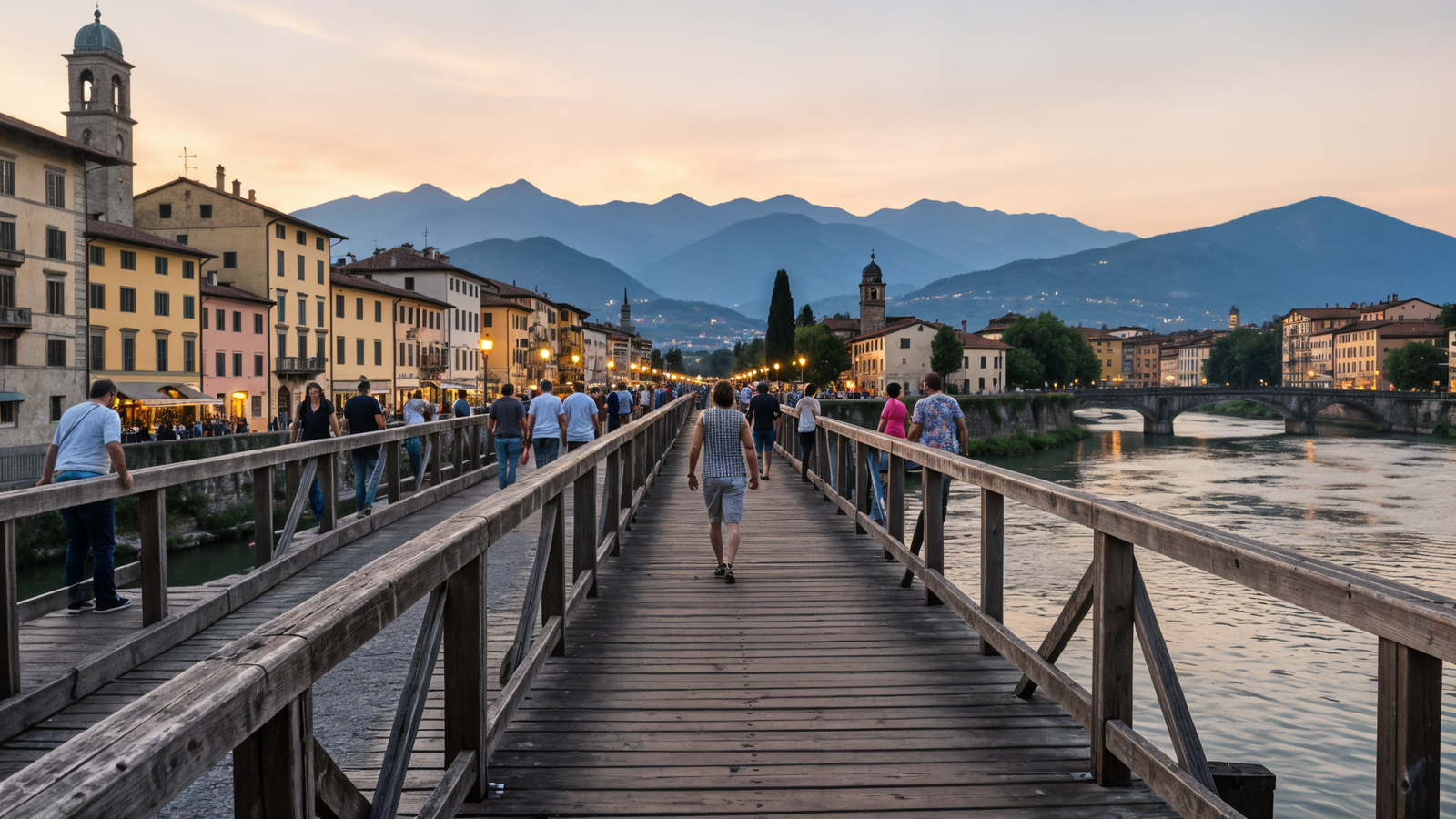
On the deck: Ponte degli Alpini and the Brenta
The Ponte Vecchio — Ponte degli Alpini if you know the mountain troops who claimed it — is not a museum piece. Palladio redesigned it in wood in 1569 because stone kept losing to the river’s autumn floods, the brentane. Floods and wars damaged it again; people rebuilt to the same logic. On the covered deck you feel that: boards underfoot, river air in the gaps, Monte Grappa and the Valsugana opening north when the weather is clean.
Stand in the middle once without a phone. The Brenta below is not a gondola canal. In summer it cools the town; a short walk toward Via Volpato gets you to the little river beaches Bassanesi call le cascatelle or the spiaggetta di Angarano. The far side of the bridge feels greener — bank paths, willows, longer walks into Palladian country if you have the afternoon.
At the town end, Grapperia Nardini has held the corner since 1779. Italy’s oldest commercial grappa house still pours at Ponte Vecchio 2. Order the mezzo e mezzo. Take it onto the wood if there’s room. Nobody here is doing a tasting flight; it’s an aperitivo with a view and no headset required. Poli Museo della Grappa is nearby if you want stills explained. Nardini is where I usually stop the day with a glass.
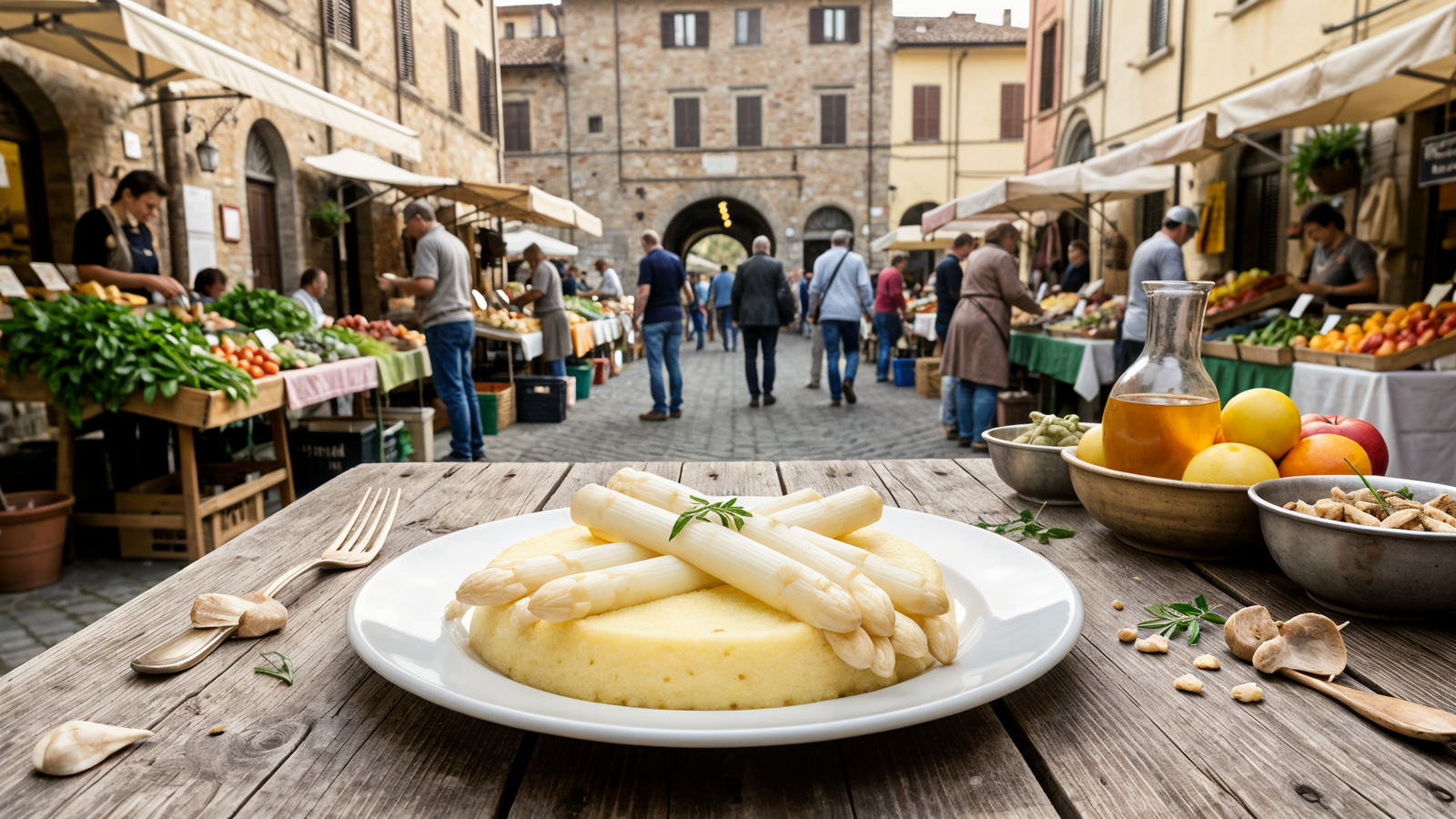
Squares, asparagus, and streets that keep their errands
From the bridge, short climbs lead into Bassano’s center: Piazza Libertà with its arcades and the lion of St. Mark, then Piazza Garibaldi with the Torre Civica, San Francesco, and the Museo Civico. Piazzotto Montevecchio still feels medieval — frescoes, the Monte di Pietà, a scale closer to a town than a shopping street.
Thursday and Saturday mornings the open-air market takes the squares — fruit, cheese, fish, ordinary clothes. Thursday is also when you buy baccalà already soaked for Friday. Bottega del Baccalà di Concato has sold stockfish here since 1935. In spring, roughly March into June, Asparago Bianco di Bassano DOP shows up in bunches bound with a stroppa, a young willow branch. The spears stay pale under the soil; menus turn to asparagus with eggs, risotto, or oil and cheese while the season lasts. The rest of the year the town just cooks whatever else is in.
Via Jacopo da Ponte holds Palazzo Roberti, now a bookshop with high rooms, a garden, and a frescoed piano nobile. I go in for one paperback and leave slower than I planned. Ceramics live at Palazzo Sturm. Walking works best when you follow other people’s errands: shoe shops, dry porcini by weight, honey, indie clothes on Via Matteotti and Via Gamba before you drop back to the river.
Viale dei Martiri, above the center, is trees and memory — World War I hangs over Bassano through Monte Grappa and the Alpini museum by the bridge. You don’t need a full war tour. Knowing why the bridge carries that name is usually enough.
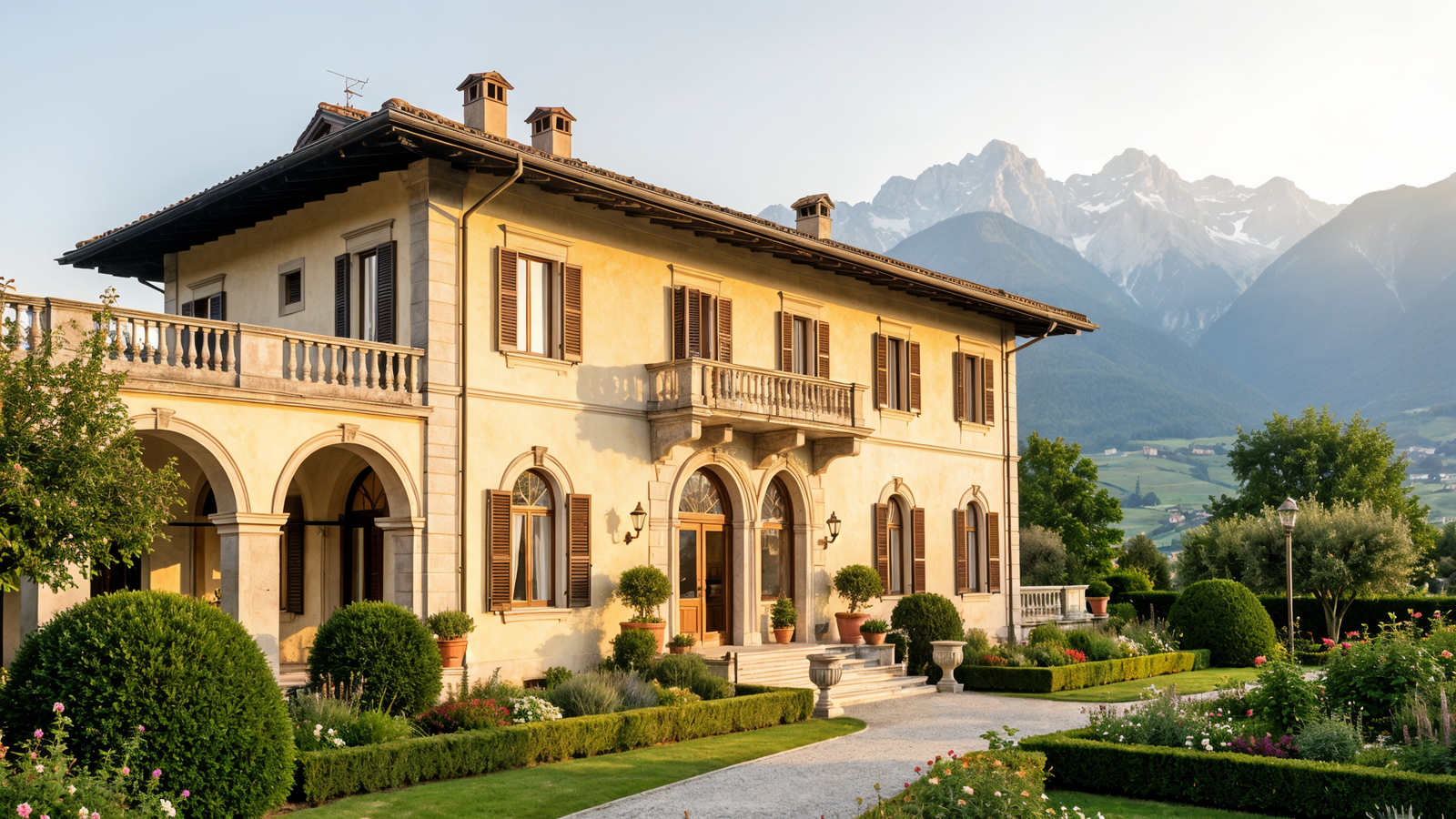
Places to Stay
Stay somewhere you can walk the bridge at dusk without hunting a taxi. Three options at different prices:
Hotel Brennero — Via Torino 7, 36061 Bassano del Grappa VI. The practical pick near the station edge: straightforward rooms, easier parking than the tightest ZTL lanes, a short walk toward the historic core. Fine when the trip is early markets, river paths, and dinner rather than a villa garden.
Hotel Al Castello — Via Lazzaro Bonamigo 19, 36061 Bassano del Grappa VI. Mid-range inside the historic fabric, close enough to the castello and squares that nights end on foot. Smaller-hotel habits; the bridge and Piazza Garibaldi stay on the evening loop.
Hotel Villa Ca’ Sette — Via Cunizza da Romano 4, 36061 Bassano del Grappa VI. The splurge: an 18th-century villa complex just outside the densest center, with gardens and a slower arrival. Rooms span older and newer buildings; breakfast and dinner feel like a country house that still feeds a real town. Book ahead for asparagus season and clear spring weekends.
Bassano fills on fair weekends and Sundays when Monte Grappa draws traffic. Midweek and shoulder seasons keep the bridge walkable at the hour you want it.
Where to Eat
The menus aimed straight at the bridge’s busiest photo angle are usually the ones to skip. Bassano eats better a street off the deck, and anywhere white asparagus or baccalà still get real kitchen time.
Birraria Ottone — Via Matteotti 48/50, 36061 Bassano del Grappa VI. Family-run since the late nineteenth century, with a room that still feels like a proper Bassano lunch. White asparagus when the DOP is in; baccalà alla vicentina with polenta when it isn’t; goulash and rye bread as a leftover Austro-Hungarian habit from the house’s beer roots. Reserve for dinner.
Antico Ristorante Cardellino — Via Bellavitis 17, 36061 Bassano del Grappa VI. Older dining room, regional cooking, a menu that moves with what the market sent. Good for a longer meal when you want soft polenta, seasonal vegetables, and a bottle from the nearby hills without paying for a bridge-view markup.
Ristorante Al Ponte — Via G. Volpato 60, 36061 Bassano del Grappa VI. On the river side with the wooden bridge in play — a sit-down evening when you want the Brenta in the window. Seasonal plates, a slightly dressier room than Ottone. Check the day off before you pin the night to it.
The Thursday and Saturday market covers a lot of daytime eating education on its own. For a standing pause, Nardini’s mezzo e mezzo at Ponte Vecchio 2 sits between the deck and dinner; it isn’t a meal. Keep dinner for rooms that still cook for locals on weeknights.
Getting around and a simple rhythm
Bassano is a walking town inside the old gates. The station sits a short walk from the walls; Venice is roughly an hour by rail when you want the lagoon without sleeping there. Vicenza, Padua, and Treviso are easy day spokes. Skip cars in the historic ZTL. If you drive for Monte Grappa or the Valsugana bike path, park outside the core and finish on foot.
What I tend to do: coffee in Piazza Libertà or Garibaldi while the market is still honest, Museo Civico or Palazzo Roberti before the heat, then down Via Gamba to the bridge. Mezzo e mezzo at Nardini on or beside the deck. Lunch at Ottone. Afternoon along the Brenta toward the spiaggetta, or up Viale dei Martiri for shade. Early evening back on the wood when the Prealps go soft. Dinner at Cardellino or Al Ponte — and if it is asparagus season, I stop second-guessing the menu.
Bassano after the photo of the bridge
I still walk the Ponte degli Alpini every time I’m here. The roofed wood holds, and the Brenta under it is the same cold push that forced Palladio to think in timber. I used to treat Bassano as a ten-minute stop between Venice and the Dolomites. That was a mistake. Market mornings set more of the pace than any brochure. Spring brings the willow-tied spears. The stockfish shop on a Thursday still outlasts fashion. There’s a bookshop in a Napoleonic palazzo, and a half-and-half poured a few steps from boards that soldiers and shopkeepers have both crossed.
Two or three nights is plenty if you stay somewhere walkable and let the river pull a few of your turns. Yes, they sell postcards of the covered bridge. I left with the ordinary stuff instead: a deck that still works as a street, squares that still hold a market, white asparagus when the calendar allows, and a mezzo e mezzo at Nardini once I’d actually walked the town.
