
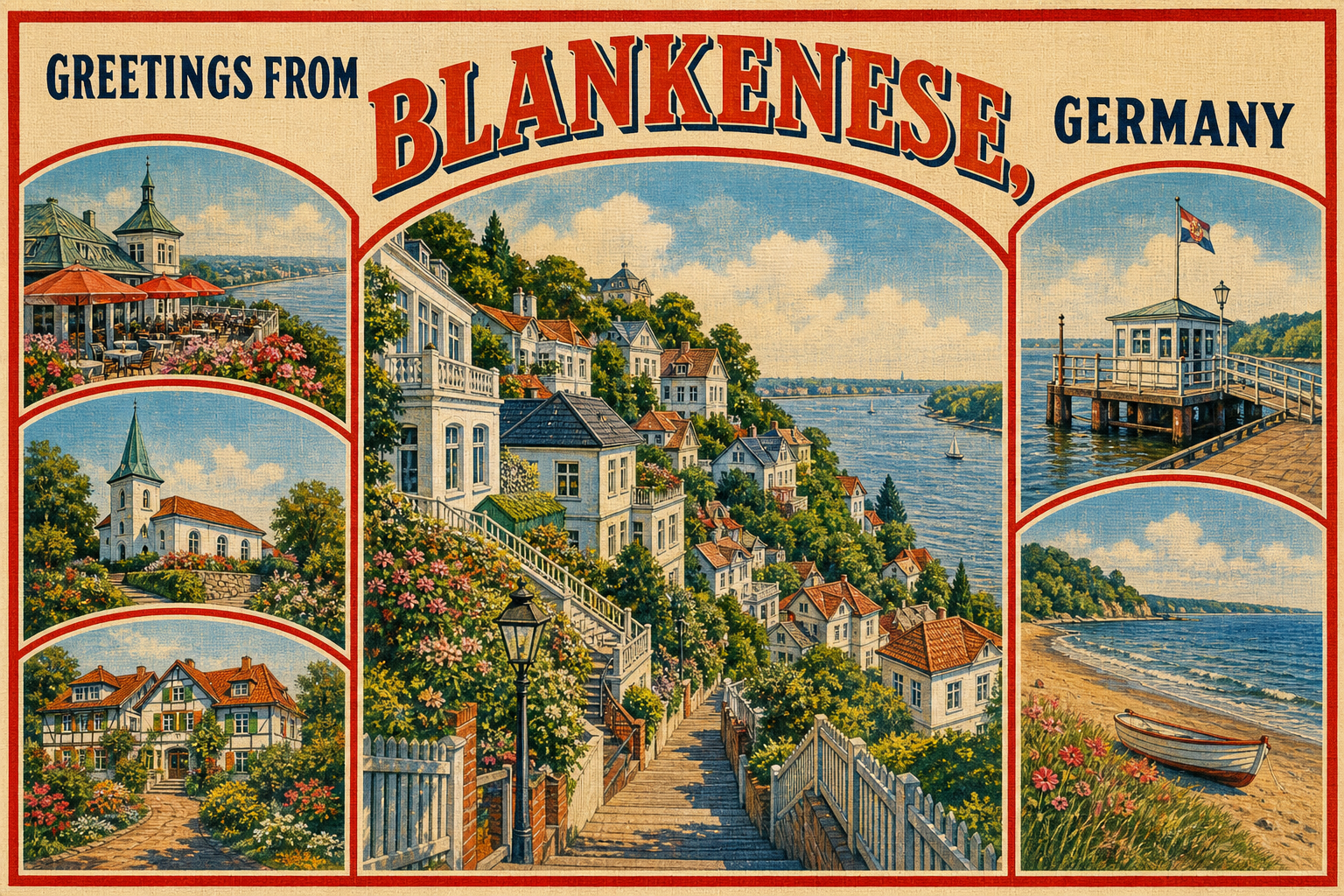
Hamburg’s postcard usually starts at the harbor cranes or the glass concert hall. I start one S-Bahn stop further west, where the river still feels like a working waterway and the houses climb the bank on stairs instead of boulevards. Blankenese was a pilot and fishing village before it became a green edge of the city. The Treppenviertel still works that way: brick and stone flights, narrow lanes between captain houses, laundry lines and garden gates that force you to walk like someone who lives here. At the bottom, Strandweg runs along the sand and the ship wakes. The day is mostly the climb down, time by the water, and the climb back up. Not a list of viewpoints.
Blankenese sits in the Elbvororte, folded into Hamburg’s Altona borough but still reading as its own place. Villas higher on the slope, smaller houses lower down, Süllberg as the old house hill, the Elbe as constant traffic. You come for stairs and river light, not for a museum ticket.
Off the S1 into the stair quarter
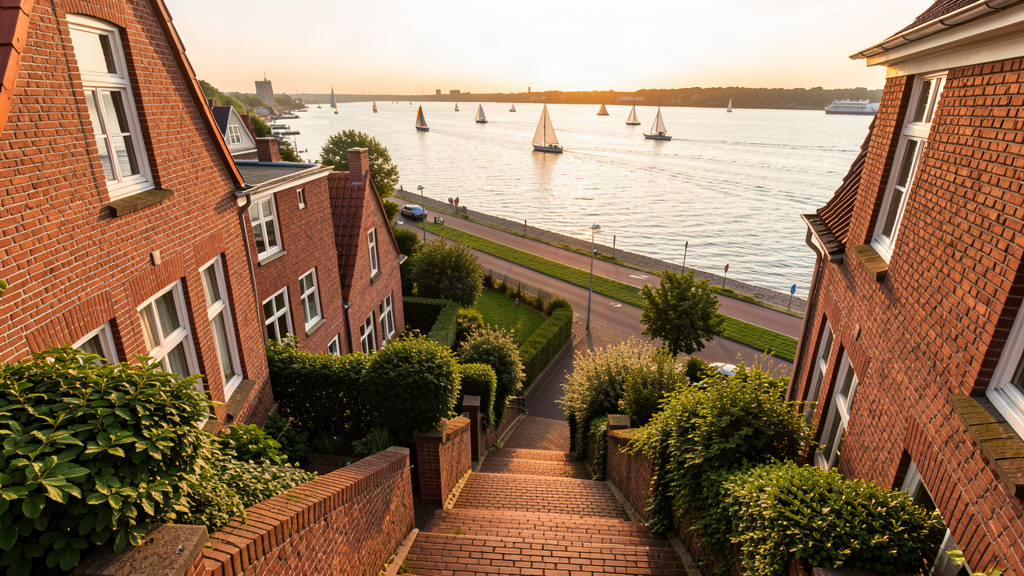
Blankenese station on the S1 is the practical door. From the platforms you are already above the river; the Treppenviertel drops south toward Strandweg in a tangle of named flights and short connecting paths. I don’t hunt for a single main stair. Let the slope decide — go down when a lane opens, cut sideways when a garden wall blocks you, take the next bricks when the path ends at a door.
The houses do most of the talking. Former pilot and captain homes sit close together, white and brick, some with river-facing balconies, some with nothing but a keyhole view between roofs. You hear the S-Bahn faintly above and freighters below. On warm days the stairs hold walkers with coffee cups and dogs that know every landing. On wet days the brick gets slick and the quarter empties to people who live here. Both versions feel true.
Give the first hour to getting lost on purpose between Bahnhofstraße and the water. Blankeneser Landstraße holds shops and ordinary errands; the Treppenviertel holds the reason you came. When you finally hit Strandweg, the river opens wide enough that the stairs behind you feel like a different climate.
Strandweg, sand, and the working Elbe
Strandweg is not a beach-resort promenade. It is a working edge with sand patches, jetties, club boats, and restaurants that face container ships and excursion craft with the same calm. Locals walk dogs at odd hours. Cyclists share the path with strollers. On clear evenings the light goes long across the water toward Falkenstein and the harbor mouth.
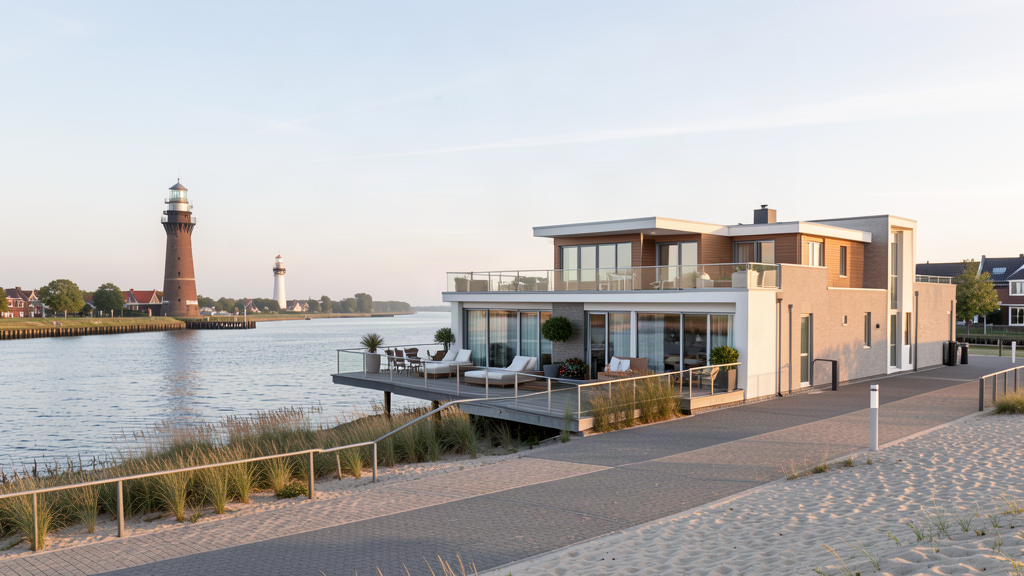
Walk west and east in short legs rather than treating the path as a marathon. East toward the denser stair exits keeps you close to cafés and dinner. West toward the lighthouse stretch and the Mühlenberger side opens more river and fewer storefronts. The Blankeneser Oberfeuer marks the transition; nearby kiosks turn ship-watching into an afternoon without much plan. MAATS, the small coffee window by the light, only makes sense if you are already on foot: waffle, fish roll, something cold, then back to the path.
Ferry wakes slap the sand. A barge pushes upstream. None of this needs a ticket — only time and shoes with grip for the return climb.
Süllberg and the green pause above the roofs
When the stairs have burned enough calves, climb or bus up toward Süllberg. The hill is Blankenese’s old lookout mass — restaurant terraces, hotel quiet, and paths that trade river grit for tree cover. Kaffeegarten Schuldt on Süllbergsterrasse has held the cake-and-coffee brief since the nineteenth century: streusel, waffles, a terrace aimed at Elbe traffic. Tourist-known, still useful if you want a sit-down pause without descending all the way again.
I treat the hill as a soft counterweight to the stair quarter, not a second headline. Late afternoon coffee here, then back down toward the station or the water, keeps the day in one neighborhood. For a single Blankenese base day, Süllberg plus Treppenviertel plus Strandweg is already a full map.
Getting around without flattening the slope
You do not need a car in the core. S1 to Blankenese covers Hauptbahnhof, Altona, and the airport branch. Local buses — including the small climbs toward Waseberg and Süllberg — fill vertical gaps when legs are done. Walking is the real mode once you leave the station: stairs, short plateaus, another stair.
Bikes suit the flatter Elbe path more than the Treppenviertel itself. Carry water and shoes you trust on damp brick. In summer Strandweg car access can be controlled; if you stay on the water, keep your booking confirmation handy.
A simple loop: morning S-Bahn in, coffee near the station or already in the stairs (Marmalade on Hans-Lange-Straße sits in the Treppenviertel fabric), full descent to Strandweg, long linger and lunch by the water, optional Süllberg cake, dinner back on Strandweg or up toward Bahnhofstraße, sleep inside the quarter so morning starts on the slope again.
Places to Stay
Homaris Strandhaus am Leuchtturm (value, river edge)
Strandweg 69, 22587 Hamburg
Small guesthouse feel on the western Strandweg stretch near the lighthouse side — simple rooms, garden calm, continental breakfast, river within a short walk. You trade boutique polish for location on the path itself. Good when you want to wake already at water level and climb the Treppenviertel only when you choose.
Remise am Süllberg / Süllberg Hotel (mid, hill quiet)
Süllbergsterrasse 8, 22587 Hamburg
Compact stay high above the Elbe next to the Süllberg gastronomy — rooms with a residential hush, breakfast on site, bus links from Blankenese station via the slope lines. You sleep above the stair noise and walk or ride down into the Treppenviertel. Practical when you want Blankenese without a beachfront rate.
stilwerk Strandhotel Blankenese (upper, design on the sand)
Strandweg 13, 22587 Hamburg
Art Nouveau villa from 1902 turned design boutique on the Elbe — curated studios and captain-house suites, garden terrace toward the water, short walk into the densest Treppenviertel exits. Choose it when the trip is the river edge itself and you want the stay to match the captain-house grain rather than a generic city hotel back toward Altona.
Confirm late check-in if your train lands after desk hours. Smaller Blankenese houses run on neighborhood time, not airport-hotel clocks.
Restaurants and food
Marmalade Café & Bar
Hans-Lange-Straße 23, 22587 Hamburg
Inside the Treppenviertel, a few minutes from the station drop and a short stair chain from the river. Espresso in the morning, wine when the light goes, a room that feels like a neighbor’s good table rather than a viewpoint café. Use it as the hinge between S-Bahn arrival and the first real descent, or as the last stop before the train back.
Restaurant Strandhof
Strandweg 27, 22587 Hamburg
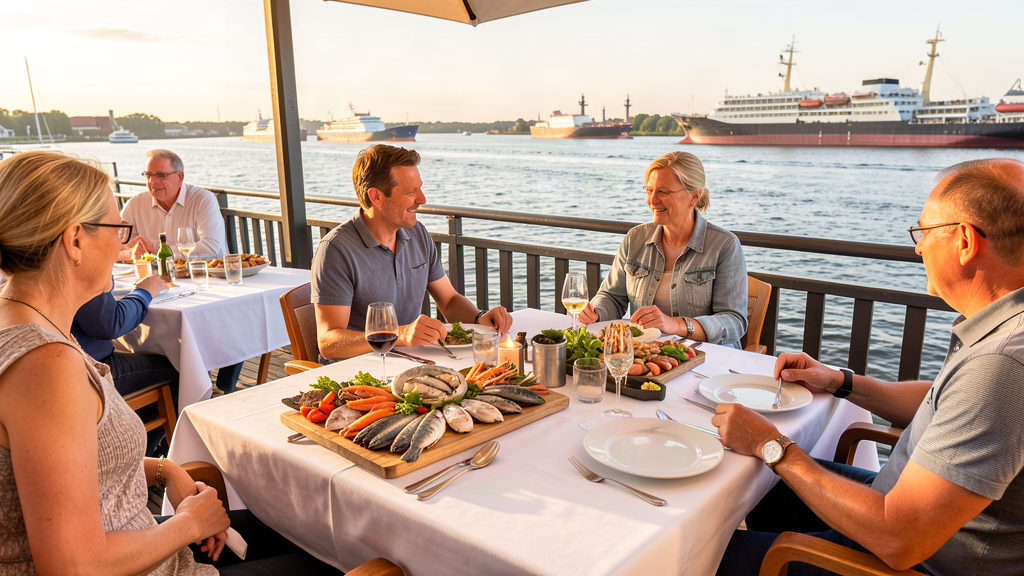
One of the oldest houses on this stretch — smithy and salvage store in earlier lives, café and restaurant for a long time now. Terrace when the weather holds, fish plates and steady German-coast cooking, vegetarians not ignored. Eat here when you want Strandweg history under the meal instead of only the view.
Fischclub Blankenese
Strandweg 30a, 22587 Hamburg
Seafood-forward room a few doors along the same water edge — indoor tables and outdoor seats, cocktails if the day turns into evening, reservations smart on fair-weather weekends. The menu stays with the river without a harbor-tourist costume. Pair it with a slow walk west toward the light after dinner if legs allow.
For lighter hours, Kaffeegarten Schuldt (Süllbergsterrasse 30, 22587 Hamburg) covers cake and ship-watching above the roofs, and the Oberfeuer coffee window covers waffle-and-path energy without a full sit-down. Carry a little cash for small kiosks; book Strandweg dinners when the forecast is clear. Locals and day-trippers hit the same tables.
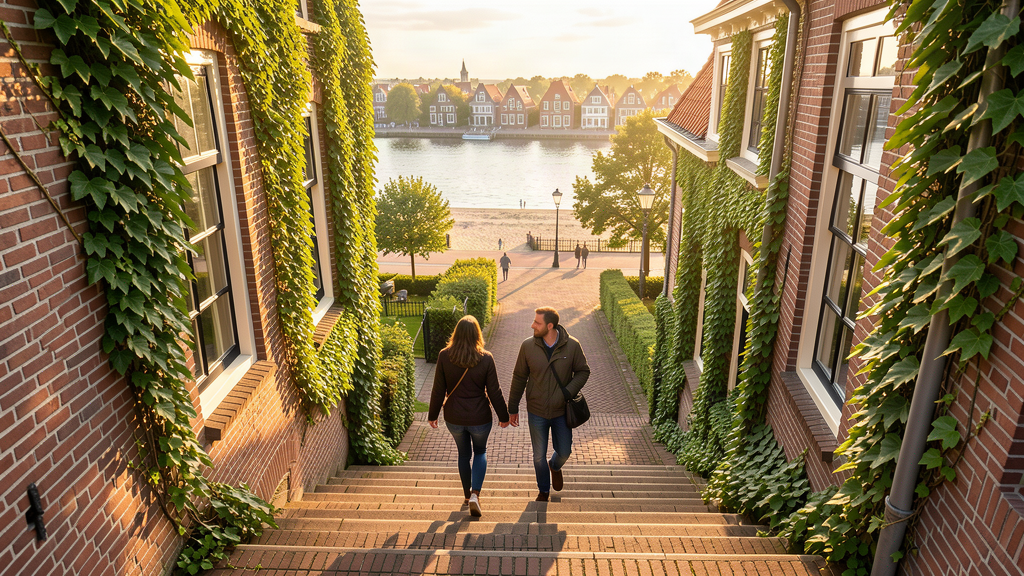
A day that stays on the stairs on purpose
Ride the S1 until the city thins and the station name is Blankenese. Do not flip straight into a harbor tour app. Walk into the Treppenviertel while the brick is still cool. Lose a half hour on nameless flights. Take Strandweg without rushing a photo at the first sand patch — watch one full ship pass. Climb toward Süllberg only if you want cake and air, not because a guide ranked the hill. Eat on Strandweg. Sleep on Strandweg or on Süllbergsterrasse so morning coffee still belongs to this slope.
The rest of Hamburg stays available on the same S-Bahn line. Blankenese works better when you let it be the whole day: captain-house stairs, river working traffic, and climbing back up whenever you’re ready.
