
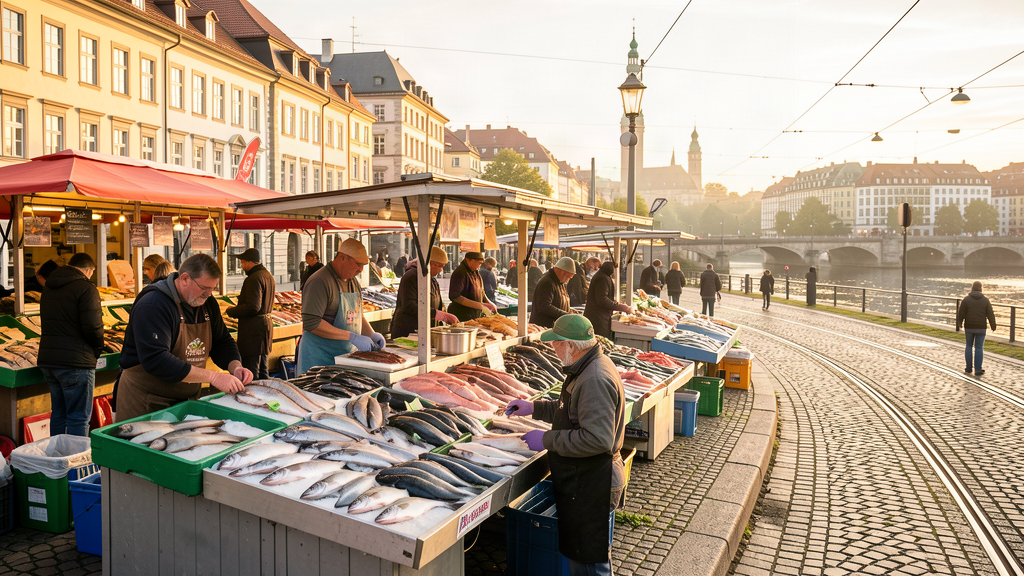
Cross the river from Marienplatz, and the noise drops a notch. Trams slow. The façades lose a story and pick up window boxes. You are in Haidhausen, on the east bank of the Isar, and the square that still behaves like a village green is Wiener Platz — maypole in the middle, chestnut shade, and a permanent market that has been feeding this quarter since 1889.
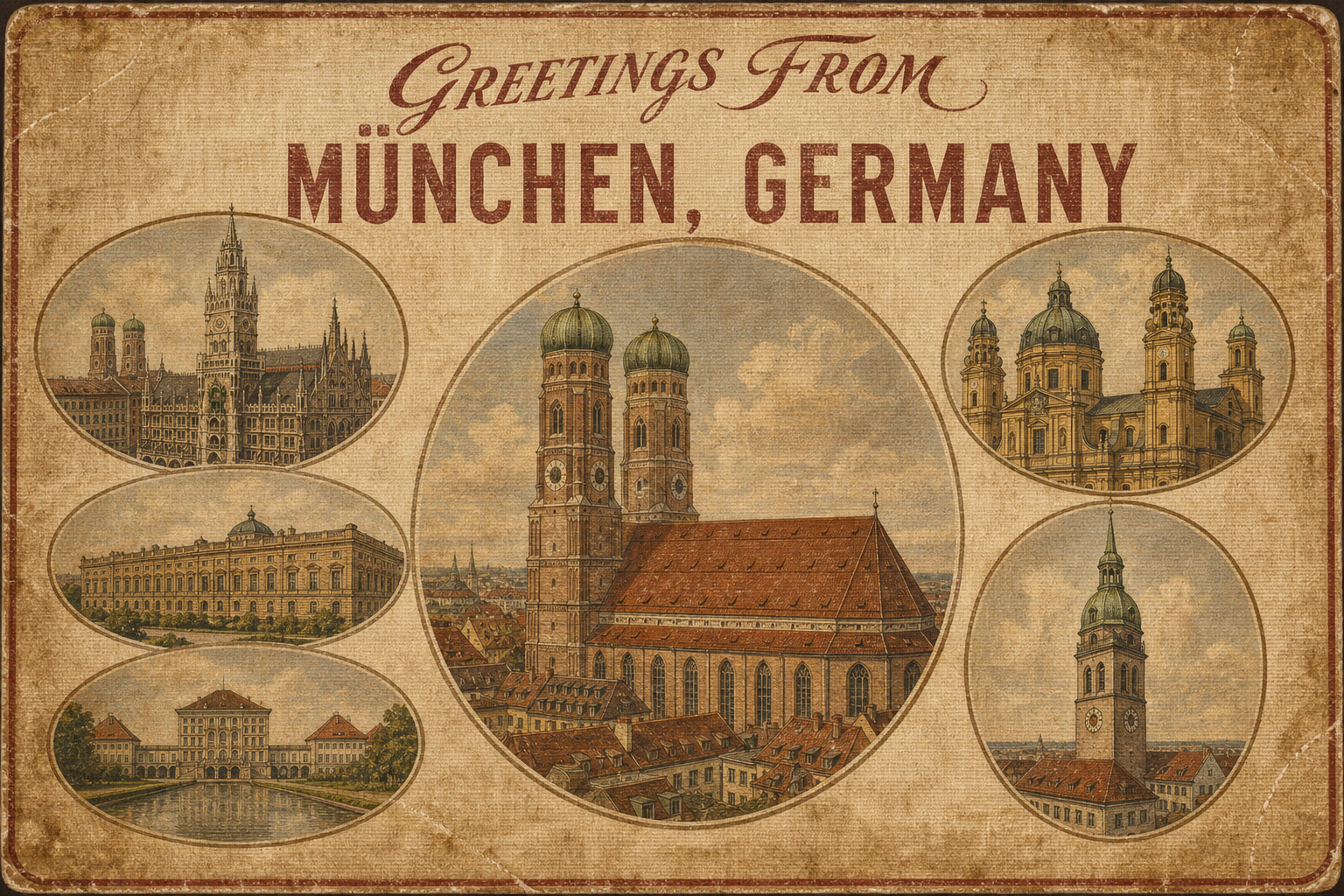
Most first visits to München start at the Glockenspiel and end in a beer hall that prints its own postcards. Fine, once. Better days sit one bridge east: morning fish and flowers at Wiener Platz, gravel bars on the Isar when the water is low, dumplings in Au, and an Art Nouveau pool you can actually swim in. The Altstadt stays fifteen minutes on foot. You just stop treating it like the whole city.
Wiener Platz and the market that stayed small
Wiener Platz is car-free now. It used to have a street through the middle; locals donated the Maibaum after the square was closed to traffic. Around a dozen stalls run Monday through Saturday — fruit, cheese, sausage, flowers, fish from a long-running stand, bread that disappears before noon on Saturdays. Hours are roughly weekday mornings into late afternoon, Saturday mornings only. Sundays the square goes quiet in the German way and the cafés take over.
Sit with a coffee on the east side and watch who actually shops here. Dog walkers. People with rolling baskets. Office workers from Max-Weber-Platz grabbing lunch. It is a fraction the size of Viktualienmarkt, which is the point. Nobody is selling novelty lederhosen. The maypole is blue-and-white and slightly scuffed. Gründerzeit houses in butter yellow and chalk blue ring the cobbles like they have always done this.
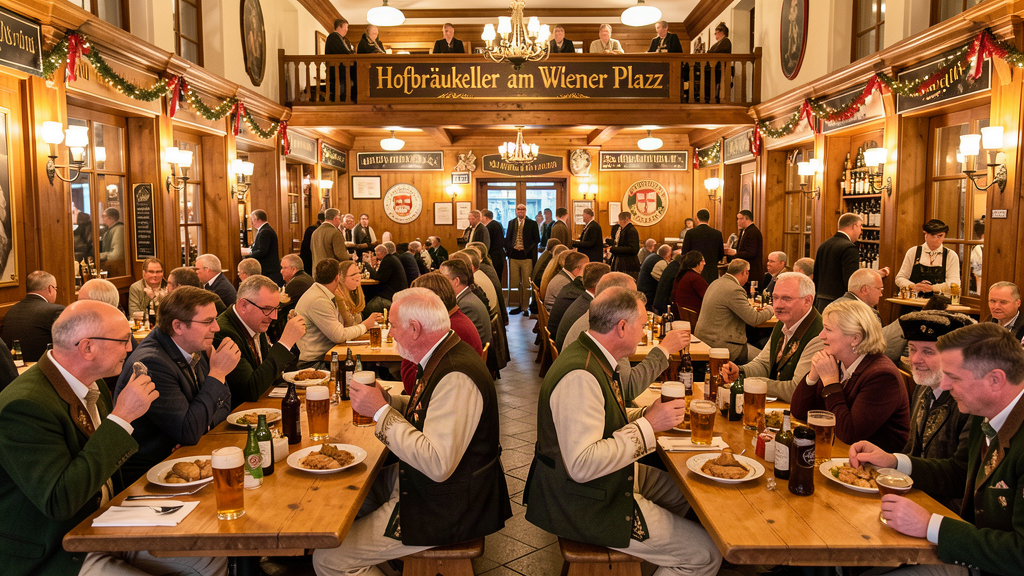
Hofbräukeller sits on the west edge of the square, beer garden under chestnuts, tables that fill with neighborhood regulars before tour groups figure out the tram stop. Use it when you want a Maß without the Hofbräuhaus wait. The Maximiliansanlagen park drops away behind the square toward the river — English-style paths, river views, joggers who live three streets over. Walk that band north toward the Friedensengel if your legs want green more than another church interior.
Franzosenviertel lanes and Preysingstraße
Haidhausen’s so-called French Quarter spreads east of the square in a star of streets named after 1870 battle towns — Pariser, Weißenburger, Bordeaux — laid out in the Gründerzeit boom when this was still a workers’ suburb outside the old gates. About two-thirds of the housing stock predates 1914. War hit other parts of München harder; here the painted façades and shutters mostly held.
Walk without a checklist. Preysingstraße still carries small shops and corner cafés. Weißenburger Platz opens around a fountain that locals treat as a living room in good weather. Courtyards hide bike racks and laundry. Bakeries open for the neighborhood rather than for cameras. The quarter is liberal and a little proud of not putting on Bavaria for strangers.
An der Kreppe, the old hollow way near Wiener Platz, keeps a few herberg-scale houses from the days when Haidhausen housed day laborers and brickmakers for the Frauenkirche. Read the street widths. This was clay, kilns, and boarding rooms — not Residenz elegance. That older grain still shows under the renovated stucco.
Au, Mariahilfplatz, and the Isar’s working edge
South of Haidhausen the ground tips toward Au — once a fishing and mill village on the river arms, later a craft quarter famous for rough humor and Karl Valentin, who grew up looking toward what is now Museumsinsel. Mariahilfplatz slopes under the Mariahilfkirche. Three times a year the Auer Dult takes it over: crockery by the crate, household iron, antiques, chain carousels, Apfelkücherl from stalls near the church steps. Spring, summer, and autumn Dults are when Au smells like frying dough. If your dates miss it, the square still works as a weekly market ground between river and tram.
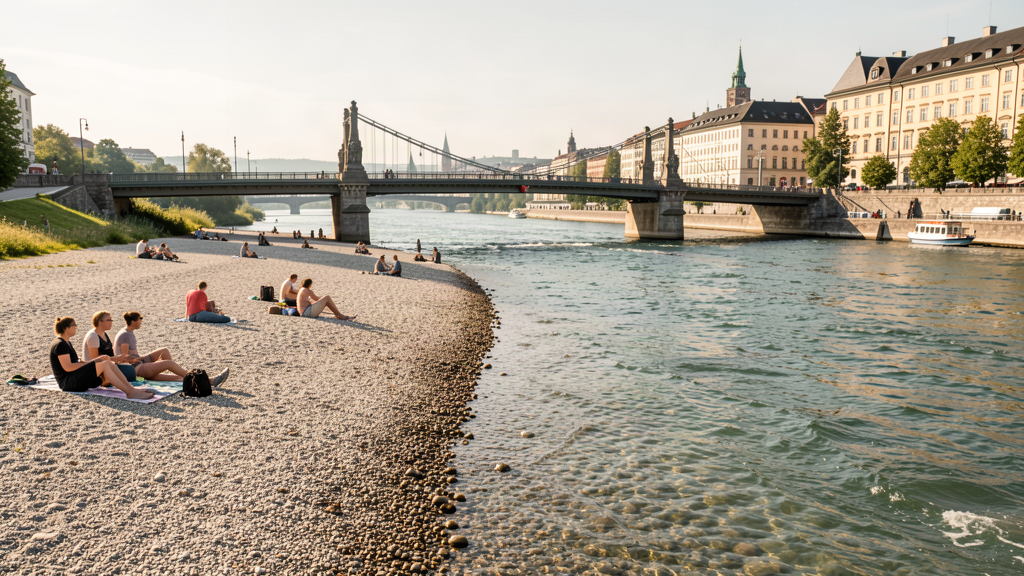
The Isar is the quarter’s other street. Between roughly Reichenbachbrücke and Wittelsbacherbrücke, the renatured banks open onto gravel and meadow. Locals call the stretch Monacocabana without much irony. In low water you can wade to midstream bars, towel on stone, skyline behind you. The water runs cold even in June — alpine melt, not a heated lido. Bring shoes that can get wet. After heavy rain or peak snowmelt, the beach disappears, and cellars near the river remember why Au learned floods.
Evenings on the bank are beer, picnic blankets, and phones lighting faces after the sun drops. Muffatwerk sits by the water with club nights and a beer garden when you want sound. Müller’sches Volksbad on Rosenheimer Straße 1 — Jugendstil, opened in 1901, still a working municipal pool — is the indoor version of the same idea: public water you pay a ticket for, not a spa day. Swim a few lanes under the vaulted hall, then walk back across Ludwigsbrücke if you need the Altstadt for one errand.
Places to stay
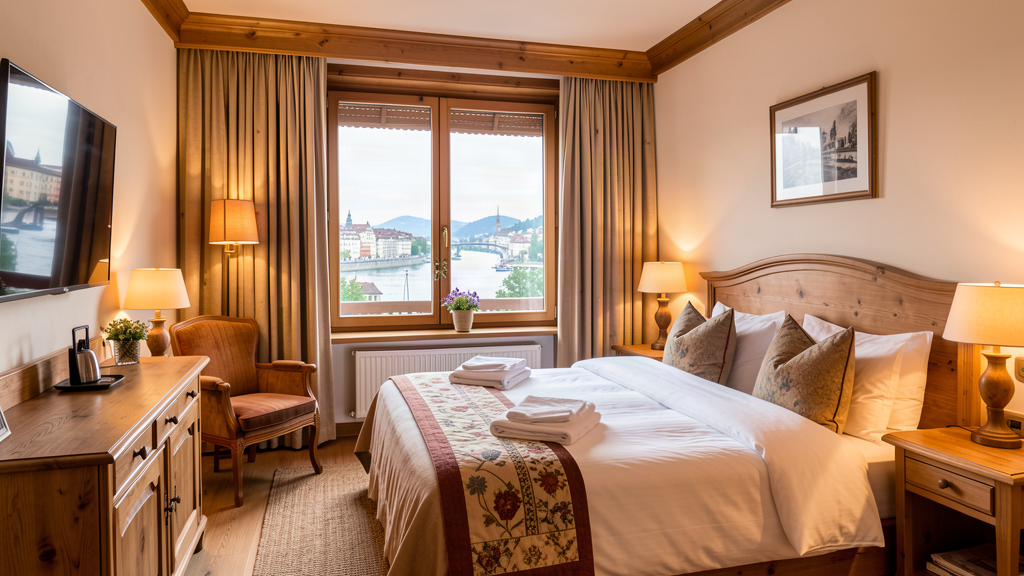
Base east of the Isar if you want morning market walks and river access without commuting through Hauptbahnhof sprawl. U4/U5 at Max-Weber-Platz and S-Bahn at Rosenheimer Platz or Ostbahnhof keep the rest of the city easy.
mk | Hotel München max-weber-platz (value / transit spine)
Einsteinstraße 34, 81675 München
Small modern house right on Max-Weber-Platz — seventeen rooms, air-conditioning, no lobby show. You give up design drama for a U-Bahn under the building and a ten-minute walk to Wiener Platz. Good when you want a clean bed, fair rates, and an easy hop to trade-fair lines or the English Garden edge without sleeping in a business tower by the station.
Marias Platzl (mid-range / on Mariahilfplatz in Au)
Mariahilfplatz 4, 81541 München
Thirty-four rooms in a Platzl-family boutique right on the Dult square — copper, linen, mural craft, underground parking when you can snag a spot. You wake into Au rather than watching it from a glass atrium. Tram 18 is close; the Isar gravel bars and Wirtshaus tables are a short walk. Use it when the river edge and Auer rhythm matter more than shopping-mile adjacency.
MOMA1890 Boutique Hotel (splurge / Orleansplatz edge of Haidhausen)
Orleansplatz 6a, 81667 München
Fourth-generation family house with fifty-one individually designed rooms, serious furniture, and a calm that fits Haidhausen better than a chain lifestyle brand. Ostbahnhof is next door for airport S-Bahn; Wiener Platz and Preysingstraße are an easy stroll. Put the money into a room that feels finished, then spend your days on foot instead of in taxis.
Where to eat
Skip the interchangeable Bavarian menus under the Glockenspiel. Eat where the east bank still shows up on the plate.
Hofbräukeller am Wiener Platz
Innere Wiener Straße 19, 81667 München
The neighborhood’s big beer garden and tavern — Schweinshaxe and dumplings when you want them, self-service garden in season, indoor rooms when the weather turns. Same brewery family orbit as the Oktoberfest tent, different crowd. Come for lunch after the market or early evening before the garden fully packs. A Maß here costs less patience than one in the Altstadt.
Wirtshaus in der Au
Lilienstraße 51, 81669 München
Knödel house with a century of neighborhood weight — dumpling plates in more variations than seem strictly necessary, a room that still feels like Au rather than a set. Karl Valentin played here when the quarter was still rough. Book on weekends. Walk it after a river afternoon when you are cold and hungry.
Showroom
Lilienstraße 6, 81669 München
Small Michelin-starred room tucked near the Deutsches Museum side of Au — bare bulbs, concrete, no white-tablecloth ceremony, six-to-eight-course menus that rotate about every two weeks. Dominik Käppeler’s kitchen leans modern more than nostalgic. Book well ahead. This is the east-bank splurge when dumplings were lunch and you want the night quieter and sharper.
Market mornings, buy fruit and a buttered pretzel at Wiener Platz and eat on a Maximiliansanlagen bench. Hotel breakfast can wait for rain.
Getting around without fuss
München’s MVG network is the real luxury. U4/U5 to Max-Weber-Platz drops you into Haidhausen; S-Bahn through Rosenheimer Platz and Ostbahnhof ties Au to the airport lines and the Stammstrecke. A day ticket pays for itself after two rides. Trams 19 and 21 stop on Wiener Platz.
Walk the east bank. Distances between Wiener Platz, Mariahilfplatz, the Isar bars, and Müller’sches Volksbad shrink once you stop routing everything through Marienplatz. Bikes work well along the river paths; the Franzosenviertel lanes are calmer than the Altstadt tourist crush. Cars are a nuisance here — parking is tight and the pleasure is street-level anyway.
Give the Glockenspiel its ten minutes if you must. Then cross the Isar and stay. Wiener Platz still sells fish on weekday mornings. The gravel bars still take bare feet when the alpine water allows. Au still fries dough three Dults a year. That is a München worth the second night, and the third.
