
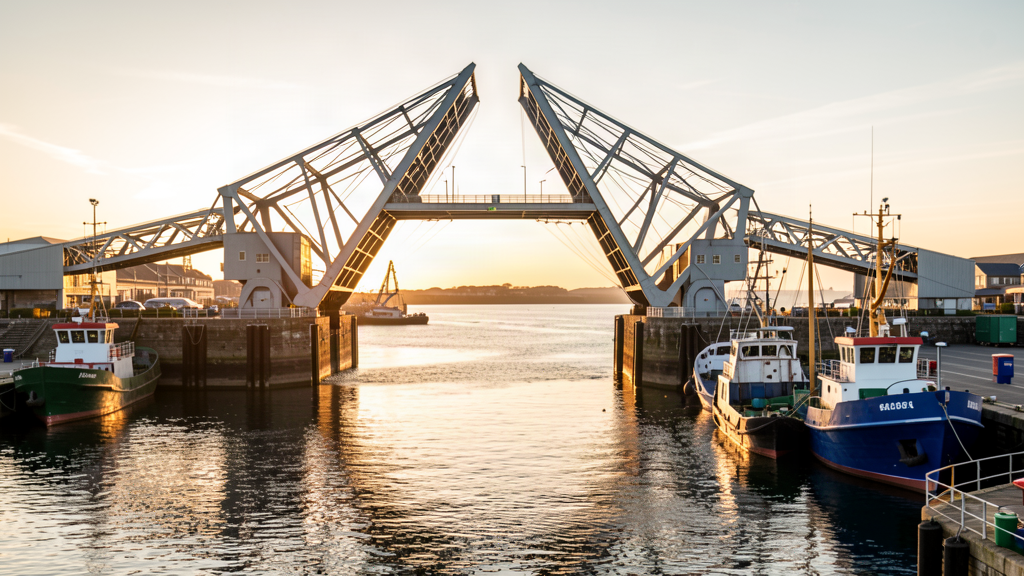
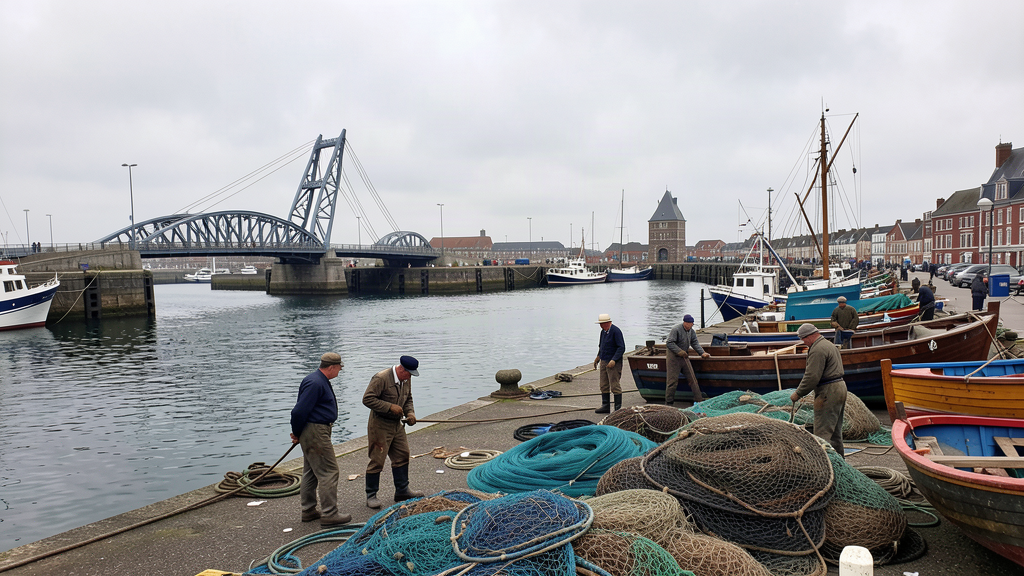
Most people treat Cherbourg as a hinge. Ferry in, coach out, Cotentin coast tomorrow. Fair enough if you are chasing dunes or the Cap. I stayed for the hinge itself: the working water in the middle of town, and the iron swing bridge that opens the Bassin du Commerce when a mast needs the cut. When the Pont Tournant turns, traffic waits, gulls argue, and the city looks like what it is. A mechanism with a job, not a postcard.
Cherbourg-en-Cotentin sits behind one of Europe’s largest artificial harbors. Naval base, ferry town, never quite a resort. Cruise days thicken the sidewalks near La Cité de la Mer. An ordinary Tuesday still smells of diesel, wet rope, and shellfish crates. If you only do the submarine museum and leave, you miss the old town across the basin, the basilica’s high gallery, and Quai de Caligny when kitchen steam mixes with harbor wind.
When the bridge decides the hour
The Pont Tournant is not a monument you tick off. It links the commercial basin with the older streets around the basilica and market halls. On foot you cross it without thinking, until a horn or a line of cars tells you a boat needs the gap. Then the roadway pivots. People lean on railings. Someone checks a watch. For a few minutes Cherbourg is pure logistics.
I timed a walk for late morning and caught one opening by luck. Nothing ceremonial. Crew on the deck, water shifting under the span, then the bridge locking back with a clunk you feel in your shoes. Cross again and drop into the Vieille Ville lanes: narrower streets, stone fronts, shop awnings, less horizon. Keep ducking toward the water and the basin stays in view. That shuffle between working water and inland stone is how the place moves. Need the bridge twice in a day and you start reading Cherbourg the way residents do, not as a terminal map.
Stand on either bank and watch the marina edges without forcing a photo. Masts, warehouse lines, the theater block nearby. Downtown, the Pont Tournant is compass enough.
Quays before the souvenir scripts
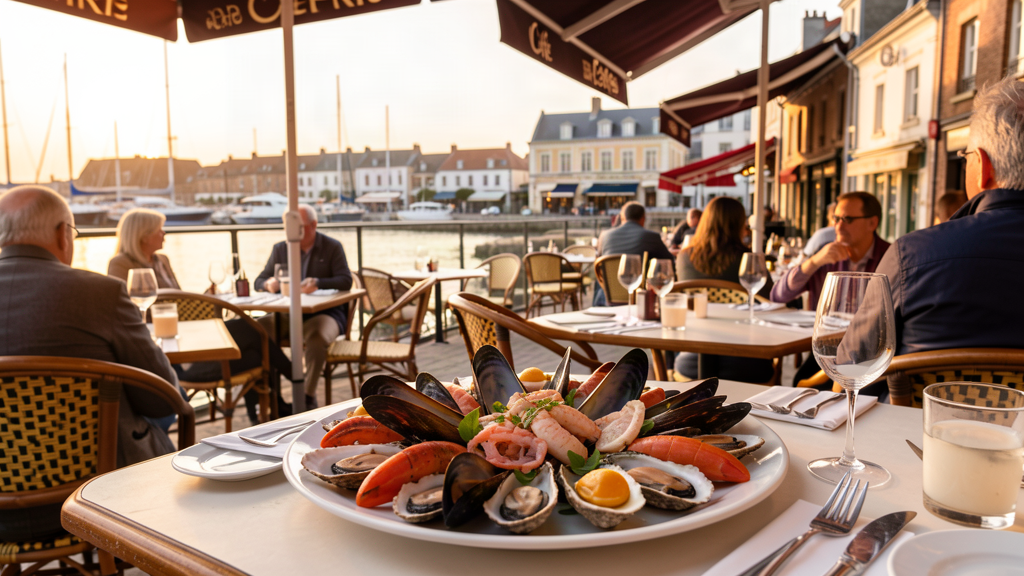
Quai de Caligny and the fishing-port edges are better early. Ice on the trays, boots, the slap of hose water. You do not need a guided tasting to understand why seafood menus here feel less staged. Buy something small if a stall sells to the public that morning, or just walk and listen. Later the same quays fill with terraces. I like the morning version more, but both are honest. Weekdays keep the working layer visible longer.
I walked the piers near Port Chantereyne when the light was flat and grey, which is half of Cotentin’s charm if you stop waiting for postcard blue. Floodlights and tide lines do more than sunshine. Locals jog the paths. Someone carries bread and a bag that smells like oysters. This is still a town that eats from its own water more often than it lectures visitors about it.
If a ferry or cruise ship is in, step one street inland. The city does not vanish. It waits until the day-trip pulse moves on.
Basilica stone and the high gallery
Basilique Sainte-Trinité sits at 1 rue de l’Église, close enough to the old center that you reach it without a pilgrimage mindset. Romanesque roots, later Gothic weight, rebuilt the way port churches usually are. Go inside for the quiet more than for a checklist. Up in the high gallery, sculpted scenes include a danse macabre register that stops the casual glance. Death walking in a line. Give it a few minutes.
I liked the basilica best after the bridge and before lunch, when my eyes were still adjusted to harbor glare and the interior felt cool and dim. Look up. Then walk the surrounding pedestrian streets without hunting a second trophy. Market halls and stone civic buildings sit a short stroll away. On the first Saturday of the month, a flea market often gathers around the basilica area. Ordinary tables, mixed junk and finds, conversation in Norman French you only half catch.
The Cavaillé-Coll organ is here if music is your hook. Even without a concert, it reminds you this was never only a transit chapel for sailors. Parish church and port commerce share the same few blocks.
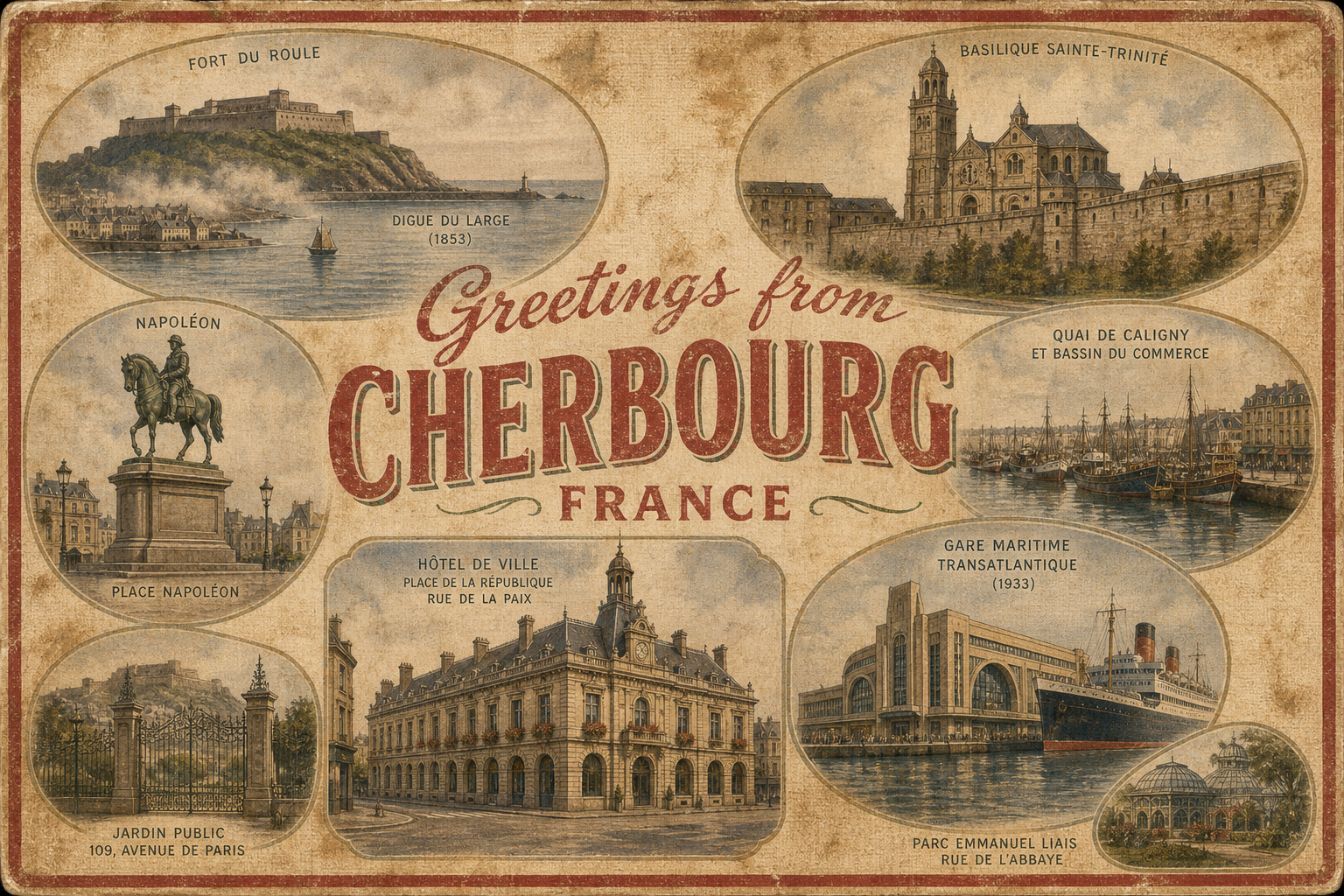
La Cité de la Mer without letting it eat the day
La Cité de la Mer occupies the old transatlantic terminal by the cruise berth, an Art Deco hall with real liner history under the museum skin. Go if you care about submarines or the building itself. The Redoutable visit is absorbing. Just do not let the ticket become your entire Cherbourg sentence. Ninety focused minutes beat a fogged half-day. Then get back outside to the quays and the bridge.
I treated the museum as afternoon weather insurance, not the reason for the train ticket. The basin and Vieille Ville still had the stronger hold. Overnight stays beat tagging the city between ferry legs for that reason alone.
Places to stay
Budget-friendly by the marina — Hôtel Chantereyne
Port Chantereyne, Rue de la Brigantine, 50100 Cherbourg-en-Cotentin
A practical base between the pleasure port and the center. Some rooms catch harbor or basilica angles; others face the garden side. You sleep inside the working geography rather than a ring-road box. Easy on foot to the quays and the bridge. Fine for one or two nights if you want money left for real seafood.
Solid mid-range on the place — Hôtel Le Cercle
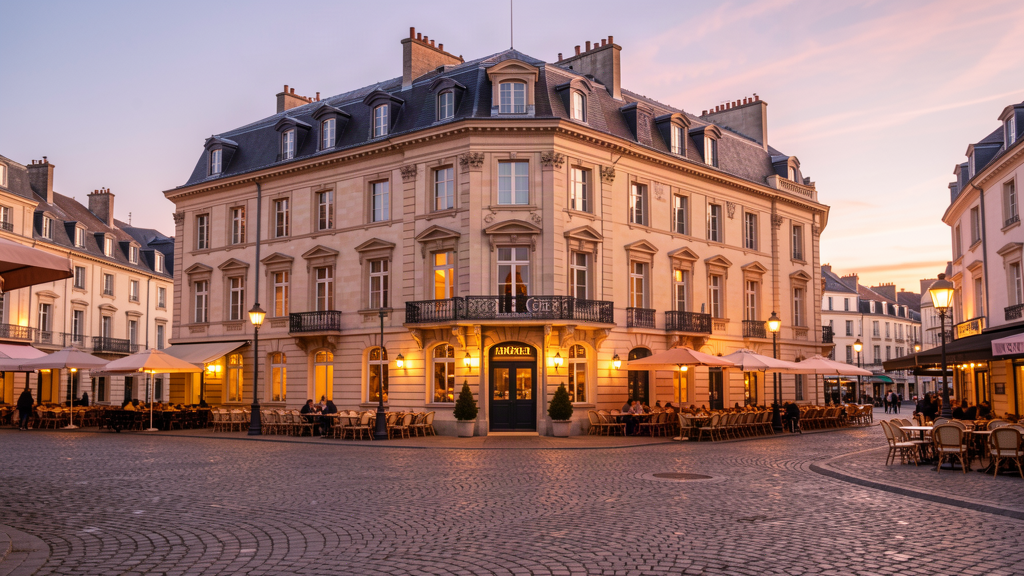
13 Place de la République, 50100 Cherbourg-en-Cotentin
Central without being trapped in a mall. Rooms look toward the marina, the basilica, Place Napoléon, or a quieter court depending on what you book. You drop bags and walk. Useful default when you want dinner options within ten minutes.
Harbor-front comfort — Ambassadeur Hotel
22 Quai de Caligny, 50100 Cherbourg-en-Cotentin
On the quay itself, steps from the station logic and the evening terrace strip. Pay more for the water at the window and a polished three-star setup that still feels tied to the port. Book ahead when ferries and events stack. Pairs cleanly with early morning walks before the quays fill.
Where to eat
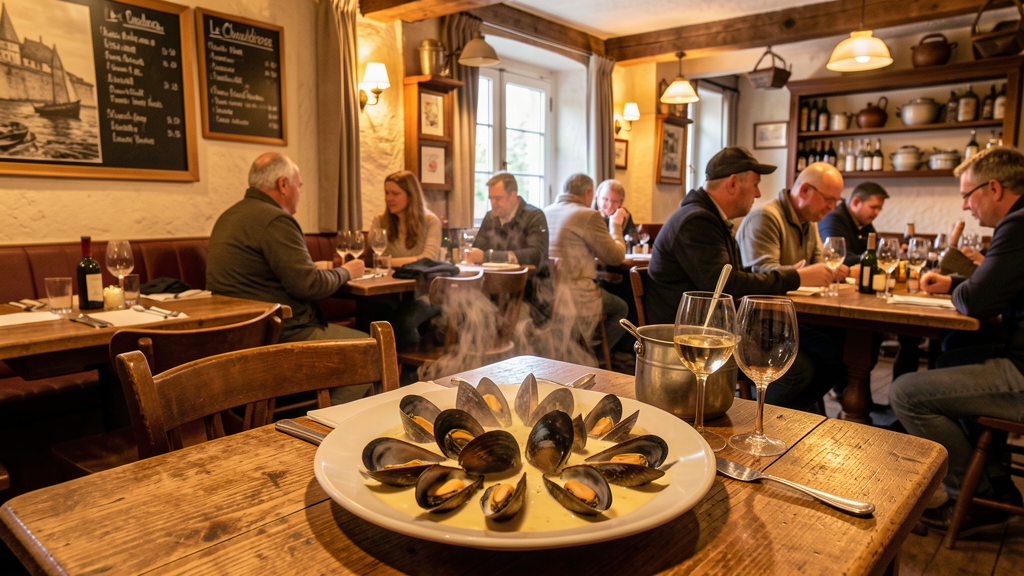
Le Chaudron
2–4 rue du Port, 50100 Cherbourg-en-Cotentin
Close to the fishing-port grain of town. Hearty plates, local product, a room that does not pretend to be a concept. Good lunch after a quay walk when you want substance more than ceremony. Check hours; port restaurants keep their own calendar.
Café de Paris
40 Quai de Caligny, 50100 Cherbourg-en-Cotentin
An old quay address with two centuries of stories behind the sign. Seafood and French standards facing the water. Terrace when weather allows. This is where you sit and watch masts instead of scrolling. Reserve on busy weekends; walk-ins work more often midweek off-season.
Le Pily
1 rue du Pont-Tournant, 50100 Cherbourg-en-Cotentin
Small, careful, and right by the swing bridge that organizes this whole piece. Pierre Marion’s cooking has earned serious attention; the room is intimate, the service unshowy. Book ahead. One proper dinner here teaches you more about Cotentin product than three rushed platters. Closed days matter.
Between those tables, bakeries in the old center and simple café counters keep you moving. Save appetite for one seated meal a day if you can. Cherbourg feeds better when you are not snacking out of ferry fatigue.
A day shaped by the basin
One full day works; two nights are kinder. Morning: quays and fishing edges while the light is honest, coffee, then the Pont Tournant crossing into the Vieille Ville. Basilica while your eyes still want cool stone. Market streets and any flea tables if the calendar lines up. Lunch at Le Chaudron or a quay table.
Afternoon: La Cité de la Mer if you want the terminal and the submarine, or skip it and walk farther along the water and inland squares. Early evening back on Quai de Caligny without shopping panic, just tide smell and kitchen steam. Dinner at Café de Paris or, if you planned ahead, Le Pily by the bridge.
If you have a second day, leave Cotentin beaches or the Val de Saire for then, and come back to town for dinner so the peninsula does not erase the port night. Rain is normal. Pack a layer.
I left with the bridge’s clunk still in my feet and salt on my jacket cuffs. Cherbourg will keep selling itself as a gateway, and it is one. Better hours come when you let the Pont Tournant set the pace, follow crate ice and basilica dust in the same morning, and eat facing water that still works for a living. A ferry horn may own the outer horizon. Inside the basin, the span swings, locks, and the town crosses again.
