
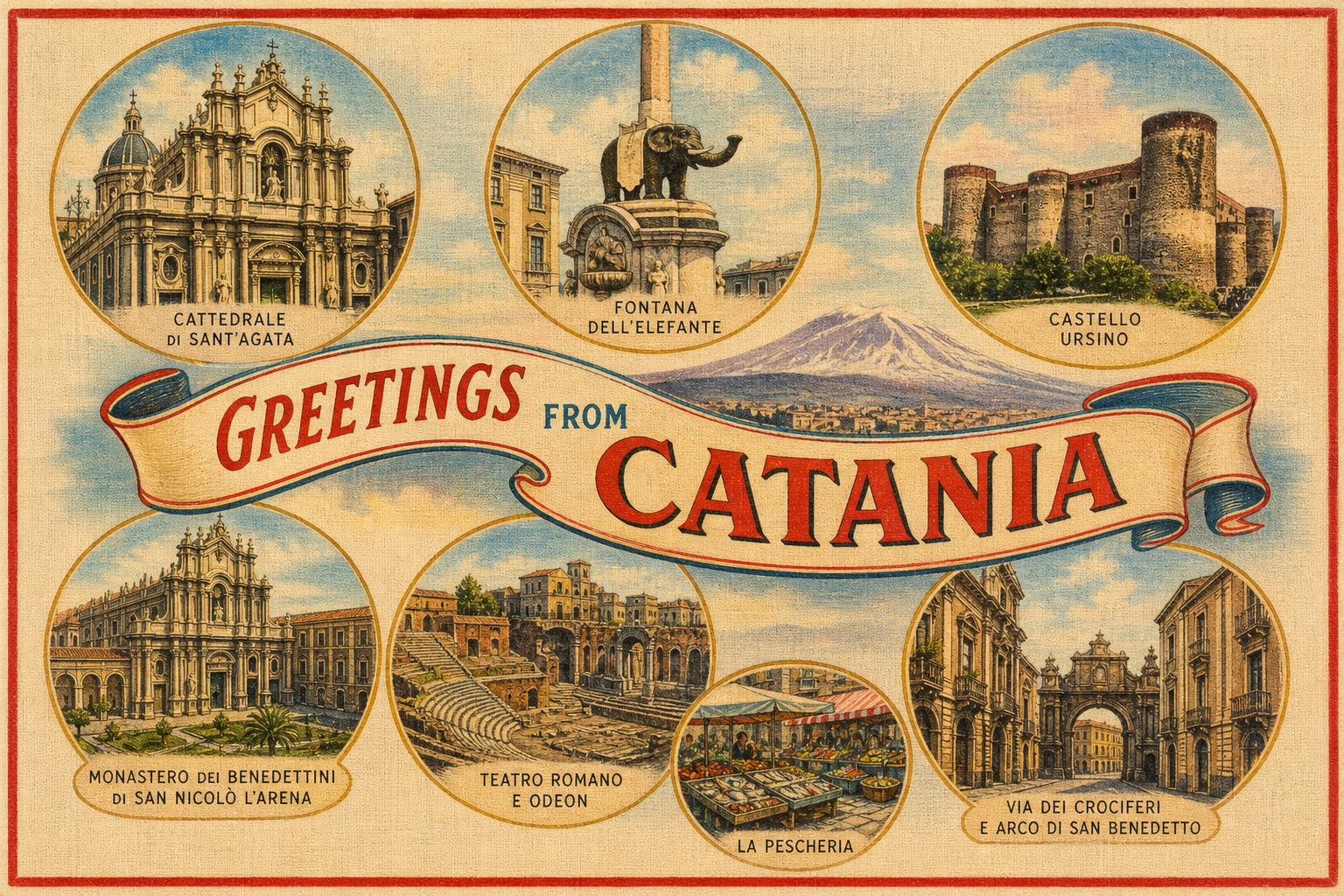
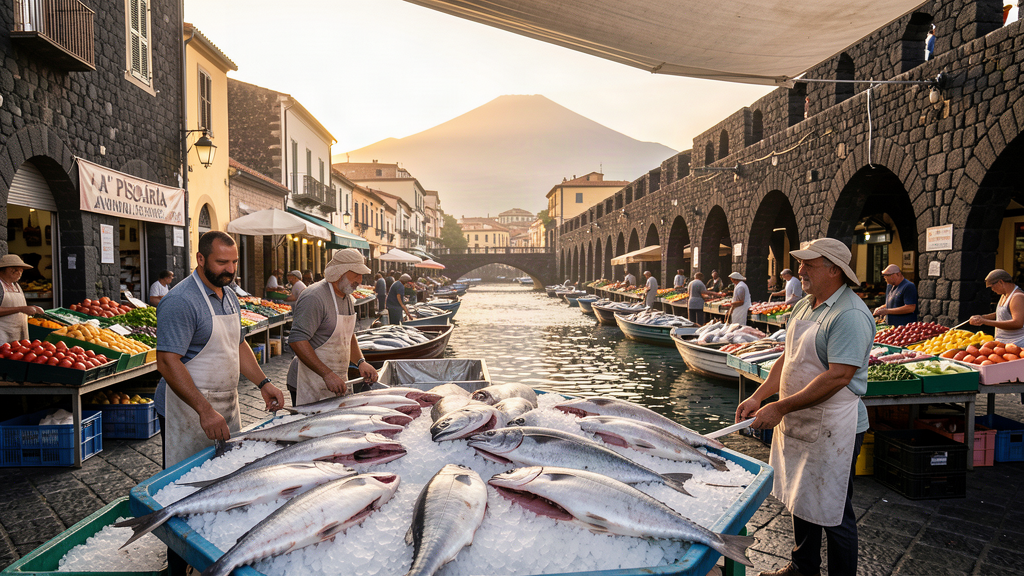
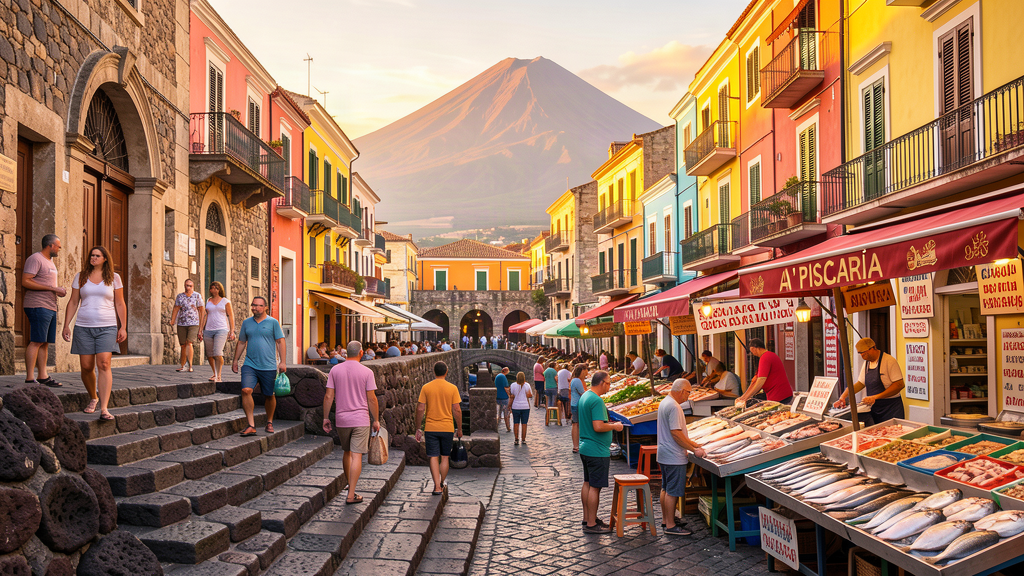
Catania does not polish itself for arrival. You come in under Etna’s slope, past black stone and traffic that treats lane lines as suggestions, and the first honest smell is not pastry sugar. It is brine, diesel, and the cold metal of fish ice. The postcard sells the elephant fountain and a baroque skyline the color of warm bread. Fair enough. What holds me sits a few steps lower: A’ Piscarìa, the working fish market under Piazza del Duomo, where the Amenano still sheets out of a marble fountain, and the city feeds itself in public before the heat takes the day.
I do not come to tick Roman ruins and leave. I come to walk the lava stairs while the stalls still shout, then let the black stone of Via Crociferi cool the afternoon.
Start under the sheet of water
Piazza del Duomo is the easy landmark. The elephant, u Liotru, stands on its lava pedestal. The cathedral faces the square like it has always won the argument. Turn toward the Fontana dell’Amenano, the nineteenth-century marble piece locals call acqua o linzolu for the way water falls in a flat white sheet into the underground river. Behind it, lava-stone steps drop into the market.
Come between eight and eleven on a weekday if you want the market as a system, not a stage set. Swordfish heads stare up from crushed ice. Tuna steaks look almost architectural. Squid, prawns, clams, and fish I still cannot name sit in wet trays while vendors call prices over the slap of knives. The air is cold where the ice melts and hot where the fryers start. Plastic crates of vegetables lean against the old walls of Porta Carlo V. Blood runs toward drains that know their job.
This is not a food hall. Shoes get wet. Voices do not soften for your camera. Buy something you can eat standing. A paper cone of mixed fried fish from a counter that does not need English. An oyster with lemon if the ice still looks honest. Olives or dried tomatoes if you need a bridge until lunch. Watch how people shop. They point, pay, move. The market has been feeding Catania in some form for generations. It does not need your wonder to continue. When the sun clears the buildings, climb back up through the sheet of water and let the square feel almost quiet by comparison.
Lava streets, baroque air, ordinary rooms
Catania is a black-and-gold city. Much of what you walk on and lean against is lava from Etna’s long habit of rewriting the map. After the market, I drift north on Via Etnea, the straight commercial spine, only long enough to feel the current of scooters and shop awnings. Then I cut west toward Via Crociferi. It is a short baroque corridor of churches and monastery facades, and the stone holds shade even in July. Tour groups pass through. So do people carrying groceries. Both belong.
Civita climbs above the Duomo side toward the port views: steeper lanes, fewer English menus. San Berillo, west of Via Etnea, still shows the scars of clearance and slow return. Cheaper rooms. Independent kitchens. Edges that do not care if you came for a checklist. I use both when I want the city without the square’s performance. You do not need a ticket every hour. Texture is enough. Laundry over a courtyard. A bar with three metal tables. A votive shrine stuck to lava plaster.
If you want one paid interior tied to how this place layers time, the Roman theater and odeon sit almost hidden in the centro fabric, seats cut into the slope under later buildings. Go when the heat is wrong for open walking. Then leave. The market and the street will put you back in your body faster than another plaque.
Etna is always somewhere in the weather, even under cloud. A half day up the mountain is worth it when skies clear. Book a sensible operator if you do not know the routes. Come back to black stone and salt air the same day. Catania is a port city that happens to live under a volcano, not a base camp with a city attached.
Tables that keep the brine honest
Street cones will try to own your itinerary. Let them for mid-morning. Sit when your legs ask.
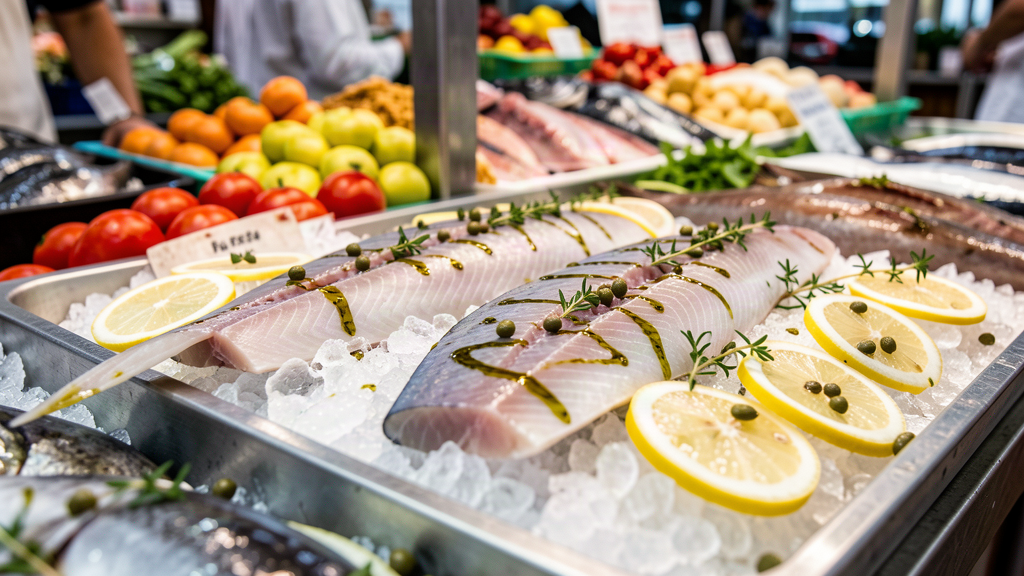
Scirocco Sicilian Fish Lab, Piazza Alonzo di Benedetto 7, 95121 Catania CT, works the Pescheria edge with fried seafood in paper, arancini if you need ballast, and almost no ceremony. Stand, eat, move. Good when the market still has ice and you are not ready for a cloth napkin.
Osteria Antica Marina, Via Pardo 29, 95121 Catania CT, sits inside the same market orbit for a proper table. Seafood that left the counters nearby. Rooms that fill with people who book because they already know. Service that keeps pace with the noise outside. Reserve when you can. Closed days shift. Confirm before you walk hungry.
Me Cumpari Turiddu, Piazza Turi Ferro 36, 95124 Catania CT, pulls you a few blocks into the living center for Sicilian cooking that is not only fish. Pasta, vegetables, slow plates. A room that feels decided rather than styled for photographs. Useful when you have done brine all morning and want land flavors without leaving the walkable core.
Places to stay
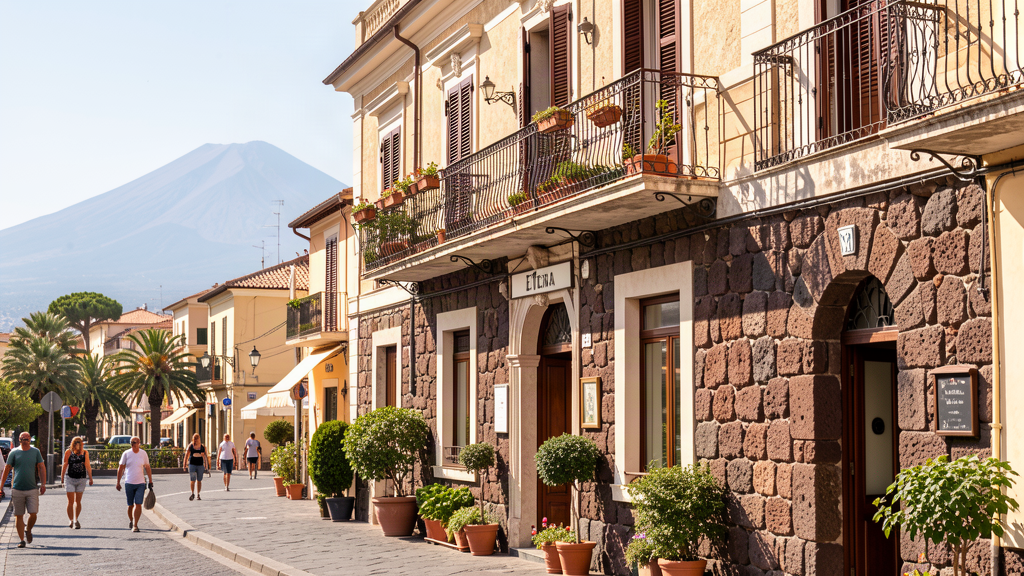
Sleep where you can walk to the Duomo stairs without negotiating a car each morning.
Budget: Crociferi B&B, Via Crociferi 81, 95124 Catania CT. A small set of rooms in an old palace on the baroque street itself, lift to the first floor, breakfast that gets you out toward the market while it still matters. You hear church bells and scooters. You walk to almost everything a long weekend needs. Book early. Inventory is thin.
Midrange: Etnea Boutique Hotel, Via Etnea 55, 95124 Catania CT. Central spine location, modern rooms inside the commercial fabric, easy reach of Piazza Università, the Duomo, and the drop into the Pescheria. Useful if you want a real front desk and a quieter night after market noise. Ask which side faces the street if you are light sleepers.
Splurge: Palace Catania | UNA Esperienze, Via Etnea 218, 95131 Catania CT, for grand hotel scale on the same spine, rooftop air, and Etna on clear evenings. Or Romano Palace Luxury Hotel, Viale Presidente Kennedy 28, 95121 Catania CT, if you prefer sea-edge calm and will taxi back into the black-stone center. Both cost for fabric and service. Neither replaces a morning under the Amenano sheet.
Ask about weekend noise before you choose a room over a piazza. Catania does not whisper after eleven.
Getting here and moving around
Catania-Fontanarossa Airport (CTA) sits south of the city. Buses and taxis run to the center when traffic cooperates. Catania Centrale puts you near the eastern edge of the walking city. From there, the Duomo and Pescheria are a walk if you travel light.
Inside the historic fabric, walk. Via Etnea is the spine. Side streets kink without warning. Scooters own the corners. Buses help for longer hops. A rental car is for Etna days and coast runs, not for nightly parking beside a centro B&B.
Spring and autumn keep the market vivid without the full August melt. July and August push everyone toward water. Winter empties some terraces and keeps the fryers honest. Mondays and holidays can quiet the stalls. Call ahead for kitchen hours around feast days.
A day that tastes like ice and black stone
Morning: coffee standing up near the Duomo, then the Amenano steps while the swordfish ice still holds and the sheet of water still sounds louder than traffic. Eat a cone in the lane. Buy fruit you will finish. Climb out before the square turns into pure heat theater.
Midday: Via Crociferi shade, a slow circuit that may include the Roman seats if doors are open, then lunch at Antica Marina if you booked or Scirocco if you did not. Rest. Early afternoon heroics in open sun are optional and often regretted.
Late afternoon: one stretch of Civita or a simple circuit east toward the port air, then back to Via Etnea light when the facades pick up color. Evening: Me Cumpari Turiddu if you want a table away from the stalls, or a second pass near the market alleys only if you still have legs and want noise with salt still in it.
Etna can take a morning when the cone is clear, and you need altitude. A swim day along the nearby coast can take the edge off August. What I keep from Catania is plainer than either. Lava stairs wet with meltwater. The Amenano sheet falls into a river you mostly cannot see. Swordfish eyes still clear on the ice while the city buys dinner in public, whether or not anyone is watching with a camera.
