
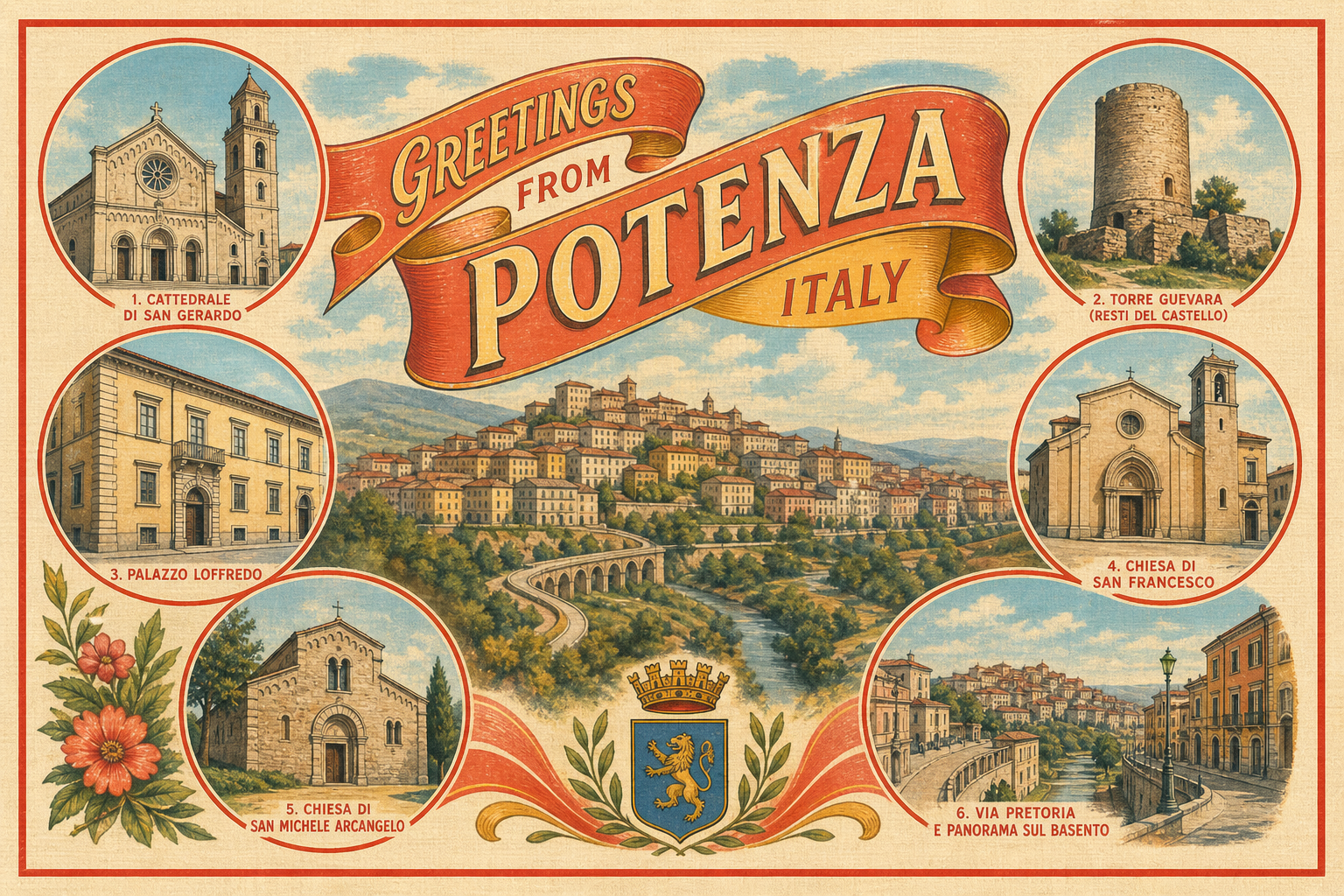
Escalators climbing toward Via Pretoria in Potenza
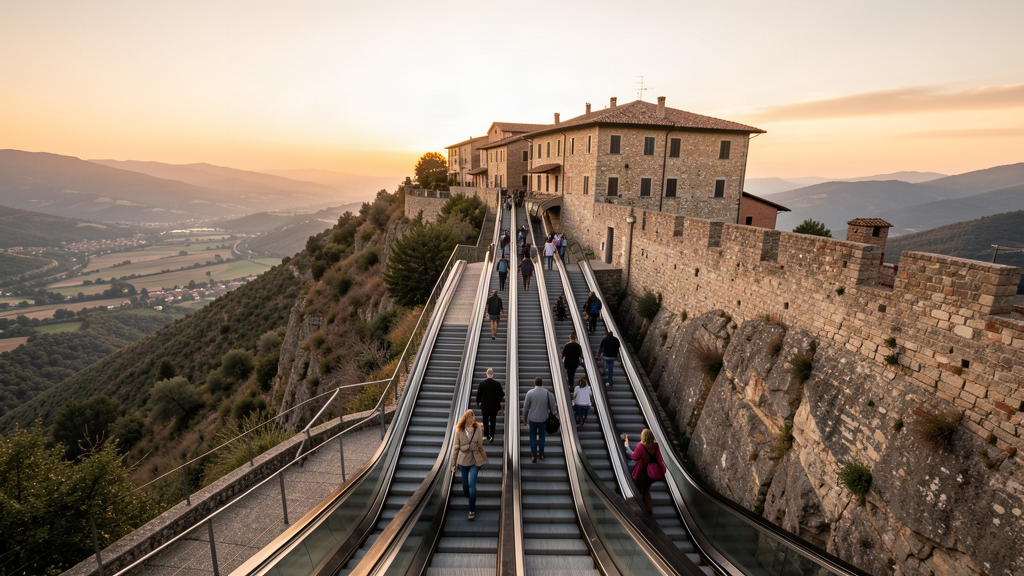
Potenza does not open with a postcard square. It opens with height. Basilicata’s regional capital sits on a narrow ridge more than eight hundred meters up, windy enough that you want a coat even when the valley looks warm. Modern blocks drop into the Basento slopes below. Above, the old town — people still say Sopra Potenza — runs along the crest like a spine. The usual way up is not a heroic climb. It is a set of long public escalators, covered and ordinary, carrying shoppers, students, and whoever else needs to get from the lower streets toward Via Pretoria.
That vertical habit is what I trust about the place. Earthquakes rewrote a lot of the skyline. What is left of the historic core feels lived-in: bakers, municipal offices, short coffees, laundry in side lanes. Come if you are driving through Basilicata, if Matera already filled your camera, or if you want a working hill city instead of another white-village script. Start with the escalators. Finish on the ridge with something fried and local.
The city that moves on belts
Potenza’s scale mobili are infrastructure, not a stunt. Segments run through covered structures around Viale Marconi, Santa Lucia, and related links, stitching the lower neighborhoods to the high center. Locals use them the way other cities use a metro line: part of the commute, sometimes slow, crowded at school hours, always more practical than circling for parking on the ridge.
Ride up once without rushing. The air cools as you gain height. Through gaps you catch rooftops, green hills, and traffic far below. At the upper exits toward via del Popolo, the streets tighten and you walk. If a segment is closed for maintenance, follow the signs or ask anyone with a shopping bag. The ride is only the prologue. Via Pretoria is why you came up.
Via Pretoria, the ridge spine
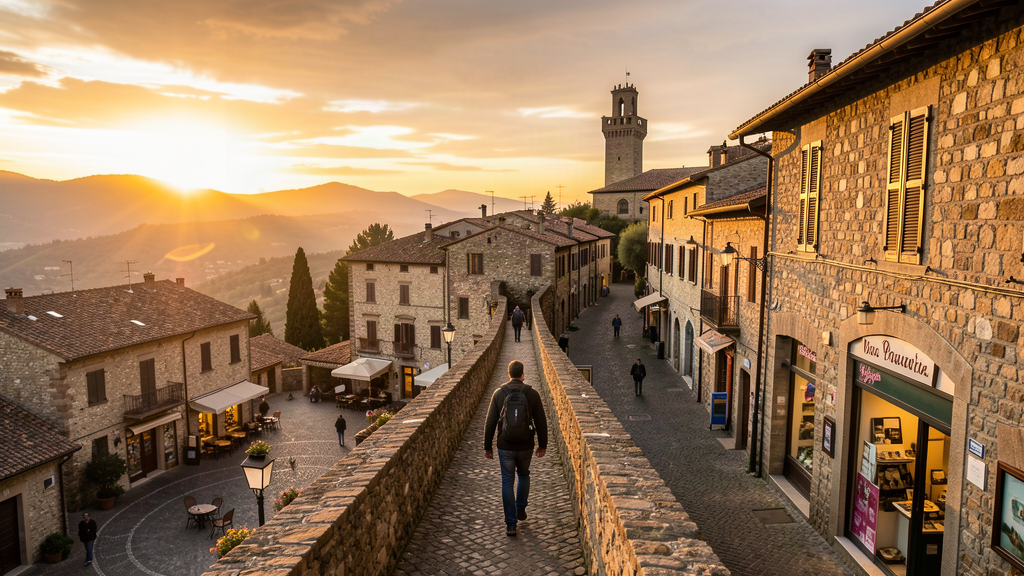
Via Pretoria is the old main street, a long, slightly bent artery that once tied the fortified town together and still carries most of the centro’s daily foot traffic. It is not grand in the Baroque southern style. Practical stone, shopfronts, small piazzas, church doors, and side alleys that drop toward views.
Walk it end to end in the morning while shutters are still half closed. Stop for coffee where the bar is already full of standing locals, not where the menu is translated three ways. Pretoria Caffè at Via Pretoria 201/205, 85100 Potenza PZ, is an easy landmark if you want a seat without leaving the spine.
Branch off to Piazza Pagano and Piazza Matteotti when the street opens. Duck into San Francesco if the door is unlocked; the cool stone feels good after wind on the ridge. The cathedral of San Gerardo anchors another stretch — step inside if the schedule allows, then get back to the lane. Torre Guevara, the stub of the old castle complex, still stands as a vertical marker and sometimes hosts exhibitions. It is a remnant, which fits a city that kept a few old pieces and went on living.
The Museo Archeologico Nazionale della Basilicata “Dinu Adamesteanu” is worth an hour if you care how Lucanian and Roman layers sit under modern Basilicata. Go when you want context. Skip it if the weather is perfect and the ridge walk is enough.
Wind, winter, and the lower city
Because the center sits so high, weather is part of the plan. Summers run clearer and breezier than the humid coast. Winters can bring snow and a sharp cold that makes the escalators feel like a gift. Pack a layer even in shoulder season. Clear days are excellent for walking. Fog erases the valley and leaves you inside a quieter hill town than the map suggests.
Down below, the modern city sprawls with services and station roads. Ponte Musmeci, the sculptural Basento bridge, is the structural celebrity of the lower landscape — raw concrete, bold geometry, best seen with a little distance. You do not need a whole afternoon with it. Just notice that Potenza’s story splits: engineered modernity in the folds, older streets on the crest.
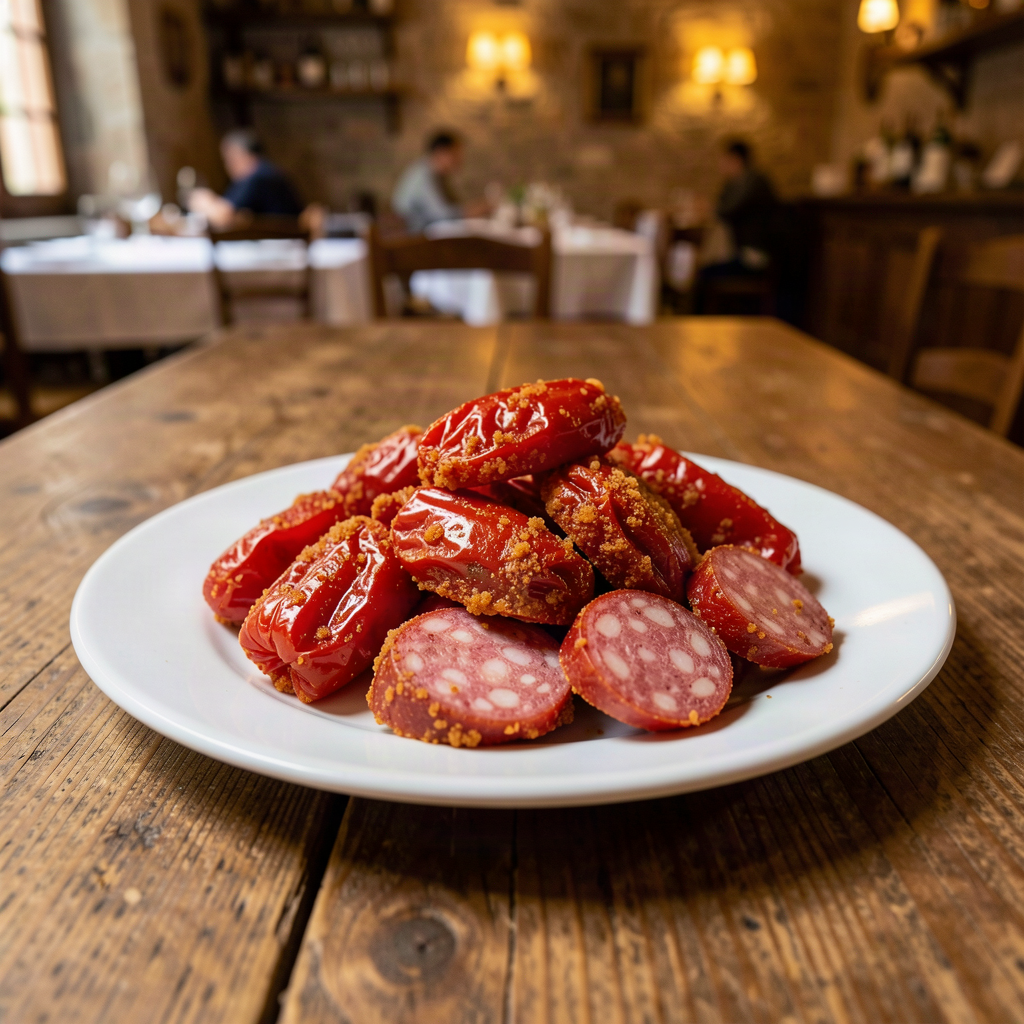
Markets and ordinary food shops still matter more here than concept stores. Look for peperoni cruschi — dried Senise peppers fried until they shatter — and lucanica sausage in windows and on menus. Lagane e ceci, baccalà with peppers, stale-bread soups, and bitter greens show up when kitchens cook for the room rather than for a photo. Lucanian food leans mountain and pepper-bright. Less cream, more pantry thrift.
Eating without the costume
Book dinner on Friday and Saturday. Weeknights are easier. Portions run honest. House wine is usually the right call unless you already know a producer from the Vulture.
Antica Osteria Marconi, Viale Marconi 233/235, 85100 Potenza PZ, sits on the lower artery near the escalator world rather than inside a tourist maze. It has been a reference point for traditional cooking for years: Lucanian plates, careful service, a room that feels like a city restaurant. Go for primi with legumes or peppers, and secondi that still taste like a butcher and a garden had a say. Closed days shift; confirm before you climb back up hungry.
Osteria della Via Appia, Via Caserma Lucania 22, 85100 Potenza PZ, nods at the old road that once threaded this interior toward the coast. The cooking stays approachable — pasta, local meats, seasonal specials — and the location works if you are lodging in or near the historic fabric. A solid middle dinner without trying too hard.
Orto e Cucina da Giò, Via Isca del Pioppo 7/O, 85100 Potenza PZ, is a more contemporary table, known for low-temperature cooking and a tighter room. Useful when you want vegetables and meat handled with patience instead of another plate of the expected classics. It sits slightly off the pure centro stroll, which is fine. Potenza is a city of short hops.
For daytime, stay simple. A panino, cruschi if you find them as a snack, fruit from a stall, coffee standing up. Save the long meal for after the ridge walk.
Places to stay
Sleep on or near the high center if you want to walk out into Via Pretoria at night. Sleep along Viale Marconi if you want escalator access and easier parking. A car-friendly edge hotel works if Potenza is a one-night hinge between the Vulture, the mountains, or Matera.
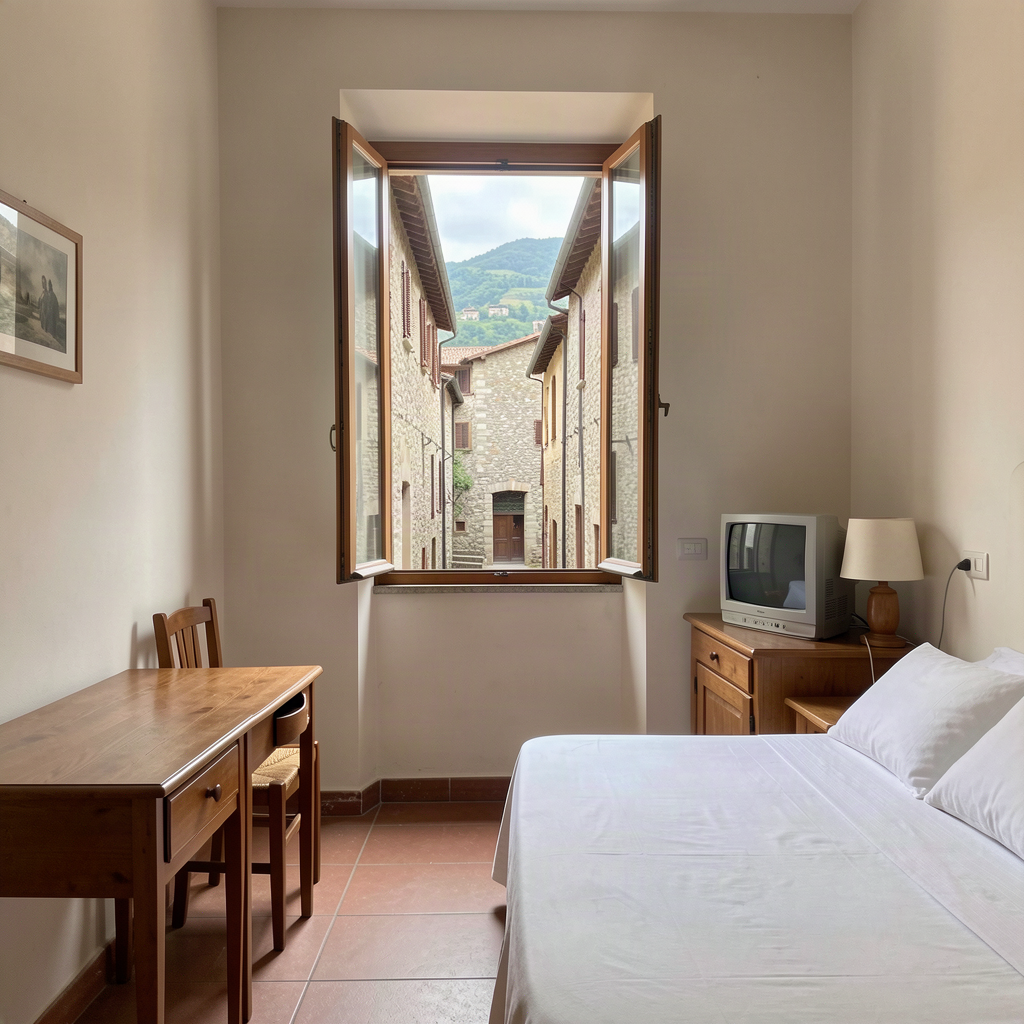
Budget: B&B Potenza IT, Viale Guglielmo Marconi 122, 85100 Potenza PZ. Small rooms with private baths, breakfast included, and a practical position near lower-city arteries and escalator links toward the centro storico. You trade antique atmosphere for clean rooms, hosts who know the vertical shortcuts, and a kinder rate.
Midrange: Pretoria Hotel Dimora della Via Appia, Via XX Settembre 4, 85100 Potenza PZ. A compact hotel in the historic center, close enough to Via Pretoria that evenings stay on foot. Rooms are straightforward rather than design-magazine. The point is location: finish dinner and walk home on stone.
Splurge: Grande Albergo Potenza, Corso XVIII Agosto 46, 85100 Potenza PZ. The classic four-star in the upper fabric, a short walk from museums, the theater, and the lanes that feed the ridge. Useful if you want a proper hotel desk and a quieter room after a long Basilicata drive.
Getting here and moving around
Potenza is inland. Naples and Bari are the usual air gateways, then a drive or a patient train link. The station sits in the lower fabric, so budget time — and those escalators — to reach Sopra Potenza. A rental car is the practical tool if you combine Potenza with Castelmezzano, Pietrapertosa, the Pollino edge, Matera, or the Vulture wine towns. Do not drive into the historic core for fun. Park lower and go up on foot and by cable car.
Walking plus escalators covers a short stay. Comfortable shoes matter on stone. In rain, the ridge gets slick. In summer heat, the covered escalators earn their keep.
A day that fits the ridge
Morning: coffee below, then the escalator climb. Surface into the historic fabric and walk Via Pretoria while deliveries are still happening. Midday: museum or Torre Guevara if open, then a light lunch. Afternoon: drop one escalator segment for a look toward the Basento and Musmeci’s concrete arc if you have the angle, then ride up again near golden hour. Evening: dinner at Marconi or Via Appia, a slow stroll on Pretoria, early sleep if tomorrow is mountain roads.
Potenza will not compete with Matera’s cave drama or the polished white towns further east. It should not try. This is a windy capital that linked its lower and upper halves with moving stairs and left Via Pretoria as a working street. Ride up, walk the ridge, and eat the peppers while they are still hot from the pan.
